
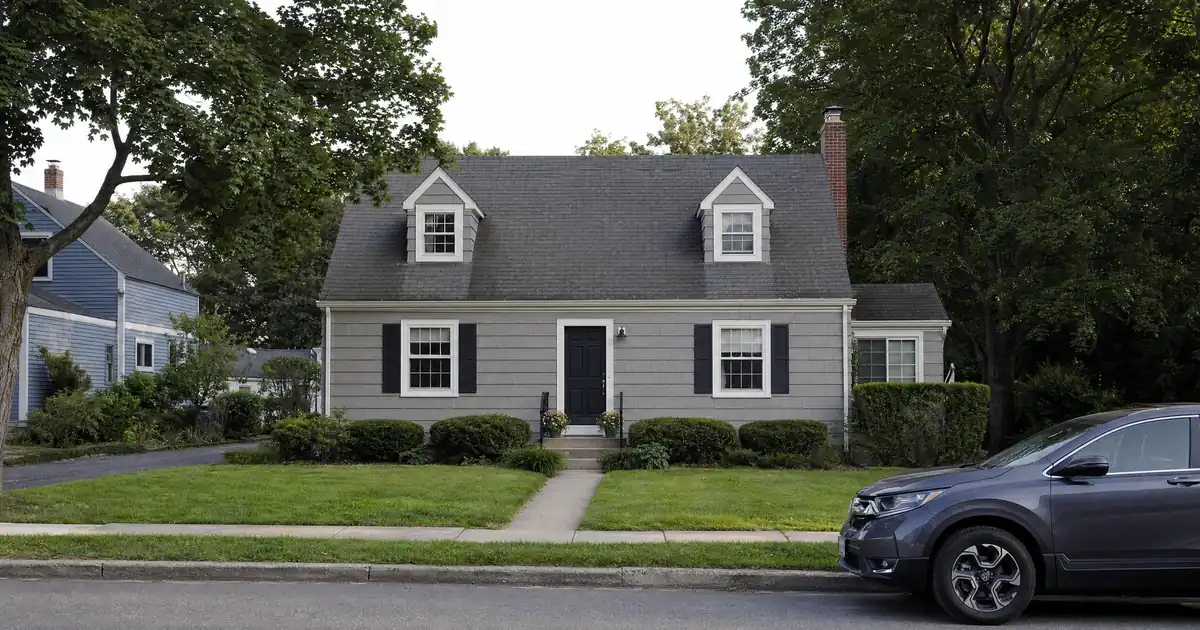
30 Year Refinance Investment Property — The Quick Read: A 30-year refinance on an investment property replaces the current loan with a new fixed-term loan. The new loan is spread over three decades. There are two paths. A rate-and-term refinance changes the loan structure but pulls no cash out. A cash-out refinance pulls equity at closing, but it caps lower. On the DSCR side, qualification runs on the property’s rent against its full monthly obligation. It does not run on the borrower’s traditional personal-income paperwork. Cash-out generally tops out near 75% loan-to-value across most of Lendmire’s wholesale network. Investors should expect roughly six months of seasoning before the payoff of the existing loan is reviewed for cash-out treatment.
What Actually Happens When You Refinance an Investment Property Into a 30-Year Loan
The new loan pays off the old one. The term resets. That’s the mechanical core of it. Everything else is just variation on that theme.
DSCR Calculator
Run the numbers in your market
Rate source: Freddie Mac 30-yr average via FRED® — Federal Reserve Bank of St. Louis · effective Jul 30, 2026
Prefilled with local estimates — enter your own rent or nightly figures, taxes, insurance, and HOA for a more accurate picture.
Program parameters update from Lendmire’s centralized guideline source. Taxes and insurance are editable estimates.
As of Jul 30, 2026 · General Freddie Mac market benchmark, not a Lendmire loan offer. Rent, nightly rate, occupancy, taxes, and insurance are editable estimates. Short-term rental figures are estimates only and vary significantly by season, property type, management approach, and local short-term-rental rules — confirm local regulations before relying on them. Qualifying income for short-term rentals varies by program — some use appraisal market rent, others use documented STR history or projections — and is confirmed in underwriting. Not a Loan Estimate, approval, or commitment to lend. Program availability and eligibility are subject to lender guidelines, credit approval, property review, and underwriting.
A rate-and-term refinance swaps the existing loan for a new one. No cash changes hands. This is the common exit for an investor who bought with a bridge loan or hard-money financing. That investor stabilized the property and now wants to land in a permanent 30-year fixed structure. It’s also the right move for someone holding a shorter-term note who wants a lower monthly payment stretched over more years.
A cash-out refinance does the same swap, but pulls equity at closing. The new loan balance is bigger than the old one. The difference lands in the investor’s pocket. It usually goes toward a down payment on the next property, a renovation, or working capital. Because equity is leaving the deal, lenders cap leverage lower on cash-out than on rate-and-term. That’s a structural fact, not a lender preference.
DSCR lending works differently than conventional agency lending. Qualification runs through the property, not the person. The lender doesn’t pull two years of personal income paperwork or run a personal debt-to-income calculation. Instead, the lender compares the property’s rent against its own monthly obligation. If the rent covers the payment, the loan works. It doesn’t matter what the borrower’s Schedule E says. Lendmire’s complete DSCR loans guide walks through the qualification model in more depth. Readers who want the full picture before running numbers on a specific property should start there.
How Underwriting Treats a 30-Year DSCR Refinance, Step by Step
Underwriting on a DSCR refinance moves through five checkpoints. Skipping ahead on any one of them is where files get delayed.
1. Purpose gets classified first. Rate-and-term or cash-out — this decision drives every leverage and seasoning rule that follows. A file that starts as a rate-and-term and gets restructured mid-process to pull cash usually has to restart underwriting under the cash-out rules.
2. The property’s income gets documented, not the borrower’s. An appraiser completes a rent schedule during the appraisal — Form 1007 for a single-family unit, Form 1025 for a two-to-four unit property. These are agency form names. But the non-QM and DSCR industry adopted the same paperwork because it’s the cleanest way to get a third party to verify market rent. On a refinance specifically, that appraisal-based rent is typically weighed alongside an actual lease. If the unit is vacant, a market-rent projection is used instead. Treatment varies by lender.
3. The ratio gets calculated against the full monthly obligation. This is where a lot of investors run the math wrong. The correct denominator is PITIA — principal, interest, taxes, insurance, and HOA dues where applicable. It is not principal and interest alone. A property with a modest HOA fee or a jump in insurance can slide from comfortably covering its payment to barely clearing it, using the same rent figure. Divide monthly rent by monthly PITIA. That ratio is what the lender prices and leverages against.
4. The ratio sets pricing and leverage, not just a pass/fail gate. A ratio right around 1.00 means rent covers the payment with nothing left over on paper. Stronger ratios — 1.20, 1.30, and up — typically open better leverage and pricing tiers. Weaker ratios close doors rather than open them.
5. Credit, reserves, and entity documentation get reviewed alongside DSCR. These loans are business-purpose. Title typically sits in an LLC or similar entity rather than an individual’s name. Underwriting still pulls credit, verifies reserves, and confirms entity documents. The DSCR calculation is one input among several — not the entire file.
This trips up a lot of investors, so it’s worth repeating: clearing 1.00 on the coverage ratio is not the same thing as positive cash flow. DSCR measures rent against PITIA only. Repairs, vacancy, property management fees, utilities, and capital reserves all sit outside that calculation. A file that clears 1.20x on paper can still run tight in practice once real operating costs hit the ledger.
Where the 30-Year Structure Sits Inside Investor Financing
The 30-year fixed is the “landing” loan for most buy-and-hold investors. It’s the structure they land in after a bridge loan, a renovation, or an ARM has done its job.
That matters most for BRRRR investors. Say an investor bought a distressed property with short-term debt, renovated it, and stabilized a tenant. That investor is typically looking for a permanent, predictable payment for the hold period — not another loan with a reset risk down the line. A 30-year fixed locks that payment for the full amortization term. That’s the entire reason so many BRRRR and buy-and-hold investors treat it as the endgame rather than a stopgap. Lendmire’s article on 30-year mortgage refinance for investment property covers the term-selection logic in more detail for readers weighing 30-year against shorter amortization schedules.
Not every investor needs to cash out just because equity is sitting there. Sometimes property values are under pressure, or a market is cooling. In those cases, pulling equity out at a lower LTV ceiling means a higher resulting balance — and that can push a comfortably cash-flowing property into borderline territory. A lower-leverage rate-and-term refinance that simply improves the structure, without touching equity, is sometimes the more conservative move. That’s true even if it leaves money on the table that a cash-out could have unlocked.
Across files Lendmire places through its wholesale network, one pattern shows up again and again on refinance requests. Investors who model the deal against full PITIA before applying rarely get surprised in underwriting. Investors who model against principal and interest only — and forget the HOA line, or use last year’s insurance premium — are the ones who see their expected ratio shrink. That happens once the appraiser’s 1007 rent schedule and the actual insurance quote land in the file.
Cash-Out vs. Rate-and-Term on a 30-Year Investment Refinance
| Factor | Rate-and-Term Refinance | Cash-Out Refinance |
|---|---|---|
| Cash to borrower at closing | None | Yes, equity extracted |
| Typical LTV ceiling | Up to 75%–80% | Up to 75% |
| Seasoning expectation | Program-dependent | Roughly 6 months common |
| Primary use case | Exit bridge/hard-money loan, lower payment | Fund next purchase, renovation, working capital |
| DSCR treatment | Same coverage math applies | Higher new balance can compress the ratio |
The gap between the two ceilings is the entire reason some investors choose the more conservative path, even when they qualify for cash-out. Pulling equity raises the loan balance. A higher balance raises the monthly obligation. That can pull the coverage ratio down at the exact moment the investor wanted to expand. The smart move is to run both scenarios — rate-and-term only, versus cash-out at the higher balance — before deciding which to apply for. That’s the difference between a file that sails through and one that comes back for a leverage adjustment.
Lendmire’s guide on using a cash-out refinance to buy an investment property walks through how investors typically redeploy the extracted equity into a next acquisition. The investment property refinance playbook covers the broader decision tree between the two structures in more depth.
Where the General Rule Breaks: Edge Cases
No lease, no problem — on select programs. A vacant unit doesn’t automatically stall a refinance. Some programs in Lendmire’s network may qualify off a market-rent projection from the appraiser’s rent schedule instead of a signed lease. Qualification and terms still vary by lender, though. Not every lender treats projected rent the same as documented in-place rent. Some price it more conservatively. That’s a program-by-program decision, not a universal rule.
Short-term rentals break the standard appraisal tool. The 1007 rent schedule is built for long-term-lease housing. It doesn’t account for nightly-rate income, seasonal vacancy patterns, or the specific expense structure of a short-term rental. The form simply isn’t designed to capture it. Appraisers working an STR refinance often need a supplemental data source such as AirDNA to build a defensible income estimate. On the DSCR side of Lendmire’s network, short-term rental refinances typically run around 70% LTV. Expect a credit profile around 640 or better, roughly twelve months of hosting history, and a coverage floor around 1.00 on select programs. Short-term rental rules can vary by city, county, HOA, and property type. Investors should confirm local rules before relying on projected rental income.
Agency seasoning rules do not automatically apply to DSCR loans. On the conventional/agency side, Fannie Mae’s cash-out refinance eligibility update requires the existing first lien being paid off to be at least 12 months old, note-date to note-date. That rule sits on top of a separate six-month title-vesting requirement described in Fannie Mae’s Selling Guide. That’s the agency rulebook. It governs loans sold to Fannie Mae, not business-purpose DSCR loans. DSCR programs set their own seasoning independently. Across Lendmire’s network, the common expectation on cash-out is closer to six months than twelve. Investors moving between entity title and personal title mid-hold should confirm which seasoning clock a specific lender is actually running, rather than assuming either rule applies.
Prepayment terms are state- and entity-dependent. Because these are business-purpose loans, most states permit negotiated prepayment structures. But a number of states treat individual borrowers differently from LLC or corporate borrowers on enforceability. Even loans exempt from ability-to-repay requirements remain subject to restrictions on prepayment penalties under the CFPB’s ATR/QM compliance guide. Business-purpose status doesn’t automatically mean unregulated prepayment terms. Any specific state claim should be checked against current statute and the individual lender’s guidelines, since this shifts over time.
Loan size draws its own structural line. Standard programs across Lendmire’s network run up to roughly $3,000,000. Above about $2,500,000, the network generally holds to 30-year fixed structures specifically. Extended terms and interest-only options tend to concentrate in the mid-size loan tier, not the largest balances. Overlay states — Connecticut, Florida, Illinois, and New Jersey among them — generally cap purchase leverage near 75% LTV. They also cap loan amounts around $2,000,000 on many programs. That’s worth confirming before assuming a higher-leverage quote applies.
Some property types are simply outside the box. Manufactured homes — single- or double-wide — along with log homes and barndominiums are not offered through DSCR programs in Lendmire’s network. That’s a hard eligibility line, not a “harder to finance” gray area. An investor holding one of these property types will need a different financing path entirely for a refinance.
Key Terms Defined
DSCR (Debt Service Coverage Ratio) — the property’s monthly rent divided by its monthly PITIA obligation; a ratio at or above 1.00 means rent covers the payment.
PITIA — principal, interest, taxes, insurance, and HOA dues combined; the full monthly obligation used as the DSCR denominator, not principal and interest alone.
Seasoning — the minimum holding period a lender requires before a property’s existing loan can be refinanced, particularly for cash-out.
Rate-and-term refinance — a refinance that replaces the existing loan with a new one on different terms, with no cash paid out to the borrower.
1007 Rent Schedule — the appraisal form used to document a single-family property’s market rent for underwriting purposes; the two-to-four unit equivalent is Form 1025.
What the Decision Actually Looks Like for an Investor
Picture an investor sitting on a stabilized rental with a bridge loan coming due. The choice is fairly clean: refinance into a 30-year fixed at whatever leverage the current equity and coverage ratio support, or refinance and pull cash to fund the next deal. The math that decides between the two isn’t the rate. It’s whether the coverage ratio stays comfortably above the program floor after the balance increases.
Run it conservatively. Say a property currently clears somewhere in the low-1.2x range on a rate-and-term basis. Moving to cash-out at a higher balance, using the same rent figure, can pull that ratio down toward 1.00 or below. How much depends on how much equity gets extracted. That’s not a reason to avoid cash-out. It’s a reason to model both scenarios against the actual PITIA stack before choosing, rather than deciding based on how much equity theoretically exists.
Coverage below 1.00 isn’t off the table entirely. Select lenders in Lendmire’s network do offer programs for ratios below that threshold, but leverage and terms adjust accordingly on those files. A no-ratio option is available for DSCR below 1.00 with stronger credit or higher down payment; qualification on that path rests on credit and equity rather than a rent-coverage calculation.
A larger down payment or a smaller cash-out draw lowers the resulting balance and lifts the coverage ratio. But it doesn’t override a leverage cap, a credit floor, a reserve requirement, or a property-eligibility rule. The strongest files clear two tests at once: enough equity to satisfy the LTV ceiling, and enough rent to clear the coverage floor with room to spare. A file that only clears one of the two usually comes back with a leverage or pricing adjustment rather than a decline.
DSCR loans are designed for non-owner-occupied investment properties. Because they are business-purpose investor loans, they are reviewed differently from a standard owner-occupied mortgage. That’s also why they sit outside standard consumer mortgage disclosure timelines, like the Loan Estimate and Closing Disclosure rules that apply to owner-occupied lending.
Investor-owned single-family rentals have grown as a share of the housing market in recent years. This growth is driven by a supply shortage and financing conditions that push more renters — and more investors — toward rental housing, per industry market analysis. That growth is not an institutional story. The Government Accountability Office reported that large-scale institutional investors hold roughly 2% of the national single-family rental stock. Small investors hold a meaningfully larger share. The refinance volume behind that growth is overwhelmingly individual investors moving one to a handful of properties into stable, long-term 30-year debt — not corporate landlords running portfolios.
Lendmire (NMLS# 2371349) arranges DSCR refinance financing through select lenders across its wholesale network, covering 40 markets including Washington, D.C. Tax treatment can depend on how refinance proceeds are used and how the property is titled. Investors should keep clear records and speak with a qualified tax professional before relying on any deduction.
Loan approval is never guaranteed, and nothing here is a commitment to lend. Every scenario described here is general information subject to lender approval and to borrower, property, and program guidelines that can change. This article is not financial, legal, or tax advice.
Frequently Asked Questions
Does refinancing an investment property into a 30-year term always require selling equity through cash-out?
No. A rate-and-term refinance replaces the existing loan on new terms with no cash paid out. The entire point is often just landing in a stable 30-year structure after a bridge loan or shorter-term note, without touching equity at all.
How much equity do I need to refinance a rental property?
Purchase and rate-and-term leverage on most DSCR programs in Lendmire’s network runs up to 75%–80% LTV. Cash-out generally tops out around 75%. The exact ceiling depends on credit profile, property type, coverage ratio, and whether a state overlay applies.
Can I refinance a rental property that doesn’t have a tenant right now?
Some programs allow it using a market-rent projection from the appraiser’s rent schedule instead of a signed lease. Treatment of projected rent versus a documented lease varies by lender, though, and is not a universal feature across every program.
Does the 12-month seasoning rule for cash-out refinances apply to DSCR loans?
That specific 12-month rule is an agency policy tied to loans sold to Fannie Mae. It doesn’t automatically govern non-QM DSCR loans. Across Lendmire’s network, DSCR cash-out seasoning commonly runs closer to six months, though this is set independently by each program.
Is a short-term rental treated the same as a long-term rental for refinance purposes?
No. The standard appraisal rent schedule isn’t built for nightly-rate income. So short-term rental refinances typically rely on a supplemental data source for income estimation, and run under different leverage and coverage assumptions — generally around 70% LTV with a stronger credit profile expected.
About Lendmire
A non-QM mortgage broker (NMLS# 2371349), Lendmire arranges DSCR financing for real estate investors in 40 markets — 39 states plus Washington, D.C. Deals are underwritten primarily on property cash flow rather than personal income documentation. That structure suits self-employed buyers and entity-owned portfolios well. Lendmire places loans through wholesale investor lenders; it is not a direct lender. Scotsman Guide named Lendmire a Top Mortgage Workplace in both 2025 and 2026.
Get Started
Ready to find the right loan for you?
In about 30 seconds you can review financing options available for your home or investment property. No commitment required.
Informational only. Not a Loan Estimate, approval, or commitment to lend. Program availability and eligibility are subject to lender guidelines, credit approval, property review, and underwriting.
References
1. Fannie Mae — Updates to Cash-Out Refinance Eligibility
2. Fannie Mae Selling Guide — Cash-Out Refinance Transactions
3. PolitiFact — Investor-Owned Single-Family Homes Analysis
Brandon Miller
Founder & CEO, Mortgage Loan Originator, Lendmire LLC
- Mortgage Loan Originator · NMLS# 1129696 · Verify on NMLS Consumer Access
- North Carolina Real Estate Broker · License# 343312 · Verify on NCREC
- North Carolina Insurance Producer · License# 19053198 · Property, Casualty, Life, Health · Verify on NAIC SBS
- Lendmire LLC · Firm NMLS# 2371349 · Verify firm licensure
Compliance and disclosures. Lendmire (NMLS# 2371349) is a licensed mortgage broker and is not a direct lender, depository institution, financial advisor, or tax professional. Content in this article is general market analysis and educational information — not financial, legal, or tax advice for any specific situation. Lendmire does not guarantee loan approval; every transaction is subject to underwriting by the funding lender. Mortgage pricing and loan program guidelines are subject to change at any time without notice and vary by borrower characteristics, property type, and state regulations. Lendmire complies with Equal Housing Opportunity. Licensure verification: NMLS Consumer Access.


