
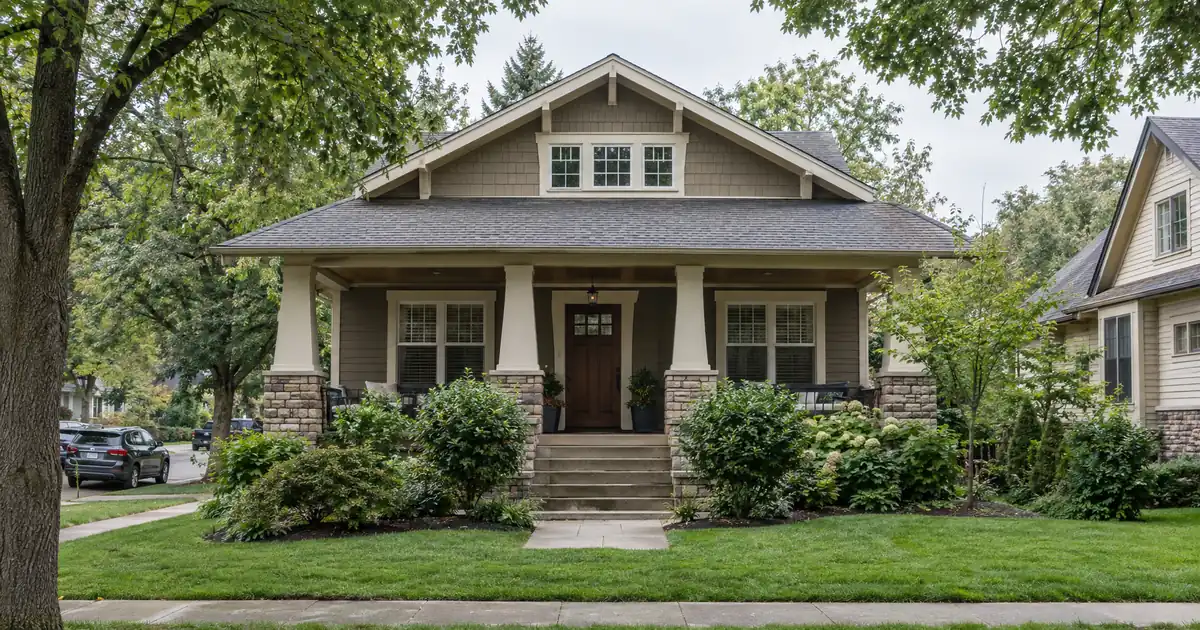
The Quick Read: Two different kinds of lenders answer this question, and they’re not interchangeable. Portfolio banks, credit unions, and some non-QM wholesale channels offer second-lien HELOCs or home equity loans on rentals, underwritten off your personal credit and debt-to-income. Separately, DSCR lenders in the non-QM space let you pull equity through a cash-out refinance or closed-end second lien qualified off the property’s own rent. Picking the wrong lane wastes an application.
Most investors ask this question because they’ve hit a wall. Big depository banks have mostly stopped offering HELOCs against non-owner-occupied property, and the ones that still do run stricter numbers than they would on a primary home. That leaves two real paths, and understanding which one fits your file matters more than any single lender’s name.
DSCR Calculator
Run the numbers in your market
Rate source: Freddie Mac 30-yr average via FRED® — Federal Reserve Bank of St. Louis · effective Sep 17, 2026
Prefilled with starting assumptions — enter your own rent or nightly figures, taxes, insurance, and HOA for a more accurate picture.
Program parameters update from Lendmire’s centralized guideline source. Taxes and insurance are editable estimates.
As of Sep 17, 2026 · General Freddie Mac market benchmark, not a Lendmire loan offer. Rent, nightly rate, occupancy, taxes, and insurance are editable estimates. Short-term rental figures are estimates only and vary significantly by season, property type, management approach, and local short-term-rental rules — confirm local regulations before relying on them. Qualifying income for short-term rentals varies by program — some use appraisal market rent, others use documented STR history or projections — and is confirmed in underwriting. Not a Loan Estimate, approval, or commitment to lend. Program availability and eligibility are subject to lender guidelines, credit approval, property review, and underwriting.
The Two Lender Pools, Explained
There’s no master directory of “rental equity lenders” because this market is private and non-agency. What actually exists is two structures, each with its own lender pool.
A home equity loan is a lump-sum second mortgage with a fixed payoff schedule. A HELOC (home equity line of credit) is a revolving credit line you draw against as needed, similar to a credit card secured by the property. Both sit behind your first mortgage in second-lien position. The Consumer Financial Protection Bureau describes a HELOC as a line that lets a homeowner borrow against the equity left after subtracting what’s owed on the mortgage from the home’s value — a straightforward idea, but the underwriting behind it gets much stricter once the collateral is a rental instead of a primary residence.
On this first path — HELOC or home equity loan on a rental — the lender is looking at you: your credit score, your personal debt-to-income, and every mortgage payment you already carry. That’s the same underwriting logic used on primary-residence loans, just applied to a riskier collateral type. Portfolio banks, credit unions, and community lenders make up most of this pool, since large national banks have largely exited non-owner-occupied second liens.
The second path is a business-purpose loan — a DSCR loan, short for debt-service coverage ratio, where qualification runs primarily off the property’s rental income rather than your personal paycheck. Instead of a HELOC, this usually means a cash-out refinance or a closed-end second lien, both structured around whether the rent covers the payment. Lendmire’s complete DSCR loans guide walks through how that qualification model works in more depth.
Key Terms Defined
- DSCR (debt-service coverage ratio): the property’s monthly rent divided by its full monthly payment — principal, interest, taxes, insurance, and any HOA dues. A ratio at or above 1.00 means the rent covers that payment.
- HELOC (home equity line of credit): a revolving credit line secured by a second lien on the property, drawn and repaid like a credit card.
- LTV (loan-to-value): the loan amount as a percentage of the property’s appraised value — a lower LTV means more equity cushion for the lender.
- Business-purpose loan: a loan made to an entity or investor for investment purposes rather than personal use, which changes how it’s underwritten and disclosed.
- Seasoning: the waiting period, often measured in months, that a lender requires between buying a property and being able to refinance or cash out on it.
- Closed-end second lien: a fixed, lump-sum loan behind the first mortgage — the DSCR-world equivalent of a home equity loan.
How the HELOC-Style Route Actually Works
If you go the personal-credit route, expect the lender to run your full debt picture, not just this one property’s numbers. Every mortgage payment on every rental you own stacks against your personal DTI, and that’s where a lot of otherwise-strong investors get declined.
Here’s the mechanic that trips people up: a rental property that cash flows beautifully on its own can still sink a HELOC application, because the underwriter isn’t just looking at that property’s rent. They’re adding up every mortgage payment across your entire portfolio and comparing it to your personal income. An investor with four solid rentals can look weaker on paper here than someone with just one, purely because of how the payments stack.
Title matters here too. Many HELOC-style products on rentals require the property to sit in an individual’s name or a revocable trust, not an LLC — a real mismatch for investors who hold rentals in entities for liability or tax reasons. That’s a decision worth making with a tax or legal advisor before you even start shopping lenders, because switching title mid-application can stall the whole file.
How the DSCR Route Works Instead
DSCR cash-out refinancing and closed-end second liens flip the qualification model: the rent has to cover the payment, and personal income documentation mostly steps aside. Lendmire arranges these loans through select lenders in a wholesale network spanning 40 states plus Washington, D.C.
On a purchase, most files in that network land at 75%-80% loan-to-value, meaning 20%-25% down. A few high-leverage programs push to 85% LTV for borrowers with roughly a 700+ credit score. Cash-out refinances top out lower — around 75% LTV across most of the network — and usually expect about six months of seasoning since the purchase or last refinance.
Coverage of 1.00 is where some programs start, meaning the rent equals the payment at that ratio. That’s a floor for specific programs, not a universal industry standard, and stronger coverage ratios typically unlock better leverage and pricing. Credit floors run around 620 in parts of the network, though most programs prefer something closer to 660, and 700+ tends to open the strongest leverage tiers. Loan sizes on standard programs run roughly up to $3,000,000 (smaller balances available through select lenders), and above $2,500,000 the network generally sticks to 30-year fixed structures rather than adjustable options.
Reserves are the cash cushion a lender wants left in your bank account after closing. The amount varies by lender, leverage, and loan size. But it commonly lands around six months of PITIA (principal, interest, taxes, insurance, and association dues). Conservative rate-and-term refinances at modest leverage under $1,500,000 sometimes have reserves waived entirely. Loans above that threshold typically step up toward nine months.
Here’s a key structural point. Scotsman Guide’s coverage of the non-QM market notes that borrowers applying through an LLC are generally ineligible for conventional agency loans. But that same borrower can often qualify for a DSCR loan based purely on the property’s cash flow, without extra personal income documentation. That’s the exact gap this product exists to fill.
Does the Rent Number Just Come From the Lease?
No — for one-unit properties, the industry standard is a comparable-based market rent opinion from the appraiser, not a simple lease pass-through. Fannie Mae’s Form 1007 rent schedule is the document lenders use to obtain that market rent figure for a one-unit investment property, even though a DSCR loan itself is never sold to Fannie Mae. For 2-4 unit buildings, the equivalent exhibit is Form 1025.
Non-QM and DSCR lenders widely borrow this same rent-schedule methodology because it’s become the industry’s common language for defensible market rent — even outside the agency system. One catch worth flagging: this form was built for standard, lease-based rentals. Short-term rental income gets excluded from the value conclusion on Form 1007, which means a DSCR lender evaluating a short-term rental typically has to look at trailing rental history separately rather than leaning on the standard rent schedule.
Where Home Equity Loans, HELOCs, and DSCR Cash-Out Diverge
| Factor | HELOC / Home Equity Loan | DSCR Cash-Out or Second Lien |
|---|---|---|
| Reviewed on | Personal credit and DTI | Property rent vs. payment |
| Typical title | Individual or revocable trust | LLC or corporation, entity-friendly |
| Lender pool | Portfolio banks, credit unions | Non-QM wholesale channel |
| Personal income docs | Usually required | Property-focused, subject to lender guidelines |
| Multi-property stacking | Every mortgage counts against DTI | Evaluated property-by-property |
What About Coverage Below 1.00?
Coverage below 1.00 doesn’t automatically kill a deal. Select lenders in the network still work with it, though leverage and terms adjust to compensate. Scotsman Guide’s market survey of non-QM terms notes some lenders will approve DSCR loans under 1.00 when the borrower has other assets to offset the shortfall. Common program features include a maximum 80% LTV and roughly six months of reserves held in a federally insured bank. These figures come from that market survey — they’re not necessarily what any single network offers. That’s why comparing across lenders matters. Final terms depend on lender guidelines, property type, leverage, and the borrower’s complete credit picture.
Separately, no-ratio qualification skips the rent-to-payment test altogether. It’s available only through select lenders in the network, generally for borrowers who already own a primary residence. It’s a real path, but a narrower one. It isn’t priced or leveraged the same as a standard DSCR file.
Clearing 1.00 coverage isn’t the same as positive cash flow, either. DSCR compares rent only to the payment itself — it doesn’t account for repairs, vacancy, property management, utilities, or capital expenditures. A property clearing 1.15x can still run thin once those real costs get added back in, which is worth remembering before treating a coverage ratio as a profit number.
In practice, files in markets with heavy investor concentration often come in tight on long-term rent assumptions. But they usually clear comfortably once trailing rental history or short-term income gets added in. The stronger files tend to run both scenarios side by side before choosing which one to submit.
What Stops Blanket and Cross-Collateral Structures From Being “Free” Leverage
Pledging multiple properties under one loan sounds efficient, but it changes the foreclosure math in a way a single-property loan never does. Nav’s guidance on blanket liens points out that if payments fall behind on a loan secured by several properties, all of the pledged properties — not just the underperforming one — can be at risk. Nav’s separate coverage on cross-collateralization makes the same point: a lender may be able to foreclose on a property even if that particular property’s mortgage is current, as long as it’s pledged against a defaulted loan elsewhere in the structure.
That’s a real tradeoff for investors scaling past two or three rentals. Consolidating equity access across a portfolio can simplify paperwork, but it also means one weak property can drag down the rest. Walking through that structure deliberately with a broker before signing beats discovering the exposure after the fact.
Why DSCR Availability Has Grown
DSCR and investor-purpose loans have gone from a niche corner of non-QM lending to a substantial share of it. Industry reporting on Optimal Blue data shows investor and DSCR loans made up 22% of non-QM production a few years back, climbing to 28% more recently and 35% in the most recent measurement. A major bank’s research arm separately projects non-QM origination volume growing from $108 billion to $175 billion, with DSCR and investor products now accounting for roughly half of all non-QM collateral. That growth is a direct reason more lenders in the wholesale channel have built out cash-out and second-lien products specifically for rental collateral rather than treating investors as an afterthought.
It also explains a common misconception worth clearing up directly: non-QM and DSCR lending doesn’t mean subprime. Industry coverage of the current non-QM borrower base describes it as skewing toward high-income, high-net-worth borrowers with larger down payments — bank-statement loans alone make up 30%-40% of non-QM originations, with average borrower credit scores in the high 730s. “Non-QM” describes the documentation path, not the borrower’s risk profile.
A Note on Property Type
Not every property fits this model. Manufactured homes — both single- and double-wide — along with log homes and barndominiums fall outside DSCR programs in this network entirely. If a rental falls into one of those categories, the DSCR cash-out path simply isn’t available, and the HELOC-style route (subject to that lender’s own overlays) becomes the more realistic option to explore.
DSCR loans are built specifically for non-owner-occupied investment properties. They’re business-purpose loans, not standard owner-occupied mortgages. Because of this, lenders review them differently. They’re also exempt from the disclosure timelines that apply to consumer mortgages. So you don’t need to build in a waiting period for a Loan Estimate or Closing Disclosure.
Frequently Asked Questions
Can I get a HELOC on a rental property I already own?
Yes, though the pool of lenders is smaller than for a primary residence, and most will underwrite off your personal credit and DTI rather than the property’s rent. Portfolio banks, credit unions, and community lenders are the more likely sources than large national banks, which have mostly pulled back from this product on non-owner-occupied collateral.
Is a DSCR cash-out refinance the same thing as a HELOC?
No. A HELOC is a revolving line qualified on your personal finances; a DSCR cash-out refinance is a business-purpose loan qualified primarily on the property’s rental income covering the payment, subject to lender guidelines. They pull from different lender pools and serve different situations.
Do I need to hold title in an LLC to get a DSCR loan?
Not necessarily, but DSCR structures are typically built with entity ownership in mind from the start, while many HELOC-style products on rentals still require individual or trust titling. Deciding on title strategy before shopping lenders avoids a mismatch mid-application.
What if my property’s rent doesn’t quite cover the payment?
Sub-1.00 coverage is available through select lenders in the network, generally with adjusted leverage and terms rather than a flat decline. Some programs also allow compensating factors like extra reserves or other assets to offset a shortfall, subject to lender guidelines and underwriting review.
Can I pull equity across several rentals at once instead of property by property?
Blanket or cross-collateralized structures exist for this, but they tie the properties together in a way that raises foreclosure risk if payments fall behind on any one loan in the group. It’s worth discussing that tradeoff with a broker before consolidating, rather than assuming it’s simply more convenient.
Are you comparing a HELOC-style equity line against a DSCR cash-out refinance on a rental? Lendmire can help you weigh the property’s income, your credit profile, and your leverage goals side by side. Reach out at 828-256-2183 or request a quote to see how the numbers line up for your specific file.
The equity-access market for rentals keeps splitting into two lanes. On one side are personal-credit HELOCs. On the other are property-income DSCR structures. This divide — more than any single lender’s name — should drive where an investor applies first.
Tax treatment can depend on how the funds are used and how the property is held; investors should keep clear records and speak with a qualified tax professional before relying on any deduction.
About Lendmire
Lendmire is a DSCR-focused mortgage brokerage, NMLS# 2371349, placing investor loans across 41 markets, including Washington, D.C. DSCR eligibility is generally reviewed by the lender on a property’s rental income rather than personal income documentation, which fits LLC-held rentals, self-employed investors, and portfolios scaling past conventional financed-property limits. Scotsman Guide named Lendmire a Top Mortgage Workplace in both 2025 and 2026.
Get Started
Ready to find the right loan for you?
See your offer in seconds. No credit pull, no obligation.
Informational only. Not a Loan Estimate, approval, or commitment to lend. Program availability and eligibility are subject to lender guidelines, credit approval, property review, and underwriting.
References
2. Scotsman Guide – Climb To The Top
3. Fannie Mae – Form 1007 official page
4. Scotsman Guide – Invest in Your Future
5. Nav – What Is a Blanket Lien
6. Nav – What Is Cross Collateralization
This article is part of Lendmire’s DSCR loan program — full qualification details, guidelines, and scenarios live on the program page.
Related reading: Banks That Offer HELOC On Investment Property · Home Equity Loans on Rental Property: Lender Types · Banks That Offer Cash Out Refinance On Rental Properties On Fixed Loans
Brandon Miller
Founder & CEO, Mortgage Loan Originator, Lendmire LLC
- Mortgage Loan Originator · NMLS# 1129696 · Verify on NMLS Consumer Access
- North Carolina Real Estate Broker · License# 343312 · Verify on NCREC
- North Carolina Insurance Producer · License# 19053198 · Property, Casualty, Life, Health · Verify on NAIC SBS
- Lendmire LLC · Firm NMLS# 2371349 · Verify firm licensure
Legal disclosures. Lendmire (NMLS# 2371349) is a state-licensed mortgage brokerage that arranges financing through wholesale lender relationships. Lendmire is not a direct lender, depository institution, or registered financial advisor. The discussion above is general informational content about real estate financing — it is not financial, legal, or tax advice, and readers should consult licensed professionals for guidance on their individual circumstances. Loan inquiries are subject to lender underwriting; this article does not represent a commitment to lend. Loan terms, rates, and qualification standards vary by borrower, property, and state, and are subject to change at any time. Equal Housing Opportunity. NMLS Consumer Access: nmlsconsumeraccess.org.