
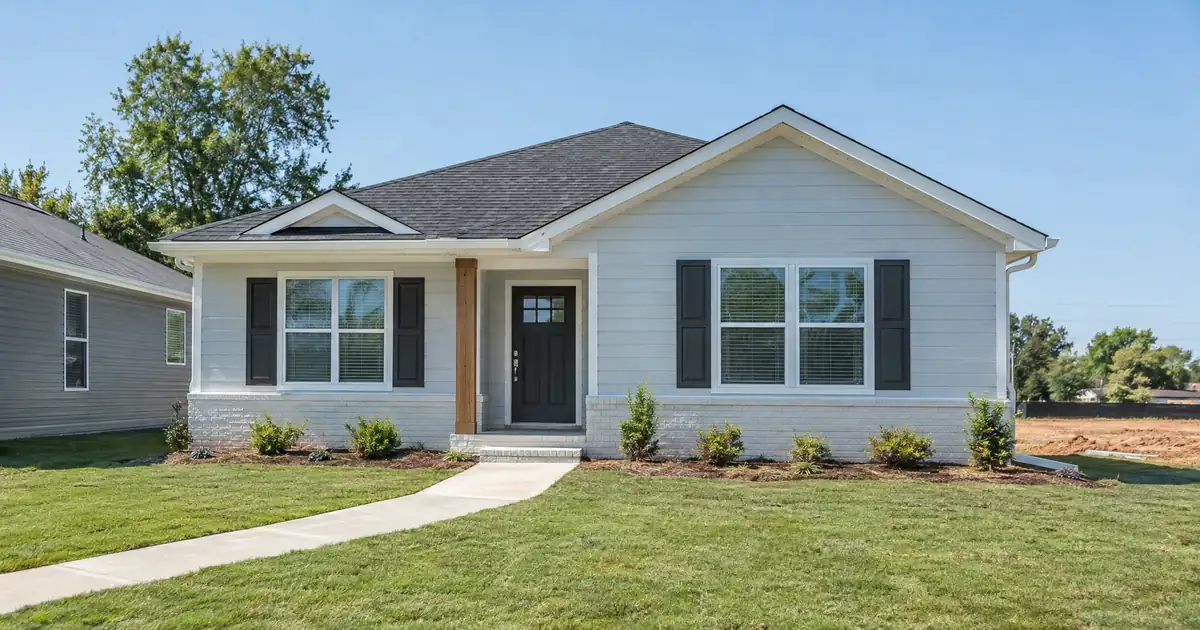
Private Money Mortgage — The Quick Read: It is a loan from a private individual or small group, secured by real estate, with terms the two sides negotiate directly. It is not a bank product. Private money usually runs short, interest-only, and is underwritten on the property and your exit plan more than on your paycheck. Investors typically use it to buy or renovate, then refinance into long-term financing.
Is Private Money the Same as Hard Money?
Not quite, but the market blurs the two. BiggerPockets describes private money as money lent by a private person or organization, with terms that vary widely. Hard money is the more institutional cousin. A lending business sets standard terms, and there is less room to negotiate.
What this loan actually costs to carry in your market.
Hard money is sized against the project and priced by time. Enter the deal and see how much the program will lend, the cash required at closing, the carry while you hold it, and what is left at the exit.
Leverage tiers on the current program: 85% with fewer than 2, 90% with 2 or more, 93% with 5 or more completed projects — every tier capped at 75% of after-repair value. Loan amounts up to $5,000,000, larger by exception; terms of 6 to 18 months, interest-only, no prepayment penalty. The rehab portion funds in draws against completed work, not at closing.
Program parameters shown update from Lendmire’s centralized guideline source. Rate, points, and months are editable assumptions, not quoted terms.
Cost cap sets the loan · positive spread
Illustrative estimate only — not a quote, Loan Estimate, approval, or commitment to lend. Rate, points, and months are editable assumptions. Hard money is business-purpose financing for real estate investors, not a consumer mortgage. Leverage on the current program tops out at 93% of project cost for investors with a documented track record, capped at 75% of after-repair value, with rehab funding up to 100% of the documented budget released in draws; actual terms vary by lender, borrower experience, property, and exit. Lendmire is a mortgage broker, not a lender.
Plenty of people use the labels interchangeably, and some lenders admit the line is fuzzy. Here is the practical split:
| Factor | Private Money | Hard Money | DSCR Loan |
|---|---|---|---|
| Lender | Individual or small group | Lending business | Wholesale-network lender |
| Terms | Fully negotiable | Mostly set | Program-based |
| Underwritten on | Relationship and property | Property, plan, exit | Property rent vs. payment |
| Typical role | Short-term or bridge | Short-term or bridge | Long-term rental hold |
Private money often depends on an established relationship. Most private lenders fund people they already know and trust. That is great if you have the relationship. Useless if you do not.
How Does a Private Money Mortgage Work?
A private lender funds the purchase or renovation, and you pay interest during a short term. You then sell or refinance to pay the lender off. Nearly every step after the capital is sourced looks like any other real estate loan.
Here is the sequence:
1. The capital shows up. A person, a group, or a private fund provides the money.
2. The collateral gets sized up. The lender looks at the property’s value, often through a broker price opinion or an appraisal.
3. Terms are set. Amount, length, payment structure, and fees are negotiated.
4. Paperwork is signed. You sign a promissory note, a deed of trust or mortgage, and usually a statement of loan purpose.
5. The lien is recorded. This is what makes it a mortgage in the real sense.
6. You pay interest, then exit. Principal typically comes due at maturity.
Step five matters more than people expect. A note is only a promise to pay. As a practitioner explainer on trust deeds puts it, the lender must use a deed of trust or mortgage to secure repayment with real estate. Skip the recorded document and there is no lien. Private money is informal in tone, not in paperwork.
It is also not “no underwriting.” Less emphasis on your credit does not mean no questions asked.
What Do Private Lenders Actually Look At?
They look at the asset first, then you, then the exit. Private and hard money lenders lean on the property’s value more than on the borrower’s credit profile. That is why investors use them when a bank says no.
The main inputs:
- Collateral value. What is it worth now, and what will it be worth after the work?
- Loan-to-cost and after-repair value. Flip and construction loans are sized against what you spend and what the finished property will appraise for, not just today’s value.
- Your track record. Experience usually unlocks more leverage.
- The exit. Can you sell or refinance before the loan matures?
- The relationship. With true private money, trust counts for a lot.
The exit deserves the most attention. Short terms and balloon maturities put pressure on it. A lender who hands you a short runway wants to know exactly how you plan to get off it.
Picture an investor buying a dated duplex to renovate and rent. The private lender asks three things. What is the property worth once the work is done? Can this investor finish the job? And can the finished rental support a long-term refinance? If any answer is shaky, the loan gets smaller or disappears.
Why Investors Sign a Business-Purpose Statement
Private money for investment property is business-purpose lending, and the paperwork says so. Investors typically sign a statement of loan purpose or use of proceeds confirming the money goes to an investment, not a personal residence.
The federal rules back that up. The CFPB’s Regulation Z commentary says credit extended to acquire, improve, or maintain non-owner-occupied rental property is deemed business purpose, regardless of unit count. The purpose still has to be real. Owner-occupied or mixed-use properties are not automatically treated as business loans.
Lenders take misclassification seriously. A consumer-purpose loan mislabeled as business purpose can create real legal trouble for the lender. State licensing and usury rules also vary, and they can apply to individual lenders. If you are borrowing from or lending to a private party, check your state’s rules with a qualified attorney.
Where Private Money Fits (and Where It Doesn’t)
Private and hard money fit deals that banks and long-term rental lenders will not take yet. That usually means a property needing work, a tight purchase window, or an asset that is not rent-ready.
Typical uses:
- Buying a distressed property to renovate
- Bridging the gap between buying and refinancing
- Ground-up construction
- Purchases banks won’t take, like non-warrantable condos
It is a poor fit for a stable rental you plan to hold for ten years. Private money is short-term. It is not permanent financing. Holding it long means paying for a product built for a sprint.
What Does Asset-Based Short-Term Money Look Like in Practice?
Terms vary widely in true private money, so there is no single number to quote. The hard money side is more standardized. Lendmire, a mortgage broker, arranges business-purpose hard money through lenders in its network. The figures below show what a structured version looks like. Every one varies by lender, property, and experience, and none is a commitment to lend.
- Fix-and-flip: leverage is tiered by documented completed projects. Typically 93% of project cost at five or more, 90% at two or more, and 85% with fewer than two. Every tier is capped at 75% of after-repair value.
- Bridge purchase without rehab: up to 80% of the purchase price.
- Cash-out and rate/term refinance: up to 65% of value.
- Ground-up construction: up to 90% of cost and 75% of completed value at three or more completed projects.
- Rehab funds: up to 100% of the rehab budget, released in draws against completed work. That is a rehab-budget figure, not a purchase LTV.
- Loan size: up to $5,000,000, larger by exception.
- Term: 6 to 18 months, interest-only, no prepayment penalty.
- Credit: 620 minimum, with extra conditions below 660. First-time investors qualify at the lower leverage tiers.
- Collateral: non-owner-occupied residential, 1-4 units. Ground-up construction goes to 10 units.
There is no true 100% purchase program. The top leverage tier is reserved for experienced investors. Commercial, land or lots, hospitality, and owner-occupied property are not on the sheet. Availability also varies by location.
The Exit: Where Private Money Becomes a DSCR Loan
Plan the exit before you sign. The standard play is to buy and renovate with short-term money, lease the property, then refinance into a long-term rental loan. Many investors refinance out of hard money into DSCR financing once the property is stabilized, and Lendmire brokers that path.
A DSCR loan tests whether the property’s rent covers its monthly payment. DSCR stands for debt service coverage ratio. It divides monthly rent by the full monthly payment: principal, interest, taxes, insurance, and any association dues. The lender’s question is whether the rent covers the payment, not how much you earn.
Across the wholesale network, the long-term side typically looks like this, always subject to lender guidelines:
- Purchase leverage: most files land at 75% to 80% LTV. Select high-leverage programs reach 85% LTV with roughly a 700+ score. LTV means loan-to-value, the loan as a share of the property’s value.
- Cash-out refinance on a standard rental: tops out around 75% LTV across most of the network. About six months of seasoning is the common expectation. Seasoning is the waiting period between buying and refinancing.
- Coverage: 1.00 is where select programs start. It is a floor for those programs, not a universal standard. Stronger ratios open better pricing and leverage. Coverage below 1.00 is available through select lenders in the network, with leverage and terms adjusted.
- Credit: a 620 floor exists in parts of the network. Most programs want around 660. A 700+ score unlocks the strongest leverage tiers.
- Reserves: they vary by lender, leverage, loan size, and transaction type. About six months of PITIA is common. PITIA is principal, interest, taxes, insurance, and association dues.
- Loan size: roughly up to $3,000,000 on standard programs (smaller balances available through select lenders) for standard programs.
Notice the gap between the two loans. A hard money refinance tops out at 65% of value. A DSCR cash-out goes up to around 75% on a standard rental. Compare that before you count on pulling equity out at the exit.
Here is the catch: a property that isn’t rented or stabilized may not qualify for a DSCR refinance yet. The loan suits rent-ready properties held long term. If your renovation drags, the takeout slips with it.
One more trap. Clearing 1.00 is not the same as positive cash flow. The DSCR math compares rent to the payment only. Repairs, vacancy, management, utilities, and capital expenses sit outside the calculation. A deal can clear the coverage test and still run thin. Underwrite your own numbers too.
Borrowers also ask about holding title in an LLC. DSCR loans to LLC borrowers are common, subject to lender program eligibility.
The pattern in these files is consistent. Short-term loans that go sideways rarely fail because the property was bad. They fail because the takeout loan’s credit, seasoning, rent, or LTV requirement was never checked against the real plan. Run the takeout math before closing the bridge loan, not after. Our complete DSCR loans guide walks through how those refinance tests work.
When Should You Skip Private Money?
Skip it when a cheaper, longer structure already fits the deal. Three cases come up most:
- The property is already a stable rental. Go straight to long-term rental financing.
- You have no credible exit. A short term with no plan is a countdown.
- You can’t verify the lender. Check the recorded documents, the state rules, and who actually holds the loan.
Also be careful with pooled lender deals. Fractional or pooled interests can be securities, which matters on the lender side. If you are the one raising money from multiple people, get legal advice first.
Tax treatment can depend on how the funds are used and how the property is held; investors should keep clear records and speak with a qualified tax professional before relying on any deduction.
Finding a lender is its own question. Lendmire covers it in where to find private money lenders and compares the types in private money mortgage lenders.
Key Terms Defined
Private money: Money lent by an individual or small group, secured by real estate, on negotiated terms.
Hard money: Short-term, asset-based loans from a lending business, sized on the property and the plan.
Loan-to-cost (LTC): The loan amount measured against purchase price plus rehab costs.
After-repair value (ARV): The expected appraised value once renovations are complete.
Deed of trust or mortgage: The recorded document that puts a lien on the property and secures the loan.
Balloon maturity: A payoff date when the remaining principal comes due in one piece.
Exit strategy: Your plan to repay the loan, usually by selling or refinancing.
DSCR: A ratio of a rental’s monthly rent to its full monthly payment.
Frequently Asked Questions
Is a private money mortgage a real mortgage?
Yes, if it is secured by a recorded deed of trust or mortgage. That recorded document creates the lien. A promissory note alone is just a promise to pay, and it gives the lender no claim on the property.
Do private money lenders check credit?
Often yes, though it is usually not the deciding factor. Collateral, your experience, and the exit drive the decision. In Lendmire’s hard money structure, a 620 minimum score applies, with extra conditions below 660. Terms vary by lender, property, and experience.
Can I use private money to buy a house I will live in?
This article covers investor financing only. Private and hard money for investment use is business-purpose lending on non-owner-occupied property. Owner-occupied purchases are a different category with different rules, so talk to a qualified professional about that scenario.
How long can I keep a private money loan?
Terms are negotiated and can vary widely. In the hard money structure Lendmire brokers, terms run 6 to 18 months, interest-only, with no prepayment penalty. Investors who need a longer runway refinance into long-term rental financing rather than extending short-term debt.
What happens if I can’t exit on time?
Options usually include asking the lender for an extension, which may carry a fee, moving to a different takeout lender, or carrying the loan from reserves. All of them cost money. The better fix is checking your takeout requirements before you close the short-term loan.
What to Do Next
If you are buying or refinancing a rental property and want to see how the numbers work, Lendmire can help you compare DSCR loan options based on the property income, credit profile, leverage, and investor goals. DSCR programs are available across 41 markets, including Washington, D.C. Call 828-256-2183 to talk through your exit before you commit to a short-term loan.
Many investors treat hard money as the acquisition tool and plan the exit up front – see refinancing out of a hard money loan with a DSCR loan.
About Lendmire
Lendmire (NMLS# 2371349) is a mortgage brokerage built around DSCR investor lending, with programs available in 41 markets, including Washington, D.C. DSCR lenders commonly evaluate rental-income coverage instead of personal income paperwork — a practical fit for LLC-owned and multi-property investors. Terms vary by lender, property, leverage, and program. Scotsman Guide named Lendmire a Top Mortgage Workplace in both 2025 and 2026.
The exit plan matters as much as the purchase price on short-term financing – see refinancing out of a hard money loan with a DSCR loan.
Get Started
Ready to find the right loan for you?
In about 30 seconds you can review financing options available for your home or investment property. No commitment required.
Informational only. Not a Loan Estimate, approval, or commitment to lend. Program availability and eligibility are subject to lender guidelines, credit approval, property review, and underwriting.
References
1. BiggerPockets: Hard Money vs. Private Money
2. Private Money Utah: Trust Deeds and Real Estate Loans
3. CFPB: Regulation Z, Section 1026.3 Exemptions
This article is part of Lendmire’s hard money loan program — full qualification details, guidelines, and scenarios live on the program page.
Related reading: Luxury Rental DSCR Loans In New Jersey · Jersey Shore Vacation Rental Loans: DSCR Financing In Ocean City, Cape May And Long Beach Island · DSCR Cash-out Refinance In New Jersey: Pulling Equity From A Rental
Brandon Miller
Founder & CEO, Mortgage Loan Originator, Lendmire LLC
- Mortgage Loan Originator · NMLS# 1129696 · Verify on NMLS Consumer Access
- North Carolina Real Estate Broker · License# 343312 · Verify on NCREC
- North Carolina Insurance Producer · License# 19053198 · Property, Casualty, Life, Health · Verify on NAIC SBS
- Lendmire LLC · Firm NMLS# 2371349 · Verify firm licensure
Legal disclosures. Lendmire (NMLS# 2371349) is a state-licensed mortgage brokerage that arranges financing through wholesale lender relationships. Lendmire is not a direct lender, depository institution, or registered financial advisor. The discussion above is general informational content about real estate financing — it is not financial, legal, or tax advice, and readers should consult licensed professionals for guidance on their individual circumstances. Loan inquiries are subject to lender underwriting; this article does not represent a commitment to lend. Loan terms, rates, and qualification standards vary by borrower, property, and state, and are subject to change at any time. Equal Housing Opportunity. NMLS Consumer Access: nmlsconsumeraccess.org.