
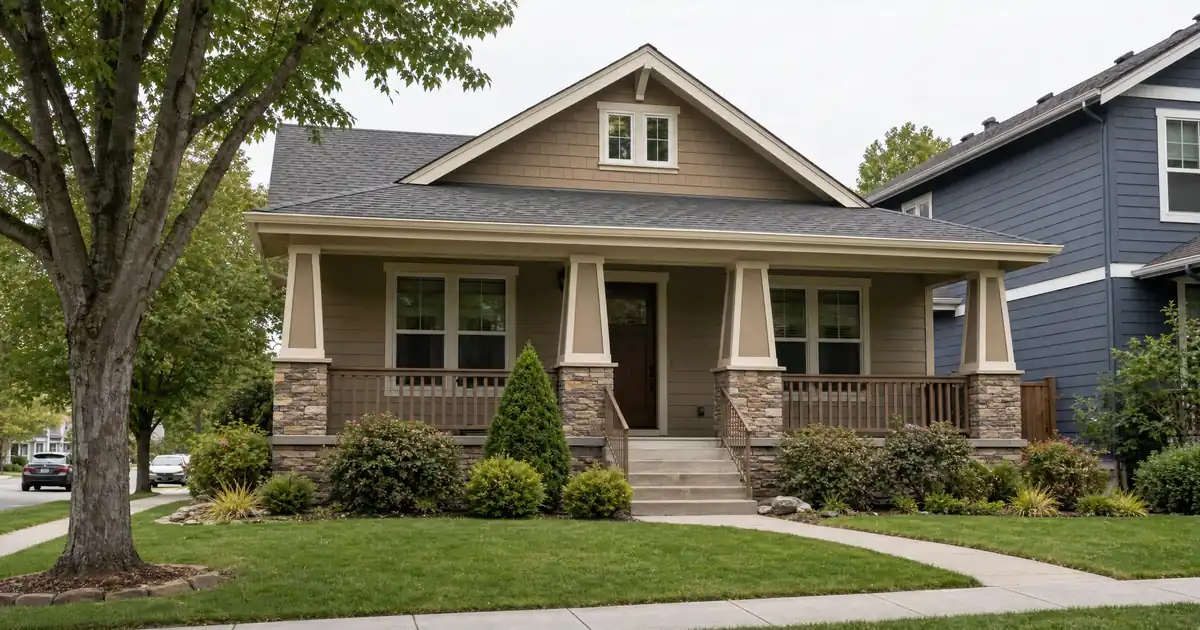
First Time Landlord Loan Options — The Quick Read: A first-time landlord has more financing paths open than most people think. A lack of prior rental experience rarely closes the door. DSCR loans qualify a property based on its rent, not the borrower’s personal income. That’s why DSCR has become the default tool for a first rental purchase. Conventional, FHA, and home-equity paths still exist. But each one trades DSCR’s flexibility for a limit of its own — on income, occupancy, or leverage. The right choice depends on how much cash you have, whether you plan to live in the property at all, and whether this is meant to be the first of several rentals.
Key Takeaways
- DSCR loans qualify primarily on the property’s rental income covering the payment, subject to lender guidelines — not traditional personal-income documentation.
- No prior landlord history is generally required; the appraiser documents market rent the same way whether it’s a borrower’s first rental or fifth.
- Purchase leverage on most DSCR files runs 75%-80% LTV, with select high-leverage programs reaching 85% for stronger credit profiles.
- Conventional and FHA/VA paths exist too, but they trade DSCR’s property-based qualification for income documentation or an owner-occupancy requirement.
- Certain structures — manufactured homes and above-$500,000 investment-property equity lines — simply aren’t offered, regardless of how strong the borrower looks on paper, and no-ratio qualification runs only through select lenders, generally for borrowers who already own a primary residence.
Key Terms Defined
- DSCR (debt service coverage ratio): divide the property’s monthly rent by its full monthly payment. A ratio above 1.00 means the rent covers the payment, with room left over.
- LTV (loan-to-value): the loan amount as a percentage of the property’s appraised value or purchase price — whichever is lower.
- PITIA: principal, interest, taxes, insurance, and association dues. This is the full monthly payment used in the DSCR calculation.
- Non-QM (non-qualified mortgage): a loan built outside the standard agency rulebook. The lender can document repayment ability in other ways — like the property’s rent — instead of the borrower’s usual income paperwork.
- Business-purpose loan: financing for an investment or business reason, not personal use. This is why DSCR loans skip the consumer-mortgage disclosure rules written for owner-occupied borrowers.
- Seasoning: the waiting period a lender wants — either owning the property or having a lease in place — before certain refinance or cash-out options open up.
What Loan Options Exist for a First-Time Landlord?
Five paths cover almost every first rental purchase: DSCR, conventional investment financing, owner-occupied FHA/VA on a small multi-unit, an investment-property equity line, and hard money. Each one qualifies the deal differently. That difference — more than experience or credit alone — usually decides which one fits.
DSCR Calculator
Run the numbers in your market
Rate source: Freddie Mac 30-yr average via FRED® — Federal Reserve Bank of St. Louis · effective Aug 13, 2026
Prefilled with local estimates — enter your own rent or nightly figures, taxes, insurance, and HOA for a more accurate picture.
Program parameters update from Lendmire’s centralized guideline source. Taxes and insurance are editable estimates.
As of Aug 13, 2026 · General Freddie Mac market benchmark, not a Lendmire loan offer. Rent, nightly rate, occupancy, taxes, and insurance are editable estimates. Short-term rental figures are estimates only and vary significantly by season, property type, management approach, and local short-term-rental rules — confirm local regulations before relying on them. Qualifying income for short-term rentals varies by program — some use appraisal market rent, others use documented STR history or projections — and is confirmed in underwriting. Not a Loan Estimate, approval, or commitment to lend. Program availability and eligibility are subject to lender guidelines, credit approval, property review, and underwriting.
| Loan Type | Reviewed on | Typical Leverage | Best For |
|---|---|---|---|
| DSCR (investor) | Property rent vs. payment | 75%-80% purchase; up to 85% on select programs | Buy-and-hold with no landlord history required |
| Conventional investment | Borrower income & debt-to-income | Generally lower leverage, larger down payment | Investors with strong documented income |
| FHA/VA owner-occupied 2-4 unit | Borrower income; owner must occupy | Low down payment, occupancy-dependent | House-hacking a duplex or fourplex you’ll live in |
| Investment-property equity line | Existing equity plus income | Capped at $500,000 total line | Tapping equity in an owned rental to fund the next deal |
| Hard money / bridge | Property value & exit plan | Short-term, asset-based | Fix-and-flip or a fast acquisition, not a long-term hold |
DSCR sits at the top of that list for a reason. It qualifies primarily on the property’s rental income covering the payment, subject to lender guidelines. That sidesteps the tax-return and DTI hurdles that trip up a lot of first-timers — especially anyone self-employed, between jobs, or light on a two-year income history. Lendmire’s complete DSCR loans guide covers the mechanics in more depth than this section can.
Hard money deserves its own mention because people confuse it with DSCR constantly. It solves a different problem: speed of acquisition and flexibility on distressed property, not a long-term hold. Anyone weighing that route against a DSCR purchase should look at hard money lenders for first-time investors before deciding. The two products aren’t interchangeable.
How Underwriting Actually Treats a First-Time Landlord’s File
The property’s rent gets documented first. The borrower’s landlord history comes second — and often not at all. An appraiser pulls comparable rents and issues a market-rent opinion. That happens the same way whether the file belongs to a first-time buyer or someone who already owns twenty doors. That opinion — not a Schedule E from a prior tax return — is what a first-time landlord’s file really leans on.
Documentation depends on whether the property already has a tenant in place. On the agency side, Fannie Mae’s rental income guidance draws the exact line that matters here: a property with rental history gets documented differently than a vacant one. The non-QM/DSCR world largely follows that same logic. A vacant or newly-purchased property doesn’t have a lease history to lean on, so the appraiser’s market-rent number becomes the key figure. That’s exactly why “no landlord history” isn’t the obstacle new investors assume it is. First rental purchases with no landlord history get underwritten on the same appraisal-driven rent figure as any other DSCR file.
Once rent is set, the ratio does the rest of the work. Divide rent by the full payment — principal, interest, taxes, insurance, and any dues — and you get the DSCR number. Across the wholesale lending network Lendmire arranges through, 1.00 is where select programs set their floor. It’s a starting point on specific programs, not a universal standard, and stronger ratios tend to unlock better leverage and pricing. Clearing 1.00 means the rent covers the payment. It does not mean the property is cash-flow positive once repairs, vacancy, management fees, and capital expenses enter the picture. Treat the ratio as a qualification test, not a profit forecast.
Credit, reserves, and entity structure carry more weight on a DSCR file than they would on an income-documented loan. That’s simply because personal income isn’t part of the math. Across this network, a 620 floor exists on parts of the program menu. Most lenders want something closer to 660. And 700-plus is typically what opens the strongest leverage tiers, including the 85% high-leverage option. Reserve requirements vary by lender, leverage, loan size, and transaction type. They commonly land around six months of PITIA. Some conservative rate-and-term deals under $1,500,000 see reserves waived. Loans above that threshold usually step up toward nine months.
DSCR loans are built for non-owner-occupied investment properties. Because they are business-purpose investor loans, they get reviewed differently than a standard owner-occupied mortgage. That classification ties back to Consumer Financial Protection Bureau rules. Those rules exempt non-owner-occupied rental credit from the disclosure and ability-to-repay requirements built for personal mortgages.
Where the Standard DSCR Rule Breaks
Not every rental scenario fits the standard playbook cleanly. Knowing where it bends matters more than knowing the general rule.
Short-term rentals need a different rent number entirely. The standard rent-schedule form appraisers use for long-term leases wasn’t built for nightly stays. An appraiser can’t just take a nightly rate and multiply it by thirty — that skips vacancy swings, business expenses, and furnishing costs baked into a nightly operation. Files on nightly-rental properties instead lean on comparable monthly-lease data or documented hosting income, with a 1.00 coverage floor applied to both purchases and refinances — purchases topping out around 75% LTV and refinances or cash-out sitting closer to 70%, though select lenders will go below that floor at reduced leverage. Short-term rentals qualify at a 1.00 coverage threshold on purchase and refinance at reduced maximum leverage, and require a 12-month income history or market data report at most lenders. Anyone weighing this path should look closely at DSCR financing for short-term rentals before assuming a first hosting year automatically qualifies. It depends heavily on platform history and property type. Short-term rental rules can also vary by city, county, HOA, and property type, so confirm local rules before relying on projected nightly income. That matters just as much as the loan structure itself.
The property-count ceiling that trips up agency borrowers doesn’t apply here. Fannie Mae’s multiple financed properties policy caps how many one-to-four-unit properties a borrower can carry mortgages on before agency financing tightens or closes off. DSCR lending underwrites each property on its own coverage ratio instead of the borrower’s total mortgage count. That’s exactly why investors planning to scale past a property or two tend to migrate to DSCR financing, even if their first purchase used something else.
Occupancy is the sharpest edge case of all. Plan to live in the property yourself for more than a couple of weeks a year, and it typically gets treated as personal-use financing rather than business-purpose credit — unless the property has more than two units. That’s exactly why house-hacking a duplex or triplex an owner intends to live in usually routes through a conventional or FHA program, not DSCR. And it’s why a first-time landlord buying a straightforward single-family rental to never occupy is the cleanest DSCR candidate.
Some structures and property types simply aren’t offered, full stop. Coverage below 1.00 is available through select lenders in the network, but leverage and terms adjust to compensate. It’s never a like-for-like substitute for a standard 1.00-plus file, and true no-ratio qualification sits on a separate, select-lender menu, generally for borrowers who already own a primary residence. Manufactured homes (single- and double-wide), log homes, and barndominiums fall outside these DSCR programs entirely — not harder to finance, simply not offered. State overlays matter too: purchases in Connecticut, Florida, Illinois, and New Jersey generally cap near 75% LTV. Overlay-state loan amounts typically top out around $2,000,000, regardless of what a national loan-size guide might otherwise allow.
The first-time-landlord segment isn’t a small niche in this world. It’s close to the center of who actually buys rental housing. Small investors owning between two and nine properties control roughly 11% of the single-family rental stock nationally. Investors owning 100 or more properties hold only about 1%, according to the American Enterprise Institute. Most single-family rentals nationwide are still held by small, individual landlords rather than large operators. This pattern shows up across research reviewed by PolitiFact. That’s the practical reason DSCR underwriting is built around the property file rather than a track record most first-time buyers simply don’t have yet.
What the Decision Actually Looks Like
Picture a first-time investor eyeing a small single-family rental with no plans to live there. Market rent, per the appraiser’s comparable-rent opinion, clears the property’s full monthly payment with room to spare — call it low-1.2x territory on a standard 75%-80% LTV purchase. That ratio, plus a credit score in the high 600s or better, adds up to a fairly typical clean DSCR file: no traditional personal-income documentation, no employment letters, no personal DTI calculation. Reserves in the six-month PITIA range are the common ask on a file that size. Standard loan amounts on this kind of purchase run anywhere from a modest balance up through roughly $3,000,000, before the network shifts to different pricing and term expectations. Terms vary by lender guidelines, property type, leverage, credit profile, and full file review.
Now change one variable: the same investor wants to pull equity out of an owned rental instead of buying new. Cash-out refinances across this network generally cap around 75% LTV. About six months of ownership seasoning is the common expectation before that door opens. Term structure on either scenario leans on a 30-year fixed spine as the default. But 40-year amortization, interest-only periods, and adjustable structures are available through select lenders for investors who want a different payment shape.
A larger down payment helps the ratio — less financed means a smaller payment against the same rent, which lifts DSCR. But it never overrides a leverage cap, a credit floor, a reserve requirement, or an ineligible property type. The files that move through underwriting cleanest clear both tests at once: enough equity in the deal and rental income that comfortably covers the payment. An investor considering their very first purchase should look at how DSCR loans work for first-time rental property buyers before assuming any one leverage tier or credit score is guaranteed. It depends on the property, the credit profile, and the specific program a lender in the network is willing to run. Exact terms depend on the lender’s guidelines, property type, leverage, and a full review of the borrower’s file.
Lendmire (NMLS# 2371349) arranges DSCR financing through a wholesale network of lenders across 41 markets, including Washington, D.C., rather than originating loans directly. That means the file gets matched to whichever program in that network fits the property and the borrower’s profile, subject to lender program eligibility. Tax treatment can depend on how loan proceeds are used and how the property is held. Investors should keep clear records and speak with a qualified tax professional before relying on any deduction.
Loan approval is never guaranteed, and nothing here is a commitment to lend. Every scenario described here is subject to lender approval and to borrower, property, and program guidelines that can change. This article is general information, not financial, legal, or tax advice.
Frequently Asked Questions
Do I need previous landlord experience to qualify for a DSCR loan?
Generally, no. The appraiser’s market-rent opinion documents the property’s income the same way for a first purchase as it would for a tenth. A first-time landlord isn’t automatically disqualified for lacking a rental track record. Credit profile and reserves tend to carry more weight instead, since there’s no landlord history or personal rental income to fall back on either way.
What credit score do I need as a first-time landlord?
A 620 floor exists on parts of the program menu, but most lenders want something closer to 660. And 700-plus is generally what unlocks the strongest leverage tiers, including higher-leverage purchase programs. A thinner credit file doesn’t close the door entirely — it usually just means less leverage or a stronger reserve position to compensate.
How much down payment should I expect on my first rental?
Most DSCR purchases land in the 20%-25% down range at 75%-80% LTV. Select high-leverage programs reach 85% LTV for borrowers with stronger credit, typically 700 or above. Cash-out refinances on an owned rental generally cap around 75% LTV instead, with roughly six months of ownership seasoning expected first.
Can I use a DSCR loan on a short-term rental if I’ve never hosted before?
It depends heavily on documented hosting history and the specific lender. Programs for nightly rentals typically want around twelve months of hosting income, a 640-plus credit score, and purchase leverage generally capped near 75% LTV. A first-time host with no platform history at all will usually find long-term-rental DSCR financing a more straightforward starting point.
What happens if the property doesn’t quite hit a 1.00 DSCR?
Coverage below 1.00 is available through select lenders in this network, but it comes with adjusted leverage and terms rather than the same pricing a stronger-coverage file would get. It’s worth running the numbers with a larger down payment or a different property before assuming a borderline ratio rules out financing entirely.
About Lendmire
Lendmire — NMLS# 2371349 — is a DSCR and non-QM mortgage brokerage with investor loan programs in 41 markets, including Washington, D.C. DSCR eligibility is commonly reviewed by the lender around property-level rent rather than personal income documentation, subject to lender guidelines. The brokerage helps arrange financing for LLC-owned portfolios beyond conventional financed-property limits. Recognized by Scotsman Guide as a Top Mortgage Workplace in 2025 and 2026.
Lendmire’s Top Mortgage Workplace recognition is documented by Scotsman Guide 2025 Top Mortgage Workplace and Scotsman Guide 2026 Top Mortgage Workplace.
Get Started
Ready to find the right loan for you?
In about 30 seconds you can review financing options available for your home or investment property. No commitment required.
Informational only. Not a Loan Estimate, approval, or commitment to lend. Program availability and eligibility are subject to lender guidelines, credit approval, property review, and underwriting.
References
1. Fannie Mae Selling Guide — Rental Income documentation (Form 1007/1025)
2. Consumer Financial Protection Bureau — Regulation Z, business-purpose credit exemption
3. American Enterprise Institute — Single-Family Rentals report
4. PolitiFact — Investor-Owned Single-Family Homes fact-check
This article is part of Lendmire’s DSCR loan program — full qualification details, guidelines, and scenarios live on the program page.
Related reading: Investment Property Loan With No Landlord History · Buy Investment Property Before Buying A Home: Is It Possible? · Why Lenders Usually Make You Own A Home First: Rental Property Basics
Brandon Miller
Founder & CEO, Mortgage Loan Originator, Lendmire LLC
- Mortgage Loan Originator · NMLS# 1129696 · Verify on NMLS Consumer Access
- North Carolina Real Estate Broker · License# 343312 · Verify on NCREC
- North Carolina Insurance Producer · License# 19053198 · Property, Casualty, Life, Health · Verify on NAIC SBS
- Lendmire LLC · Firm NMLS# 2371349 · Verify firm licensure
Disclosures. The information presented in this article is general market commentary, not financial, legal, or tax advice. Lendmire is a mortgage brokerage (NMLS# 2371349) — not a direct lender or depository institution — and loan placement is subject to lender underwriting. Nothing in this content represents a commitment to lend. Loan terms, pricing, and program availability vary based on borrower qualifications, property characteristics, and state of subject property, and are subject to change at any time. Lendmire complies with Equal Housing Opportunity requirements. Consumer access: nmlsconsumeraccess.org.