
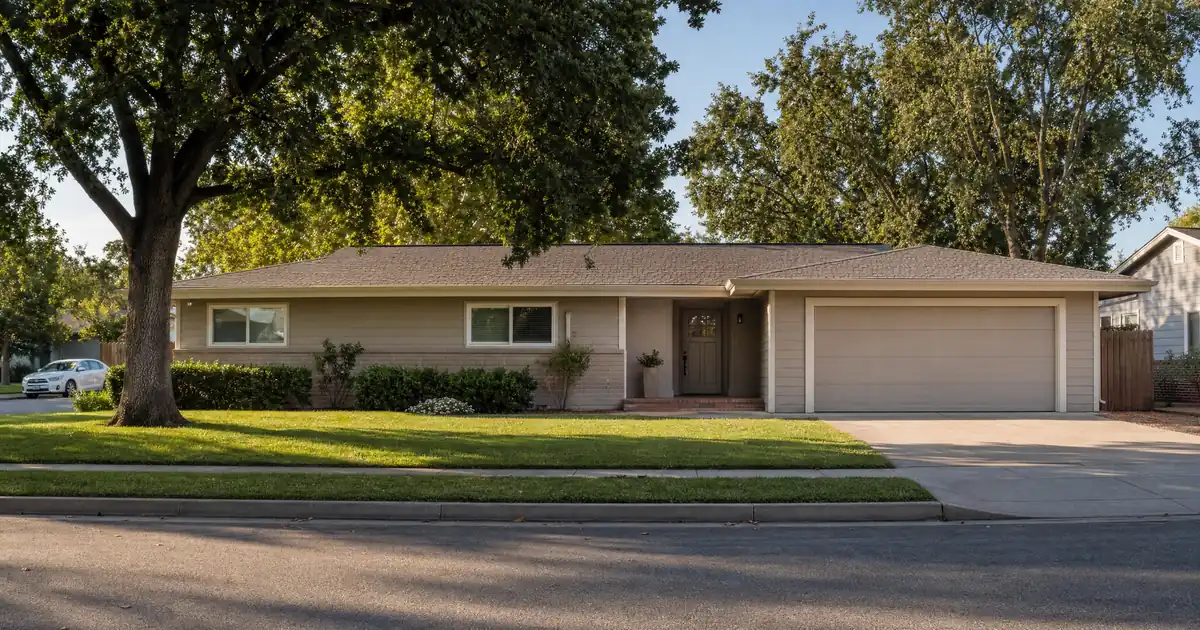
How To Finance Your First Rental Property — The Quick Read: Most first-time investors pick between two different paths. A conventional agency loan looks at your income and debt-to-income ratio. A DSCR loan looks at the property’s rental income instead, comparing it to the property’s own payment. A smaller group uses home equity, a co-borrower, or a portfolio/hard-money lender to fill a gap in credit, savings, or paperwork. The right path depends less on the property itself and more on your income type, your credit profile, and how many financed properties you already own.
Key Takeaways
- DSCR loans qualify mainly on the property’s own rent-to-payment ratio. That’s why self-employed and multi-property investors often end up here.
- A DSCR result at or above 1.00 means the rent covers the full payment on paper. But that’s not the same as positive cash flow after repairs, vacancy, and management costs.
- Down payment, credit score, and reserves work together as a package. A stronger number in one area can make up for a weaker one somewhere else.
- Short-term rentals, sub-1.00 files, and cash-out refinances each follow different underwriting rules than a standard long-term-lease purchase.
What Changes When the Property Isn’t Your Home
Rental income helps, but only partly. Agency guidelines count 75% of gross rental income toward qualifying, per Fannie Mae’s Selling Guide. The other 25% acts as a cushion for vacancy, repairs, and management.
DSCR Calculator
Run the numbers in your market
Rate source: Freddie Mac 30-yr average via FRED® — Federal Reserve Bank of St. Louis · effective Aug 13, 2026
Prefilled with local estimates — enter your own rent or nightly figures, taxes, insurance, and HOA for a more accurate picture.
Program parameters update from Lendmire’s centralized guideline source. Taxes and insurance are editable estimates.
As of Aug 13, 2026 · General Freddie Mac market benchmark, not a Lendmire loan offer. Rent, nightly rate, occupancy, taxes, and insurance are editable estimates. Short-term rental figures are estimates only and vary significantly by season, property type, management approach, and local short-term-rental rules — confirm local regulations before relying on them. Qualifying income for short-term rentals varies by program — some use appraisal market rent, others use documented STR history or projections — and is confirmed in underwriting. Not a Loan Estimate, approval, or commitment to lend. Program availability and eligibility are subject to lender guidelines, credit approval, property review, and underwriting.
FHA and VA loans work differently, and mostly don’t fit a pure rental purchase. Both require you to live in the home. So the real exception is a 2-4 unit “house hack.” You live in one unit and rent the others. Once you’ve met the required occupancy period, you can move out. Then you can rent out the remaining units — plus your former unit — as a full rental. After that, future purchases typically move to either another owner-occupied program or a rental-qualified product like DSCR. This is a common bridge for anyone weighing whether their first home can double as a rental property or whether buying a rental before a first home makes more sense given their income and savings.
For a straight rental purchase — no owner-occupancy, no personal-income file — the practical alternative is a DSCR loan. That’s where most of this article focuses.
Financing Paths at a Glance
| Path | Reviewed on | Occupancy Required | Best Fit |
|---|---|---|---|
| Agency/conventional | Personal income, DTI, credit | No (investment allowed) | W-2 borrowers with clean traditional personal-income documentation |
| FHA/VA | Personal income + owner-occupancy | Yes, 2-4 unit house-hack only | First-time buyers wanting to house-hack |
| DSCR (non-QM) | Property’s rent vs. payment | No | Self-employed, LLC, or multi-property investors |
| HELOC / cash-out refi | Equity in an existing property | Depends on the source property | Funding a down payment, not the purchase loan itself |
| Portfolio / hard money | Lender-specific, often asset-based | No | Short-term bridge or fix-and-flip situations |
How a DSCR Loan Actually Gets Underwritten
A DSCR file moves through the same basic steps across the wholesale network Lendmire works with. The details shift by lender, but the sequence stays the same.
Classify the loan purpose. DSCR loans are built for non-owner-occupied investment properties. Establish the rent. If a lease already exists, the lender uses that rent number directly. If the property is vacant or newly bought, the lender turns to an appraiser’s market-rent opinion instead. That’s the Single-Family Comparable Rent Schedule (Form 1007) for one-unit properties, or the Small Residential Income Property Appraisal Report (Form 1025) for two-to-four-unit buildings. Both forms are built from Fannie Mae’s rental income documentation standards.
Run the ratio. Take the gross monthly rent and divide it by the full monthly payment — principal, interest, taxes, insurance, and any HOA dues. That gives you the DSCR. Most programs Lendmire places files with treat 1.00 as a starting floor, not a hard universal minimum. A few select lenders in the network will go below that if other parts of the file are stronger. And higher ratios open up better leverage and pricing tiers.
Layer in the rest of the file. Credit, reserves, and leverage all move together. On most purchase files, leverage runs 75% to 80% loan-to-value. Worth scoping: those are the standard-program numbers for borrowers who already own a primary residence. Investment-property CLTV caps at 70% across the network with a $500,000 maximum line and a hard 700 credit floor — second homes carry the same 70% ceiling from a 640 floor. A handful of high-leverage programs stretch to 85% for borrowers around a 700 score or better. Credit floors sit near 620 in parts of the network, though 660 is a more common working minimum, and 700+ unlocks the strongest tiers. Reserve requirements shift based on lender, leverage, and loan size. Commonly, expect around six months of PITIA. That requirement is sometimes waived on conservative rate-term files under $1,500,000, and it can step up toward nine months on larger loans.
Document the entity, if used. Since the file is already business-purpose, DSCR loans are among the few residential-secured products that commonly close directly in an LLC or corporation, subject to program eligibility, with a personal guaranty from the principal standing behind it. If you’re wondering whether a first-time buyer can purchase a rental property at all, this vesting flexibility is one of the clearest differences from an agency loan.
Close. With no personal income file to assemble, the paperwork shifts toward rent verification and entity documents. Lendmire’s complete DSCR loans guide walks through the fuller mechanics for anyone who wants the product explained end to end. The DSCR loan overview for first-time rental buyers covers the same ground from a first-purchase angle specifically.
Key Terms Defined
DSCR (Debt Service Coverage Ratio): the property’s monthly rent divided by its full monthly payment. A result at or above 1.00 means the rent covers the payment on paper.
PITIA: principal, interest, taxes, insurance, and any association dues — the full monthly obligation used in the DSCR calculation.
LTV (loan-to-value): the loan amount expressed as a percentage of the property’s purchase price or appraised value. A lower LTV means a bigger down payment.
Seasoning: the required ownership period before a lender will use a property’s appraised value, instead of its purchase price, for a refinance. On a DSCR cash-out refinance, this is commonly around six months.
Business-purpose loan: a loan made to fund an income-producing property rather than a personal residence. That’s why it’s underwritten and documented differently than a consumer mortgage.
Where the Plan Can Break
The framework above holds until the property or the deal structure hits a wrinkle. Several wrinkles show up often enough on first rental purchases that they’re worth naming directly. Because these are business-purpose investor loans, they get reviewed differently than a standard owner-occupied mortgage. There’s no personal ability-to-repay file, no pay stubs, and no tax-return chase.
A nightly-rate listing doesn’t work that way, and Form 1007 isn’t built to capture vacancy rates, service fees, or business expenses tied to short-term rentals, which is part of why lenders apply a lower leverage ceiling on STR collateral than they do on standard rentals under the same program. Programs in Lendmire’s network that finance STR properties instead lean on platform-specific income data or roughly 12 months of hosting history. Short-term rentals qualify at a 1.00 coverage threshold on purchase and refinance at reduced maximum leverage, and require a 12-month income history or market data report at most lenders. Short-term rental rules can also vary by city, county, HOA, and property type. Confirm local rules before counting on projected rental income.
A DSCR under 1.00 doesn’t automatically kill a file. Select programs in the network will still look at properties below full coverage. Generally, this means trading a lower ratio for reduced leverage or a stronger credit and reserve profile.Select lenders in the network do offer a no-ratio structure — no coverage ratio is calculated — though it generally requires existing primary-residence ownership, and leverage and terms adjust to match, subject to lender guidelines.
Cash-out refinances carry more friction than purchases. Most of the network expects around six months of seasoning before it will use appraised value instead of purchase price. And cash-out leverage tops out lower than a purchase — generally around 75% LTV, even on files that qualified at 80% going in.
Certain property types simply aren’t offered. Manufactured homes (single- and double-wide), log homes, and barndominiums fall outside these DSCR programs. That’s not a “harder to finance” situation — it’s just not something the network offers today.
In practice, the DSCR files that come in cleanest on a first rental purchase usually pair a rent number the appraiser can support with a credit profile in the mid-600s or better. The files that run into friction are almost always trying to stretch leverage and a marginal rent number in the same transaction.
Who This Financing Path Fits — And Who It Doesn’t
DSCR tends to fit the self-employed investor whose traditional personal-income documentation understates real cash flow. It also fits the borrower already carrying several conventional mortgages, or anyone who wants the property titled in an LLC from day one. It’s a natural fit for someone weighing buying a rental property as a first-time buyer without an owner-occupancy requirement attached.
It fits less well for a W-2 borrower with strong, clean personal income who only wants one rental. A straightforward agency loan can often qualify more easily on that borrower’s file, and typically asks for a smaller down payment, since agency underwriting is built around dual collateral-and-borrower risk rather than collateral alone. The trade-off runs the other way on price and leverage: DSCR programs generally price at a premium to comparable agency financing and ask for more down. That reflects the fact that the lender is qualifying the property, not the person.
Across the DSCR files that come through Lendmire’s wholesale network, the pattern that shows up most often on a first rental purchase is a borrower with solid credit but traditional personal-income documentation that doesn’t cleanly reflect their real income — self-employed, 1099, or heavily write-off-driven filers. Those are exactly the files where property-income qualification does the most work. An agency file would likely stall on the DTI math even if the borrower’s actual cash flow is strong.
Scaling Past the First Property
Fannie Mae caps a single borrower at 10 financed properties under agency guidelines, per its Selling Guide. That ceiling matters more with each additional purchase you make. DSCR financing generally isn’t subject to that same cap. This is one reason investors who plan to buy more than a handful of properties often move to DSCR earlier rather than later, even if their first purchase would have qualified conventionally.
Home equity is a common funding source once that first property (or a primary residence) has built up equity. Investment-property HELOC lines through the network cap at $500,000 total — a ceiling worth knowing before you assume a large equity pull can fund a second down payment. This is part of why the sequencing question — buy a rental before a first home, or the reverse — matters beyond the first transaction. It shapes what equity and qualifying options exist for property two.
Non-QM lending overall has grown into a meaningful share of the market, not a fringe product. It made up roughly 5% of all mortgage originations by 2024, up from about 3% in 2020, according to Scotsman Guide. The average non-QM borrower carries a 776 FICO score — essentially on par with conventional borrowers. Investor purchase activity has held near record territory too. Investors made up roughly 30% of home purchases as of September, and more than 85% of them own fewer than five properties, per Scotsman Guide’s analysis. That’s a reminder that a first-time rental buyer is squarely in the mainstream of this market, not an outlier. Final terms depend on lender guidelines, property type, leverage, and the borrower’s complete credit picture.
If a first rental purchase is on the table, compare your options against the property’s income, your personal credit profile, your leverage needs, and your long-term portfolio plans before choosing a lane. Lendmire (NMLS# 2371349), a mortgage broker arranging DSCR investor loans through select lenders across 41 markets including Washington, D.C., can help compare how a given property’s rent and an investor’s credit profile line up against the leverage and coverage ranges above. Reaching the team at 828-256-2183 or requesting a quote is a reasonable next step once the property and numbers are in hand.
Frequently Asked Questions
Can a first-time buyer qualify for a DSCR loan on their very first purchase?
Yes — DSCR loans don’t require a prior ownership or landlord track record. Qualification runs mainly on the property’s rental income covering the payment, not on the borrower’s history. What typically matters more is credit profile and available reserves, subject to lender guidelines.
Do I need an LLC to get a DSCR loan on my first rental property?
No, an LLC isn’t required, though many investors choose one for liability separation. DSCR loans are structured to accept entity borrowers, subject to program eligibility, in a way agency-eligible conventional loans generally aren’t.
What happens if my rental’s DSCR comes in under 1.00?
It isn’t an automatic decline. Select lenders in the network will consider sub-1.00 files with adjustments elsewhere in the structure — typically reduced leverage or a stronger credit and reserve profile.Select lenders in the network do offer a no-ratio structure — no coverage ratio is calculated — though it generally requires existing primary-residence ownership, and leverage and terms adjust to match, subject to lender guidelines.
Can I use a HELOC on my primary home to fund the down payment on a rental?
Yes, that’s a common funding source, though investment-property HELOC lines in this network cap at $500,000 total. The HELOC funds the down payment; it’s a separate transaction from the rental’s own purchase loan.
How many rental properties can I finance before running into a cap?
Agency loans cap a single borrower at 10 financed properties under Fannie Mae guidelines. DSCR loans generally aren’t subject to that ceiling. That’s a reason investors planning to scale past a few properties often move to DSCR sooner rather than later.
About Lendmire
Lendmire (NMLS# 2371349) is a non-QM mortgage brokerage that arranges DSCR investor loans through a network of select lenders across 41 markets, including Washington, D.C. Lendmire does not originate or fund loans directly. Instead, it works with borrowers to match a given property’s rent profile and an investor’s credit and reserve picture against the range of programs, leverage tiers, and coverage thresholds available in its lender network. Investors can reach the team at 828-256-2183 or request a quote to start that comparison. Scotsman Guide named Lendmire a Top Mortgage Workplace in both 2025 and 2026.
This article is for general informational purposes only. It is not legal or tax advice, and nothing in it should be relied on as a substitute for advice from a qualified attorney or CPA. Investors should consult their own legal and tax professionals about entity structure, tax treatment, and how any of the financing paths described here apply to their specific situation. Loan approval is never guaranteed, and nothing here is a commitment to lend. Every scenario described is subject to lender approval and to the borrower’s, property’s, and program’s specific guidelines at the time of application.
Get Started
Ready to find the right loan for you?
In about 30 seconds you can review financing options available for your home or investment property. No commitment required.
Informational only. Not a Loan Estimate, approval, or commitment to lend. Program availability and eligibility are subject to lender guidelines, credit approval, property review, and underwriting.
References
1. Fannie Mae Selling Guide – Rental Income
2. Blueprint – What Is Form 1007?
3. Scotsman Guide – Which Groups Are Driving Non-QM Lending?
4. Scotsman Guide – Investors Anchor Housing Market as Non-QM Loans Surge
This article is part of Lendmire’s DSCR loan program — full qualification details, guidelines, and scenarios live on the program page.
Related reading: Apartment Investment Property Refinance Finance · DSCR Loan For Renters Explained · Young Professional Buying First Rental Property
Brandon Miller
Founder & CEO, Mortgage Loan Originator, Lendmire LLC
- Mortgage Loan Originator · NMLS# 1129696 · Verify on NMLS Consumer Access
- North Carolina Real Estate Broker · License# 343312 · Verify on NCREC
- North Carolina Insurance Producer · License# 19053198 · Property, Casualty, Life, Health · Verify on NAIC SBS
- Lendmire LLC · Firm NMLS# 2371349 · Verify firm licensure
Compliance and disclosures. Lendmire (NMLS# 2371349) is a licensed mortgage broker and is not a direct lender, depository institution, financial advisor, or tax professional. Content in this article is general market analysis and educational information — not financial, legal, or tax advice for any specific situation. Lendmire does not guarantee loan approval; every transaction is subject to underwriting by the funding lender. Mortgage pricing and loan program guidelines are subject to change at any time without notice and vary by borrower characteristics, property type, and state regulations. Lendmire complies with Equal Housing Opportunity. Licensure verification: NMLS Consumer Access.