
Buy A Rental In Your Hometown While Renting In The City — The Quick Read: Yes, you can rent an apartment in an expensive city and still own a rental property back where you grew up. DSCR loans qualify on the property’s rental income, not on where you personally live, so the two housing situations never touch each other on paper. The catch: most DSCR programs expect the borrower to already own a primary residence somewhere, and if that’s not you yet, a narrower renter-path envelope applies instead. Either way, the file lives or dies on rent versus payment — not on your paycheck.
Here’s what matters most before shopping for a property:
DSCR Calculator
Run the numbers in your market
Rate source: Freddie Mac 30-yr average via FRED® — Federal Reserve Bank of St. Louis · effective Aug 13, 2026
Prefilled with local estimates — enter your own rent or nightly figures, taxes, insurance, and HOA for a more accurate picture.
Program parameters update from Lendmire’s centralized guideline source. Taxes and insurance are editable estimates.
As of Aug 13, 2026 · General Freddie Mac market benchmark, not a Lendmire loan offer. Rent, nightly rate, occupancy, taxes, and insurance are editable estimates. Short-term rental figures are estimates only and vary significantly by season, property type, management approach, and local short-term-rental rules — confirm local regulations before relying on them. Qualifying income for short-term rentals varies by program — some use appraisal market rent, others use documented STR history or projections — and is confirmed in underwriting. Not a Loan Estimate, approval, or commitment to lend. Program availability and eligibility are subject to lender guidelines, credit approval, property review, and underwriting.
- DSCR loans qualify on the property’s rent, not on your personal income or housing situation.
- The property has to be genuinely non-owner-occupied — no borrower, LLC member, or family member can live there.
- Whether you already own a primary residence determines which program tier applies, and the difference is real.
- An appraiser sets the rent figure using a standardized form, not your own guess.
- Clearing a coverage ratio of 1.00 is not the same thing as positive cash flow.
Is This You?
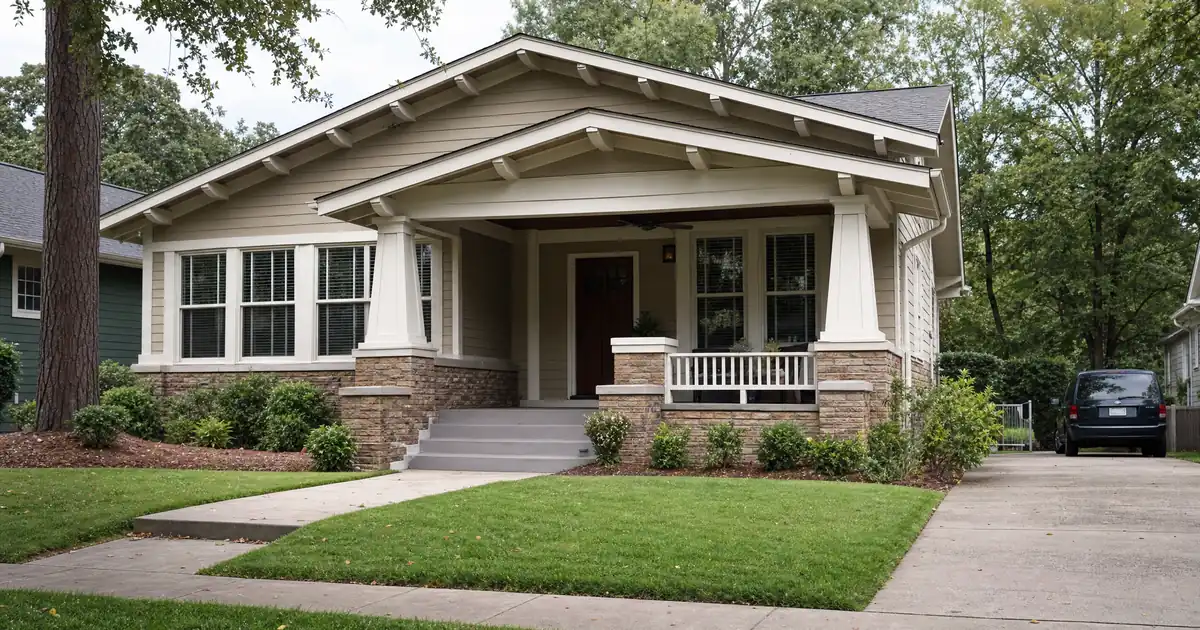
Picture someone renting a one-bedroom in a city where housing values sit well above what they’ll ever comfortably finance. They grew up two states away, in a town where a starter duplex still trades for a fraction of that. They’ve got savings, decent credit, and zero interest in uprooting their life just to chase a cheaper mortgage. This is exactly the setup DSCR financing was built for.
A few signs this fits:
- You’re renting where you live, by choice or by circumstance, with no near-term plan to buy a primary residence there.
- You have a hometown, or another familiar market, where prices and rents pencil out better than where you currently live.
- You’ve got decent credit and enough saved for a down payment plus reserves.
- You want rental income and equity growth without becoming a landlord in a market you’ve never set foot in.
- You’re not trying to disguise the purchase as anything other than what it is: an investment.
There’s nothing unusual about the underlying setup, either. A meaningful share of occupied U.S. housing units are renter-occupied rather than owner-occupied, according to U.S. Census Bureau data. Renting where you live while owning property elsewhere isn’t a workaround — it’s just two separate decisions that don’t have to line up.
Why Your Hometown Beats a Random Cheap Market
Buying somewhere you already know solves the two hardest parts of investing outside your own city: finding good help and trusting the numbers. A hometown comes with a built-in network — someone who does drywall, a friend who manages property on the side, parents who can drive by and check on the place — that a spreadsheet-picked city never hands you for free.
Three paths, side by side:
| Path | Upfront Commitment | Ongoing Exposure | Equity Growth |
|---|---|---|---|
| Keep renting only | Minimal | Rent payment only | None |
| Buy a rental in your hometown | Down payment + reserves | Rent plus mortgage on the rental | Builds in a market you know |
| Buy where you live now | Full down payment on a pricier property | Owner-occupied payment | Builds slower, in an expensive market |
Rent-to-price math explains why so many renters look elsewhere at all. A healthier rent-to-price relationship for cash-flow purposes tends to favor lower-cost regions; expensive coastal metros generally run leaner on that same measure, according to Lineage HQ. A hometown in a lower-cost region frequently clears that bar without much strain — which is exactly the arithmetic pushing people back toward familiar territory.
Nonresident buying isn’t a fringe behavior, either. It accounts for a meaningful share of single-family home purchases nationwide, roughly in line with pre-pandemic norms, per HousingWire. Buying in a hometown you already understand just narrows the unfamiliarity gap that generic out-of-state investing carries — a strategy covered in more general terms in buying a rental property in another state while renting.
Key Terms Defined
- DSCR (Debt Service Coverage Ratio): monthly rental income divided by the property’s monthly payment. A ratio above 1.00 means the rent covers the payment with room to spare.
- PITIA: principal, interest, taxes, insurance, and any association dues — the full monthly obligation used in the DSCR math.
- LTV (loan-to-value): the percentage of a property’s value the loan covers; the rest comes from the down payment.
- CLTV (combined loan-to-value): the same idea, but counting every lien against the property, not just the first mortgage.
- Non-owner-occupied: nobody tied to the borrower — not the borrower, an LLC member, or a family member — lives in the property.
- Business-purpose loan: a loan made for an investment reason rather than to house the borrower, which is why DSCR loans are reviewed differently from a standard owner-occupied mortgage.
- Seasoning: the waiting period a lender wants — commonly around six months — before letting an owner refinance or pull cash out.
The Occupancy Rule That Makes This Work
DSCR loans flip the usual occupancy rule on its head: instead of requiring you to live in the property, they require that you don’t. That single distinction is what lets someone rent an apartment across the country and still finance a rental back home.
A conventional primary-residence loan comes with an occupancy affidavit — the borrower agrees to move in within 60 days of closing and live there for at least a year, per guidance cited by Pocketsense. A DSCR loan asks for the mirror-image commitment: the property is non-owner-occupied, and it stays that way. No borrower, no LLC partner, and no family member can move in — not into a single-family rental, and not into the one leftover unit of a triplex where the other two are already leased.
DSCR loans are designed for non-owner-occupied investment properties. Because they’re business-purpose investor loans, they’re reviewed differently from a standard owner-occupied mortgage.
Lendmire’s complete DSCR loans guide walks through the full underwriting picture. The short version: the file lives or dies on the property’s rent-to-payment math, not on the borrower’s pay stubs.
What If You Don’t Own a Home Yet?
Most DSCR programs quietly assume the borrower already owns a primary residence somewhere else. If renting is your only housing situation right now, a narrower path applies — and it’s worth knowing the difference before making an offer.
For someone who already owns a primary residence, purchase leverage on most files runs in a moderate range, with select high-leverage programs available for borrowers carrying stronger credit. Coverage floors on select programs can sit as low as 1.00, credit floors run lower in parts of the network though most programs prefer a higher score, and loan sizes can reach into the low seven figures on standard programs.
If you don’t currently own a primary residence, select lenders in the network still work with you — but the envelope tightens considerably. That path generally calls for a stronger credit score, lower maximum combined loan-to-value, a higher required debt-coverage ratio, a lower loan-amount ceiling, and several months of reserves. Interest-only structures aren’t offered on this path, and the lender collects tax and insurance impounds as part of the monthly payment. Sub-1.00 coverage and no-ratio qualification generally aren’t available here either — those workaround structures are typically reserved for borrowers who already own a primary residence, subject to lender guidelines.
None of this is permanent. Close the first deal, or buy a primary residence of your own down the road, and the standard envelope opens up: more leverage, a lower coverage floor, larger loan sizes, and access to interest-only or extended-term structures through select lenders. The renter path is a way in, not a ceiling.
Which envelope fits a specific file depends on credit, the property, and the numbers. Reach Lendmire at 828-256-2183 to sort out which path applies before shopping.
The Mechanics, Step by Step
1. Tell the lender it’s a rental from day one. The file gets classified as business-purpose and non-owner-occupied at application, and the borrower signs a non-owner-occupancy affidavit at closing.
2. Let the appraiser set the rent. For a single-family property, that means the Single-Family Comparable Rent Schedule — Form 1007; for a two-to-four-unit property, it’s the Small Residential Income Property Appraisal Report, Form 1025, per Fannie Mae’s Selling Guide. Most DSCR lenders lean on these same forms even though the loan itself never gets sold to Fannie Mae. If the property already has a tenant, the signed lease can stand in for the appraiser’s market-rent estimate.
3. Run the ratio. Divide monthly rent by PITIA. That number is the coverage ratio — the entire backbone of the file.
4. Clear credit and reserves. Reserves generally run around six months of PITIA on most files, stepping up toward nine months on larger loan amounts. Some rate-term refinances at modest leverage on smaller loan amounts can see reserves waived entirely.
5. Decide how to vest. Many investors close in an LLC rather than their own name for liability reasons — an option most DSCR programs allow, subject to lender program eligibility.
6. Close and lease it up, or keep an existing tenant in place if the property already has one.
If the hometown property ends up running as a short-term rental instead of a standard lease, the math shifts: purchase files typically want a somewhat higher coverage ratio, refinances a bit lower, and roughly twelve months of hosting history before booking income counts toward the file. Short-term rental rules can vary by city, county, HOA, and property type, so confirming local rules before relying on projected income matters here too.
What Can Go Wrong
The single biggest way this plan backfires is moving in later. If you, a family member, or an LLC partner ever occupies the hometown property, that violates the non-owner-occupancy affidavit signed at closing. This is the exact reverse-occupancy pattern lenders watch for, and it’s a real risk on a property with personal ties. If plans might change, that’s a conversation to have with the lender before closing — not after.
Clearing a coverage ratio of 1.00 is not the same as positive cash flow. The ratio only measures rent against PITIA — it says nothing about repairs, vacancy, property management, utilities, or capital expenses. A file that clears coverage comfortably on paper can still lose money in year one if the roof needs work.
Renting in the city while carrying a mortgage on the hometown property means two housing obligations at once, even with a tenant covering most of the payment. Vacancy between tenants, or a slow rental season locally, falls entirely on you. Not exactly a fun surprise.
Property type matters more in a hometown market than people expect. Smaller towns lean heavily on manufactured housing, and DSCR programs in Lendmire’s network don’t finance single- or double-wide manufactured homes, log homes, or barndominiums — those property types fall outside these programs entirely, whatever the rent looks like on paper.
Coverage below 1.00 isn’t automatically a dead end. Select lenders in the network still work with sub-1.00 files, typically at reduced leverage and tighter terms.A no-ratio structure, where the coverage calculation is skipped entirely, is offered through select lenders in the network — it generally requires the borrower to already own a primary residence, and leverage and terms adjust accordingly, subject to lender guidelines.
Deciding between the smaller hometown deal and a bigger property in the expensive city is a genuine toss-up for some renters. The hometown file usually clears coverage more easily; the city property might appreciate faster over time. Running both scenarios side by side before committing to either usually settles it.
Who This Fits — and Who It Doesn’t
This fits renters with stable income, decent credit, reserves set aside, and a hometown or familiar market where the rent-to-price math actually works. It fits people comfortable being a landlord from a short distance, who understand that “close” still means someone else needs a key when the furnace dies.
It doesn’t fit someone planning to eventually move into the hometown property — that’s a different loan and a different plan entirely. It doesn’t fit someone without a down payment cushion or reserves. And it doesn’t fit someone whose target property turns out to be a manufactured home, log home, or barndominium, since those sit outside DSCR eligibility across the network regardless of how the rent pencils.
Some investors fund the down payment on a hometown rental by tapping equity from elsewhere — a HELOC on a property they already own, for example. Lendmire covers that specific approach in taking out a home equity loan to buy a rental property. Investment-property HELOC lines are capped across the network, so that source works better as a down-payment bridge than as the entire purchase price on a pricier deal.
Once the hometown property has some seasoning behind it — commonly around six months — refinancing to pull cash out or adjust the structure is worth revisiting. Lendmire’s guides on pulling cash out of a rental property while renting and when it makes sense to refi a rental property both walk through that timing. Cash-out refinances on investment property generally have a leverage ceiling across the network, regardless of what the original purchase leverage looked like.
Frequently Asked Questions
How do you qualify for a DSCR loan on a hometown rental while renting in another city?
Qualification runs on the property’s rent versus its PITIA payment, not on your personal housing situation or pay stubs. An appraiser sets the market rent using a standardized form, the lender checks that the property is genuinely non-owner-occupied, and credit, reserves, and the coverage ratio round out the file.
Can I qualify for a rental property loan if I don’t own the home I currently live in?
Yes, through a narrower path built for exactly this situation. Select lenders in the network work with borrowers who don’t yet own a primary residence, typically requiring a stronger credit score, a lower maximum combined loan-to-value, and a higher required debt-coverage ratio. Loan amounts on this path generally cap lower than on the standard program.
Do I need a bigger down payment because I’m renting instead of owning a primary residence?
Leverage tightens rather than the down payment simply growing on its own. A borrower who already owns a home can often finance at a higher loan-to-value; a borrower on the renter path typically sees leverage capped lower on a combined loan-to-value basis, which functionally means more equity into the deal.
Can a family member live in the hometown rental I finance this way?
No. Non-owner-occupancy applies to everyone connected to the borrower — not just the borrower personally, but any LLC member and any family member. If someone in that circle occupies the property, it violates the affidavit signed at closing.
What happens if I decide to move into the hometown property later?
That change needs to happen through the lender, not around it. Occupying a property financed as non-owner-occupied without addressing it with the lender first violates the loan terms; anyone considering a future move-in should raise that possibility before closing rather than after.
Does the hometown rental have to be a single-family house?
No. Two-to-four-unit properties qualify too, using the Small Residential Income Property Appraisal Report (Form 1025) to establish rent instead of the single-family rent schedule. What doesn’t qualify, regardless of unit count or how the rent pencils out, is a manufactured home, log home, or barndominium — those property types fall outside DSCR eligibility across the network.
As always, this article is general information rather than individualized advice — consulting a qualified attorney or CPA before finalizing occupancy, vesting, or tax decisions on a specific property is the right next step.
About Lendmire
Lendmire, a mortgage broker (NMLS# 2371349) that arranges DSCR programs available in 41 markets, including Washington, D.C., can help compare which envelope — standard or renter-path — fits a specific file. If you’re buying or refinancing a rental property and want to see how the numbers actually run, request a quote or call 828-256-2183. Scotsman Guide named Lendmire a Top Mortgage Workplace in both 2025 and 2026.
This is general information, not legal or tax advice — an attorney or CPA can weigh in on how occupancy rules, LLC vesting, or rental income apply to a specific situation. Tax treatment can depend on how funds are used and how a property is held, so keeping clear records matters before relying on any deduction. Nothing here is a commitment to lend, and loan approval is never guaranteed; every scenario is subject to lender approval and the borrower’s credit, reserves, property, and current program guidelines.
Get Started
Ready to find the right loan for you?
In about 30 seconds you can review financing options available for your home or investment property. No commitment required.
Informational only. Not a Loan Estimate, approval, or commitment to lend. Program availability and eligibility are subject to lender guidelines, credit approval, property review, and underwriting.
References
2. Lineage HQ
3. HousingWire
4. Pocketsense
This article is part of Lendmire’s DSCR loan program — full qualification details, guidelines, and scenarios live on the program page.
Related reading: How To Buy A Rental Property While Renting An Apartment · Can You Get A DSCR Loan While Renting? · Priced Out Of Your Market Buy A Rental Somewhere Else
Brandon Miller
Founder & CEO, Mortgage Loan Originator, Lendmire LLC
- Mortgage Loan Originator · NMLS# 1129696 · Verify on NMLS Consumer Access
- North Carolina Real Estate Broker · License# 343312 · Verify on NCREC
- North Carolina Insurance Producer · License# 19053198 · Property, Casualty, Life, Health · Verify on NAIC SBS
- Lendmire LLC · Firm NMLS# 2371349 · Verify firm licensure
Disclosure information. Lendmire is a state-licensed mortgage brokerage under NMLS# 2371349. Lendmire is not a depository institution, direct lender, or financial advisor — all loans referenced are placed through wholesale lender partners and are subject to each lender's underwriting standards. This article is provided for general informational purposes and is not a commitment to lend, nor does it constitute financial, legal, or tax advice. Loan programs, terms, rates, and qualification standards change without notice and depend on borrower profile, property type, and the state in which the subject property is located. Equal Housing Opportunity provider. NMLS Consumer Access: nmlsconsumeraccess.org.