
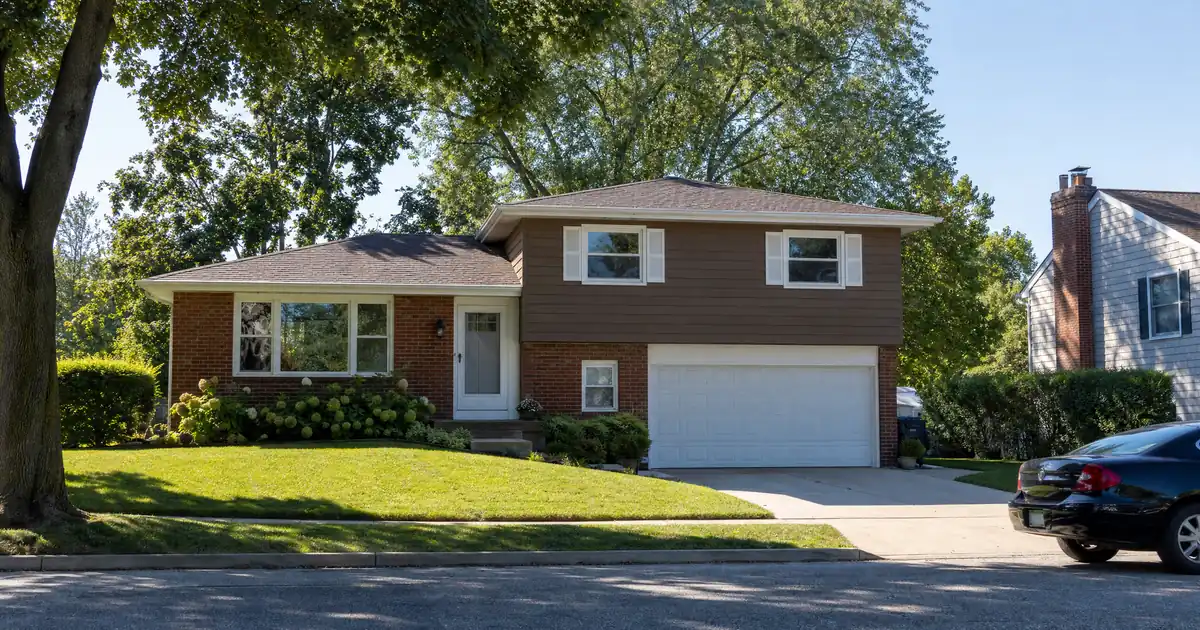
Can You Skip Buying A Home And Invest Instead — The Quick Read: Yes. No law or lender says you must own the home you live in before you build a real estate or stock portfolio. Renting where you live and owning income property are two separate choices. A rental property can be financed on its own rent, not your paycheck. Does skipping the primary home actually win? That depends on your local price-to-rent math, how long you’d otherwise stay put, and whether you truly reinvest the money you didn’t spend on a down payment.
Key Terms Defined
DSCR (debt-service coverage ratio): This measure divides a property’s monthly rent by its monthly housing payment. Lenders use it to qualify a rental loan based on the property’s income, not the borrower’s.
DSCR Calculator
Run the numbers in your market
Rate source: Freddie Mac 30-yr average via FRED® — Federal Reserve Bank of St. Louis · effective Aug 13, 2026
Prefilled with local estimates — enter your own rent or nightly figures, taxes, insurance, and HOA for a more accurate picture.
Program parameters update from Lendmire’s centralized guideline source. Taxes and insurance are editable estimates.
As of Aug 13, 2026 · General Freddie Mac market benchmark, not a Lendmire loan offer. Rent, nightly rate, occupancy, taxes, and insurance are editable estimates. Short-term rental figures are estimates only and vary significantly by season, property type, management approach, and local short-term-rental rules — confirm local regulations before relying on them. Qualifying income for short-term rentals varies by program — some use appraisal market rent, others use documented STR history or projections — and is confirmed in underwriting. Not a Loan Estimate, approval, or commitment to lend. Program availability and eligibility are subject to lender guidelines, credit approval, property review, and underwriting.
LTV (loan-to-value): This is the percentage of a property’s value that the loan covers. An 80% LTV purchase means the buyer covers the other 20%. These specifics depend on lender guidelines and a full review of property, leverage, and credit.
PITIA: This stands for principal, interest, taxes, insurance, and association dues. Together they make up the full monthly housing bill a property has to cover.
Business-purpose loan: This is financing for an investment or income property, not the borrower’s own home. That puts it outside standard consumer-mortgage rules.
Price-to-rent ratio: Take a home’s price and divide it by its annual rent. This number gives a rough signal for whether buying or renting makes more financial sense in a given market.
Seasoning: This is the length of time a lender wants a borrower to own or hold a property before doing certain things with it, like a cash-out refinance.
Is Renting And Investing Really Cheaper Than Owning?
The answer depends entirely on where you’re comparing. That’s why there’s no single national verdict. The standard yardstick is the price-to-rent ratio: home price divided by annual rent. The rule of thumb runs roughly like this. Under 15, buying tends to win. Between 15 and 20 sits a gray zone, where financing costs and how long you’ll stay decide the outcome. Above 20, renting usually wins on pure monthly cost.
The nationwide ratio currently sits around 16, based on typical home values measured against rents that stay comfortably manageable relative to those values, according to Lofty.ai. That number sits squarely in the ambiguous middle. But this national figure hides a huge spread. Ratios run as low as about 13 in Chicago, Pittsburgh, and Toledo. They run as high as roughly 35 in San Jose. A market with a ratio near 13 tells a very different story than one near 35. Averaging them into one national figure erases the real answer.
Here’s a useful overlap most people miss. The same ratio that tells a homebuyer “renting might be smarter here” is roughly the inverse of gross rental yield for an investor. A lower ratio points to a comparatively strong gross yield before expenses. A much higher ratio points to a noticeably thinner one. Markets where the rent-vs-buy math favors renting are often the same markets where the rental-income math favors an investor. That’s exactly why this decision and the DSCR financing decision connect — they aren’t separate at all.
What Does “Investing Instead” Actually Mean?
It means taking the capital you’d otherwise put toward a home — the down payment, closing costs, and ongoing maintenance reserve — and putting it into an income-producing asset instead. That asset might be the stock market, a diversified fund, or a rental property financed on its own cash flow. This isn’t a vague “save more” plan. It’s a specific reallocation of money you were already going to spend.
That capital is real money. The typical first-time homebuyer put down about 9% of a typical home’s price last year. Repeat buyers put down closer to 23%, according to The Motley Fool. That’s a meaningful sum sitting between “rent an apartment” and “buy a house.” It’s also the same size of capital an investor would put toward a rental property’s down payment instead.
If the plan is stocks or funds, the mechanics are simple. Open a brokerage account. Automate the transfer so the money that would have gone toward a mortgage payment goes toward shares instead. If the plan leans toward real estate, most people who don’t want to pay all-cash take a different route. They use a rental loan qualified on the property, not the buyer’s income — this is where DSCR financing comes in. Some investors also look at real estate investment trusts or real estate funds. These give property exposure without the work of buying or managing anything directly.
Homeowners already sitting on equity sometimes ask the reverse question. Should they pull equity out and redirect it into the market instead of a rental? That’s a related but different decision. Lendmire covers it in a piece on using home equity to invest in the stock market, and in a companion piece asking whether a home equity loan to invest in property is a bad idea.
How Do You Finance A Rental Property Without Ever Owning A Home First?
You qualify the property, not yourself. A DSCR loan is built for non-owner-occupied investment properties. Because it’s business-purpose financing rather than a loan on the home you live in, lenders review it under a different framework than a standard owner-occupied mortgage. There’s no personal debt-to-income ratio calculated at all, because personal income isn’t the qualifying factor.
Across Lendmire’s wholesale network, most purchase files land at 75%–80% loan-to-value. That means 20%–25% down. A handful of higher-leverage programs reach 85% LTV for borrowers with credit scores generally around 700 or better. On the coverage side, most programs want the rent-to-payment ratio at 1.00 or above. That means rent covers the full monthly obligation of principal, interest, taxes, insurance, and any association dues. Still, 1.00 is a floor on select programs, not a universal standard. Stronger ratios tend to open better leverage and pricing.
Credit requirements vary by lender. Some corners of the network go as low as a 620 floor. Most programs want something closer to 660, and 700-plus tends to unlock the strongest leverage tiers. Reserve requirements are the liquid cash a borrower needs on hand after closing. These commonly run around 6 months of PITIA, stepping up toward 9 months on loan amounts above roughly $1,500,000. Loan sizes on standard programs commonly reach into the low seven figures. Smaller balances get placed through specific lenders in the network. Above roughly $2,500,000, the network generally sticks to 30-year fixed structures rather than shorter or adjustable terms.
Not every property type qualifies for this kind of financing. Manufactured homes — single- or double-wide — along with log homes and barndominiums fall outside these programs entirely. That’s true no matter what rent they might command locally.
If you’re comparing this to a traditional mortgage path, Lendmire’s complete DSCR loans guide breaks down how the property-income qualification model works from start to finish.
Can You Rent Your Own Home And Still Own Rental Property?
Yes. These are two financially and legally independent decisions. Owning a rental property doesn’t require you to already own, or ever own, the home you personally live in. You can rent an apartment indefinitely while holding one or several DSCR-financed properties in your own name or in an entity, subject to program eligibility.
This is the single biggest misconception around this whole topic. People assume “skipping homeownership” means giving up on real estate wealth entirely. It doesn’t. It just separates where you live from what you own. DSCR products exist specifically because they don’t require the borrower to occupy, or already hold, any residence.
There’s no personal debt-to-income calculation on a DSCR file. So an investor also isn’t capped by a personal income ceiling on how many properties they can finance. The constraint shifts instead to each property’s own rent coverage, the borrower’s credit, available reserves, and the specific lender’s guidelines for that file.
What Actually Decides Whether This Beats Buying?
A handful of factors do the deciding, and none of them applies everywhere:
- How long you’d stay. The shorter your expected stay in a home, the more buying costs (closing costs, agent commissions on exit, moving costs) eat into any equity gain — favoring rent-and-invest.
- Local price-to-rent ratio. Markets in the 13–16 range lean toward buying or landlording; markets north of 20 lean toward renting.
- Discipline. The plan only works if the money you didn’t spend on a house actually gets invested — a documented, common failure mode is people who say they’ll “invest the difference” and never open the account.
- Leverage appetite. A mortgage — on a home or a rental — amplifies gains and losses in a way that paying cash for stocks doesn’t; more leverage means more upside and more downside risk.
- What you actually want the money to do. A stock portfolio is liquid and requires no maintenance; a rental property is illiquid but produces monthly income and can be refinanced later.
| Factor | Rent & Invest Elsewhere | Buy & Occupy |
|---|---|---|
| Down-payment capital goes to | Stocks, funds, or a rental property | Home equity |
| Leverage | Optional, through a separate rental loan | Built into the mortgage |
| Liquidity | High — shares trade daily | Low — equity is tied up until sale or refinance |
| Tax posture | Schedule E if rental; capital-gains rules if stocks | Mortgage-interest itemization; primary-residence gain rules |
| Monthly cost path | Rent, which can rise | Fixed principal, variable tax and insurance |
Across the DSCR files Lendmire places, the deals that pencil out most cleanly on a rent-and-invest strategy tend to share a pattern. The investor already knows their local price-to-rent number is elevated. They’ve picked a rental market with a lower ratio than where they personally live. And they treat the down payment they didn’t spend on a home as a fixed, non-negotiable transfer into an investment account or a rental purchase — not a “someday” plan.
What Do Lenders Actually Check Instead Of Your Paycheck?
Lenders check a property’s rent, verified against an appraiser’s independent market-rent estimate rather than a signed lease alone. For single-family rentals, appraisers typically use Fannie Mae’s Form 1007 rent schedule. For 2-4 unit properties, the equivalent is Form 1025. These are the standard, third-party-verifiable rent figures the non-QM industry has adopted for property-rent-based lender review, even though DSCR lenders aren’t bound by agency selling guides. Underwriting typically uses the lower of the appraised rent or the signed lease. An above-market lease doesn’t automatically raise the number a lender will count.
That appraised or leased rent then gets divided by PITIA to produce the coverage ratio. A ratio above 1.00 means the property’s rent, on paper, exceeds its monthly payment. But that is not the same thing as positive cash flow. Repairs, vacancy, property management, utilities, and capital expenses all sit outside the DSCR math. A file that clears 1.00 can still run tight once real operating costs hit.
Programs below 1.00 coverage exist through select lenders in the network, but leverage and terms adjust accordingly. A lower ratio typically means lower LTV, not the same terms at a discount.Select lenders in the network do offer a no-ratio structure — no coverage ratio is calculated — though it generally requires existing primary-residence ownership, and leverage and terms adjust to match, subject to lender guidelines.
A file “qualifies primarily on property-level rental income covering the payment, subject to lender guidelines.” It doesn’t bypass underwriting altogether. Credit, reserves, and property condition all still get reviewed. Lendmire (NMLS# 2371349) arranges DSCR investor loans across 40 states plus Washington, D.C. Through its wholesale lender network, it structures files around the property’s numbers rather than a borrower’s traditional personal-income documentation.
Where Does The “Skip Buying” Strategy Break Down?
The math weakens once real financing costs get applied to a price-to-rent ratio that looked cheap on paper. A ratio that clearly favored buying under looser financing conditions can look very different once actual payment obligations are factored in against comparable rent. In other words, a “good” ratio today doesn’t automatically mean the buying math still wins. It depends on the full monthly obligation, not the ratio alone.
The strategy also breaks down anywhere the investor mixes up two different assets. National Association of Realtors commentary frames homeowner equity gains in the tens of thousands annually, per Inman. But that describes personal-residence equity growth, not the return profile of a professionally financed rental portfolio. Treating those two figures as interchangeable is a common and costly mistake.
Non-QM lending — the broader category DSCR sits inside — has grown into a meaningful share of the market. It reached roughly $239 billion in origination volume last year, about 10% of total U.S. mortgage originations, according to Scotsman Guide. That scale means this isn’t a fringe workaround. It’s a mainstream financing channel real estate investors use every day. Federal housing data backs up how many households this affects. The national homeownership rate sits at 65.0%, per the U.S. Census Bureau. That means roughly one in three U.S. households rents, whether by choice or circumstance.
One more edge worth flagging: mortgage interest on a rental property runs through Schedule E against rental income, not through the itemized-deduction path a primary residence uses. Tax treatment can depend on how funds are used and how the property is held. Investors should keep clear records and speak with a qualified tax professional before relying on any deduction assumption.
Loan approval is never guaranteed, and nothing here is a commitment to lend. Every scenario described here is subject to lender approval and to the specific borrower’s, property’s, and program’s guidelines at the time of application. This content is general information only, not financial, legal, or tax advice, and program terms are subject to change without notice.
Frequently Asked Questions
Is it always cheaper to rent and invest instead of buying a home?
No. It depends on the local price-to-rent ratio, how long you plan to stay, and whether you actually invest the money. Markets with ratios under roughly 15 tend to favor buying; markets above 20 tend to favor renting and investing — most of the country sits somewhere in between.
Can I buy a rental property without ever owning a primary home?
Yes. A DSCR loan is reviewed on the rental property’s income, not your personal ownership history or income documentation. You can rent your own residence indefinitely while owning one or more financed rental properties, subject to lender guidelines.
Does a DSCR loan work for the home I plan to live in?
No. DSCR loans are business-purpose financing for investment properties only — they don’t cover a primary residence. If you want to occupy the property yourself, you’d need a standard owner-occupied mortgage instead.
What happens if I don’t actually invest the money I saved by not buying?
Then the strategy doesn’t work. The whole comparison assumes the freed-up down payment and monthly savings genuinely get deployed, whether into a brokerage account or a rental property. Sitting on the cash removes the advantage this strategy is built around.
Do I need a certain amount of rental history to qualify a property?
Not necessarily. A newly purchased or currently vacant property can often be qualified using an appraiser’s market-rent estimate rather than trailing lease income, though underwriting typically defaults to whichever figure is lower between the appraisal and an actual lease.
If you’re weighing whether to put capital into a home or into an income property instead, Lendmire can help you compare DSCR loan options based on the property’s rental income, your credit profile, available leverage, and your broader investment goals. Reach the team at 828-256-2183 or through Lendmire’s mortgage quote page. For investors who already own property and are weighing whether pulling equity out to redeploy it makes sense, Lendmire’s piece on whether you have to reinvest home equity walks through that specific decision.
About Lendmire
Lendmire, NMLS# 2371349, is a non-QM mortgage broker serving real estate investors in 41 markets, including Washington, D.C., through DSCR investor loan programs. Lenders generally review qualification around the subject property’s rental income, not the borrower’s W-2 history. This makes it a practical fit for LLC-titled portfolios and self-employed investors. All scenarios remain subject to lender review and program guidelines. Lendmire holds two consecutive Scotsman Guide Top Mortgage Workplace recognitions (2025, 2026).
Get Started
Ready to find the right loan for you?
In about 30 seconds you can review financing options available for your home or investment property. No commitment required.
Informational only. Not a Loan Estimate, approval, or commitment to lend. Program availability and eligibility are subject to lender guidelines, credit approval, property review, and underwriting.
References
1. Lofty.ai — Price-to-Rent Ratio by City
2. The Motley Fool — Median Down Payment on a Home in 2025
3. Inman — NAR Predicts Home Sales Will Increase 4 Percent in 2026
4. Scotsman Guide — Which Groups Are Driving Non-QM Lending?
5. U.S. Census Bureau — Housing Vacancies and Homeownership
This article is part of Lendmire’s DSCR loan program — full qualification details, guidelines, and scenarios live on the program page.
Related reading: Why Your First Property Does Not Have To Be Your Home: Rental Property Basics · When Renting Makes You A Better Real Estate Investor · The Morris Invest HELOC Strategy for Real Estate Investing
Brandon Miller
Founder & CEO, Mortgage Loan Originator, Lendmire LLC
- Mortgage Loan Originator · NMLS# 1129696 · Verify on NMLS Consumer Access
- North Carolina Real Estate Broker · License# 343312 · Verify on NCREC
- North Carolina Insurance Producer · License# 19053198 · Property, Casualty, Life, Health · Verify on NAIC SBS
- Lendmire LLC · Firm NMLS# 2371349 · Verify firm licensure
Disclosure information. Lendmire is a state-licensed mortgage brokerage under NMLS# 2371349. Lendmire is not a depository institution, direct lender, or financial advisor — all loans referenced are placed through wholesale lender partners and are subject to each lender's underwriting standards. This article is provided for general informational purposes and is not a commitment to lend, nor does it constitute financial, legal, or tax advice. Loan programs, terms, rates, and qualification standards change without notice and depend on borrower profile, property type, and the state in which the subject property is located. Equal Housing Opportunity provider. NMLS Consumer Access: nmlsconsumeraccess.org.