
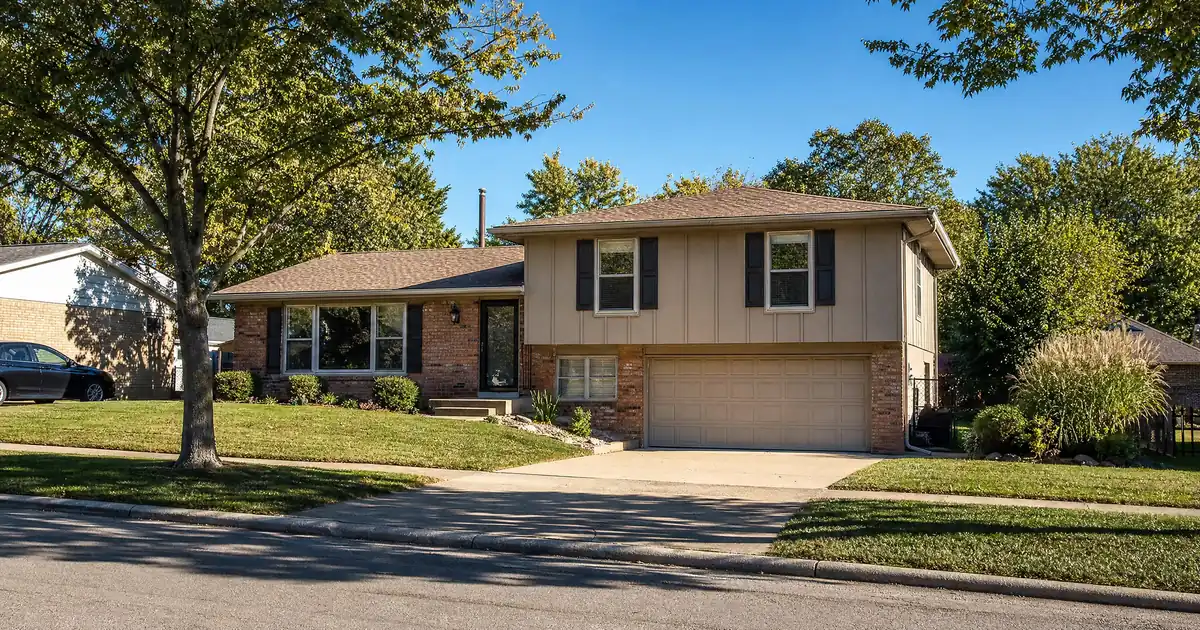
Does Rent Payment History Help You Buy A Rental Property — The Quick Read: Mostly no, if the loan in question is a DSCR loan — the financing most investors actually use to buy rental property. DSCR underwriting qualifies the deal on the property’s rental income, not on the borrower’s personal history of paying rent as a tenant. Rent history can still help indirectly, by lifting the credit score that determines pricing tier and leverage, but it isn’t a direct qualifying factor the way it can be on an owner-occupied purchase.
That’s the honest, unglamorous answer. Most of what’s been written about “rent payment history and mortgages” is scoped to first-time homebuyers financing a primary residence — not investors buying a rental. Those are two different underwriting worlds, and conflating them is where most confusion starts.
DSCR Calculator
Run the numbers in your market
Rate source: Freddie Mac 30-yr average via FRED® — Federal Reserve Bank of St. Louis · effective Aug 13, 2026
Prefilled with local estimates — enter your own rent or nightly figures, taxes, insurance, and HOA for a more accurate picture.
Program parameters update from Lendmire’s centralized guideline source. Taxes and insurance are editable estimates.
As of Aug 13, 2026 · General Freddie Mac market benchmark, not a Lendmire loan offer. Rent, nightly rate, occupancy, taxes, and insurance are editable estimates. Short-term rental figures are estimates only and vary significantly by season, property type, management approach, and local short-term-rental rules — confirm local regulations before relying on them. Qualifying income for short-term rentals varies by program — some use appraisal market rent, others use documented STR history or projections — and is confirmed in underwriting. Not a Loan Estimate, approval, or commitment to lend. Program availability and eligibility are subject to lender guidelines, credit approval, property review, and underwriting.
Market Snapshot
A quick read on the investor landscape — figures come from the cited sources below. Confirm current property-level numbers before underwriting.
| Metric | Detail |
|---|---|
| Typical rents | $300 minimum monthly (Fannie Mae) |
| University enrollment | 27% ineligible/enrollment issues (Urban Institute) |
The Straight Answer
For a DSCR loan, a borrower’s personal rent-paying track record as a tenant plays no formal role in the approval decision. What matters is the target property’s rent relative to its full monthly housing payment — principal, interest, taxes, insurance, and any HOA dues (PITIA). Credit score still matters, but that’s a general creditworthiness measure, not a record of on-time rent.
Two separate questions get merged constantly, so it’s worth splitting them cleanly upfront:
- “Will my personal history of paying rent on time help me get approved for a rental-property loan?” Largely no, for DSCR files specifically.
- “Does the target property’s existing rent matter?” Yes — enormously — but that’s a property-income question answered through a lease and appraisal, not a personal-credit question answered through a tradeline.
Key Terms Defined
DSCR (Debt Service Coverage Ratio): The ratio of a property’s gross monthly rental income divided by its total monthly housing payment (PITIA). A ratio of 1.00 means the rent exactly covers the payment; anything below that means the rent falls short on paper.
Rent tradeline: A line item on a credit report showing a consumer’s rent payment history, similar to how a credit card or auto loan appears. Most consumer rent payments never generate a tradeline at all unless a landlord or third-party service reports them.
VOR (Verification of Rent): An older, manual-underwriting document used mostly on owner-occupied FHA and VA loans, showing 12 months of on-time housing payments as a compensating factor. It has nothing to do with DSCR underwriting.
Form 1007 / Form 1025: Industry-standard appraisal forms used to document a property’s market rent (1007 for single-family, 1025 for two- to four-unit properties). Non-QM and DSCR lenders widely use the same rent-documentation concept even though these loans aren’t sold to Fannie Mae or Freddie Mac.
Tri-merge credit pull: The standard three-bureau credit report DSCR underwriters order to screen the borrower’s overall creditworthiness — not a check of rental payment history specifically.
Why DSCR Loans Skip Personal Rent History
DSCR loans are asset-based: they qualify the property, not the person. That single design choice is why a borrower’s history as a renter doesn’t factor into approval the way it would on a standard consumer mortgage.
Across a wholesale network of DSCR lenders, the underwriting question is simple — does the subject property’s rent, whether from an existing lease or an appraiser’s market-rent opinion, cover the full monthly housing payment at an acceptable ratio? Most standard programs treat 1.00 as a starting floor for select programs, not a universal minimum, and stronger coverage ratios typically unlock better leverage. There’s no line on a DSCR application asking whether the borrower paid their own rent on time for the past two years, because there’s no personal debt-to-income calculation at all in this loan type. DSCR loans qualify primarily on property-level rental income covering the payment, subject to lender guidelines — they don’t replace or bypass underwriting altogether, they just replace personal income documentation with property income as the qualifying basis. Anyone weighing this loan type for the first time may want to start with the complete DSCR loans guide, which walks through the full mechanics.
Credit still matters here, just differently than a rent tradeline would. A tri-merge credit report is pulled to screen general reliability — revolving accounts, installment history, derogatories, collections — and that score determines whether a file clears the program’s minimum and what tier it lands in for leverage. Across the wholesale network Lendmire places files through, credit floors run as low as 620 on some programs, though most want something closer to 660, and scores of 700 or better tend to unlock the strongest leverage tiers. None of that is a measure of whether the borrower has ever paid rent — it’s a measure of how the borrower has handled credit generally.
DSCR loans are designed for non-owner-occupied investment properties. Because they are business-purpose investor loans, they are reviewed differently from a standard owner-occupied mortgage.
Where Rent History Actually Does Matter
Rent payment history moves the needle in consumer credit scoring — just not in the way most rental-property buyers assume. The credit-score models that incorporate rent are specific: VantageScore 4.0 and newer FICO versions can pull in rent payments that appear on a credit report, while the older, classic FICO scores still widely used in mortgage tri-merge pulls generally do not.
The Federal Housing Finance Agency has been explicit about this shift on the agency side. FHFA validated VantageScore 4.0 and FICO 10T for use by Fannie Mae and Freddie Mac after finding these models “take into account additional sources of data, including rent payment history, to more accurately assess credit risk,” according to FHFA. That validation is aimed at conventional, owner-occupant lending — it doesn’t create a regulatory mandate pulling DSCR or non-QM lenders toward rent-inclusive scoring, since those loans are underwritten by private capital rather than agency guidelines.
Fannie Mae’s Desktop Underwriter built a separate, purpose-made mechanism for this. Beginning in 2021, DU can, with borrower permission, automatically scan bank statement data for recurring rent payments and use consistent payments of $300 or more over 12 consecutive months to help improve mortgage eligibility, per Fannie Mae. It’s a positive-only mechanism — missed or inconsistent rent payments identified in the bank data are not held against the applicant, according to Fannie Mae’s newsroom. This is a real and useful tool — but it’s built for primary-residence purchases through DU, not for DSCR investor files.
Whether rent shows up on a credit report at all depends heavily on whether it gets reported in the first place, and most of it still doesn’t. Rent-reporting adoption has grown fast but remains a small slice of the renter population: the share of renter households with any rent payments reported quadrupled from about 3% in 2020 to 13% in 2024, according to the Urban Institute. At the individual level, roughly 2.7 million consumers — about 3.5% of the nation’s 77 million renters — have rental tradelines in their credit files, per Urban Institute reporting on FICO’s scoring data.
The effect, when rent does get reported, is real and measured. A randomized controlled trial by the Urban Institute found that positive-only rent reporting produced “large, statistically significant increases” in the likelihood of having a credit score, and increased the odds of reaching a near-prime VantageScore (601 or above) by an estimated 12 percentage points, per the Urban Institute. A TransUnion study cited by the Credit Builders Alliance found about 80% of subprime consumers saw a score increase within one month of a new lease, and nearly 41% saw a VantageScore gain of 10 points or more, according to rentreportingcenter.org.
None of that boosts a DSCR file directly. But a stronger personal credit score from consistent rent reporting can move a borrower into a better DSCR credit tier — which is the indirect path worth understanding.
Primary Residence vs. Rental Property Purchase
| Factor | Primary Residence Purchase | Rental Property (DSCR) Purchase |
|---|---|---|
| What drives lender review | Borrower’s income, debt, credit, rent history (in some programs) | Property’s rental income vs. its payment (DSCR ratio) |
| Does personal rent history count? | Can help, via DU’s rent-scan feature or rent-inclusive scoring models | Generally no — not a formal underwriting input |
| Credit score’s role | Determines rate tier and eligibility; some models add rent data | Screens general reliability; sets pricing/leverage tier |
| Rent verification method | Bank-statement scan, tenant ledger, rent-reporting service | Lease documentation and/or appraiser market-rent opinion (Form 1007/1025) |
| Typical leverage | Program-dependent, agency guidelines | Typically 75%-80% LTV on purchase across most wholesale-network programs |
What Actually Helps You Buy A Rental Property
If personal rent history isn’t the lever, three things typically move a DSCR file forward instead: the property’s projected rent, the borrower’s credit tier, and the leverage requested.
Rent is documented through a lease if the property is already tenanted, or through an appraiser’s market-rent opinion using Form 1007 for single-family properties or Form 1025 for two- to four-unit properties, per Fannie Mae’s Selling Guide — a form concept non-QM lenders borrow even though the loans themselves aren’t agency products. For a short-term rental, appraisers can’t simply annualize nightly rates into that figure; McKissock notes that business income from short-term rentals falls outside the scope of Form 1007, which is one reason short-term rental files typically lean on trailing rental income or platform data rather than a standard appraisal rent schedule alone.
On the numbers side, most programs across the wholesale network land purchase leverage at 75%-80% LTV, with select high-leverage programs reaching 85% LTV for borrowers around a 700 credit score or better. Cash-out refinances typically cap closer to 75% LTV, generally after about six months of seasoning. Reserve requirements vary by lender, leverage, and loan size — commonly landing around six months of PITIA, sometimes waived on conservative rate-term files at modest leverage under $1,500,000, and often stepping up to roughly nine months on larger loans. Standard loan sizes across the network run up to about $3,000,000, with the largest balances generally structured as 30-year fixed loans above $2,500,000.
Consider a scenario where an investor is evaluating a small multifamily purchase and wants to gauge where they stand. A larger down payment lowers the monthly payment and can lift the DSCR ratio — but it never overrides a credit floor, a leverage cap, a reserve requirement, or property eligibility. The strongest files clear two separate tests at once: enough equity in the deal and enough rental coverage on paper. A file with a 25% down payment but a coverage ratio hovering right at 1.00 is a different risk profile than one with 20% down and coverage comfortably above 1.20 — both details matter independently. Terms vary by lender guidelines, property type, leverage, credit profile, and full file review.
It’s also worth being precise about what a 1.00 DSCR actually means. Clearing 1.00 means rent equals the payment on paper — it is not the same thing as positive cash flow. Repairs, vacancy stretches, property management fees, utilities, and capital expenditures all sit outside the DSCR calculation entirely. An investor should never treat “the file cleared 1.00” as “this property makes money.”
Coverage below 1.00 is available through select lenders in the network, though leverage and terms adjust accordingly — it’s not a fallback with the same pricing or leverage as a file that clears comfortably above 1.00. A no-ratio structure, where the coverage calculation is skipped entirely, is offered through select lenders in the network — it generally requires the borrower to already own a primary residence, and leverage and terms adjust accordingly, subject to lender guidelines.
For readers weighing whether to buy a rental first or a primary home first, or considering pulling equity from an existing home to fund a down payment, two related questions come up constantly: should I buy a rental property before my first home and taking out a home equity loan to buy a rental property both dig into that decision in more depth. For a full walkthrough of the DSCR purchase process itself, how to buy a rental property with a DSCR loan covers the mechanics start to finish.
The House-Hacking Exception
There’s one real exception worth naming: a 2-4 unit property purchased as an owner-occupant. If an investor buys a duplex, triplex, or fourplex and lives in one unit, that’s technically an owner-occupied purchase for the units the borrower occupies — which can open the door to conventional or government-backed financing where personal rent history and credit models like VantageScore 4.0 might actually apply. Once that owner-occupancy condition ends (the borrower moves out, or the property converts fully to rental use), refinancing or acquiring additional rental units almost always shifts back to DSCR-style, property-income-based underwriting, since there’s no longer a personal residence in the equation.
This is where the SERP consistently drops the ball: articles about rent-history programs stop at “these are for owner-occupants,” without ever pivoting to what actually finances a straight rental purchase. DSCR is that pivot for anyone not house-hacking.
Building Toward a Future Rental Purchase
Even though rent history doesn’t touch DSCR files directly, it can still be worth building deliberately — just for a different reason. A stronger personal credit score, partly built through consistent rent reporting on a primary residence, can move a future investor into a better credit tier on their first DSCR purchase. That’s not a rent-history line item on the DSCR application; it’s a credit-score effect that happens to trace back, in part, to reported rent.
Across DSCR files that come through a wholesale network like this one, a recurring pattern shows up: investors with thin credit files — often younger buyers or those new to real estate — get more benefit from proactively enrolling in a rent-reporting service before applying than they would from any documentation tied to the rental property itself. The credit-tier jump can matter more to their leverage and pricing eligibility than anything about the deal. Investors with an established, thicker credit history generally see less movement from rent reporting alone, since their score is already anchored by years of other tradelines.
Practically, that means someone planning their first rental purchase 6-12 months out might get more mileage from checking whether their current landlord already reports rent, or enrolling in a third-party rent-reporting service, than from anything specific to the target investment property. It won’t change how the DSCR ratio is calculated. It might change which credit tier — and which leverage ceiling — that borrower lands in.
Tax treatment can depend on how funds are used and how a property is held; investors should keep clear records and speak with a qualified tax professional before relying on any deduction.
Frequently Asked Questions
Does my landlord reporting my rent payments help me qualify for a DSCR loan?
Not directly. DSCR underwriting doesn’t check whether your rent is reported as a tenant tradeline — it evaluates the target property’s rental income against its payment. If that reporting has lifted your personal credit score over time, it could help move you into a stronger credit tier for pricing and leverage purposes, but it isn’t a line item DSCR underwriters look for.
If I have an eviction on my record, will it block a DSCR loan?
An eviction itself isn’t a line item on a DSCR application the way it might be on a rental application to a landlord, but it can show up as a collection or judgment on a credit report, which does affect the credit score DSCR lenders use for tiering. The property’s income still drives the core qualification, but a damaged credit profile from any source — eviction-related or otherwise — can affect which program and leverage a borrower qualifies for.
Can I use rent history from a property I already own and rent out?
The rent that matters for DSCR qualification is the current or projected rent of the property being financed, documented through a lease or an appraiser’s market-rent opinion — not a personal payment history. If you’re refinancing a property you already own and rent out, the existing lease and rent roll typically carry more underwriting weight than anything from your own credit file.
Does rent-reporting help if I’m house-hacking a duplex and living in one unit?
Potentially, yes — because a house-hack purchase where you occupy one unit is generally treated as an owner-occupied transaction, which can qualify for conventional or government-backed financing where rent-inclusive credit scoring models like VantageScore 4.0 may apply. Once you move out or the property becomes fully rental, future financing on that property typically shifts to DSCR-style, property-income underwriting instead.
Do I need 12 months of rent-reporting history before applying for a DSCR loan?
No — DSCR loans don’t have a rent-reporting history requirement at all, since personal rent history isn’t part of the qualification. Programs that do require a rent-payment track record, like Fannie Mae’s Desktop Underwriter rent-scan feature, are built for owner-occupied purchases, not investor DSCR files.
About Lendmire
Lendmire (NMLS# 2371349) is a mortgage broker, not a lender, and arranges DSCR investor financing through select lenders across a wholesale network spanning 41 markets, including Washington, D.C. Loan approval is never guaranteed, and nothing here is a commitment to lend. Every scenario described here is subject to lender approval and to borrower, property, and program guidelines, and this article is general information only — not financial, legal, or tax advice. Scotsman Guide named Lendmire a Top Mortgage Workplace in both 2025 and 2026.
If you’re buying or refinancing a rental property and want to see how the numbers actually work for your situation, Lendmire can help you compare DSCR loan options based on the property’s income, your credit profile, the leverage you’re targeting, and your broader investment goals. Reach the team at 828-256-2183 or request a pricing quote to get a read on where a specific deal stands.
Get Started
Ready to find the right loan for you?
In about 30 seconds you can review financing options available for your home or investment property. No commitment required.
Informational only. Not a Loan Estimate, approval, or commitment to lend. Program availability and eligibility are subject to lender guidelines, credit approval, property review, and underwriting.
References
1. Fannie Mae – Positive Rent Payment Reporting
2. Urban Institute – Evaluating Rent Reporting as a Pathway to Build Credit
3. FHFA – Credit Scores Policy Page
4. Urban Institute – Rise of Rent Reporting as a Credit-Building Tool
5. Urban Institute – Including Rental Payment History in Underwriting
6. Credit Builders Alliance – Rent Reporting Impact Analyses
7. McKissock – Form 1007 and Short-Term Rental Appraisals
This article is part of Lendmire’s DSCR loan program — full qualification details, guidelines, and scenarios live on the program page.
Related reading: VA Investment Property Loans Explained · Types of Investment Property Loans · Can a DSCR Loan Help You Qualify for More Conventional Loans Later?
Brandon Miller
Founder & CEO, Mortgage Loan Originator, Lendmire LLC
- Mortgage Loan Originator · NMLS# 1129696 · Verify on NMLS Consumer Access
- North Carolina Real Estate Broker · License# 343312 · Verify on NCREC
- North Carolina Insurance Producer · License# 19053198 · Property, Casualty, Life, Health · Verify on NAIC SBS
- Lendmire LLC · Firm NMLS# 2371349 · Verify firm licensure
Disclosure information. Lendmire is a state-licensed mortgage brokerage under NMLS# 2371349. Lendmire is not a depository institution, direct lender, or financial advisor — all loans referenced are placed through wholesale lender partners and are subject to each lender's underwriting standards. This article is provided for general informational purposes and is not a commitment to lend, nor does it constitute financial, legal, or tax advice. Loan programs, terms, rates, and qualification standards change without notice and depend on borrower profile, property type, and the state in which the subject property is located. Equal Housing Opportunity provider. NMLS Consumer Access: nmlsconsumeraccess.org.