
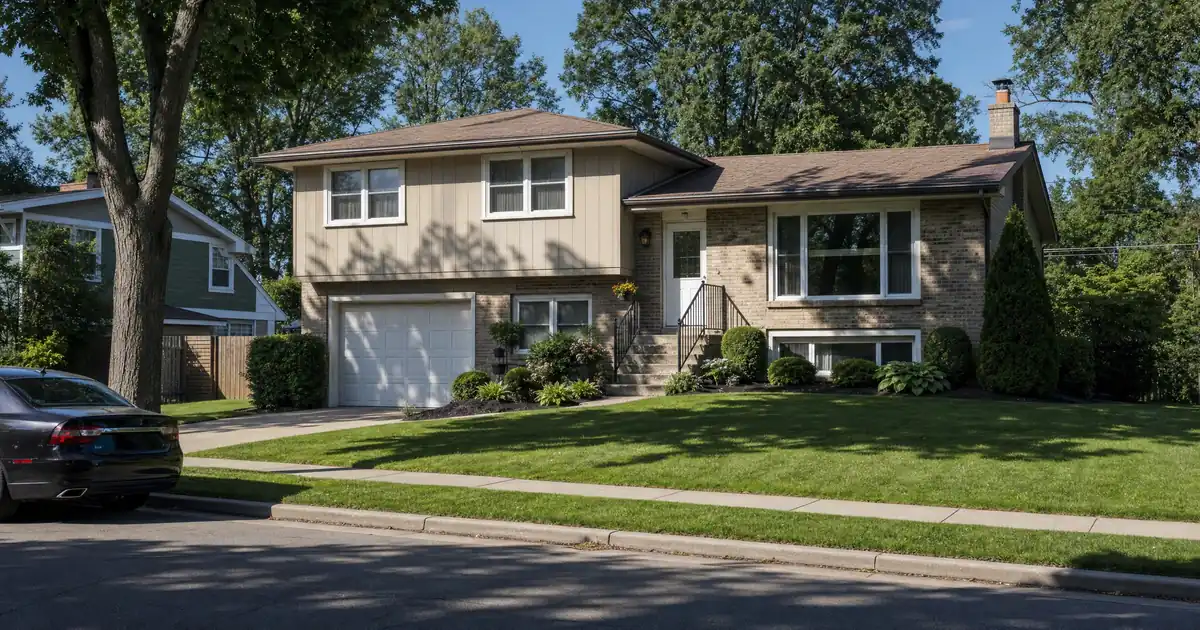
What Properties Qualify For A First Time Investor DSCR Loan — The Quick Read: Most standard rental properties qualify for a DSCR loan. It doesn’t matter if the buyer has ever owned a rental before. Single-family homes, 2-4 unit buildings, warrantable condos, and townhomes make up the core eligible set. Eligibility comes down to the property’s rent-to-payment math and its physical condition. It has nothing to do with the investor’s landlord resume. A few property types fall outside these programs entirely: manufactured housing, log homes, and barndominiums. That’s true no matter how strong the borrower’s file looks.
A DSCR loan is qualified mainly on one thing: does the property’s rental income cover the payment? That’s subject to lender guidelines. It’s not based on traditional personal-income documents, W-2s, or years of ownership history. This is what lets a first-time buyer compete for financing on equal footing with someone who already owns a dozen doors. What actually changes the conversation is the property itself. Its type, its condition, and whether its rent can be verified in a way a lender can underwrite — that’s what matters.
DSCR Calculator
Run the numbers in your market
Rate source: Freddie Mac 30-yr average via FRED® — Federal Reserve Bank of St. Louis · effective Aug 13, 2026
Prefilled with local estimates — enter your own rent or nightly figures, taxes, insurance, and HOA for a more accurate picture.
Program parameters update from Lendmire’s centralized guideline source. Taxes and insurance are editable estimates.
As of Aug 13, 2026 · General Freddie Mac market benchmark, not a Lendmire loan offer. Rent, nightly rate, occupancy, taxes, and insurance are editable estimates. Short-term rental figures are estimates only and vary significantly by season, property type, management approach, and local short-term-rental rules — confirm local regulations before relying on them. Qualifying income for short-term rentals varies by program — some use appraisal market rent, others use documented STR history or projections — and is confirmed in underwriting. Not a Loan Estimate, approval, or commitment to lend. Program availability and eligibility are subject to lender guidelines, credit approval, property review, and underwriting.
Key Terms Defined
DSCR (debt-service coverage ratio): the property’s monthly rent divided by its full monthly housing obligation. That obligation includes principal, interest, taxes, insurance, and HOA dues where applicable.
PITIA: shorthand for that full monthly obligation. It stands for principal, interest, taxes, insurance, and association dues combined.
LTV (loan-to-value): the loan amount shown as a percentage of the property’s value or purchase price. A lower LTV means more cash down.
Warrantable condo: a condo project that meets standard criteria at the project level. These cover owner-occupancy ratios, HOA reserve funding, and litigation history. Non-warrantable projects fall short on one or more of these. They route through a different underwriting path instead.
Seasoning: the minimum holding period a lender requires before it will consider a cash-out refinance on a property. Lenders commonly measure it from the date title was recorded at purchase.
Which Property Types Are Eligible?
Standard 1-4 unit residential real estate makes up the core of what these programs finance. That roster doesn’t shrink just because the buyer is new to investing. The table below shows how Lendmire sees eligibility sorted across the wholesale lenders in its network.
| Property Type | Generally Eligible | First-Time Investor Notes |
|---|---|---|
| Single-family (attached/detached) | Yes | Most straightforward file type for a first deal |
| 2-4 unit residential | Yes | Multiple rent rolls can strengthen coverage |
| Warrantable condo/PUD | Yes | Project must meet standard warrantability criteria |
| Non-warrantable condo | Case-by-case | Routes through lender-specific overlays |
| Short-term rental | Yes, with overlays | Typically needs about 12 months of hosting history |
| 5+ unit multifamily | Different program category | Usually moves toward commercial/bridge financing |
| Manufactured / log / barndominium | Not offered | Excluded across the network’s DSCR programs |
Single-family and small multifamily properties tend to make the cleanest first deal. There’s a simple reason for that. Rent is easy to document, comparable sales are easy to find, and the appraiser has a straightforward job. A 2-4 unit property can actually make the coverage math easier for a first-timer. Two or three rent rolls covering one loan payment often produce more cushion than a single-family lease covering that same payment alone.
Short-term rentals qualify too, but the overlays are real. Programs across the network generally cap short-term-rental purchases at 75% LTV. Refinance and cash-out leverage stays closer to 70%. Lenders want to see roughly a year of hosting history, along with a stronger credit profile — commonly 640 or higher — before they’ll treat projected nightly income as reliable. Short-term rental rules can also vary by city, county, HOA, and property type. Investors should confirm local rules before relying on projected rental income at all.
Which Property Types Are Not Eligible?
Three property categories are excluded outright across the network’s DSCR programs. They are single- and double-wide manufactured homes, log homes, and barndominiums. These aren’t just “harder to finance” or stuck with a stricter overlay. They’re simply not offered under these programs. That holds true regardless of the borrower’s credit, down payment, or rental income.
The reason mostly comes down to valuation reliability. Appraisers rely on comparable sales and comparable rent data to support both the property’s value and its income opinion. These construction types often don’t have a deep enough pool of standard comparables in most markets to support that process cleanly. That’s a structural limitation of the loan product. It’s not a reflection of the investor’s qualifications.
Does Being a First-Time Investor Change the Property Rules?
No. The property rules stay the same whether it’s an investor’s first rental or fiftieth. What can shift for a first-timer is the leverage and credit tier a specific lender is willing to offer on that property. The list of eligible property types itself doesn’t change.
Across the wholesale lenders Lendmire works with, purchase leverage on most files lands in the 75%-80% LTV range. That means 20%-25% down is typical. A smaller number of programs push to 85% LTV — 15% down — for borrowers with roughly a 700-plus credit score and strong overall files. That ceiling tends to apply regardless of prior landlord experience. Credit tiers across the network commonly start around a 620 floor. Most programs prefer 660 or better, and the strongest leverage tiers open up at 700-plus. A first-time buyer with a 780 score and solid reserves is often treated the same as an experienced investor with the same profile. The property, not the resume, is doing most of the underwriting work.
Entity vesting is also usually available on a first purchase. That means buying in an LLC rather than in your personal name, subject to program eligibility and the specific lender’s documentation requirements. That flexibility matters for investors thinking ahead to how they’ll title future acquisitions. Anyone weighing that decision on a very first deal may find it useful to read through Lendmire’s guide on how to qualify for a DSCR loan as a first-time investor before signing a purchase contract.
How the DSCR Ratio Actually Works on a First Deal
DSCR is calculated by dividing the property’s monthly rent by its full monthly housing payment. That payment includes principal, interest, taxes, insurance, and any HOA dues combined — commonly abbreviated PITIA. A ratio at or above 1.00 means the rent covers that full payment. A ratio below 1.00 means it doesn’t, at least on paper.
That distinction matters more than it sounds. Clearing 1.00 is not the same thing as positive cash flow in the way most investors mean it. Repairs, vacancy stretches, property management fees, utilities, and capital expenses all sit outside the DSCR calculation entirely. A property clearing 1.05 on paper can still run thin once real operating costs get layered in. First-time investors evaluating their first deal should stress-test the property’s actual operating picture. Don’t just look at the qualifying ratio.
Across select programs in Lendmire’s network, 1.00 acts as a starting floor for certain products. It’s not a universal industry standard, and it’s not a guarantee that any specific file will qualify. Some lenders in the network will consider coverage below that floor, but leverage and pricing adjust to compensate.Select lenders in the network do offer a no-ratio structure — no coverage ratio is calculated — though it generally requires existing primary-residence ownership, and leverage and terms adjust to match, subject to lender guidelines. Stronger coverage — comfortably above 1.20 or 1.30 — tends to open better leverage and terms across the board. That’s one more reason the property-type decision matters early. A duplex often produces stronger combined coverage than a comparable single-family purchase at the same price point, simply because it’s collecting more than one rent roll against one loan payment.
Rent verification itself follows a standardized format the industry has largely adopted. Lenders use a single-family comparable rent schedule for one-unit properties and a small residential income property appraisal for 2-4 unit buildings, per the naming convention in Fannie Mae’s Selling Guide. DSCR lenders reference these same form names as a documentation convention, even though the loans themselves aren’t sold to a government-sponsored enterprise.
Worked Example: Comparing Two Eligible Property Types
Picture a first-time investor choosing between a single-family rental and a duplex priced in a similar general range, both financed at 75% LTV. On the single-family property, rent from one tenant needs to cover the entire payment on its own. A common outcome lands coverage somewhere near 1.10x to 1.15x, depending on local rent levels. On the duplex, two separate rent rolls apply against that same single loan payment. That often pushes coverage closer to 1.25x to 1.35x for a comparable price point and market.
Neither outcome is guaranteed. Actual coverage depends on the specific rents, taxes, insurance, and HOA costs on each property. But the pattern holds often enough that it’s worth factoring into a first purchase decision. A first-timer torn between two similarly priced properties might find the multi-unit option easier to qualify for. It’s also more forgiving if one unit sits vacant for a stretch.
In Lendmire’s experience placing DSCR files across a wide range of wholesale lenders, first-time buyers who start with a straightforward single-family or small multifamily purchase tend to move through underwriting with fewer surprises. Compare that to buyers who start with a condotel or a property carrying a non-warrantable HOA. It’s not that the loan type is off the table — it’s that the extra layers of project review and documentation take more time to resolve. Investors weighing their very first acquisition often do better choosing the simpler property type first. They can save the more complex asset class for a second or third deal, once they understand how the process runs.
Reserves, Loan Size, and What Trips First-Timers Up
Reserve requirements vary by lender, leverage, loan size, and transaction type. A common benchmark across the network runs around six months of PITIA in verifiable liquid reserves. Conservative rate-and-term refinances at modest leverage under $1,500,000 sometimes see that requirement waived entirely. Loans above that threshold commonly step up toward nine months. Loan amounts on standard programs generally run up to $3,000,000. Above roughly $2,500,000, the network typically holds to 30-year fixed structures rather than adjustable or interest-only options.
Cash-out refinances top out around 75% LTV across most of the network. Lenders commonly expect roughly six months of seasoning from the purchase date before they’ll consider pulling equity back out. A larger down payment on the front end lowers the monthly obligation and can lift the DSCR ratio. But it never overrides a leverage cap, a credit floor, a reserve requirement, or a property-type exclusion. The strongest files clear both tests at once: enough equity in the deal, and enough rental coverage to support it. Terms vary by lender guidelines, property type, leverage, credit profile, and full file review.
DSCR vs. conventional financing
Two common ways to finance an investment property in this market. They qualify you differently — here’s how investors weigh them.
Why investors choose it
- Qualifies on the property’s rental income — no personal tax returns, W-2s, or pay stubs needed to document income.
- No personal debt-to-income ceiling to clear, so existing mortgages and obligations don’t cap your borrowing the same way.
- Can be closed in an LLC, keeping the property inside a business entity.
- Built for scaling — not held to the limit on number of financed properties that conventional financing applies.
- Underwriting centers on the deal: generally qualifies when the rent covers the payment, a 1.00x coverage ratio being a common baseline (confirmed in underwriting).
- Designed specifically for investment property, including long-term and, where the program allows, short-term rentals.
Where it’s strong
- Often the lowest ongoing financing cost for a buyer who fully qualifies on personal income — a fit for a first property or a cost-first purchase.
Trade-offs for investors
- Requires full personal income documentation and must fit within a debt-to-income limit — salary, existing debts, and other mortgages all count.
- Typically held in your personal name rather than a business entity.
- Caps how many financed properties you can carry, which can become a ceiling as a portfolio grows.
- Evaluates you as a borrower as much as the property, which usually means more paperwork.
How investors usually choose: a first or single property often optimizes for the lowest financing cost; portfolio builders often optimize for leverage, vesting in an LLC, and scaling past conventional caps. The right answer depends on your goals, the property, and current guidelines — both paths run through select lenders in Lendmire’s wholesale network, with eligibility and terms confirmed in underwriting.
A small number of states — including Connecticut, Florida, Illinois, and New Jersey — carry lender overlays across parts of the network. These generally cap purchase leverage closer to 75% LTV and hold loan sizes near $2,000,000. That’s true regardless of how strong the borrower’s file otherwise looks. Investors buying in those states should factor that into their down-payment planning early, rather than discovering it mid-underwriting.
DSCR loans are designed for non-owner-occupied investment properties. Because they are business-purpose investor loans, they get reviewed differently than a standard owner-occupied mortgage. That business-purpose framing is part of what lets underwriting center on the property’s rent instead of the borrower’s personal income documents.
Common Misconceptions First-Time Investors Have
“First-time investors can’t get a DSCR loan.” False. Scotsman Guide — the mortgage trade publication — frames DSCR products as suitable for new and experienced investors alike. The one hard boundary: these loans cannot finance a primary residence or a second home, regardless of experience level.
“Non-QM and DSCR mean lower-credit, riskier borrowers.” Also false. According to Scotsman Guide’s reporting, the average non-QM borrower carried a 776 FICO score. That puts this borrower pool close to conventional conforming credit profiles, not the subprime stereotype the label sometimes implies. Exact terms depend on the lender’s guidelines, property type, leverage, and a full review of the borrower’s file.
“Any condo qualifies the same way as a single-family home.” Not quite. A condo project’s warrantability status changes which path the file follows. Non-warrantable projects typically fall short on owner-occupancy ratios or HOA reserve funding. They route through additional lender-specific review that a warrantable project doesn’t require.
Investors comparing DSCR against a standard rental mortgage might also want to review Lendmire’s DSCR vs conventional investment loan comparison. A first-timer who already owns a primary residence and is weighing whether to pull equity for that first rental purchase may find young investor cash-out refinance for a first rental directly useful.
Tax treatment can depend on how the loan proceeds are used and how the property is held. Investors should keep clear records and speak with a qualified tax professional before relying on any deduction.
Lendmire (NMLS# 2371349) is a mortgage broker that arranges DSCR investor financing through select lenders across a wholesale network spanning 40 states plus Washington, D.C. For a fuller walkthrough of how these loans are structured from the ground up, Lendmire’s complete DSCR loans guide covers the mechanics in more depth than any single property-eligibility question can.
Nothing here is a commitment to lend, and loan approval is never guaranteed. Every scenario discussed here is subject to lender approval and to the borrower’s, property’s, and program’s individual guidelines. This content is general information only and is not financial, legal, or tax advice.
Frequently Asked Questions
Do I need prior landlord experience to qualify for a DSCR loan?
No. Eligibility runs mainly on the property’s rental income covering its payment, not on the buyer’s ownership history. A first-time investor with strong credit and adequate reserves is generally evaluated the same way as an experienced landlord on the same property.
Can I buy my first rental through an LLC instead of my own name?
Often, yes. Entity vesting is commonly available on DSCR purchases, subject to program eligibility and the specific lender’s documentation requirements. Not every wholesale program handles LLC vesting the same way, so this is worth confirming early in the file.
What happens if my property’s DSCR comes in below 1.00?
Some lenders in the network will still consider financing, with adjusted leverage and terms to compensate for the shortfall. A structure with no rent-to-payment test at all isn’t part of these standard paths — in the wider network it’s available only through select lenders, generally for borrowers who already own a primary residence. Coverage that clears 1.00 or better generally opens leverage and terms across the board.
Are condotels or non-warrantable condos off the table for a first-time buyer?
Not automatically, but they route through additional project-level review that a standard warrantable condo doesn’t require. That added layer can extend the underwriting process. That’s one reason many first-timers start with a simpler property type.
Does a bigger down payment guarantee my property will qualify?
No. A larger down payment lowers the monthly obligation and can raise the DSCR ratio, but it doesn’t override a credit floor, a reserve requirement, or a property-type exclusion like manufactured housing or log homes. The strongest files satisfy both the leverage test and the coverage test together. Every figure here varies by lender and program — guidelines, property type, leverage, and credit profile all apply.
If you are buying or refinancing a rental property and want to see how the numbers work on a specific address, Lendmire can help compare DSCR loan options based on the property’s projected income, your credit profile, target leverage, and overall investor goals. Reach Lendmire at 828-256-2183 or request a quote directly to start that conversation.
About Lendmire
Lendmire (NMLS# 2371349) is a mortgage brokerage focused on DSCR investor financing, helping arrange programs through wholesale and investor-lending channels in 41 markets, including Washington, D.C. DSCR loans are evaluated by the lender on property cash flow rather than personal income, subject to lender guidelines, supporting LLC closings and accommodating investors with four or more financed properties. Scotsman Guide Top Mortgage Workplace in both 2025 and 2026.
Get Started
Ready to find the right loan for you?
In about 30 seconds you can review financing options available for your home or investment property. No commitment required.
Informational only. Not a Loan Estimate, approval, or commitment to lend. Program availability and eligibility are subject to lender guidelines, credit approval, property review, and underwriting.
References
1. Fannie Mae Selling Guide — Rental Income (B3-3.8-01)
2. Scotsman Guide — Reach Real Estate Investors by Becoming an Expert in These Loans
3. Scotsman Guide — Which Groups Are Driving Non-QM Lending
This article is part of Lendmire’s DSCR loan program — full qualification details, guidelines, and scenarios live on the program page.
Related reading: DSCR Loan Eligible Property Types · Steps To Buying Your First Rental Property With A DSCR Loan · Getting Approved For Your First Investment Property
Brandon Miller
Founder & CEO, Mortgage Loan Originator, Lendmire LLC
- Mortgage Loan Originator · NMLS# 1129696 · Verify on NMLS Consumer Access
- North Carolina Real Estate Broker · License# 343312 · Verify on NCREC
- North Carolina Insurance Producer · License# 19053198 · Property, Casualty, Life, Health · Verify on NAIC SBS
- Lendmire LLC · Firm NMLS# 2371349 · Verify firm licensure
Important disclosures. Lendmire (NMLS# 2371349) is a licensed mortgage brokerage. Lendmire is not a direct lender, depository institution, or financial advisor. All loan inquiries are subject to lender underwriting; this article does not constitute a commitment to lend. Rates, terms, and program guidelines are subject to change without notice and vary by borrower profile, property type, and state. Information in this article is general in nature and is not financial, legal, or tax advice. Equal Housing Opportunity. NMLS Consumer Access: nmlsconsumeraccess.org.