
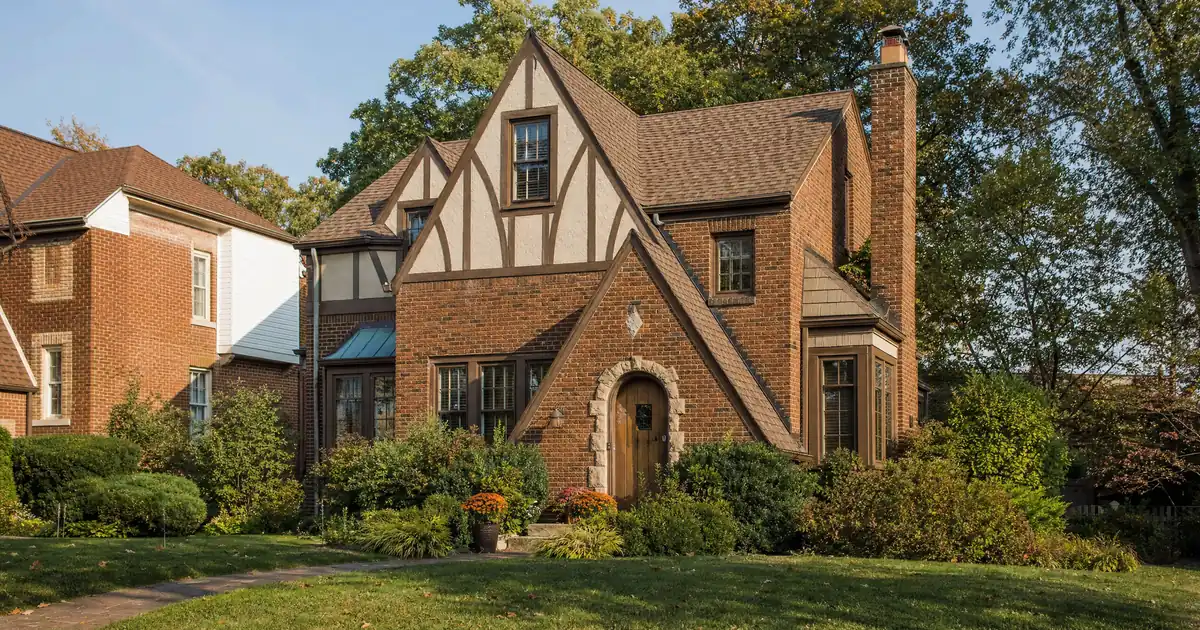
DSCR Loan Eligible Property Types — The Quick Read: DSCR loans finance non-owner-occupied investment property — single-family rentals, 2-4 unit buildings, condos, townhomes, and, through specific programs, short-term rentals typically qualify. Larger apartment buildings, raw land, and primary or second homes sit outside these programs by design. Manufactured homes, log homes, and barndominiums fall outside these programs entirely and are not offered through Lendmire’s wholesale network. Everything else comes down to whether the property can produce documented rental income that clears a lender’s coverage, leverage, and credit guidelines.
Key Takeaways
- The eligible core is single-family rentals, 2-4 unit buildings, warrantable condos, townhomes, and PUDs.
- Short-term rentals qualify through specific programs, with their own leverage, credit, and history rules.
- Buildings of five or more units generally move into small-balance commercial territory, outside standard DSCR.
- Manufactured homes (single- and double-wide), log homes, and barndominiums are ineligible in the network — they fall outside these programs, regardless of condition or rent potential.
- Condotels, non-warrantable condos, and rural-designated properties get reviewed case by case — not auto-approved, not auto-declined.
What Counts as an Eligible Property, and Why?
DSCR loans qualify a property, not a paycheck. The lender’s real question is simple: does this property produce rent that reasonably covers its own monthly housing obligation? Everything about property-type eligibility flows from that one test.
DSCR Calculator
Run the numbers in your market
Rate source: Freddie Mac 30-yr average via FRED® — Federal Reserve Bank of St. Louis · effective Aug 13, 2026
Prefilled with local estimates — enter your own rent or nightly figures, taxes, insurance, and HOA for a more accurate picture.
Program parameters update from Lendmire’s centralized guideline source. Taxes and insurance are editable estimates.
As of Aug 13, 2026 · General Freddie Mac market benchmark, not a Lendmire loan offer. Rent, nightly rate, occupancy, taxes, and insurance are editable estimates. Short-term rental figures are estimates only and vary significantly by season, property type, management approach, and local short-term-rental rules — confirm local regulations before relying on them. Qualifying income for short-term rentals varies by program — some use appraisal market rent, others use documented STR history or projections — and is confirmed in underwriting. Not a Loan Estimate, approval, or commitment to lend. Program availability and eligibility are subject to lender guidelines, credit approval, property review, and underwriting.
DSCR loans are designed for non-owner-occupied investment properties. Because they’re business-purpose investor loans, they’re reviewed differently than a standard owner-occupied mortgage — the borrower’s traditional personal-income documentation and pay stubs largely step aside, and the property’s income takes the lead role.
Lendmire, a mortgage broker (NMLS# 2371349) arranging DSCR investor loans across 40 states plus Washington, D.C., works with a wholesale network of DSCR lenders, and each one sets its own property-type overlays on top of that shared core logic. That’s the part most investors miss: there’s no single national rulebook. There’s a common core, and then a lot of lender-specific judgment layered on top of it.
The core that shows up across nearly every program: single-family rentals, 2-4 unit buildings, warrantable condos, townhomes, and planned unit developments. Beyond that core, eligibility gets program-specific fast — which is exactly why the rest of this piece walks through each category on its own.
How Underwriting Actually Treats the Property, Step by Step
Every DSCR file runs through the same basic sequence, regardless of property type: pull comparable rent, compare it to the full monthly obligation, and see where the ratio lands. The property type mostly matters because it determines how confidently that rent figure can be documented.
Step one is the appraisal. For a single-family rental, the appraiser completes a rent comparable schedule alongside the standard appraisal report; for a 2-4 unit building, a small residential income property appraisal captures the combined rent roll across every unit. These are the same rental income documentation forms the broader mortgage industry has used for years — DSCR lenders lean on them because they’re a standardized way to document market rent, not because DSCR loans are tied to any agency program.
Step two is the ratio itself. Take the documented monthly rent and divide it by the property’s full monthly housing payment — principal, interest, taxes, insurance, and any HOA dues combined, often shortened to PITIA. Select programs in the network set 1.00x as a starting floor, though that’s a floor for specific programs, not a universal industry standard. Clear 1.00x, and rent covers the payment. Clear 1.20x or 1.30x, and stronger leverage and pricing tiers usually open up.
A handful of lenders in the network will also review deals that land below 1.00x, though leverage typically comes down and terms shift to offset the added risk. No-ratio programs — meaning no rent-to-payment test at all — aren’t part of what these standard programs offer — in the wider network they exist only through select lenders, generally for borrowers who already own a primary residence. Some form of coverage math always applies.
One caution worth sitting with: clearing 1.00x is not the same as positive cash flow. The ratio only measures rent against PITIA. Repairs, vacancy stretches, property management fees, utilities, and capital expenses all sit outside that calculation entirely. An investor can clear 1.15x on paper and still run negative some months once real operating costs show up. For a full walkthrough of how the ratio and the qualification process work end to end, Lendmire’s complete DSCR loans guide covers the underwriting model in more depth.
Tax treatment can depend on how loan proceeds are used and how the property is titled; investors should keep clean records and talk to a qualified tax professional before relying on any deduction.
Where Does the Line Sit for Multi-Unit Buildings?
Two to four units is the ceiling for standard residential DSCR — five units and up generally shift into small-balance commercial territory with a different underwriting model entirely. This isn’t a lender preference so much as a structural line: residential income-property appraisal forms and standard DSCR programs are built around the 1-4 unit range.
That ceiling is also where property type quietly becomes a coverage-ratio lever. A single rent check on a single-family property either clears the floor or it doesn’t. A duplex, triplex, or fourplex stacks multiple leases into one loan, and combined rent rolls often push the ratio higher than a comparable single-family purchase at the same price point — more on that math below.
Are Condotels and Non-Warrantable Condos Eligible?
Sometimes, and it depends entirely on the specific lender file. Condotels and non-warrantable condos sit outside conventional agency lending — Fannie Mae’s guidelines explicitly list condo and co-op hotel units among property types conventional loans won’t touch. That’s precisely the gap DSCR programs were built to fill, but “DSCR fills the gap” doesn’t mean every lender in the network treats these the same way.
Some lenders in the network will finance a condotel; others decline the category outright. The underwriting concern is real: a condotel unit’s income often runs through a hotel operator’s rental program rather than a traditional lease, which introduces a different kind of income volatility than a standard rental. Non-warrantable condos — projects that fail one or more of the standard warrantability tests, like high investor concentration or pending litigation — face a similar case-by-case review. Neither category is a blanket yes or a blanket no; it’s a file-by-file conversation with whichever lender in the network is the best fit.
Can a DSCR Loan Finance a Short-Term Rental?
Yes, through specific programs built for it — but the leverage and documentation rules differ from a standard long-term rental. Purchase financing on short-term rentals typically runs up to 75% LTV, refinance and cash-out both typically cap closer to 70% LTV, and lenders generally want a credit score of 640 or better along with roughly 12 months of documented hosting history and a coverage floor set by the specific program.
That hosting-history requirement exists because the standard rent comparable form appraisers use wasn’t built for nightly income. Appraisal-industry training material is blunt about this: Form 1007 is not designed for single-family properties used as short-term rentals, because it documents monthly market rent, not nightly booking revenue or platform-level business income. That’s why STR-focused programs lean on platform statements, trailing operating history, or projection tools instead of treating a standard appraisal’s rent figure as the final word.
New short-term rentals without a track record face a real hurdle here — some lenders will underwrite the property as if it were a long-term rental for qualification purposes until it builds history. Investors evaluating this path should read Lendmire’s DSCR loan for Airbnb breakdown before assuming a property may qualify on projected nightly rates alone. Coverage for short-term rentals runs on the same principle as anywhere else in this piece — rent (or documented STR income) divided by PITIA — never on a promised rate or a projected occupancy number without support.
What About Rural Land, Acreage, and Unusual Construction?
A rural label doesn’t disqualify a property outright, but it changes the conversation. Some of the strongest-performing short-term rentals sit in areas an appraisal will flag as rural, and because not every lender is comfortable with that combination, a rural designation can mean reduced leverage, a lender-specific decline, or a referral to a different program in the network. It’s a risk-adjustment factor, not an automatic disqualifier.
Worth separating clearly: a lender’s internal “rural” risk label is different from the federal regulatory definition of “rural or underserved” used for compliance purposes under Regulation Z. They share a name and nothing else — one affects a lender’s appetite for the deal, the other governs a completely separate compliance question. Acreage matters too: DSCR programs typically limit eligible properties to five acres or fewer, which screens out agricultural and rural-recreational parcels that don’t function as straightforward income-producing rentals.
Construction type draws a harder line, and it’s a firm one: manufactured homes — single- and double-wide — log homes, and barndominiums are ineligible in the network. These property types fall outside the programs available, full stop. It doesn’t matter how the comps look, how strong the documented rent is, or how much equity or down payment is put toward the deal — none of that changes the outcome, because the property type itself is the disqualifier, not the deal’s financials. If an investor is eyeing one of these, the conversation needs to start with a different loan product entirely, not a DSCR file.
Does Mixed-Use Property Qualify?
Generally only when the income is primarily residential in character. DSCR programs are built around residential rent, and a property with a meaningful slice of retail or office space introduces a different income stream that most standard DSCR underwriting isn’t set up to evaluate.
Conventional agency guidelines offer a useful reference point here even though they don’t govern DSCR files directly: Fannie Mae caps commercial space at 35% of a project or building before a project becomes ineligible for standard financing. DSCR investors evaluating a mixed-use asset should expect a similar mental model from lenders in the network — the more the property leans residential, the more comfortably it fits a standard file; the more it leans commercial, the more likely it needs a different loan product altogether.
Property Type Eligibility at a Glance
| Property Type | Status | Why |
|---|---|---|
| Single-family rental | Eligible | Core product; strong rent-comp support |
| 2-4 unit building | Eligible | Combined rent roll strengthens coverage |
| Warrantable condo / townhome / PUD | Eligible | Standard comps and project docs support it |
| Short-term rental (STR) | Conditional | Specific programs; higher score, hosting history |
| Non-warrantable condo | Conditional | Reviewed lender by lender |
| Condotel | Conditional | Hotel-managed income adds volatility |
| Mixed-use, heavy commercial | Conditional | Reviewed for residential-income share |
| 5+ unit apartment building | Not offered | Shifts into small-balance commercial |
| Manufactured home | Not offered | Ineligible in the network; outside these programs |
| Log home | Not offered | Ineligible in the network; outside these programs |
| Barndominium | Not offered | Ineligible in the network; outside these programs |
| Raw land / vacant lot | Not offered | No rental income to underwrite |
| Primary or second home | Not offered | Business-purpose product only |
How Property Type Changes the Coverage Ratio
Picture two properties at the same purchase price. A single-family rental produces one rent check. If that single rent lands the modeled scenario at roughly 0.95x coverage against the monthly obligation, it falls short of the 1.00x floor select programs use as a starting point. A 2-4 unit building at that same price point stacks multiple leases instead of one, and the combined rent might push that same modeled scenario to roughly 1.15x-1.25x coverage.
DSCR vs. conventional financing
Two common ways to finance an investment property in this market. They qualify you differently — here’s how investors weigh them.
Why investors choose it
- Qualifies on the property’s rental income — no personal tax returns, W-2s, or pay stubs needed to document income.
- No personal debt-to-income ceiling to clear, so existing mortgages and obligations don’t cap your borrowing the same way.
- Can be closed in an LLC, keeping the property inside a business entity.
- Built for scaling — not held to the limit on number of financed properties that conventional financing applies.
- Underwriting centers on the deal: generally qualifies when the rent covers the payment, a 1.00x coverage ratio being a common baseline (confirmed in underwriting).
- Designed specifically for investment property, including long-term and, where the program allows, short-term rentals.
Where it’s strong
- Often the lowest ongoing financing cost for a buyer who fully qualifies on personal income — a fit for a first property or a cost-first purchase.
Trade-offs for investors
- Requires full personal income documentation and must fit within a debt-to-income limit — salary, existing debts, and other mortgages all count.
- Typically held in your personal name rather than a business entity.
- Caps how many financed properties you can carry, which can become a ceiling as a portfolio grows.
- Evaluates you as a borrower as much as the property, which usually means more paperwork.
How investors usually choose: a first or single property often optimizes for the lowest financing cost; portfolio builders often optimize for leverage, vesting in an LLC, and scaling past conventional caps. The right answer depends on your goals, the property, and current guidelines — both paths run through select lenders in Lendmire’s wholesale network, with eligibility and terms confirmed in underwriting.
The purchase price didn’t change. The leverage didn’t change. What changed is the income side of the ratio — more doors, more rent, better coverage. That’s the honest case for looking at 2-4 unit properties even for investors who started out shopping single-family: the property-type decision itself can be the difference between a file that clears the floor and one that doesn’t.
Purchase leverage across most of the network runs 75%-80% LTV, with select high-leverage programs reaching 85% LTV for borrowers around a 700 credit score. Cash-out refinances generally top out near 75% LTV with roughly six months of seasoning expected first. Reserve requirements vary by lender, leverage, and loan size — commonly landing around six months of PITIA, with some conservative rate-term files at modest leverage seeing reserves waived, and files above roughly $1.5 million typically stepping up closer to nine months. Every one of these numbers is a typical range from select programs in the network, not a guarantee for any individual file — qualification runs primarily on the property’s rental income covering the payment, subject to lender guidelines, credit approval, and property review.
A bigger down payment lowers the payment and can lift the ratio, but it never overrides a hard property-type exclusion. A larger down payment on a barndominium still doesn’t produce a reviewable DSCR file, because the property type itself is the obstacle — these structures are ineligible in the network regardless of leverage.
What If the Property Doesn’t Qualify Yet?
A property that needs real work before it can be leased usually isn’t ready for a DSCR loan yet — it’s a candidate for a rehab or bridge loan first. Once it’s renovated, occupied, and producing documented rent, the picture changes.
That’s often when investors start asking when it makes sense to refinance a rental property into a DSCR loan, particularly once the seasoning clock on the property has run its course — though some situations allow investors to refinance without waiting out a full seasoning period, depending on the lender and file. Because DSCR underwriting reviews the property’s income rather than requiring the personal income documentation a conventional refinance demands, that first stabilized lease is frequently what turns a rehab project into a refinanceable rental.
If a specific property — a duplex, a condo, a short-term rental with a year of hosting history — needs a real answer, Lendmire can help compare DSCR options across its wholesale network based on the property’s income, credit profile, leverage, and investor goals. Reach Lendmire at 828-256-2183, or request a quote to walk through a specific file.
Key Terms Defined
DSCR (Debt Service Coverage Ratio): the number produced by dividing a property’s monthly rent by its full monthly housing payment.
PITIA: principal, interest, taxes, insurance, and any HOA dues, added together into one monthly housing obligation.
Non-owner-occupied / business-purpose loan: financing for an investment property the borrower doesn’t live in, underwritten under different rules than a personal home loan.
Warrantable condo: a condo project that meets standard ownership, insurance, and occupancy thresholds lenders use to judge project risk.
Seasoning: the waiting period a lender wants between buying a property and pulling equity out of it through a refinance.
Non-QM: short for “non-qualified mortgage” — a loan reviewed outside the standard qualified-mortgage rule, which is why DSCR programs can underwrite around a property’s income instead of the borrower’s traditional personal-income documentation.
DSCR loans are never a guaranteed approval. Every scenario described here is subject to lender approval and to the specific borrower’s credit, the property’s condition and location, and the guidelines of the program a given file is placed with. This article is general information, not financial, legal, or tax advice, and nothing in it is a commitment to lend.
Frequently Asked Questions
Can a DSCR loan finance a fourplex? Yes — 2-4 unit buildings sit squarely in the eligible core. The combined rent roll across all units is what gets compared to the property’s monthly obligation, and stacking multiple leases often produces a stronger ratio than a single-family purchase at a comparable price.
Are condotels eligible for DSCR financing? Sometimes. Condotels are excluded from conventional agency financing, which is part of why DSCR programs exist to serve them, but not every lender in a given network will take one. Hotel-managed rental income carries different volatility than a standard lease, so expect case-by-case review rather than a blanket answer.
What about a log cabin or a barndominium? Neither is offered through Lendmire’s network. Log homes and barndominiums are ineligible in the network and fall outside these programs regardless of the property’s condition, rent potential, or comps — an investor eyeing one of these needs a different loan product entirely.
Are manufactured homes eligible for a DSCR loan through Lendmire? No. Manufactured homes, whether single- or double-wide, are not offered through Lendmire’s wholesale network. That’s a property-type exclusion, not a documentation issue, so no amount of rent support or equity changes the outcome.
Does a rural-designated property get automatically declined? No, but it can shift the terms. A rural label on the appraisal is a risk factor some lenders weigh with reduced leverage or a referral to a different program, not an automatic disqualifier. It’s also worth knowing that a lender’s internal “rural” risk label is a separate thing from the federal regulatory definition of rural or underserved.
Can a DSCR loan be used to buy raw land? No. DSCR loans qualify a property based on the rental income it produces, and raw land has no rent to document. That category sits outside every DSCR program in the network, standard or specialty.
About Lendmire
Lendmire is a non-QM mortgage brokerage (NMLS# 2371349) arranging DSCR investor loans in 41 markets, including Washington, D.C., through wholesale and investor-lending channels. DSCR loans are evaluated by the lender on rental income rather than personal income, subject to lender guidelines — a fit for LLC-owned portfolios, self-employed investors, and operators scaling beyond conventional loan caps. Recognized as a Scotsman Guide Top Mortgage Workplace in 2025 and 2026.
Lendmire’s Top Mortgage Workplace recognition is documented by Scotsman Guide 2025 Top Mortgage Workplace and Scotsman Guide 2026 Top Mortgage Workplace.
Get Started
Ready to find the right loan for you?
In about 30 seconds you can review financing options available for your home or investment property. No commitment required.
Informational only. Not a Loan Estimate, approval, or commitment to lend. Program availability and eligibility are subject to lender guidelines, credit approval, property review, and underwriting.
References
1. Fannie Mae Selling Guide — Rental Income (B3-3.8-01)
2. Fannie Mae Selling Guide — Ineligible Projects (B4-2.1-03)
3. McKissock Learning — Form 1007 & Its Impact on Short-Term Rental Appraisals
This article is part of Lendmire’s DSCR loan program — full qualification details, guidelines, and scenarios live on the program page.
Related reading: Interest-only DSCR Loan Eligible Property Types · Eligible Property Types For A 40-year DSCR Loan · What Properties Are Ineligible for DSCR Loans?
Brandon Miller
Founder & CEO, Mortgage Loan Originator, Lendmire LLC
- Mortgage Loan Originator · NMLS# 1129696 · Verify on NMLS Consumer Access
- North Carolina Real Estate Broker · License# 343312 · Verify on NCREC
- North Carolina Insurance Producer · License# 19053198 · Property, Casualty, Life, Health · Verify on NAIC SBS
- Lendmire LLC · Firm NMLS# 2371349 · Verify firm licensure
Legal disclosures. Lendmire (NMLS# 2371349) is a state-licensed mortgage brokerage that arranges financing through wholesale lender relationships. Lendmire is not a direct lender, depository institution, or registered financial advisor. The discussion above is general informational content about real estate financing — it is not financial, legal, or tax advice, and readers should consult licensed professionals for guidance on their individual circumstances. Loan inquiries are subject to lender underwriting; this article does not represent a commitment to lend. Loan terms, rates, and qualification standards vary by borrower, property, and state, and are subject to change at any time. Equal Housing Opportunity. NMLS Consumer Access: nmlsconsumeraccess.org.