
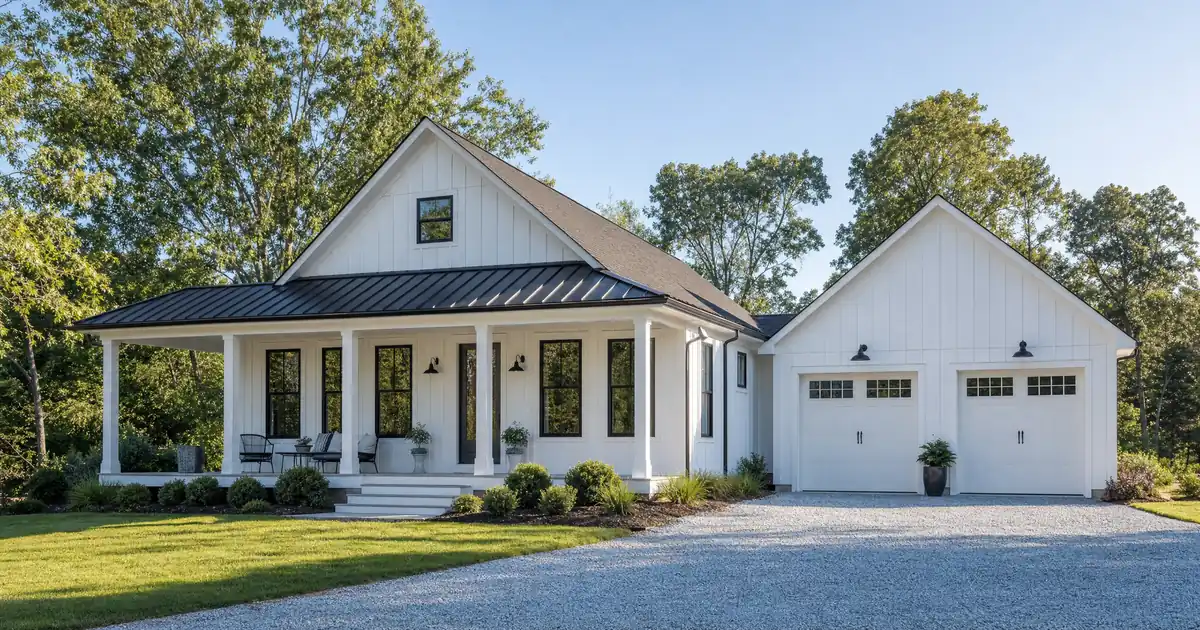
Eligible Property Types For A 40-Year DSCR Loan — The Quick Read: Single-family rentals, 2-4 unit properties, warrantable condos, townhomes, and most short-term rentals all qualify for a 40-year DSCR structure across Lendmire’s wholesale network. Five-unit-plus buildings, manufactured homes, log homes, and barndominiums do not — they fall outside these programs entirely. Non-warrantable condos and condotels sit in between, with eligibility depending heavily on which lender is reviewing the file. Loan size matters too: above roughly $2,500,000, the network generally shifts to 30-year fixed terms only.
Key Takeaways
DSCR Calculator
Run the numbers in your market
Rate source: Freddie Mac 30-yr average via FRED® — Federal Reserve Bank of St. Louis · effective Aug 13, 2026
Prefilled with local estimates — enter your own rent or nightly figures, taxes, insurance, and HOA for a more accurate picture.
Program parameters update from Lendmire’s centralized guideline source. Taxes and insurance are editable estimates.
As of Aug 13, 2026 · General Freddie Mac market benchmark, not a Lendmire loan offer. Rent, nightly rate, occupancy, taxes, and insurance are editable estimates. Short-term rental figures are estimates only and vary significantly by season, property type, management approach, and local short-term-rental rules — confirm local regulations before relying on them. Qualifying income for short-term rentals varies by program — some use appraisal market rent, others use documented STR history or projections — and is confirmed in underwriting. Not a Loan Estimate, approval, or commitment to lend. Program availability and eligibility are subject to lender guidelines, credit approval, property review, and underwriting.
- Core eligible categories: single-family homes, 2-4 unit properties, warrantable condos, townhomes/PUDs, and short-term rentals through select programs.
- The hard cutoff sits at four units — five-plus unit buildings move into commercial multifamily financing, not residential DSCR.
- Manufactured homes (single- and double-wide), log homes, and barndominiums are not offered anywhere in the network, regardless of term length.
- The 40-year structure helps most on properties where rent-to-payment math runs thin at purchase — smaller multifamily, higher-priced condos, and STRs in expensive markets.
- Loan size caps the term itself: above about $2,500,000, most lenders default back to 30-year fixed amortization.
What a 40-Year Term Actually Changes
A 40-year DSCR loan stretches the amortization schedule from the standard 30 years to 40, and it often pairs with an interest-only period for the first several years. Neither change alters what kind of property qualifies — a duplex is still a duplex whether the loan amortizes over 30 years or 40. What changes is the math sitting underneath the qualification decision.
DSCR — debt-service coverage ratio — compares the property’s rent against its full monthly obligation, known as PITIA (principal, interest, taxes, insurance, and any association dues). Stretch that same loan balance over 40 years instead of 30, and the monthly principal-and-interest slice shrinks, which lifts the coverage ratio without touching the rent side of the equation at all. Add an interest-only period on top, and the payment drops further during those early years, pushing the ratio higher still.
That’s the entire mechanical purpose of the extended term: lower payment, higher DSCR, same property. It’s a financing-structure decision, not a property-eligibility decision — but the two intersect in ways worth understanding before shopping for a lender.
Key Terms Defined
DSCR (debt-service coverage ratio) — a number that compares a property’s monthly rent to its full monthly payment; anything above 1.00 means the rent covers the payment.
PITIA — the full monthly housing obligation: principal, interest, taxes, insurance, and association dues, if any.
LTV (loan-to-value) — the loan amount expressed as a percentage of the property’s value; lower LTV means a larger down payment.
Business-purpose loan — a loan made to buy, improve, or hold a non-owner-occupied rental property rather than a home the borrower lives in; DSCR loans fall into this category, which is why they’re underwritten differently from a standard owner-occupied mortgage.
Seasoning — the length of time a borrower must own a property before a lender will allow a cash-out refinance against it, typically counted from the title recording date.
Non-warrantable condo — a condo project that doesn’t meet standard project-review criteria (too many rentals, pending litigation, a commercial-space ratio that’s too high, and similar factors), which narrows the pool of lenders willing to finance it.
Eligible Property Types at a Glance
The property types that clear standard DSCR underwriting are the ones where a lender can pull a defensible rent figure and a clean valuation. That’s the entire logic behind every row below.
| Property Type | Eligible on 40-Year? | Key Nuance |
|---|---|---|
| Single-family rental | Yes, broadly | Deepest comp support, most standardized file |
| 2-4 unit (duplex, triplex, fourplex) | Yes | Still residential; rent from all units counts |
| Warrantable condo | Yes | Standard project review applies |
| Townhome / PUD | Yes | Treated like a single-family rental |
| Non-warrantable condo | Case-by-case | Fewer lenders in the network will take it |
| Condotel | Narrow, select lenders only | Rental-pool structure complicates income |
| Short-term rental (STR) | Yes, select lenders | Needs hosting history or a narrative income analysis |
| 5-10 unit apartment building | No | Moves into commercial multifamily financing |
| Manufactured home (single/double-wide) | No | Not offered in the network on any term |
| Log home | No | Not offered in the network on any term |
| Barndominium | No | Not offered in the network on any term |
For a deeper look at how the base program treats these categories outside the 40-year context, Lendmire’s DSCR loan eligible property types guide breaks down standard-term eligibility side by side.
Property Types the Network Simply Doesn’t Offer
Manufactured homes — both single- and double-wide — log homes, and barndominiums are not reviewable through Lendmire’s DSCR wholesale network, on a 40-year term or any other. That’s a hard rule across the programs Lendmire places files with, not a case-by-case judgment call.
This isn’t a “harder to finance” situation. It’s a “not offered” situation, and the distinction matters for an investor’s search. Some of these property types can find financing through niche manufactured-housing lenders or portfolio banks operating outside the DSCR non-QM space, but that’s a different product with a different underwriting model entirely. If a target property falls into one of these three categories, the 40-year DSCR structure — or any DSCR structure — isn’t the tool for that deal.
Raw land and properties requiring heavy rehab before they can generate rent also fall outside standard eligibility, for a more basic reason: DSCR underwriting needs an existing or immediately achievable rent figure, and a property that can’t be leased today can’t produce one.
The Four-Unit Cliff
Residential DSCR financing stops at four units. A fourplex qualifies; a five-unit building does not — it moves into commercial multifamily financing with a different appraisal method, different lenders, and a different capital source entirely.
This line exists because of how the appraisal is built, not because of an arbitrary policy choice. Two-to-four unit properties get appraised using the small residential income-property framework, described in Fannie Mae’s Selling Guide as the standard tool for capturing rent across a small number of units. That same appraisal form explicitly stops at four units — anything larger gets treated as a commercial property, appraised on an income-capitalization basis instead. DSCR non-QM programs borrow this same convention wholesale, which is why the four-unit boundary shows up consistently across the network rather than varying lender to lender.
An investor eyeing a five-unit or six-unit building shouldn’t expect a residential DSCR quote to cover it. That deal needs a commercial multifamily lender, and the underwriting conversation — leverage, reserves, amortization — looks entirely different from what’s described here.
Where the Extra Ten Years Actually Helps
The 40-year structure earns its keep on properties where rent-to-payment math runs tight at purchase — not on properties that already clear coverage comfortably. A single-family rental in a market with strong rent growth relative to price often clears 1.20x or better on a standard 30-year term; stretching to 40 years there is a nice-to-have, not a necessity.
Smaller multifamily is a different story. A duplex or triplex bought near the top of its price range, in a market where rents haven’t caught up yet, can land right at the edge of 1.00x on 30-year amortization. Stretch that same loan to 40 years, and the lower payment can lift the ratio into a more comfortable range — sometimes enough to unlock better leverage or pricing tiers that weren’t available on the tighter file.
Higher-priced condos see something similar. Assessments and dues eat into the payment side of PITIA, and rent growth in luxury or resort-adjacent condo markets doesn’t always track purchase-price growth. The extended term and an interest-only period can be the difference between a file that clears a lender’s minimum coverage floor and one that doesn’t.
Short-term rentals, where income swings seasonally, benefit from the lower baseline payment for a different reason: it builds in more cushion against the slower months. That cushion matters more for STRs than for long-term rentals, because DSCR only measures rent against PITIA — it says nothing about vacancy, cleaning turnover, platform fees, or management costs, and STR operating expenses tend to run heavier than a standard lease.
Short-Term Rentals and the 40-Year Structure
STRs qualify through select lenders in the network, but the underwriting path looks different from a long-term rental from the first document requested. Purchase leverage on STRs tops out around 75% LTV, refinances generally cap near 70%, and cash-out refinances land around 70% as well. Most programs want a credit score of 640 or higher and roughly 12 months of hosting history before they’ll lean on actual platform income.
The appraisal side is where STRs genuinely diverge from every other property type on this list. A standard one-unit rent schedule was built to estimate long-term monthly rent, and it simply wasn’t designed to capture nightly or seasonal pricing. Class Valuation, an appraisal management company active in non-QM lending, is direct about this limitation — the standard rent-schedule form cannot support short-term rental appraisals because it was built exclusively around stable, long-term occupancy assumptions. Reporting from HousingWire echoes the same point, noting that forcing STR income through that standard form tends to produce artificially low ratios that understate what the property actually earns. McKissock, which trains appraisers, adds a practical detail: appraisers aren’t permitted to just take a nightly rate and multiply it out to a monthly figure. The accepted alternative is a narrative income analysis built on actual booking history, seasonal occupancy patterns, and comparable STR performance — a different document from what a long-term rental file needs, but a standard one across the space.
Lendmire’s interest-only DSCR loan eligible property types page covers how the IO structure specifically interacts with STR income documentation, which is worth a look for anyone weighing an Airbnb purchase against a long-term rental in the same price range.
Non-Warrantable Condos and Condotels: The Gray Zone
Non-warrantable condos and condotels sit closer to “it depends on the lender” than any other category on this list, and that’s the honest answer. A condo project can be non-warrantable for a handful of reasons — too high a concentration of investor-owned units, pending litigation, a commercial-space ratio that runs too high, or a project that’s still under construction. Some lenders in Lendmire’s network treat non-warrantable condos as standard collateral with a modest leverage haircut; others avoid the category almost entirely.
Condotels — units in buildings with hotel-style operations and mandatory rental-pool management — draw even more caution, because the borrower often doesn’t control occupancy of the specific unit being financed the way a standard rental owner would. Appetite here varies lender to lender more than in almost any other category, and a 40-year term on a condotel is available through a narrower slice of the network than on a standard condo.
The practical takeaway: if the target property is a non-warrantable condo or condotel, expect the shopping process itself to take more legwork, and expect the terms to differ meaningfully from a warrantable condo down the street.
DSCR vs. conventional financing
Two common ways to finance an investment property in this market. They qualify you differently — here’s how investors weigh them.
Why investors choose it
- Qualifies on the property’s rental income — no personal tax returns, W-2s, or pay stubs needed to document income.
- No personal debt-to-income ceiling to clear, so existing mortgages and obligations don’t cap your borrowing the same way.
- Can be closed in an LLC, keeping the property inside a business entity.
- Built for scaling — not held to the limit on number of financed properties that conventional financing applies.
- Underwriting centers on the deal: generally qualifies when the rent covers the payment, a 1.00x coverage ratio being a common baseline (confirmed in underwriting).
- Designed specifically for investment property, including long-term and, where the program allows, short-term rentals.
Where it’s strong
- Often the lowest ongoing financing cost for a buyer who fully qualifies on personal income — a fit for a first property or a cost-first purchase.
Trade-offs for investors
- Requires full personal income documentation and must fit within a debt-to-income limit — salary, existing debts, and other mortgages all count.
- Typically held in your personal name rather than a business entity.
- Caps how many financed properties you can carry, which can become a ceiling as a portfolio grows.
- Evaluates you as a borrower as much as the property, which usually means more paperwork.
How investors usually choose: a first or single property often optimizes for the lowest financing cost; portfolio builders often optimize for leverage, vesting in an LLC, and scaling past conventional caps. The right answer depends on your goals, the property, and current guidelines — both paths run through select lenders in Lendmire’s wholesale network, with eligibility and terms confirmed in underwriting.
Loan Size and the 40-Year Ceiling
Loan size is its own gatekeeper for the 40-year structure, separate from property type entirely. Standard DSCR programs across Lendmire’s network run up to roughly $3,000,000, but once a loan crosses about $2,500,000, most lenders default back to 30-year fixed amortization only — the 40-year and interest-only options thin out considerably at that size, regardless of how strong the property or the borrower’s credit looks.
This matters most for exactly the property types where the 40-year term helps the most: a higher-priced condo or a strong-rent duplex in an expensive market can bump into that ceiling faster than a mid-market single-family rental would. A handful of states — Connecticut, Florida, Illinois, and New Jersey among them — carry their own overlays too, generally capping purchase leverage near 75% LTV and holding loan amounts closer to $2,000,000 in those markets. An investor targeting a larger file in one of those states should build the term-length conversation into the financing plan early, not after the appraisal comes back.
A Worked Example: Same Property, Two Amortization Schedules
Picture a duplex where the rent from both units, run against a standard 30-year fully amortizing payment, lands the file at roughly 0.97x coverage — just under the 1.00x threshold that several programs in the network use as a starting floor. That’s a real, if narrow, gap using modeled assumptions, not a fabricated pass-fail number.
Run the same rent and the same loan balance through a 40-year schedule with an initial interest-only period, and the payment drops enough that the ratio can climb into something like 1.08x-1.15x territory, depending on the specific rate and program. That shift is what makes the extended term relevant to property-type eligibility even though it doesn’t change what qualifies — it changes whether a marginal file clears the floor a given lender is using that day.
It’s worth being blunt about what that ratio does and doesn’t mean. Clearing 1.00x is not the same as positive cash flow. Repairs, vacancy stretches, property management fees, utilities, and capital expenditures all sit outside the DSCR calculation entirely — a file at 1.05x can still lose money in a bad year if those costs run heavy. The ratio measures whether rent covers the mortgage payment, full stop.
What This Means for the Next File
Across Lendmire’s wholesale network, purchase leverage on most DSCR files runs 75%-80% LTV, with select high-leverage programs reaching 85% for borrowers with scores around 700 or better. Cash-out refinances top out closer to 75% LTV network-wide, and most lenders want roughly six months of seasoning — ownership time — before they’ll consider pulling equity back out. Credit floors go as low as 620 in parts of the network, though most programs prefer something closer to 660, and the strongest leverage tiers open up around 700 and above.
Reserve requirements vary by lender, loan size, and leverage more than almost anything else in a DSCR file. Six months of PITIA in reserves is common on a lot of standard files; conservative rate-and-term refinances at modest leverage under $1,500,000 sometimes see that requirement waived entirely, while loans above that size typically step up to something closer to nine months.
A bigger down payment lowers the monthly payment and can lift the coverage ratio — but it doesn’t erase a leverage cap, a credit floor, a reserve requirement, or a property-type restriction. The strongest files clear both tests at once: enough equity in the deal and enough rental coverage to satisfy the program’s floor. One without the other still leaves gaps a lender will flag. Exact terms depend on the lender’s guidelines, property type, leverage, and a full review of the borrower’s file.
For investors comparing a purchase against a refinance path on an existing rental, Lendmire’s guide on when it makes sense to refinance a rental property walks through that decision in more depth. And for anyone weighing whether a sub-1.00x file has any path forward at all, the no-ratio DSCR loan eligible property types page covers what’s available through select lenders — though the leverage and terms adjust meaningfully when a file leans on that structure.
Lendmire (NMLS# 2371349) arranges DSCR financing through a wholesale network spanning 40 states plus Washington, D.C. — and works through select lenders whose property-type appetite, leverage, and 40-year availability all vary by program. For anyone weighing a 40-year structure against the standard 30-year term on a specific property, Lendmire’s complete DSCR loans guide covers the base program in full before layering in term-length decisions. Investors can also reach Lendmire directly at 828-256-2183 to talk through how a specific property and credit profile line up against current program guidelines.
Tax treatment can depend on how loan proceeds are used and how the property is held; investors should keep clear records and speak with a qualified tax professional before relying on any deduction. If the investor is closing in an LLC or other entity, eligibility for that structure is subject to lender program eligibility and varies by program.
If you are buying or refinancing a rental property and want to see how the numbers work, Lendmire can help you compare DSCR loan options based on the property income, credit profile, leverage, and investor goals.
Nothing here is a commitment to lend, and loan approval is never guaranteed. Every scenario described is general information, subject to lender approval and to the borrower’s, property’s, and program’s specific guidelines at the time of application. This article is for informational purposes only and isn’t financial, legal, or tax advice.
Frequently Asked Questions
Does a fourplex qualify for a 40-year DSCR loan the same way a single-family rental does?
Yes — a fourplex sits inside standard residential DSCR eligibility, and a 40-year term is available through select lenders the same way it is on a single-family rental. The rent from all four units counts toward the coverage ratio, and the file uses the same small residential income-property appraisal framework that applies to duplexes and triplexes.
Can a five-unit apartment building get a 40-year DSCR loan?
No. Five units and up moves out of residential DSCR entirely and into commercial multifamily financing, which uses a different appraisal method and a different set of lenders. The four-unit line is a hard cutoff across the network, not a soft guideline that shifts by lender.
Is a 40-year term available on a short-term rental purchase?
Yes, through select lenders, though STR files carry their own leverage and documentation requirements separate from long-term rentals. Purchase leverage on STRs generally tops out around 75% LTV, with most programs wanting a credit score near 640 and roughly 12 months of hosting history to support the income figure.
What happens if a property is a barndominium or a manufactured home?
Those property types aren’t offered through Lendmire’s DSCR wholesale network on any amortization term — 30-year, 40-year, or otherwise. That’s a firm program limit, not a case where the file is simply “harder” to place.
Does a bigger down payment make an otherwise thin condo file qualify?
A larger down payment lowers the payment and can lift the DSCR ratio, but it doesn’t override a lender’s property-type appetite, credit floor, or reserve requirement on its own. A non-warrantable condo or condotel still needs a lender willing to underwrite that specific collateral type regardless of how much equity is in the deal. Every figure here varies by lender and program — guidelines, property type, leverage, and credit profile all apply.
About Lendmire
A non-QM mortgage broker (NMLS# 2371349), Lendmire arranges DSCR financing for real estate investors in 41 markets — 40 states plus Washington, D.C. Because deals are underwritten primarily on property cash flow rather than personal income documentation, the structure suits self-employed buyers and entity-owned portfolios. Lendmire places loans through wholesale investor lenders; it is not a direct lender. Scotsman Guide named Lendmire a Top Mortgage Workplace in both 2025 and 2026.
Get Started
Ready to find the right loan for you?
In about 30 seconds you can review financing options available for your home or investment property. No commitment required.
Informational only. Not a Loan Estimate, approval, or commitment to lend. Program availability and eligibility are subject to lender guidelines, credit approval, property review, and underwriting.
References
1. Fannie Mae Selling Guide — Rental Income
2. Class Valuation — Why Form 1007 Can’t Be Used for Short-Term Rentals
3. HousingWire — Short-Term Rentals Are Breaking the Appraisal Playbook
4. McKissock Learning — Form 1007 and Its Impact on Short-Term Rental Appraisals
This article is part of Lendmire’s DSCR loan program — full qualification details, guidelines, and scenarios live on the program page.
Related reading: DSCR Loan Eligible Property Types · Interest-only DSCR Loan Eligible Property Types · What Properties Qualify For A First Time Investor DSCR Loan?
Brandon Miller
Founder & CEO, Mortgage Loan Originator, Lendmire LLC
- Mortgage Loan Originator · NMLS# 1129696 · Verify on NMLS Consumer Access
- North Carolina Real Estate Broker · License# 343312 · Verify on NCREC
- North Carolina Insurance Producer · License# 19053198 · Property, Casualty, Life, Health · Verify on NAIC SBS
- Lendmire LLC · Firm NMLS# 2371349 · Verify firm licensure
Disclosures. The information presented in this article is general market commentary, not financial, legal, or tax advice. Lendmire is a mortgage brokerage (NMLS# 2371349) — not a direct lender or depository institution — and loan placement is subject to lender underwriting. Nothing in this content represents a commitment to lend. Loan terms, pricing, and program availability vary based on borrower qualifications, property characteristics, and state of subject property, and are subject to change at any time. Lendmire complies with Equal Housing Opportunity requirements. Consumer access: nmlsconsumeraccess.org.