
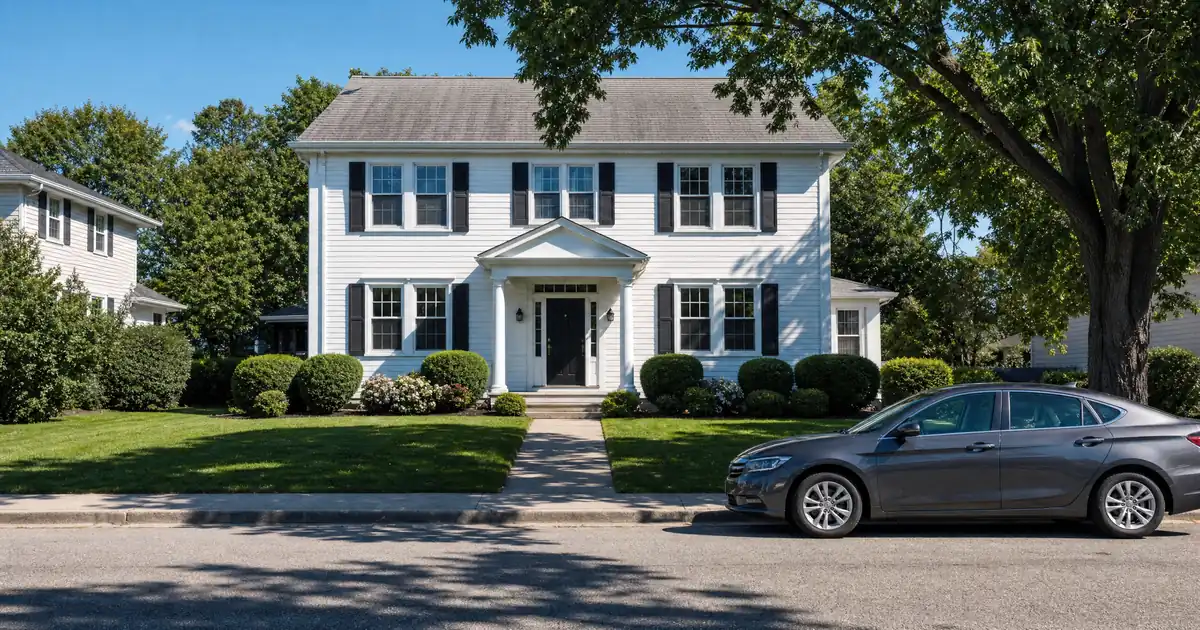
DSCR Loan LLC And Entity Vesting — The Quick Read: A property secures a DSCR loan, rental income drives the underwriting, and the LLC can sit on title and the note from the day the deal closes — something a conventional mortgage almost never allows. A natural person still signs a personal guaranty behind the entity, so liability doesn’t disappear. What changes is where title sits and how the file gets documented, not whether someone stands behind the debt.
What Vesting Actually Means
Vesting answers one narrow question: whose name is on the deed. It’s a different question than “who is the borrower” and a different question again than “who is personally on the hook.” On most DSCR closings, the LLC holds title, the LLC is named as borrower on the note and mortgage or deed of trust, and the managing member (or members) signs a personal guaranty alongside it. Three separate roles, three separate documents, one property.
DSCR Calculator
Run the numbers in your market
Rate source: Freddie Mac 30-yr average via FRED® — Federal Reserve Bank of St. Louis · effective Aug 13, 2026
Prefilled with local estimates — enter your own rent or nightly figures, taxes, insurance, and HOA for a more accurate picture.
Program parameters update from Lendmire’s centralized guideline source. Taxes and insurance are editable estimates.
As of Aug 13, 2026 · General Freddie Mac market benchmark, not a Lendmire loan offer. Rent, nightly rate, occupancy, taxes, and insurance are editable estimates. Short-term rental figures are estimates only and vary significantly by season, property type, management approach, and local short-term-rental rules — confirm local regulations before relying on them. Qualifying income for short-term rentals varies by program — some use appraisal market rent, others use documented STR history or projections — and is confirmed in underwriting. Not a Loan Estimate, approval, or commitment to lend. Program availability and eligibility are subject to lender guidelines, credit approval, property review, and underwriting.
This is where a lot of investors get tripped up. Forming an LLC and putting it on title doesn’t erase the loan obligation — it changes who owns the property and, in the right circumstances, who a lawsuit can reach.
Key Terms Defined
DSCR (debt-service coverage ratio): a ratio comparing a property’s rent to its full monthly housing payment — principal, interest, taxes, insurance, and any HOA dues (PITIA) — used to size the loan against the property’s own income instead of the borrower’s personal income.
Non-QM (non-qualified mortgage): a mortgage that isn’t underwritten to Fannie Mae or Freddie Mac’s rulebook, which is what frees DSCR lenders to accept an LLC as borrower of record instead of requiring an individual.
Vesting: the legal form in which title to real property is held — an LLC, a trust, a corporation, or an individual’s own name.
Disregarded entity: the IRS classification for a single-member LLC that hasn’t elected corporate tax treatment, meaning the LLC’s activity reports on the owner’s personal return rather than a separate one, per the IRS.
Personal guaranty: a signed promise from an individual that they’ll personally repay the loan if the LLC borrower defaults — the mechanism that lets a lender evaluate a real person’s credit even when the entity is on the note.
Due-on-sale clause: a clause in a mortgage that lets the lender demand full repayment if the property is transferred without its consent — relevant here because it’s the exact reason transferring a personally titled property into an LLC after closing can be risky.
Why DSCR Loans Allow This and Conventional Loans Don’t
DSCR loans are business-purpose, non-owner-occupied products, reviewed against a completely different rulebook than a standard owner-occupied mortgage. Conventional and agency-backed loans are underwritten with an individual borrower in mind, and moving a property into an LLC after closing typically has to be treated as a transfer of the collateral. That’s where the due-on-sale clause comes in: it gives the lender the right to call the loan due if title changes hands without approval, and the federal statute that limits when lenders can enforce that clause — the Garn-St Germain Act, implemented through 12 CFR Part 191 — protects specific transfer types like certain trust transfers and transfers to relatives on death. LLC transfers aren’t on that protected list. A conventional borrower who deeds a property into an LLC after the fact is taking on real due-on-sale exposure on the existing loan.
DSCR financing sidesteps the problem by never creating that exposure in the first place. Because the loan is a business-purpose, non-QM product from day one, the LLC can be the named borrower and titleholder at closing — no personal-name step, no later transfer, no due-on-sale question to answer.
How the File Actually Gets Underwritten, Step By Step
Putting an LLC on the loan doesn’t remove underwriting — it changes what gets collected and reviewed. Across the wholesale network Lendmire places files through, the sequence tends to run the same way regardless of lender:
- Entity documents first. Articles of Organization filed with the state, the operating agreement, and IRS EIN verification are the baseline. If the LLC formed in a different state than the property, a Certificate of Good Standing and foreign entity registration usually get added to the stack.
- The guaranty runs in parallel. While entity paperwork is being reviewed, the managing member’s personal credit, background, and financial profile get underwritten just like on any other DSCR file. When an LLC has more than one member, most programs in the network want the majority ownership interest represented among the guarantors, and if there’s more than one guarantor, the file typically qualifies off the lowest credit score in the group.
- Rental income gets analyzed the same way, LLC or not. Appraisers commonly lean on a Single-Family Comparable Rent Schedule (Form 1007) or, on small multifamily, a Small Residential Income Property Appraisal Report (Form 1025) to establish market rent. Whether the borrower on the note is a person or an entity, that methodology doesn’t change.
- Title and insurance have to match exactly. The deed runs to the LLC’s exact registered name, and the title policy and landlord insurance need to name that same entity. A mismatch between what’s on the state’s formation filing and what’s on the deed is one of the most common closing delays in entity-vested files — get the exact legal name locked before the file goes to closing, not after.
- Tax treatment flows through regardless of vesting. A single-member LLC that hasn’t elected corporate treatment stays a disregarded entity for tax purposes; the activity reports on the owner’s own return. A multi-member LLC defaults to partnership treatment unless it files to be taxed as a corporation. Putting the property in an LLC for liability purposes doesn’t automatically create a new taxpayer or trigger double taxation.
Beyond LLCs: Trusts, Corporations, and Personal Name
LLCs dominate DSCR vesting, but they’re not the only option in the network, and the choice changes what gets underwritten and how liability sits.
| Vesting Type | Liability Treatment | Documentation Burden | Tax Treatment |
|---|---|---|---|
| LLC | Shields against third-party lawsuits tied to the property; guarantor still owes the lender | Formation docs, operating agreement, EIN, guaranty | Usually pass-through (disregarded or partnership) |
| Corporation | Similar liability shield to LLC; guaranty still required | Articles of incorporation, bylaws, good standing, guaranty | Corporate return unless S-corp election |
| Revocable trust | No third-party liability shield by itself; estate-planning tool | Trust agreement, trustee authority documents | Flows to grantor’s personal return |
| Personal name | No entity shield at all | Standard individual borrower docs | Individual return |
Corporate vesting shows up in a minority of DSCR files and requires an analogous document set, but the personal guaranty requirement doesn’t go away just because the entity is a corporation instead of an LLC. Revocable living trusts are a separate path in some programs and serve estate-planning goals more than liability goals — they carry the trust’s own protections under Garn-St Germain for transfers involving an existing conventional loan, which is a different legal question than whether a DSCR loan can close in the trust’s name at origination. Irrevocable trusts draw more scrutiny because the grantor often isn’t a beneficiary, which changes how a lender evaluates who actually controls the asset.
Where the “Entity-Friendly” Story Breaks Down
The general rule — DSCR loans are built for entity borrowers — holds up well at origination but gets more complicated after closing.
Transferring an existing loan into an LLC later is the riskiest move, not the safest one. If a property is already financed conventionally in a personal name, deeding it into an LLC afterward strips away the due-on-sale protections that would apply to a trust transfer or a transfer to a relative on death. Legal practitioner coverage is consistent on this point: the statute’s protected categories are narrow, and LLC transfers aren’t among them. Even the death-of-borrower exemption is specific to transfers to a relative, not to an entity — the statutory language sits at 12 U.S.C. § 1701j-3(d)(5), as detailed in practitioner analysis of the exemption list. Closing directly in the LLC’s name through a DSCR loan avoids the question entirely, which is exactly why so many investors use DSCR financing for entity-titled purchases rather than title-then-transfer.
Moving the other direction has its own friction. An investor who later wants to refinance an LLC-vested property into a conventional loan may find the reverse problem: agency underwriting generally wants an individual borrower, and title sometimes has to move back to a person before that refinance can close. This is program- and investor-specific, not a fixed industry rule, and it’s worth confirming against the specific note before assuming either direction is automatic.
A brand-new LLC is common, not disqualifying. Because DSCR underwriting anchors to the property’s rental income and the guarantor’s personal credit rather than the entity’s operating history, a freshly formed LLC is a normal fact pattern in this market. Every lender in the network sets its own documentation threshold for how new is too new, so this isn’t a universal green light — but it’s also not the obstacle many investors assume it is.
Buy Personal, Then Transfer — Or Close Directly in the LLC?
Close directly in the LLC whenever the liability separation is the goal from day one. That avoids the due-on-sale exposure described above entirely, and it means there’s no second closing, no re-titling, and no gap where the property sits personally exposed. The scenario where buying personally first makes more sense is narrower: an investor who isn’t yet sure whether they’ll hold the property as a rental, or who needs to close under a personal name for a specific financing reason, might title personally at first — but should understand that moving into an LLC afterward is the higher-risk path, not a formality.
An investor with an LLC already formed for a rental portfolio, evaluating a new purchase, is the cleanest case: form the entity, get the EIN, draft the operating agreement, and close the DSCR loan directly in the LLC’s name. No intermediate step, no transfer risk.
What This Means for Leverage and Coverage
Entity vesting is a title and documentation decision — it doesn’t change the numbers a lender is underwriting to. Across the network Lendmire places files with, purchase leverage on DSCR loans typically runs 75%–80% LTV, and select high-leverage programs reach 85% LTV for borrowers around a 700+ credit score. Cash-out refinances generally top out closer to 75% LTV, with roughly six months of ownership seasoning expected on most files. A 1.00 debt-service coverage ratio is where select programs start rather than a universal standard — stronger coverage above that floor tends to open better leverage and pricing tiers, and coverage below 1.00 is reviewable through select lenders in the network, though leverage and terms adjust when it does. Credit floors sit around 620 in parts of the network, with most programs preferring 660 and the strongest leverage reserved for 700+. Reserve requirements vary by lender, leverage, and loan size — commonly around six months of PITIA, stepping up toward nine months on larger loans, generally above roughly $1,500,000. Standard programs go up to $3,000,000, with smaller balances handled through select lenders in the network.
None of that changes based on whether the LLC or an individual signs. A bigger down payment lowers the payment and can lift the coverage ratio, but it doesn’t override a credit floor, a reserve requirement, or property eligibility — the strongest files clear both the leverage test and the coverage test, not just one. And clearing 1.00 coverage isn’t the same as positive cash flow; the ratio only measures rent against PITIA, not repairs, vacancy, management fees, or capital expenses sitting outside that math. Terms vary by lender guidelines, property type, leverage, credit profile, and full file review.
DSCR vs. conventional financing
Two common ways to finance an investment property in this market. They qualify you differently — here’s how investors weigh them.
Why investors choose it
- Qualifies on the property’s rental income — no personal tax returns, W-2s, or pay stubs needed to document income.
- No personal debt-to-income ceiling to clear, so existing mortgages and obligations don’t cap your borrowing the same way.
- Can be closed in an LLC, keeping the property inside a business entity.
- Built for scaling — not held to the limit on number of financed properties that conventional financing applies.
- Underwriting centers on the deal: generally qualifies when the rent covers the payment, a 1.00x coverage ratio being a common baseline (confirmed in underwriting).
- Designed specifically for investment property, including long-term and, where the program allows, short-term rentals.
Where it’s strong
- Often the lowest ongoing financing cost for a buyer who fully qualifies on personal income — a fit for a first property or a cost-first purchase.
Trade-offs for investors
- Requires full personal income documentation and must fit within a debt-to-income limit — salary, existing debts, and other mortgages all count.
- Typically held in your personal name rather than a business entity.
- Caps how many financed properties you can carry, which can become a ceiling as a portfolio grows.
- Evaluates you as a borrower as much as the property, which usually means more paperwork.
How investors usually choose: a first or single property often optimizes for the lowest financing cost; portfolio builders often optimize for leverage, vesting in an LLC, and scaling past conventional caps. The right answer depends on your goals, the property, and current guidelines — both paths run through select lenders in Lendmire’s wholesale network, with eligibility and terms confirmed in underwriting.
Lendmire (NMLS# 2371349) is a mortgage broker that arranges DSCR investment-property loans through select lenders in a wholesale network spanning 40 states plus Washington, D.C. — and works with entity-vested and personally-vested borrowers alike. For a fuller walkthrough of qualification mechanics, Lendmire’s complete DSCR loans guide covers the underwriting model start to finish, and its guidance on DSCR loans for properties owned in an LLC and on DSCR loans for LLC-owned investment properties goes deeper into entity-specific documentation. Program terms are subject to program eligibility guidelines and can shift by lender, so any specific figure here should be confirmed at the time of application rather than assumed from a prior file.
Institutional and entity-based ownership of rental housing has been trending up for two decades, not down. Federal survey data compiled by the Harvard Joint Center for Housing Studies shows the share of single-family rental properties owned by institutional investors climbing from 17.3 percent to 24.5 percent between 2001 and 2015 — evidence that entity-based ownership, and the financing built to accommodate it, has become the norm for active investors rather than an edge case.
Tax treatment can depend on how the funds are used and how the property is held; investors should keep clear records and speak with a qualified tax professional before relying on any deduction.
This article is general information about how DSCR entity vesting typically works and isn’t legal or tax advice — an investor’s specific formation, state, and lender should be reviewed with a qualified attorney or CPA before closing. Loan approval is never guaranteed, and nothing here is a commitment to lend; every scenario is subject to lender approval and to the borrower’s, the property’s, and the program’s specific guidelines.
Investors who want to see how leverage, coverage, and entity documentation line up for a specific deal can reach Lendmire at 828-256-2183 or request a quote directly to walk through the numbers.
Frequently Asked Questions
Does putting an LLC on a DSCR loan eliminate my personal liability?
No — it shields against third-party lawsuits tied to the property, but nearly every DSCR program still requires a personal guaranty. If the loan defaults, the guarantor is still personally on the hook to the lender even though the LLC holds title and the note.
Can a brand-new LLC with no operating history get a DSCR loan?
Generally yes, since qualification centers on the property’s rental income and the guarantor’s personal credit rather than how long the entity has existed. Each lender sets its own documentation threshold for new entities, so this varies by program rather than following one industry-wide rule.
Is a DSCR loan automatically non-recourse just because the LLC is the borrower?
No — true non-recourse structures are rare in this space and typically require much larger down payments, larger loan sizes, and stronger borrower profiles than a standard DSCR file. The personal guaranty behind the LLC is the norm, and it’s a separate concept from non-recourse lending.
What happens if I already own a rental personally and want to move it into an LLC?
That’s the riskier direction to move in, because transferring an existing conventionally financed property into an LLC afterward isn’t protected under the federal due-on-sale exemptions that cover certain trust transfers. Refinancing directly into a DSCR loan titled in the LLC’s name avoids that exposure rather than executing a standalone post-closing transfer.
Do multi-member LLCs need every member to guarantee the loan?
Not necessarily every member, but most programs want the majority ownership interest represented among the guarantors before clearing the file. When there’s more than one guarantor, underwriting typically qualifies off the lowest credit score among them.
About Lendmire
A non-QM mortgage broker (NMLS# 2371349), Lendmire arranges DSCR financing for real estate investors in 41 markets — 40 states plus Washington, D.C. Because deals are underwritten primarily on property cash flow rather than personal income documentation, the structure suits self-employed buyers and entity-owned portfolios. Lendmire places loans through wholesale investor lenders; it is not a direct lender. Scotsman Guide named Lendmire a Top Mortgage Workplace in both 2025 and 2026.
Get Started
Ready to find the right loan for you?
In about 30 seconds you can review financing options available for your home or investment property. No commitment required.
Informational only. Not a Loan Estimate, approval, or commitment to lend. Program availability and eligibility are subject to lender guidelines, credit approval, property review, and underwriting.
References
1. IRS — Single Member Limited Liability Companies
2. eCFR — 12 CFR Part 191, Preemption of State Due-on-Sale Laws
3. Paramus Estate Planning — Due-on-Sale Clause, Trusts, LLCs, and the Garn-St Germain Act
4. Foust & Foust — Garn-St Germain Act: Due-on-Sale Exceptions
5. Harvard Joint Center for Housing Studies — Who Owns Rental Properties, and Is It Changing?
This article is part of Lendmire’s DSCR loan program — full qualification details, guidelines, and scenarios live on the program page.
Related reading: LLC And Entity Vesting For A 40-year DSCR Loan · No-ratio DSCR Loan LLC And Entity Vesting · LLC Vs Personal Vesting On A DSCR Loan At Many Doors
Brandon Miller
Founder & CEO, Mortgage Loan Originator, Lendmire LLC
- Mortgage Loan Originator · NMLS# 1129696 · Verify on NMLS Consumer Access
- North Carolina Real Estate Broker · License# 343312 · Verify on NCREC
- North Carolina Insurance Producer · License# 19053198 · Property, Casualty, Life, Health · Verify on NAIC SBS
- Lendmire LLC · Firm NMLS# 2371349 · Verify firm licensure
Compliance and disclosures. Lendmire (NMLS# 2371349) is a licensed mortgage broker and is not a direct lender, depository institution, financial advisor, or tax professional. Content in this article is general market analysis and educational information — not financial, legal, or tax advice for any specific situation. Lendmire does not guarantee loan approval; every transaction is subject to underwriting by the funding lender. Mortgage pricing and loan program guidelines are subject to change at any time without notice and vary by borrower characteristics, property type, and state regulations. Lendmire complies with Equal Housing Opportunity. Licensure verification: NMLS Consumer Access.