
The Quick Read: Turning a second home into a nightly rental changes three separate things at once: how the mortgage classifies the property, how the IRS taxes the income, and whether local ordinances or HOA rules even allow it. None of these systems talk to each other, so clearing one doesn’t clear the others. The financing piece is usually the first wall investors hit, because a second-home loan and a short-term-rental loan are underwritten on entirely different assumptions.
Key Takeaways
- A second-home mortgage and a short-term-rental (STR) loan are built on different occupancy assumptions — converting use without addressing the loan is the biggest structural risk in this move.
- The IRS decides tax treatment separately from the lender, using a day-count test tied to personal use versus rental days.
- HOA and condo governing documents can block short-term rentals outright, regardless of what the mortgage or the tax code allows.
- DSCR loans sidestep the occupancy question by qualifying the property from day one as a business-purpose investment, based on the rental income the property produces rather than the borrower’s personal income.
- Purchase leverage on STR-secured DSCR files typically tops out around 75% loan-to-value, with cash-out or rate-term refinances generally capped closer to 70%, subject to lender guidelines.
The Setup: What “Converting a Second Home” Actually Means
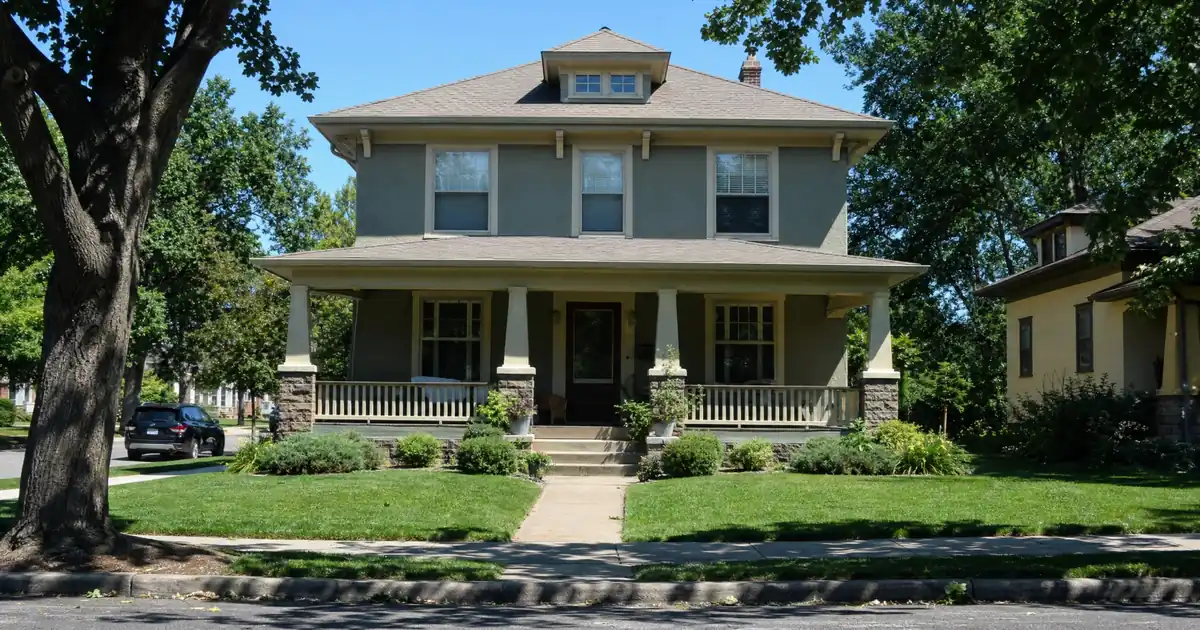
Picture an investor who bought a vacation property two years ago, financed it as a second home, and now wants to list it on a booking platform to offset the carrying costs. That single decision — list it nightly — quietly triggers changes across the loan file, the tax return, and possibly the community’s governing documents.
The mortgage piece is the least intuitive. A second-home loan comes with an occupancy certification signed at closing, and agency guidance treats second homes and investment properties as separate risk categories with separate rules. Under Fannie Mae’s own selling guide, a property financed as a second home may only be delivered that way if any rental income isn’t used to help the borrower qualify — the moment the home functions like a rental business, it no longer fits the second-home definition the original loan was built around (Fannie Mae Selling Guide, B2-1.1-01). That guidance governs agency (conforming) mortgages, not DSCR loans — but it explains exactly why converting use on an existing second-home loan creates friction that a purpose-built investment loan doesn’t have.
Key Terms Defined
Second home — a one-unit property the borrower personally occupies part of the year, kept under their exclusive control, and not part of a rental pool.
Investment property — a property held primarily to produce rental income rather than for the owner’s personal use; this is the classification a converted STR generally falls into.
Debt Service Coverage Ratio (DSCR) — the ratio of a property’s rental income to its full monthly housing payment (principal, interest, taxes, insurance, and any HOA dues); a ratio of 1.00 means the rent matches the payment exactly.
14-day rule / Augusta Rule — the IRS threshold (IRC §280A) under which rental income is excluded and not reported at all if the property is rented 14 days or less in a tax year; personal use beyond 14 days (or 10% of rental days, whichever is greater) shifts the tax treatment.
Form 1007 — the Fannie Mae-designed appraisal form used to document estimated monthly market rent for a single-unit property, based on long-term lease comparables rather than nightly rates.
No-ratio loan — a DSCR structure that doesn’t require the property to hit a specific coverage number at all; available only through select lenders in the network, generally for borrowers who already own a primary residence.
Seasoning — the length of time a property has been owned (or, in refinance scenarios, the loan has existed) before a lender will consider a new transaction against it.
The Mechanics, Step by Step
Step 1: Check what the existing loan actually allows. If the property carries a second-home mortgage, listing it nightly without addressing that loan creates a mismatch between what was certified at closing and how the property is now being used. This is the mechanical trigger for the occupancy-fraud risk discussed below.
Step 2: Decide whether to keep the loan, refinance it, or treat this as a fresh investment-property purchase. Investors buying a new property specifically to run as an STR — rather than converting one they already own — usually originate a DSCR loan from day one as a business-purpose, non-owner-occupied loan. That approach avoids the second-home occupancy question entirely, because there’s no prior owner-occupancy certification to conflict with.
Step 3: Line up STR-specific income documentation. This is where short-term-rental underwriting diverges from a standard long-term-rental DSCR file. Lenders in the network typically accept an appraiser’s short-term rental income analysis, market data from platforms like AirDNA, a 12-month statement from the booking platform or a property manager, or 12 months of the borrower’s own bank statements showing deposits. New acquisitions without an operating history usually lean on the AirDNA or appraiser-projection path; refinances of a property already running as an STR usually lean on trailing 12-month host-platform or bank-statement history. Lendmire’s short-term rental appraisal and market rent guide walks through how that documentation gets built.
Step 4: Understand the appraisal form’s limits. Form 1007 and Form 1025 are the standard rent-schedule tools, but they’re built around long-term lease comparables, not nightly rates. Fannie Mae has been direct about this: an appraiser shouldn’t simply multiply a nightly STR rate by 30 to estimate monthly rent, because that approach ignores furniture, services, vacancy, and business expenses baked into short-term operations (McKissock Learning, Form 1007 and Short-Term Rentals). A standard rent-schedule appraisal will almost always understate true STR revenue potential — which is exactly why AirDNA data and platform history exist as parallel paths in non-QM programs.
Step 5: Match the property’s income against the coverage ratio the file needs. On most STR-secured DSCR files in the network, purchases are evaluated against a DSCR floor of around 1.00, and refinances are evaluated against a similar 1.00 benchmark — evaluated separately, since a purchase file and a refinance file are underwritten differently even when the number looks the same. Clearing 1.00 isn’t the same thing as positive cash flow; DSCR only measures rent against the payment, not against repairs, vacancy, management fees, utilities, or capital expenditures.
Step 6: Replace the insurance policy before or immediately after the conversion. Standard homeowners and even standard landlord policies generally exclude business activity, and short-term hosting is treated as a business activity. As one specialty STR insurer puts it, a standard homeowners policy gives the insurer grounds to deny even common claims like fire or storm damage once the home has been entrusted to a paying guest as part of a business transaction (Proper Insurance). Most DSCR programs require proof of adequate coverage at closing and annually after — a lapsed or excluded policy isn’t just a tax problem, it’s a loan-servicing problem.
Step 7: Clear local ordinances and HOA governing documents. This step sits outside both the lender’s control and the IRS’s — a municipality or a homeowners association can block the conversion regardless of what the loan or the tax return says.
Second Home vs. Long-Term Rental vs. Short-Term Rental
| Factor | Second Home | Long-Term Rental | Short-Term Rental |
|---|---|---|---|
| Income pattern | None used for qualifying | Steady monthly lease | Variable, seasonal bookings |
| Personal-use flexibility | Full personal use | Little to none | Owner can block dates |
| Typical financing path | Second-home mortgage | Standard DSCR loan | STR-specific DSCR loan |
| Insurance type needed | Standard homeowners | Landlord policy | STR-specific policy |
| Tax trigger | N/A | Schedule E from day one | Depends on rental day count |
Where This Goes Wrong (Tradeoffs and Edge Cases)
Occupancy fraud is the sharpest risk on an existing second-home loan. If a borrower certified the property as a second home and then runs it as a full-time nightly rental, that’s a mismatch between the loan’s terms and the property’s actual use — even if the original application was accurate at the time. Legal commentary describes the exposure plainly: consequences can range from an immediate call of the full loan balance to foreclosure and, in more serious cases, prosecution (SuperMoney, Occupancy Fraud). This is precisely why DSCR loans are structurally cleaner for a conversion — because they’re written from the start as business-purpose loans, there’s no owner-occupancy certification sitting in the file to later contradict.
Tax treatment isn’t optional and isn’t automatic. How rental income on this property gets reported depends on personal-use days versus rental days, and treating it incorrectly can misstate deductible expenses. Tax treatment can depend on how the property is used and held, and investors should keep clear records and speak with a qualified tax professional before relying on any deduction.
HOA and condo restrictions can override everything else. Many governing documents write minimum lease-term requirements directly into their bylaws — commonly 30 days — which functionally bans nightly rentals even if the mortgage and the tax situation are both clean. Some states have gone further and codified an association’s authority to prohibit transient rentals outright. That means an investor can clear the lending and tax hurdles and still be blocked at the community level.
The income might not clear the coverage floor. If projected nightly income, once documented through AirDNA data or an appraiser’s STR analysis, doesn’t reach the DSCR floor a given program wants, that doesn’t automatically end the file. Coverage below 1.00 is available through select lenders in the network, with leverage and terms adjusted accordingly. No-ratio structures are also available, but only through select lenders in the network and generally reserved for borrowers who already own a primary residence — not a numeric floor swap, a different qualification path entirely.
A pattern worth flagging from files across the network: STR conversions with heavy seasonal concentration often come in tight on a straight trailing-twelve-month average, but clear more comfortably once the file is run against both a long-term-rent baseline and an AirDNA-projected STR scenario side by side. Running both numbers before submitting the file, rather than betting on the stronger of the two, tends to produce fewer surprises at underwriting.
Who This Play Fits — and Who It Doesn’t
This works cleanest for an investor buying a new property specifically to operate as a short-term rental, credit in the 640+ range, comfortable documenting income through AirDNA data or an appraiser’s STR analysis, and not relying on second-home pricing perks to make the deal pencil. It also fits an owner of an existing second home who’s willing to refinance out of that loan into a purpose-built investment structure rather than quietly changing use underneath the original mortgage.
It fits less well for a borrower who wants to keep the second-home loan’s terms and simply start renting nightly on the side — that’s the exact scenario that creates occupancy-classification risk. It also doesn’t fit a property sitting in an HOA or condo association with a hard minimum-lease requirement; no loan structure solves a governing-document restriction. And it’s a rougher fit for an investor whose local market simply doesn’t produce STR demand strong enough to clear a coverage floor even after the leverage adjusts — sometimes the more honest answer is that the property cash-flows better as a standard long-term rental.
How DSCR Financing Fits This Conversion
DSCR loans are designed for non-owner-occupied investment properties. Because they’re business-purpose investor loans, they’re reviewed differently from a standard owner-occupied mortgage — the file qualifies primarily on property-level rental income covering the payment, subject to lender guidelines, rather than on the borrower’s personal income documentation.
On STR-secured files across the network, purchase transactions generally reach up to about 75% loan-to-value on the strongest files, while cash-out or rate-term refinances generally cap closer to 70%, both subject to lender guidelines and the property’s documented income. Most programs want credit around 640 and roughly 12 months of hosting or landlord history behind the file, particularly on refinances where trailing income is the primary documentation source. Loan sizes on standard STR programs run up to around $3,000,000, and reserve requirements vary by lender, leverage, and loan size — commonly landing around six months of the full monthly housing payment, with larger loans sometimes stepping up toward nine months.
Lendmire (NMLS# 2371349) arranges DSCR financing for investors through a wholesale network of lenders spanning 41 markets, including Washington, D.C., and works through both purchase and refinance structures for converted second homes. Investors weighing whether to hold current second-home financing, refinance into a rate-term DSCR loan, or pull equity out through dedicated STR refinance programs can request a quote at 828-256-2183 or through Lendmire’s request a quote page. For the underlying qualification framework these files run on, Lendmire’s short-term rental loan overview and its complete DSCR loans guide cover how coverage ratios, leverage tiers, and documentation paths fit together.
This article is general information, not legal or tax advice, and readers should consult a qualified attorney or CPA about how a specific property, loan, and ownership structure applies to their own situation. Nothing here is a commitment to lend, and loan approval is never guaranteed — every scenario discussed is subject to lender approval and to borrower, property, and program guidelines that can change.
Frequently Asked Questions
Do I need a new mortgage to convert a second home into a short-term rental?
Not automatically, but it’s the safer move in most cases. Keeping a second-home loan while operating the property as a full-time nightly rental creates a mismatch between the occupancy certified at closing and the property’s actual use, which is the core of the occupancy-fraud exposure discussed above. Refinancing into a business-purpose DSCR loan removes that conflict because the loan is written around investment use from the start.
How many days can I rent the property before it becomes taxable income?
The IRS generally excludes rental income entirely if the property is rented 14 days or less in a tax year — sometimes called the Augusta Rule (TaxAct, The Augusta Rule Explained). Beyond that threshold, income generally needs to be reported, and how expenses get allocated depends on the personal-use-versus-rental-day math. This is a tax-code question, not a lending one, and a CPA should confirm how it applies to a specific property.
Will my HOA let me run a short-term rental?
It depends entirely on that association’s governing documents, and no loan or tax status overrides them. Many HOAs write minimum lease-term requirements — commonly 30 days — directly into their bylaws, which functionally blocks nightly rentals regardless of what the mortgage allows. Short-term rental rules can also vary by city, county, and property type, so investors should confirm both HOA restrictions and local ordinances before relying on projected rental income.
Do I need 12 months of hosting history to qualify?
Generally yes for refinances, less so for new purchases. Refinancing an already-operating STR typically relies on that trailing operating history through host-platform statements or bank deposits, while a new acquisition without a track record usually documents projected income through AirDNA data or an appraiser’s short-term rental analysis instead.
What if my projected short-term rental income doesn’t cover the monthly payment?
That doesn’t necessarily end the file. Coverage below a 1.00 ratio is available through select lenders in the network, though leverage and terms adjust to reflect the lower coverage. No-ratio structures are also available, but only through select lenders and generally for borrowers who already own a primary residence — a different qualification path, not a numeric substitute for the standard DSCR floor.
Investors focused on short-term rentals can review DSCR loans for Airbnb and short-term rentals.
About Lendmire
Lendmire, NMLS# 2371349, is a non-QM mortgage broker serving real estate investors in 41 markets, including Washington, D.C., through DSCR investor loan programs. Qualification is generally reviewed around the subject property’s rental income, not the borrower’s W-2 history — a practical fit for LLC-titled portfolios and self-employed investors. All scenarios remain subject to lender review and program guidelines. Lendmire has earned two consecutive Scotsman Guide Top Mortgage Workplace recognitions (2025, 2026).
Get Started
Ready to find the right loan for you?
In about 30 seconds you can review financing options available for your investment property. No commitment required.
Informational only. Not a Loan Estimate, approval, or commitment to lend. Program availability and eligibility are subject to lender guidelines, credit approval, property review, and underwriting.
References
1. Fannie Mae Selling Guide, B2-1.1-01, Occupancy Types
2. McKissock Learning, Form 1007 and Its Impact on Short-Term Rental Appraisals
3. Proper Insurance, Does Homeowners Insurance Cover Short-Term Rentals?
4. SuperMoney, Occupancy Fraud Encyclopedia Entry
5. TaxAct, What Is the Augusta Rule?
This article is part of Lendmire’s short-term rental loan program — full qualification details, guidelines, and scenarios live on the program page.
Related reading: Converting A Long Term Rental To An Airbnb · How To Convert A Vacation Home Into A Short-term Rental Loan · How To Refinance A Vacation Home Into A DSCR Rental Loan
Brandon Miller
Founder & CEO, Mortgage Loan Originator, Lendmire LLC
- Mortgage Loan Originator · NMLS# 1129696 · Verify on NMLS Consumer Access
- North Carolina Real Estate Broker · License# 343312 · Verify on NCREC
- North Carolina Insurance Producer · License# 19053198 · Property, Casualty, Life, Health · Verify on NAIC SBS
- Lendmire LLC · Firm NMLS# 2371349 · Verify firm licensure
Disclosure information. Lendmire is a state-licensed mortgage brokerage under NMLS# 2371349. Lendmire is not a depository institution, direct lender, or financial advisor — all loans referenced are placed through wholesale lender partners and are subject to each lender's underwriting standards. This article is provided for general informational purposes and is not a commitment to lend, nor does it constitute financial, legal, or tax advice. Loan programs, terms, rates, and qualification standards change without notice and depend on borrower profile, property type, and the state in which the subject property is located. Equal Housing Opportunity provider. NMLS Consumer Access: nmlsconsumeraccess.org.