
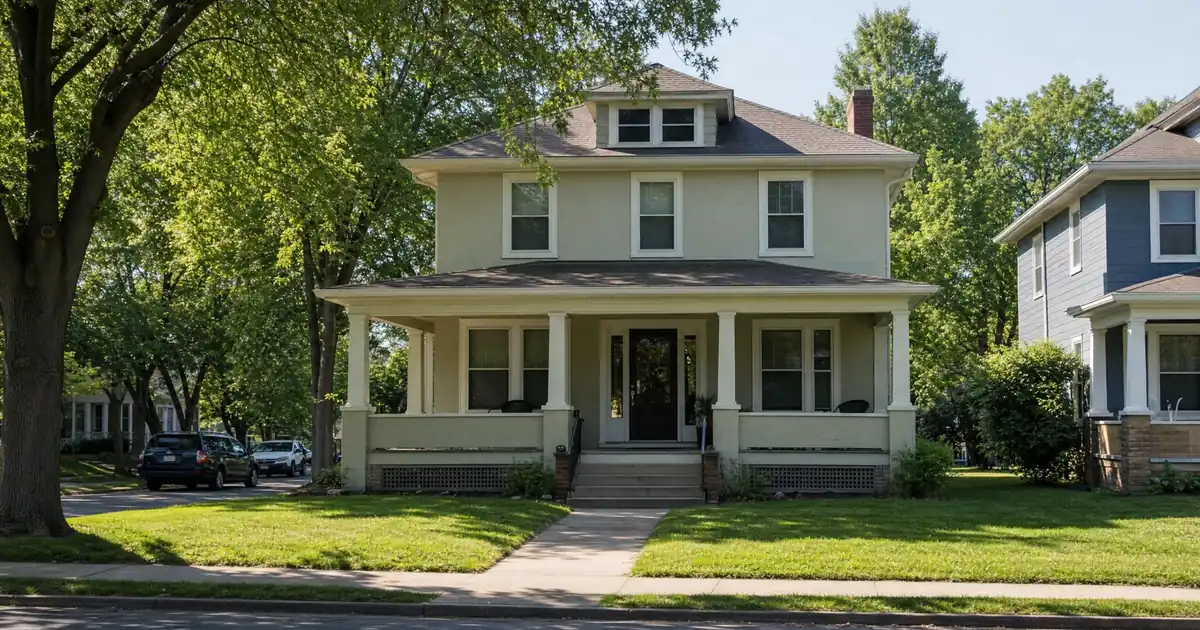
The Quick Read: FHA house hacking works like this. You buy a 1-4 unit property. You live in one unit for at least a year. You use conservative long-term rent — not projected Airbnb income — from the other units to help you qualify. A DSCR purchase works differently. You skip owner-occupancy entirely. The lender reviews the property’s rental income instead, including documented or projected short-term rental income, to see if it covers the payment. One path is an entry strategy for someone who needs housing anyway. The other is a scaling tool for someone who doesn’t.
Key Takeaways
- FHA requires the buyer to occupy one unit within 60 days of closing and stay at least 12 consecutive months; DSCR purchases require no owner-occupancy at all.
- FHA generally qualifies rental income using conservative long-term comparable rent, not Airbnb projections — and HUD’s own paperwork (the Borrower’s Contract with Respect to Hotel and Transient Use) shows the agency specifically anticipates and limits transient use.
- DSCR lenders can document short-term rental income three ways: trailing platform history, an AirDNA-style market projection, or a long-term rent fallback from the appraisal.
- FHA effectively caps an investor at one government-backed loan at a time; DSCR programs carry no limit on the number of financed properties, subject to program guidelines.
- Down payment logic runs opposite directions — FHA’s entry cost is famously low, while DSCR purchase leverage in Lendmire’s wholesale network typically tops out near 75% loan-to-value on the strongest short-term rental files.
Key Terms Defined
House hacking means you buy a 2-4 unit (or accessory-unit) property. You live in one section. You rent out the rest to offset your mortgage.
Short-Term Rental Calculator
Run the STR numbers in your market
Rate is an editable market assumption — the live benchmark loads when available.
Prefilled with starting assumptions — enter your nightly rate, occupancy, taxes, and insurance for a more accurate picture.
Short-term rental income is documented with a 12-month history or a market data report. Program parameters update from Lendmire’s centralized guideline source.
Fallback assumption · General Freddie Mac market benchmark, not a Lendmire loan offer. Nightly rate, occupancy, taxes, and insurance are editable estimates. Qualifying income for short-term rentals varies by program — some use appraisal market rent, others use documented STR history or projections — and is confirmed in underwriting. Not a Loan Estimate, approval, or commitment to lend. Program availability and eligibility are subject to lender guidelines, credit approval, property review, and underwriting.
DSCR (Debt Service Coverage Ratio) compares a property’s rental income to its full monthly payment. Lenders use this ratio to qualify the loan on the property’s cash flow, not on the borrower’s personal income.
Self-sufficiency test is HUD’s underwriting rule for 3-4 unit FHA purchases. Net rental income from all units — including the owner’s — must be at or above 100% of the monthly PITI. Duplexes skip this test entirely; they never get tested. You can find the rule in HUD Handbook 4000.1.
Business-purpose loan is a loan made for investment or income-generating purposes, not personal use. This classification matters later in this comparison.
AirDNA-style projection is a market-based estimate of short-term rental income. A DSCR lender may use it for a property that has no operating history yet. Lenders typically discount the raw projection before applying it to the coverage ratio.
Side-by-Side
| Factor | FHA House Hack | DSCR Purchase |
|---|---|---|
| Review basis | Personal income/DTI plus conservative rent from non-owner units | Property rental income vs. payment (coverage ratio) |
| Occupancy | Must occupy one unit 12+ months | Non-owner-occupied only |
| STR income treatment | Owner-occupancy generally required to count rental income; transient-use certification required | Documented history, market projection, or long-term rent — lender uses the most conservative |
| Entity vesting | Personal name only | LLC, trust, or other entity vesting, subject to program eligibility |
| Portfolio scaling | Effectively one FHA loan at a time | No cap on number of financed properties, per program guidelines |
| Reserve expectations | 3 months PITI required on 3-4 unit purchases | Commonly around 6 months of PITIA, more on larger balances |
When FHA House Hacking an Airbnb Is the Better Fit
FHA wins when you need a place to live anyway and don’t have much cash to put down. That’s the core case for it, full stop. Say you’re a first-time buyer. You want housing. You have a W-2 or documentable income that supports your debt-to-income ratio. You’re willing to commit to a full year in the property. In that case, FHA gets you a low-down-payment purchase — an entry cost that a pure investment loan can’t match.
FHA also works well for a duplex, and here’s why: the self-sufficiency test doesn’t apply to two-unit purchases. That makes a duplex much easier to finance than a triplex or fourplex under this program. But there’s a catch. Airbnb income on the non-owner unit generally doesn’t count unless the whole setup is built around owner-occupancy. And HUD’s paperwork for hotel and transient use inside FHA-financed buildings tells you something important: the agency is watching this pattern closely, not ignoring it.
FHA stops making sense in a few situations. Maybe you already own a primary residence. Maybe you don’t want to live in the new property. Maybe you’re trying to buy a fourth or fifth unit this year. FHA is built as a one-at-a-time tool.
When a DSCR Purchase Is the Better Fit
DSCR wins when your goal is pure investment income and you either already have housing or don’t want the 12-month occupancy commitment. It’s also the stronger path if your traditional personal-income paperwork understates your real cash flow — self-employed investors run into this a lot. The lender reviews the loan mainly on whether the property’s rental income covers the payment, subject to lender guidelines, not on your personal debt-to-income ratio.
DSCR loans are business-purpose loans made for non-owner-occupied investment properties. That’s why the CFPB’s ability-to-repay exemption applies to them and not to a standard owner-occupied FHA purchase. This distinction comes from a legal classification, not a lender preference. But not every investment-property purchase automatically qualifies for it, per compliance guidance from Pennymac’s revised QM rule FAQ. Your stated and documented purpose still matters.
For Airbnb specifically, this is where DSCR pulls ahead structurally. Lendmire’s wholesale network places short-term rental purchases up to roughly 75% loan-to-value on the strongest files. Lenders generally expect a credit score around 700 and about 12 months of landlord or host experience. They also look for coverage at or above a 1.00 floor on the purchase side. A separate 1.00 floor applies on STR refinances, and those typically cap closer to 70% loan-to-value. One thing to know: manufactured homes, log homes, and barndominiums fall outside these programs no matter which income strategy you use. Want a full walkthrough of how these files get built? Check Lendmire’s complete DSCR loans guide and its dedicated page on DSCR loans for Airbnb for more on documentation paths.
DSCR stops making sense for a first-time buyer with 3.5% to put down and no other place to live. The occupancy-free structure only helps when occupancy wasn’t the point in the first place.
A Worked Example: Same Triplex, Two Underwriting Paths
Let’s model the same triplex, purchased two different ways, to see where the underwriting actually splits. This is a modeled scenario, not a market data point.
Under FHA, the buyer occupies the smallest unit and rents the other two long-term. Because it’s a three-unit property, HUD’s self-sufficiency test kicks in. Here’s how it works: take the appraiser’s fair market rent across all three units. Subtract the greater of estimated vacancy/maintenance or 25% of that rent. The result must equal or exceed the full monthly PITI. Airbnb income on the two rented units generally isn’t part of that test — long-term comparable rent is the basis instead.
DSCR vs. conventional financing
Two common ways to finance an investment property in this market. They qualify you differently — here’s how investors weigh them.
Why investors choose it
- Qualifies on the property’s rental income — no personal tax returns, W-2s, or pay stubs needed to document income.
- No personal debt-to-income ceiling to clear, so existing mortgages and obligations don’t cap your borrowing the same way.
- Can be closed in an LLC, keeping the property inside a business entity.
- Built for scaling — not held to the limit on number of financed properties that conventional financing applies.
- Underwriting centers on the deal: generally qualifies when the rent covers the payment, a 1.00x coverage ratio being a common baseline (confirmed in underwriting).
- Designed specifically for investment property, including long-term and, where the program allows, short-term rentals.
Where it’s strong
- Often the lowest ongoing financing cost for a buyer who fully qualifies on personal income — a fit for a first property or a cost-first purchase.
Trade-offs for investors
- Requires full personal income documentation and must fit within a debt-to-income limit — salary, existing debts, and other mortgages all count.
- Typically held in your personal name rather than a business entity.
- Caps how many financed properties you can carry, which can become a ceiling as a portfolio grows.
- Evaluates you as a borrower as much as the property, which usually means more paperwork.
How investors usually choose: a first or single property often optimizes for the lowest financing cost; portfolio builders often optimize for leverage, vesting in an LLC, and scaling past conventional caps. The right answer depends on your goals, the property, and current guidelines — both paths run through select lenders in Lendmire’s wholesale network, with eligibility and terms confirmed in underwriting.
Under DSCR, the buyer purchases the same triplex as a pure investment. No unit needs an occupant. The lender’s rental analysis can pull from three sources: documented Airbnb history if it exists, an AirDNA-style market projection if it doesn’t, or the long-term rent from a Form 1007 rent schedule as a conservative fallback. The lender applies the most conservative option available. Coverage gets expressed as a ratio, not a dollar payment. A file that clears comfortably above 1.00 opens up better leverage. A file hovering right at the floor gets tighter terms. Tax treatment can depend on how you use the funds and how you hold the property, so keep clear records and talk to a qualified tax professional before relying on any deduction from either path.
The Transition Play: FHA Today, DSCR Tomorrow
Plenty of investors don’t pick one path and stick with it forever. They start with FHA and move into DSCR once the occupancy clock runs out. Here’s how that plays out: after the required 12 months, you can rent out the FHA-financed property, including as a short-term rental. You’re also free to buy your next primary residence with a new loan — though generally only one FHA mortgage stays outstanding at a time. At that point, refinancing the original property into a DSCR loan turns it into a true investment asset. It opens the door to LLC vesting, subject to program eligibility, and gets you out from under FHA’s one-loan ceiling. Lendmire’s page on how soon an investor can refinance a property after purchase and its side-by-side comparison of FHA house hacking and a DSCR rental purchase both cover that sequencing in more depth.
Where the Real Risk Sits
The FHA-side risk is occupancy misrepresentation. That means buying with the stated intent to live in the property, then never moving in — or moving out early without a documented exception. HUD treats this as a compliance issue, not a technicality. Job relocation or family-size changes are about the only exceptions that get approved, and those require documentation. Don’t plan a strategy around expecting one.
The DSCR-side risk is regulatory, not occupancy-related. Short-term rental rules can vary by city, county, HOA, and property type. A local restriction — say, an annual night cap, an owner-occupancy requirement, or a hotel-zone-only rule — doesn’t disqualify the loan outright. But it can push the appraiser toward long-term rent as the income basis instead of the Airbnb projection you were counting on. Either way, confirm local rules before relying on projected rental income. That belongs at the top of your diligence list.
The Verdict
Neither loan is objectively “better” — they solve different problems. FHA is the lower-capital entry point for someone who needs housing and is willing to trade a year of occupancy for a smaller down payment. DSCR is the scaling tool for someone who already has housing, wants the property purchased as a pure business asset, and wants Airbnb income underwritten on its own merits instead of discounted to long-term comparable rent. Lendmire (NMLS# 2371349) arranges DSCR purchase and refinance financing through select lenders across 40 states plus Washington, D.C. Lendmire can help model a specific property against both paths before you commit capital.
Loan approval is never guaranteed, and nothing here is a commitment to lend. Every scenario described here is subject to lender approval and to borrower, property, and program guidelines, which can change. This article is provided for general information and isn’t financial, legal, or tax advice.
Frequently Asked Questions
Can a DSCR loan ever be used to house hack?
Not in the traditional owner-occupied sense — DSCR programs require non-owner-occupied properties, so a buyer planning to live in one unit doesn’t fit the structure. Investors who want the house-hack entry point typically start with FHA and refinance into DSCR once occupancy ends.
Does FHA credit Airbnb income when I apply?
Generally no. FHA underwriting typically relies on conservative long-term comparable rent for non-owner units rather than projected short-term rental income. And counting rental income at all usually depends on the property being owner-occupied under the required structure.
What happens once the FHA 12-month occupancy period ends?
You can rent out the vacated unit, including as a short-term rental where local rules allow it. You’re generally free to purchase a next primary residence too, though typically only one FHA mortgage stays outstanding at a time. Refinancing the property into a DSCR loan at that point is a common next step.
Can I close a DSCR loan under an LLC the way I might title an FHA property personally?
FHA purchases are made in a personal name only. DSCR purchases can vest in an LLC, trust, or other entity at closing, subject to program eligibility — though the individual signing the note still personally guarantees the loan either way.
How does a DSCR lender actually document short-term rental income?
Through whichever of three inputs is available and most conservative: trailing platform income history, a market-based projection for properties without a track record, or the long-term market rent from the appraisal as a fallback. Lendmire’s guide to DSCR loans for Airbnb breaks down how each input gets applied.
For current guidelines and terms, see Lendmire’s DSCR loan programs page.
About Lendmire
Lendmire is a non-QM mortgage brokerage (NMLS# 2371349) that arranges DSCR investor loans in 41 markets, including Washington, D.C., through wholesale and investor-lending channels. The lender evaluates DSCR loans on rental income rather than personal income, subject to lender guidelines. This makes DSCR a fit for LLC-owned portfolios, self-employed investors, and operators scaling beyond conventional loan caps. Lendmire has been recognized as a Scotsman Guide Top Mortgage Workplace in 2025 and 2026.
Get Started
Ready to find the right loan for you?
In about 30 seconds you can review financing options available for your investment property. No commitment required.
Informational only. Not a Loan Estimate, approval, or commitment to lend. Program availability and eligibility are subject to lender guidelines, credit approval, property review, and underwriting.
References
1. HUD Handbook 4000.1 — SFH Policy Handbook
2. Pennymac — Revised Qualified Mortgage Rule FAQ
This article is part of Lendmire’s short-term rental loan program — full qualification details, guidelines, and scenarios live on the program page.
Related reading: House Hacking Vs DSCR Loan · Investment Property Loans with Low Down Payments · Buying Investment Properties For The First Time: What Lenders Look At
Brandon Miller
Founder & CEO, Mortgage Loan Originator, Lendmire LLC
- Mortgage Loan Originator · NMLS# 1129696 · Verify on NMLS Consumer Access
- North Carolina Real Estate Broker · License# 343312 · Verify on NCREC
- North Carolina Insurance Producer · License# 19053198 · Property, Casualty, Life, Health · Verify on NAIC SBS
- Lendmire LLC · Firm NMLS# 2371349 · Verify firm licensure
Important disclosures. Lendmire (NMLS# 2371349) is a licensed mortgage brokerage. Lendmire is not a direct lender, depository institution, or financial advisor. All loan inquiries are subject to lender underwriting; this article does not constitute a commitment to lend. Rates, terms, and program guidelines are subject to change without notice and vary by borrower profile, property type, and state. Information in this article is general in nature and is not financial, legal, or tax advice. Equal Housing Opportunity. NMLS Consumer Access: nmlsconsumeraccess.org.