
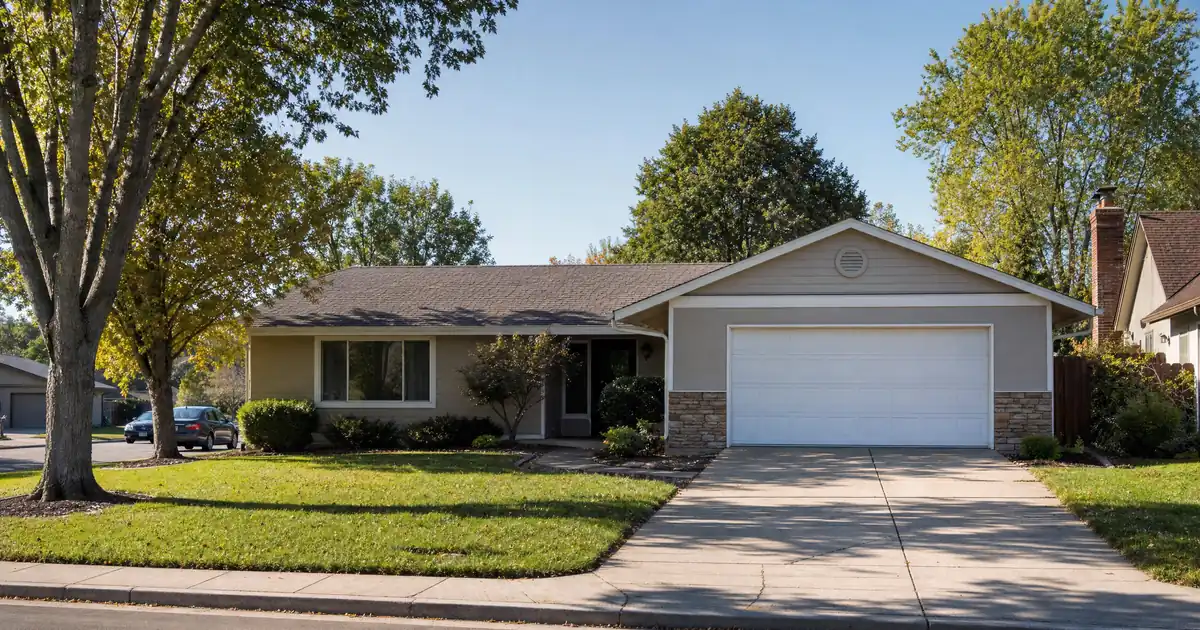
The Quick Read: Airbnb arbitrage means renting a property on a long-term lease, then re-listing it as a short-term rental with the landlord’s written permission — pocketing the spread between what you pay in rent and what guests pay you. It’s also called rent-to-rent or lease arbitrage. No purchase, no mortgage, no DSCR loan involved. The catch: rent is owed every month whether guests show up or not.
That last sentence is the whole risk profile in one line. You’re not building equity. You’re not appreciating. You’re running a leasehold business where your only asset is a signed sublease and a stack of furniture — and your only liability is a fixed rent payment that doesn’t care what your occupancy calendar looks like.
Short-Term Rental Calculator
Run the STR numbers in your market
Rate is an editable market assumption — the live benchmark loads when available.
Prefilled with starting assumptions — enter your nightly rate, occupancy, taxes, and insurance for a more accurate picture.
Short-term rental income is documented with a 12-month history or a market data report. Program parameters update from Lendmire’s centralized guideline source.
Fallback assumption · General Freddie Mac market benchmark, not a Lendmire loan offer. Nightly rate, occupancy, taxes, and insurance are editable estimates. Qualifying income for short-term rentals varies by program — some use appraisal market rent, others use documented STR history or projections — and is confirmed in underwriting. Not a Loan Estimate, approval, or commitment to lend. Program availability and eligibility are subject to lender guidelines, credit approval, property review, and underwriting.
Key Terms Defined
Sublease (subletting): renting out a unit you’re already renting, to a third party — the arrangement Airbnb arbitrage depends on entirely.
Rent-to-rent: another name for Airbnb arbitrage, used more often in commercial and multifamily circles than “arbitrage” itself.
DSCR loan: a loan for investment property that qualifies primarily on the property’s rental income covering the payment, rather than the borrower’s traditional personal-income documentation — the financing tool that matters once an arbitrage operator decides to buy rather than lease.
LTV (loan-to-value): the percentage of a property’s value a lender will finance; the rest is the down payment.
Business-purpose loan: a loan made to an investor for a rental or commercial property, not a home the borrower lives in — reviewed under different rules than a typical owner-occupied mortgage.
Non-QM (non-qualified mortgage): a loan category, including DSCR loans, underwritten outside standard conforming guidelines — built for investors and self-employed borrowers whose income doesn’t fit a conventional file.
How Airbnb Arbitrage Actually Works
The mechanics are the same everywhere: sign a lease with explicit permission to sublet short-term, furnish the unit, list it, manage guests, and keep the difference between what guests pay and what you owe the landlord. Awning lays out the model as five steps — lease, furnish, list, manage, collect the spread — and that sequence hasn’t changed since the model became popular.
The permission piece is where most operators get sloppy. A verbal nod from a landlord isn’t a contract. If the lease doesn’t explicitly authorize short-term subletting in writing, the operator is exposed to eviction the moment the landlord — or the landlord’s insurance carrier, or the building’s HOA — decides to enforce the underlying lease terms as written.
Startup costs run far lower than buying, since arbitrage skips ownership expenses like a down payment and property acquisition. The entry ticket is a security deposit, first month’s rent, and furnishings — which is exactly why the model attracts investors who want short-term rental cash flow without the capital a purchase requires.
A few things worth knowing at a glance:
- Ownership required: No — it’s a leasehold arrangement, not a purchase.
- Upfront capital: Security deposit, first month’s rent, and furnishing costs — no down payment.
- Typical margin: Roughly 15%-35% of gross nightly revenue after expenses, per Turno.
- Fixed obligation: Full rent is owed every month, regardless of how many nights the unit actually books.
- Legal status: Depends on the lease, the HOA, the city, and the state — never assume it’s automatically fine.
Is Airbnb Arbitrage Legal?
Airbnb arbitrage is legal as a category — no federal or state law bans the general practice of leasing a unit and subletting it short-term. What makes any specific deal legal or illegal is whether four separate layers of permission all line up: the lease itself, the HOA or condo bylaws, the city ordinance, and the state framework governing short-term rentals.
Airbnb’s own platform doesn’t prohibit the model. The company’s terms state that hosts are responsible for understanding and following any laws, contracts, or association rules that apply to their listing, and specifically flag that some leases and HOA rules restrict or prohibit subletting and short-term stays (Airbnb Help Center). Airbnb isn’t the gatekeeper here. Your lease is.
That’s the layer people skip. A lease that’s silent on Airbnb — that doesn’t name the platform at all — is not the same as a lease that permits it. Standard clauses barring subletting, capping guest stays, or restricting commercial activity routinely get interpreted to cover short-term rentals even without the word “Airbnb” anywhere in the document.
Then there’s the city layer, and New York offers the clearest national example of how fast that can shut a business down. Local Law 18, enacted in 2022 and enforced starting in September 2023, requires hosts to register listings with the city and bars booking platforms from processing payments for unregistered short-term rentals (Local Law 18). The registration requirement effectively ended casual entire-apartment arbitrage across most of the city’s housing stock overnight — with one notable carve-out: buildings legally classified as Class B multiple dwellings, such as hotels and licensed rooming houses, remain exempt.
States can move the opposite direction. Arizona’s 2016 framework, and a 2022 follow-up law tightening local enforcement authority without reversing the core rule, prevents cities and towns from banning short-term rentals outright based solely on their short-term status. State preemption like this protects an owner’s right to operate — but it does not touch private contracts. A preemption law can stop a city council from banning STRs; it cannot force an HOA to waive its own bylaws, and it cannot override a landlord’s lease.
Bottom line on legality: check the lease language first, then the HOA or condo rules, then the city ordinance, then the state framework. All four have to clear. Short-term rental rules can vary by city, county, HOA, and property type, so confirming local rules before relying on any projected rental income is not optional — it’s the entire compliance job in this business model.
The Insurance Layer Almost Everyone Skips
A landlord’s policy insures the building and the landlord’s interests. It does not insure the arbitrage operator’s guests, furnishings, or business income — and plenty of landlord policies flatly exclude short-term subletting from coverage altogether.
That gap matters because the operator carries real exposure the moment a guest checks in. A guest injury inside the unit, a fire that damages the operator’s furniture, a slow month with an empty booking calendar — none of that is covered by a standard landlord or renters policy. Operators running this model typically carry their own commercial general liability coverage, business personal property coverage for furnishings, and business income coverage that can help cover the fixed rent obligation if the unit goes dark after a covered loss. Airbnb’s built-in host protection is a supplemental layer that applies only to bookings made through the platform — it isn’t a substitute for a standalone commercial policy covering the broader business.
Skipping this step is one of the more common — and more expensive — mistakes new arbitrage operators make. The lease permission gets the deal started. The insurance is what keeps one bad night from wiping out a year of margin.
The Math: What Kind of Margin Are You Actually Chasing?
The entire model runs on one spread: what you pay the landlord in fixed rent versus what guests pay you in nightly revenue, minus operating costs. Practitioner sources put realistic margins in the 15%-35% range of gross revenue after expenses — cleaning, platform fees, utilities, furnishings depreciation, and the ever-present risk of a slow month.
That range is wide for a reason. Occupancy swings hit an arbitrage operator harder than an owner, because the rent obligation doesn’t flex down when bookings do. An owner with a mortgage at least has the option to hold the property through a slow season and refinance later. An arbitrage operator holding a fixed lease has no such lever — the rent is due whether the calendar is full or empty, every month, for the life of the lease.
This is also the point where the model’s ceiling shows up. Margin compresses as rents rise and as more operators compete for the same landlord relationships in a given market. There’s no equity cushion underneath the spread — just the spread itself, month after month, for as long as the lease and the landlord relationship both hold.
Arbitrage vs. Owning: Two Different Bets
Arbitrage and owning a short-term rental through financing look similar on a listing page — same platform, same guest experience — but they’re structurally different bets on completely different sides of the balance sheet.
| Factor | Arbitrage | Owned STR (DSCR loan) | Co-Hosting |
|---|---|---|---|
| Ownership | No — leasehold only | Yes | No |
| Equity built over time | None | Yes, as balance amortizes | None |
| Upfront capital | Deposit + furnishings | Down payment + closing costs | Minimal |
| Fixed monthly obligation | Full rent, regardless of bookings | Mortgage payment, regardless of bookings | Management fee split only |
| Long-term upside | None — spread only | Appreciation + equity + cash flow | Fee income only |
Arbitrage wins on speed to cash flow and low capital. Ownership wins on the thing arbitrage structurally can’t offer: an appreciating, refinanceable asset. Lendmire’s side-by-side comparison of arbitrage versus owning the property walks through that tradeoff in more depth for investors weighing which model fits their capital and risk tolerance.
Common Misconceptions
“You have to own property to be a real Airbnb host.” Not true — arbitrage exists specifically to challenge this assumption. An operator can sign a long-term lease and sublet it short-term without ever holding title to the property.
“Arbitrage is illegal, or exists in a permanent gray zone.” Also not accurate as a blanket statement. The leasing and subletting activity itself isn’t prohibited by any federal law as a category — legality is determined lease by lease, jurisdiction by jurisdiction, not by the model itself.
“My landlord’s insurance covers my guests.” This is one of the costliest assumptions in the space. A landlord’s policy protects the landlord’s building and interests, not the operator’s guests, furnishings, or business income — and Airbnb’s platform protection only applies to bookings made through the platform.
“If my lease doesn’t mention Airbnb, I’m in the clear.” Generic subletting or guest-limitation clauses are routinely enforced against short-term rental use even when the lease never names a specific platform.
Tax treatment can depend on how the funds are used and how the arrangement is structured; investors should keep clear records and talk to a qualified tax professional before relying on any deduction.
Signs This Model Fits You — And Signs It Doesn’t
Arbitrage tends to work best for operators with strong negotiating skills, existing STR operations experience, and enough capital cushion to absorb a slow booking month without missing rent. Signs it fits: comfort pitching landlords directly, an existing furnished-unit playbook you can replicate across multiple leases, and a market where local rules and HOA structures are clear enough to verify before signing anything.
Signs it doesn’t fit: you’re relying on the arbitrage spread as your only income with no reserve for a bad month, you haven’t confirmed the lease language in writing, or you’re drawn to the model mainly because you can’t qualify for financing yet. That last one is worth sitting with — arbitrage can be a bridge into short-term rental experience, but it isn’t a permanent substitute for the equity and appreciation that come with owning.
When Arbitrage Investors Move Into Ownership
Lendmire’s own program knowledge here comes from working DSCR files daily across a wholesale network of investor lenders, not from a single lender’s guideline sheet. Investors who run arbitrage for a year or two often come back wanting the thing the model can’t give them: an owned, reviewable asset. That’s where a DSCR loan — which qualifies primarily on the property’s rental income covering the payment, subject to lender guidelines — becomes the practical next step, and Lendmire’s complete DSCR loans guide walks through how that qualification actually works.
For short-term rental purchases specifically, most programs across the network cap purchase leverage around 75% LTV, with a credit score around 640 and roughly 12 months of hosting or landlord experience typically expected. Coverage floors on purchases and on refinances each tend to sit around 1.00 — meaning rental income needs to roughly match the monthly obligation — though refinance leverage on short-term rentals generally caps lower, closer to 70% LTV. A few lenders in the network will also review files that fall short of that coverage floor, with leverage and terms adjusted accordingly, and a smaller set will consider no-ratio structures for borrowers who already own a primary residence. Financing a short-term rental with a DSCR loan also involves documenting and verifying the STR income.
Reserve requirements vary by lender, leverage, and loan size — commonly landing around six months of the property’s monthly carrying costs, sometimes waived on conservative, lower-leverage files and stepping up toward nine months on larger loan amounts. None of these numbers are guarantees. Every file gets underwritten on its own merits, based on the borrower, the property, and the specific program.
DSCR loans are business-purpose investor loans, reviewed differently from a standard owner-occupied mortgage. Lendmire (NMLS# 2371349) arranges these loans through select lenders in its wholesale network spanning 40 states plus Washington, D.C. Investors can reach the team at 828-256-2183 or request a quote to see how a specific property’s rental income lines up against a purchase or cash-out scenario.
Loan approval is never guaranteed, and nothing here is a commitment to lend. Every scenario described here is subject to lender approval and to borrower, property, and program guidelines that can change. This article is general information only, not financial, legal, or tax advice.
Frequently Asked Questions
Do I need a business license to run Airbnb arbitrage?
It depends entirely on the city and county where the property sits — some jurisdictions require a short-term rental permit or business license regardless of whether you own or lease the unit, while others only require registration at the ownership level. Confirming local licensing requirements before signing a sublease avoids a shutdown after you’ve already furnished the unit.
What happens if my landlord finds out I’m subletting without permission?
Without written authorization, a landlord who discovers unauthorized subletting can typically pursue eviction and terminate the lease, since most residential leases restrict subletting by default. This is the single biggest reason written permission — not a verbal agreement — has to come before any furniture gets purchased.
Is Airbnb arbitrage more profitable than owning a short-term rental?
Not necessarily, and the comparison depends on time horizon. Arbitrage can produce faster initial cash flow with far less capital, but it never builds equity or benefits from appreciation the way an owned property does — the spread is the entire return, indefinitely.
How is this different from just co-hosting someone else’s Airbnb?
Co-hosting means managing someone else’s listing for a fee split, with no lease obligation and no rent risk on your end. Arbitrage means you’re the tenant on the underlying lease, carrying the full fixed-rent obligation yourself regardless of what the listing earns.
Can I use a DSCR loan to finance an arbitrage lease?
No — DSCR loans finance the purchase or refinance of a property the borrower owns, not a leasehold sublease arrangement. DSCR financing becomes relevant only when an arbitrage operator decides to buy a property outright rather than lease it.
Investors focused on short-term rentals can review DSCR loans for Airbnb and short-term rentals.
About Lendmire
Lendmire (NMLS# 2371349) is a mortgage brokerage built around DSCR investor lending, with programs available in 41 markets, including Washington, D.C. DSCR lenders commonly evaluate rental-income coverage instead of personal income paperwork — a practical fit for LLC-owned and multi-property investors. Terms vary by lender, property, leverage, and program. Scotsman Guide named Lendmire a Top Mortgage Workplace in both 2025 and 2026.
Get Started
Ready to find the right loan for you?
In about 30 seconds you can review financing options available for your investment property. No commitment required.
Informational only. Not a Loan Estimate, approval, or commitment to lend. Program availability and eligibility are subject to lender guidelines, credit approval, property review, and underwriting.
References
1. Awning — Airbnb Arbitrage Guide
2. Turno — Airbnb Rental Arbitrage: What It Is and How It Works
3. Airbnb Help Center — Article 2908
4. Wikipedia — Local Law 18 of 2022
This article is part of Lendmire’s short-term rental loan program — full qualification details, guidelines, and scenarios live on the program page.
Related reading: Airbnb Arbitrage Vs Owning The Property · Do You Need To Own A Home To Buy An Airbnb? · How A Vacation Home’s Loan Status Shifts When Guests Pay Rent?
Brandon Miller
Founder & CEO, Mortgage Loan Originator, Lendmire LLC
- Mortgage Loan Originator · NMLS# 1129696 · Verify on NMLS Consumer Access
- North Carolina Real Estate Broker · License# 343312 · Verify on NCREC
- North Carolina Insurance Producer · License# 19053198 · Property, Casualty, Life, Health · Verify on NAIC SBS
- Lendmire LLC · Firm NMLS# 2371349 · Verify firm licensure
Required disclosures. Lendmire (NMLS# 2371349) operates as a licensed mortgage broker, not a direct lender or depository. The discussion in this article is general in nature and should not be relied upon as financial, legal, or tax advice — every investment scenario is unique and should be reviewed by a qualified professional. Any loan inquiry is subject to lender underwriting, and this article is not a commitment to lend or a guarantee of approval. Mortgage rates, loan terms, and program guidelines vary by borrower, property, and state, and may change without notice. Equal Housing Opportunity. Verify licensure at NMLS Consumer Access.