
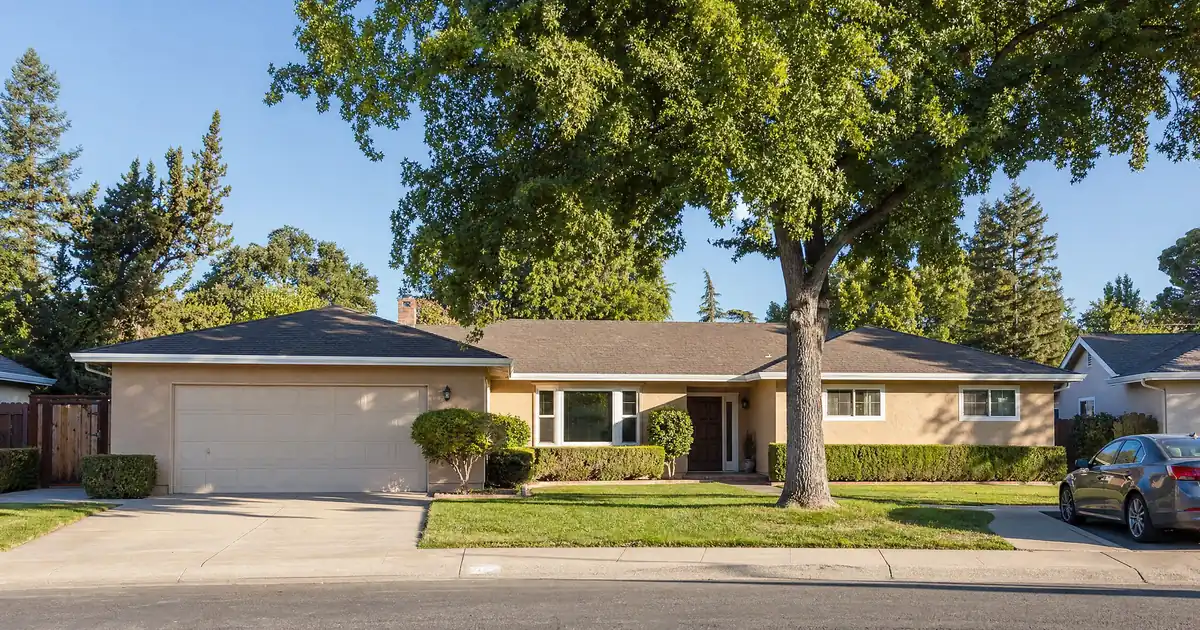
The Quick Read: No. You can’t buy a property and turn it into a full-time Airbnb from day one. VA loans require a signed certification. That certification says the veteran will occupy the home as a primary residence. This rule gets enforced — it’s not just paperwork. There are compliant paths around it, though. One option is house-hacking a 2-4 unit property. Another is converting a home to a rental after you’ve genuinely satisfied the occupancy requirement. Once an investor is buying purely for rental income, most files move to a DSCR loan instead.
That’s the short version. The longer version depends on timing, property type, and what “occupy” actually means under VA rules. That’s where most of the confusion lives.
Key Terms Defined
- VA loan: A mortgage guaranteed by the Department of Veterans Affairs for eligible veterans, service members, and some surviving spouses. It’s built around the idea that the borrower will live in the home.
- Occupancy requirement: This VA rule says a home financed with a VA loan has to function as the veteran’s primary residence. It can’t be an investment bought purely for rental income.
- DSCR loan: A mortgage that qualifies based on whether the property’s rental income covers its own monthly obligation. It doesn’t look at the borrower’s personal income or occupancy status.
- LTV (loan-to-value): The percentage of a property’s value a loan covers. The rest comes from the down payment.
- Business-purpose loan: A loan made for investment or income-producing purposes rather than a personal residence. This puts it in a different underwriting category than a standard owner-occupied mortgage.
- Seasoning: How long a lender wants an investor to have owned or held a property before allowing a refinance against it.
How VA Occupancy Rules Actually Work — And What Happens After You Move Out
The VA doesn’t permanently ban rental income on a VA-financed home. But it does require the home to function as a real primary residence first. Everything about the Airbnb question flows from that single condition.
At application and again at closing, the borrower signs paperwork. That paperwork certifies an intent to personally occupy the home. VA.gov states this plainly: financing a VA-backed loan requires meeting credit, income, and occupancy conditions from both the VA and the lender. That occupancy condition isn’t just a lender preference. It traces back to federal regulation — specifically 38 CFR § 36.4339, the rule governing loan eligibility and reasonable value requirements.
Mechanically, here’s what that looks like:
The borrower generally has around 60 days from closing to move in. Extensions are possible for documented reasons like deployment or a PCS move. There’s no hard statutory clock beyond that. But most lenders treat roughly 12 months of genuine residency as the practical benchmark for good-faith occupancy. Buy the house, move in within the window, live there for a year. That’s the version of events that raises zero flags.
A few real exceptions exist inside that framework. Military orders are the clearest one — a deployment or a permanent change of station gives you a documented reason to vacate and convert to a rental earlier than 12 months. Renting spare rooms, a basement, or an accessory unit doesn’t violate occupancy at all, as long as the veteran still lives in the home. The home remains the primary residence either way. And a VA Interest Rate Reduction Refinance Loan is a genuine outlier worth mentioning: it only requires that the home was previously occupied, not that it currently is. So a home already converted to a full-time Airbnb can still carry that specific refinance.
The one scenario the VA does police is intent. Picture someone buying a home with no plan to ever live there, then listing it full-time within weeks of closing. That fact pattern draws occupancy-fraud scrutiny — loan acceleration, funding-fee reinstatement, and in serious cases criminal exposure. A veteran who lived in the home honestly for a year and later decided to rent it out is a completely different story. The VA treats it that way.
Here’s how the common scenarios sort out in practice:
| Scenario | VA Loan Status | Why |
|---|---|---|
| Buy a single-family home to Airbnb from day one | Not allowed | Breaks the occupancy certification signed at closing |
| Buy a 2-4 unit property, live in one, Airbnb the rest | Allowed | Occupancy is satisfied by the unit you actually live in |
| Live in the home, then move out and rent it later | Allowed once occupancy is satisfied | No re-approval or notice to the VA is required |
| Deploy or receive PCS orders shortly after buying | Generally allowed | Documented military orders are a recognized exception |
| Rent spare rooms or an ADU while still living there | Allowed | The home is still functioning as your primary residence |
Local short-term rental ordinances, HOA rules, and the lender’s own loan documents still apply on top of all this. The VA’s silence on notification doesn’t mean nothing else governs the property. Short-term rental rules can vary by city, county, HOA, and property type. Investors should confirm local rules before relying on projected rental income at all.
Why a Straight Rental Purchase Usually Moves to DSCR Financing
For a real investor, the VA program’s occupancy structure makes it a one-property, live-in-first benefit. It’s not a repeatable acquisition tool. DSCR financing exists to fill that gap, and the demand shift backs it up: non-QM securitization volume has reportedly hit a record high, with DSCR loans making up a substantial share of that volume as tighter housing inventory pushed more borrowers toward alternative products. Looking ahead, HousingWire projects non-QM originations climbing to around $175 billion, up from roughly $108 billion, with DSCR and other investor products driving close to half of that growth.
The mechanics flip VA logic entirely. DSCR loans qualify primarily on property-level rental income covering the payment, subject to lender guidelines. They don’t look at personal income, occupancy, or a signed intent to live there. There’s no primary-residence certification to sign, because the loan is business-purpose by design. It’s built for non-owner-occupied investment property, and it’s underwritten that way — not as a standard owner-occupied mortgage. For the full mechanics — documentation, property eligibility, how the ratio gets calculated — Lendmire’s complete DSCR loans guide is worth a read before you run any specific numbers.
Here’s the practical sequencing for a lot of veteran-investors: use the VA benefit once for a genuinely owner-occupied 2-4 unit house-hack. Satisfy occupancy honestly. Then finance every subsequent pure-investment or short-term-rental purchase through DSCR. That keeps the VA entitlement intact for its intended purpose. And it opens up a scalable path for everything after.
What a DSCR Loan Looks Like for a Short-Term Rental
Across the wholesale network Lendmire places files through, short-term rental purchases typically top out around 75% LTV on the strongest applications. Cash-out or rate-term refinances are generally capped closer to 70%. Most lenders in that network want a credit score around 640 for a short-term rental file specifically. That’s tighter than the floor on a standard long-term-rental DSCR loan.
Coverage matters too. On most STR purchase files, lenders want the DSCR at or above 1.00. That means the projected rent covers the full monthly obligation. Refinance files carry that same 1.00 expectation, evaluated against the property’s trailing rental performance rather than a fresh purchase projection. Clearing 1.00 isn’t the same thing as positive cash flow, either. The ratio compares rent to the payment itself. Repairs, vacancy, cleaning turnover, and management fees all sit outside that math.
Host history matters on Airbnb-specific files in a way it doesn’t on a standard rental purchase. Most programs want to see around 12 months of hosting or landlord experience before treating short-term rental income as reliable underwriting material. A file with no track record isn’t automatically dead. But it’s the kind of gap that shows up as a lender question early, not late.
Loan sizes across the network generally run up to $3,000,000 on standard programs. Smaller balances get routed through specific lenders that specialize in that range, rather than treated as the network default. Reserve requirements vary by lender, leverage, and loan size. Most files land around six months of the property’s monthly obligation in reserves, though larger loans sometimes step up to nine.
None of this is a fixed rulebook. Say a borrower’s coverage ratio comes in a little under 1.00 on paper. That borrower isn’t automatically shut out. Select lenders in the network will still look at those files, typically with leverage and terms adjusted to offset the lighter coverage. That’s a real path — just a narrower one than a file that clears 1.00 cleanly on its own.
Consider a property that blends residential units with retail or commercial space — a corner building with an apartment over a storefront, say. That usually shifts to a mixed-use DSCR structure rather than a standard investment-property one, which changes how the loan is underwritten. And for investors already sitting on equity from a first property who want to fund the next acquisition without waiting to sell, pulling cash out through a DSCR refinance is often the faster route to scaling a portfolio than starting each deal from zero. Lendmire’s dedicated guide to DSCR loans for Airbnb properties goes deeper on the host-history and reserve specifics for anyone building a short-term rental portfolio from scratch.
Frequently Asked Questions
Can Airbnb income help me qualify for a VA loan?
Not on a standard VA purchase. VA underwriting for an owner-occupied home doesn’t run on projected rental income the way appraisal-based rent schedules do on conventional or DSCR files. On a 2-4 unit VA purchase, a lender may consider projected income from the units the veteran isn’t living in. But that’s layered underwriting on top of the occupancy rule, not a substitute for it.
Do I have to tell my lender I’m renting the home on Airbnb?
The VA itself doesn’t require notification once occupancy has been satisfied. But loan documents and lender agreements can still contain their own provisions about rental use. And insurance coverage needs to match the property’s actual use — so it’s worth a check even without a formal VA requirement.
Can I have two VA loans at once — a new home and an Airbnb on the old one?
It’s possible in some circumstances. This generally involves remaining entitlement and lender-specific underwriting on the second loan. The details depend heavily on individual entitlement history and current lender guidelines. This is one to run past a lender directly, rather than assume from a general rule.
What if I get deployed right after buying — can I still rent the home while I’m away?
Generally, yes. Documented deployment or PCS orders are one of the clearest recognized exceptions to the standard occupancy timeline. A spouse’s continued occupancy can also satisfy the requirement while the service member is away.
Does converting the home to Airbnb later affect my VA entitlement?
Not automatically. If the original occupancy was genuine and satisfied, converting to a rental afterward doesn’t itself trigger loss of entitlement or repayment. Those consequences are reserved for cases where the original occupancy certification wasn’t made in good faith.
Investors focused on short-term rentals can review DSCR loans for Airbnb and short-term rentals.
About Lendmire
Lendmire (NMLS# 2371349) is a mortgage broker, not a direct lender. It arranges DSCR loans through select lenders in a wholesale network spanning 40 states plus Washington, D.C. — 41 markets total. Tax treatment can depend on how the funds are used and how the property is held. Investors should keep clear records and speak with a qualified tax professional before relying on any deduction. Scotsman Guide named Lendmire a Top Mortgage Workplace in both 2025 and 2026.
If you’re weighing a VA-financed house-hack against a straight DSCR purchase for a short-term rental, running both structures side by side is usually worth the ten minutes it takes. Lendmire can be reached at 828-256-2183. Investors can also request a quote directly to see how the numbers compare on a specific property.
Loan approval is never guaranteed, and nothing here is a commitment to lend. Every scenario described here is subject to lender approval and to the borrower’s, the property’s, and the specific program’s guidelines at the time of application. This article is general information only, not financial, legal, or tax advice.
Get Started
Ready to find the right loan for you?
In about 30 seconds you can review financing options available for your investment property. No commitment required.
Informational only. Not a Loan Estimate, approval, or commitment to lend. Program availability and eligibility are subject to lender guidelines, credit approval, property review, and underwriting.
References
1. VA.gov — Home loan eligibility requirements
2. eCFR — 38 CFR § 36.4339, Eligibility of loans; reasonable value requirements
3. HousingWire — Non-QM originations projected to reach $175 billion in 2026
This article is part of Lendmire’s short-term rental loan program — full qualification details, guidelines, and scenarios live on the program page.
Related reading: VA Loan Occupancy Rules Vs Investment Airbnb Financing · House Hacking Your Way Into Short Term Rentals · Best VA Cash Out Refinance Lenders?
Brandon Miller
Founder & CEO, Mortgage Loan Originator, Lendmire LLC
- Mortgage Loan Originator · NMLS# 1129696 · Verify on NMLS Consumer Access
- North Carolina Real Estate Broker · License# 343312 · Verify on NCREC
- North Carolina Insurance Producer · License# 19053198 · Property, Casualty, Life, Health · Verify on NAIC SBS
- Lendmire LLC · Firm NMLS# 2371349 · Verify firm licensure
Legal disclosures. Lendmire (NMLS# 2371349) is a state-licensed mortgage brokerage that arranges financing through wholesale lender relationships. Lendmire is not a direct lender, depository institution, or registered financial advisor. The discussion above is general informational content about real estate financing — it is not financial, legal, or tax advice, and readers should consult licensed professionals for guidance on their individual circumstances. Loan inquiries are subject to lender underwriting; this article does not represent a commitment to lend. Loan terms, rates, and qualification standards vary by borrower, property, and state, and are subject to change at any time. Equal Housing Opportunity. NMLS Consumer Access: nmlsconsumeraccess.org.