
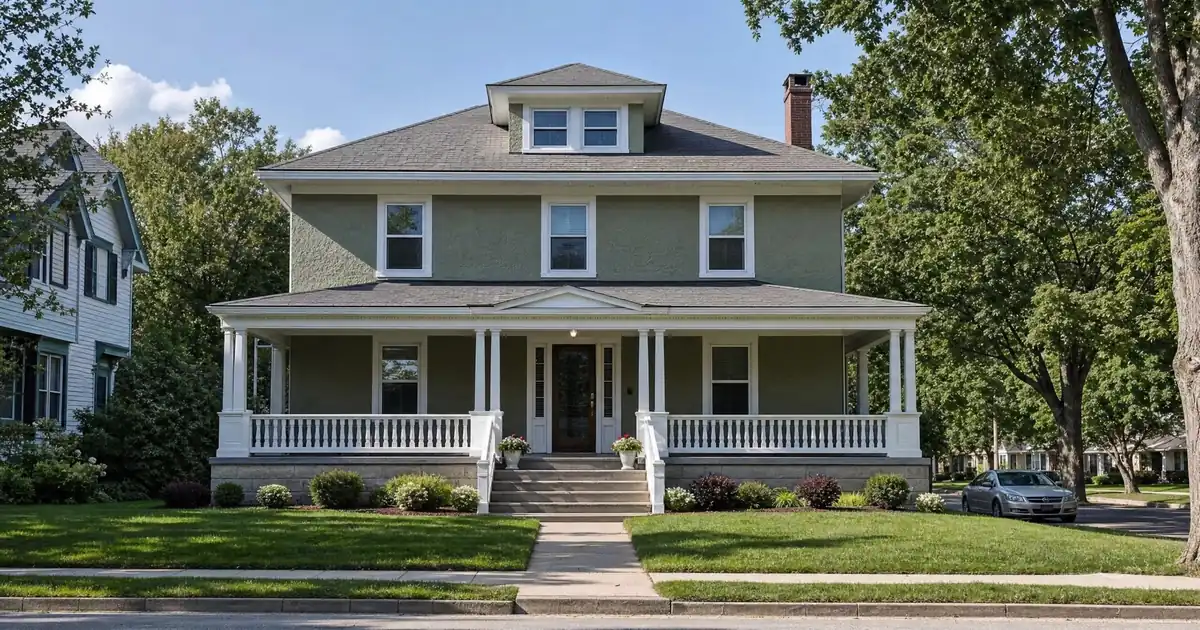
The Quick Read: Residential rehab hard money lenders finance the purchase and renovation of distressed investment property based on the property’s projected after-repair value, not the borrower’s income. The hard money loan is sized against total project cost — up to 93% of purchase plus rehab for investors with five or more completed projects, capped at 75% of after-repair value — with up to 100% of the rehab budget funded in draws against completed work, not at closing. These are short-term bridge loans — measured in months, not decades — and the intended exit is usually a sale or a refinance into a long-term rental loan once the property is stabilized. None of this is consumer mortgage financing. These are business-purpose loans made to investors and entities, not owner-occupants buying a home to live in.
Key Terms Defined
A handful of terms show up constantly in rehab lending conversations. Here’s what they actually mean:
What this loan actually costs to carry in your market.
Hard money is sized against the project and priced by time. Enter the deal and see how much the program will lend, the cash required at closing, the carry while you hold it, and what is left at the exit.
Leverage tiers on the current program: up to 85% of project cost with fewer than two completed projects, 90% with two or more, 93% with five or more — every tier capped at 75% of after-repair value. Loan amounts up to $5,000,000, larger by exception; terms of 6 to 18 months, interest-only, no prepayment penalty. The rehab portion funds in draws against completed work, not at closing.
Program parameters shown update from Lendmire’s centralized guideline source. Rate, points, and months are editable assumptions, not quoted terms.
Cost cap sets the loan · positive spread
Illustrative estimate only — not a quote, Loan Estimate, approval, or commitment to lend. Rate, points, and months are editable assumptions. Hard money is business-purpose financing for real estate investors, not a consumer mortgage. Leverage on the current program tops out at 93% of project cost for investors with a documented track record, capped at 75% of after-repair value, with rehab funding up to 100% of the documented budget released in draws; actual terms vary by lender, borrower experience, property, and exit. Lendmire is a mortgage broker, not a lender.
- After-Repair Value (ARV): the projected value of a property once renovations are complete, estimated using comparable sales of already-renovated homes nearby.
- Business-purpose loan: a loan made for investment or commercial reasons rather than to buy a home to live in — this is the legal category that governs how rehab loans get underwritten and disclosed.
- Draw schedule: the process of releasing rehab funds in stages, tied to completed and inspected work, rather than handing over the full renovation budget at closing.
- Loan-to-value (LTV): the loan amount expressed as a percentage of a property’s value — sometimes the purchase price, sometimes the ARV, depending on which figure the lender is measuring against.
- Seasoning: the minimum ownership period a lender wants before it will use a new, higher appraised value as the basis for a refinance.
- Recourse: whether the lender can pursue the borrower’s personal assets if the collateral doesn’t cover the full loan balance after a default.
- DSCR (debt service coverage ratio): a comparison of a property’s rental income to its full monthly obligation, used to qualify a long-term rental refinance instead of personal income.
Key Takeaways
- Rehab hard money loans underwrite the deal and the exit plan — not W-2s, traditional personal-income documentation, or debt-to-income ratios.
- The structure is cost-based: up to 93% of purchase plus rehab for experienced investors, capped at 75% of after-repair value, with the rehab budget funded in draws as work is completed.
- Money for repairs gets released in draws, tied to inspected, completed work — not handed over in one lump sum at closing.
- These loans are short-term by design; the investor’s plan is usually a sale or a refinance into a permanent rental loan.
- Business-purpose status doesn’t mean unregulated — state licensing, usury limits, and recourse rules still apply in a lot of scenarios.
What a Residential Rehab Hard Money Loan Actually Is
A residential rehab hard money loan is short-term financing secured by an investment property, sized against what the property will be worth after renovation — not what it’s worth today. It’s built for investors and entities buying distressed, outdated, or otherwise unfinanceable property, not for someone planning to move in.
That distinction matters more than it sounds. Conventional lenders appraise a property in its current, as-is condition. A house with no working kitchen, fire damage, or a collapsed roof line often can’t get a conventional appraisal that supports the purchase price at all — let alone a loan-to-value ratio an investor could actually use. Rehab hard money exists specifically to fill that gap, which is a big part of why it dominates the fix-and-flip business.
The market backs this up. In Q1 2026, the typical gross return on a home flip nationally sat at 25.4%, with a median gross profit around $66,000 and a median 165 days between purchase and resale, according to ATTOM’s Q1 2026 U.S. Home Flipping Report. Financing — as opposed to all-cash purchases — accounted for 38.9% of flip purchases in that same period, per ATTOM’s home flipping trends data, which tells you draw schedules and ARV underwriting aren’t a niche corner of this market anymore.
Who it’s for: investors and LLCs buying to renovate and sell, or renovate and refinance into a rental. Who it’s not for: anyone planning to occupy the property as their primary residence. That’s a hard line, not a preference — occupancy status changes the legal category the loan falls into, and business-purpose products aren’t built for owner-occupied borrowing. For a broader look at how these products flex across property types, Lendmire’s guide to residential hard money lenders is worth a read alongside this one.
How Underwriting Actually Works, Step by Step
Underwriting on a rehab hard money file runs on the property, not the person. Here’s the sequence most files move through.
Step one: the lender evaluates the deal, not the borrower’s income. Personal-income documentation and debt-to-income math are not the basis for the decision. What matters is whether the numbers on the deal itself — purchase price, rehab scope, projected ARV — actually work.
Step two: ARV drives everything downstream. The lender estimates what the property will be worth once the renovation is finished, using recently sold comparable properties that are already renovated. That number, not the current as-is value, becomes the anchor for loan sizing.
Step three: the loan splits into two pieces. The first piece is the purchase advance. Across the wholesale network Lendmire places files through, fix-and-flip leverage on the current program runs up to 93% of project cost for investors with five or more completed projects and up to 90% with two or more, with every tier capped at 75% of after-repair value; bridge purchases without rehab run up to 80% of purchase price, and cash-out or refinance files top out at 65% of value. The second piece funds the renovation itself, and a lot of programs will finance up to 100% of that rehab budget on top of the purchase advance.
Step four: renovation money moves in draws, not a lump sum. The lender doesn’t hand over the full rehab budget at closing. Funds get released in stages, tied to inspected, completed milestones — framing, mechanicals, drywall, finish work. The borrower completes work, submits documentation, the lender verifies it, and the reimbursement goes out. This protects both sides: the lender isn’t funding work that hasn’t happened, and the borrower isn’t sitting on undisbursed cash with nothing to show for it.
Step five: total loan gets checked against ARV, not just against the purchase price. Even with a strong purchase advance and a fully funded rehab budget, the lender still wants the combined loan amount to make sense relative to where the property will land once finished. This is the sanity check that keeps a deal from getting overleveraged even when the individual pieces look fine on their own.
Step six: five things actually decide the outcome. How defensible the ARV is against real comparable sales — optimistic ARVs are the single most common reason both underwriting and the eventual flip itself go sideways. The leverage cushion the lender is being asked to carry. How credible the exit plan is — sale versus refinance into a long-term rental loan. Reserves to cover carrying costs between draws. And borrower credit and experience, which tends to move terms more than it moves a flat approve-or-decline call.
A Worked Rehab Deal, Start to Finish
Run the numbers on a modeled scenario — purely illustrative, not a quoted deal. Say an investor is under contract on a property at a $300,000 purchase price, with a $60,000 rehab budget and a projected ARV of $420,000.
At an 80% purchase advance, the initial funding at closing covers $240,000 of the $300,000 price — the investor brings the rest to the table. On top of that, the rehab budget gets financed at 100%, adding another $60,000 released through draws as work gets inspected and completed. Total combined loan: $300,000.
Measured against the $420,000 projected ARV, that $300,000 loan works out to roughly 71% of the finished value — comfortably inside the zone most lenders want to see before they’ll fund a rehab file. That gap between the loan and the ARV is the lender’s cushion if the sale takes longer than planned or the market softens before the renovation wraps.
None of this accounts for interest carry, points, or the actual cost of the renovation eating into the eventual profit margin — those are separate line items that shrink the gross number, not the loan structure itself.
The Structures and Variations You’ll Run Into
Not every rehab hard money loan looks the same, and the range across the space is wider than most first-time investors expect.
Loan sizes on the current program run up to $5,000,000, with larger amounts considered by exception. The current program is a short-term structure — 6 to 18 months, interest-only — rather than a multi-year note; investors who need longer runway refinance into a DSCR loan once the property qualifies.
Leverage varies by experience and file strength. Rehab budgets, separately, can often be financed up to 100%. Eligible collateral on the current program is non-owner-occupied residential property of one to four units, with ground-up construction up to ten units.
Some investors also structure hard money as a second lien layered behind existing financing, rather than replacing the first mortgage outright — a way to pull rehab capital without disturbing a loan that’s already in place. Lendmire’s piece on hard money second mortgages covers when that structure actually makes sense versus when it just adds complexity.
The current program carries a 620 minimum credit score, with additional conditions under 660; credit is one input among several in an asset-based review that centers on the property, the plan, and the exit. None of this is a promise of approval; every file gets underwritten on its own facts.
Where the General Rule Breaks Down
The “asset-based, business-purpose, minimal red tape” story is mostly true — but it breaks in a few specific, recurring ways that catch investors off guard.
State licensing isn’t uniform, even for business-purpose loans. A common assumption is that “business purpose” automatically means “no licensing required.” That’s wrong in enough states to matter. California in particular requires most non-bank lenders — including business-purpose lenders — to hold a specific finance license, per Cornerstone Licensing’s guidance for hard money lenders. Several other states carry similar wrinkles. The federal exemption from consumer-mortgage rules doesn’t automatically clear a lender — or a fund — from state-level licensing obligations.
That federal exemption itself comes from a specific rule: extensions of credit made primarily for a business, commercial, or agricultural purpose are exempt from certain consumer-protection disclosure requirements, and lenders may rely on the Regulation Z definition of business purpose to determine whether that exemption applies, per the Consumer Financial Protection Bureau. Practically, that’s why a rehab loan made to an LLC to flip or hold a rental doesn’t come with the disclosure paperwork a consumer home loan does.
Recourse is the default, not the exception. A lot of investors assume that closing in an LLC shields them personally if a deal goes sideways. In practice, most hard money loans are full recourse, and most carry a personal guarantee from the borrower or the entity’s principals — meaning the lender can pursue personal assets if the collateral doesn’t cover the full balance. Even loans marketed as “non-recourse” usually carve back in personal liability for fraud, waste, or misapplication of funds. One genuine exception exists: loans funded through a self-directed retirement account can’t legally carry a personal guaranty, so recourse in that specific structure is limited to the collateral itself.
Usury caps can still bite, depending on the state and the borrowing entity. Some states exempt business-purpose loans from usury limits entirely; others apply caps regardless of purpose. Borrowing through an LLC or corporation rather than as an individual often removes a loan from a state’s consumer usury ceiling — one reason most rehab purchases close inside an entity from day one, not just for liability reasons.
Short-term rental exit strategies break the standard rent-verification tools. If the plan after renovation is a short-term rental rather than a long-term lease, the standard appraisal form used to support market rent — Form 1007 — was built exclusively to estimate long-term monthly rent, not nightly-rate income, and appraisers using it can’t include business income like short-term rental revenue as part of the value opinion. Lenders financing an STR exit generally need to lean on platform booking-history data instead of a standard rent schedule. Short-term rental rules can also vary by city, county, HOA, and property type, so confirming local rules before relying on projected nightly income matters as much as the financing math.
The BRRRR-to-DSCR refinance has its own seasoning clock — separate from the purchase-money rehab loan. Once the rehab is done and the plan shifts to refinancing into a long-term rental loan, most programs want a minimum ownership period before they’ll use the new, higher appraised value as the basis for the refinance amount. On most files across the network, that’s somewhere around three to six months, with six months the single most common expectation — and the clock generally starts on the date the original purchase deed recorded, not the date the rehab wrapped or a tenant moved in.
This is exactly where a rehab hard money loan and a long-term rental loan intersect. A DSCR refinance qualifies primarily on the property’s rental income covering its full monthly obligation, subject to lender guidelines — not personal income documentation. Cash-out refinance leverage on most files tops out around 75% LTV, and coverage of roughly 1.00 is where a number of programs start, though that’s a floor for specific programs, not a universal requirement — select lenders in the network will still look at files below that level, with leverage and terms adjusted to compensate. Lendmire’s complete DSCR loans guide walks through that qualification math in full, and Lendmire’s guide to refinancing a hard money loan after the BRRRR strategy covers the transition itself in more depth. Missing the seasoning window entirely can get a cash-out refinance denied outright or downgraded to a rate-and-term refinance with no cash returned to the investor — worth planning around well before the rehab is finished.
Hard Money vs. Conventional vs. a DSCR Refinance Exit
| Factor | Rehab Hard Money | Conventional Loan | DSCR Refinance |
|---|---|---|---|
| Underwriting basis | Property deal, ARV, exit plan | Borrower income, credit, DTI | Property rental income |
| Property condition | As-is, even distressed | Must meet livability standards | Must be rent-ready |
| Repair funding | Draw-based rehab budget | Generally not included | Not applicable — post-rehab |
| Term length | Short-term bridge (months) | 15-30 year amortizing | Typically long-term, 30-year |
| Occupancy | Non-owner-occupied, business-purpose | Owner or investor | Non-owner-occupied |
Vetting a Lender Before You Sign
The fastest way to spot a weak rehab lender is asking who actually decides on the draw request — and how fast that answer changes deal-by-deal.
A few questions worth asking before committing to any lender or broker relationship: Is this a direct lender or a broker sourcing capital from a wholesale network? Direct lenders control their own draw decisions; brokers place the file with a lender that does. What’s the licensing status in the state where the property sits — and can they show it? How is the draw-release process actually documented, and how are disputes over incomplete work handled? What’s their track record funding files similar in size and scope to yours? And what reserves do they typically want held back, given that reserve requirements vary by lender, leverage, and loan size — commonly landing around six months of carrying costs, sometimes waived on conservative, lower-leverage files, and sometimes stepping up toward nine months on larger loans.
Red flags worth walking away from: vague answers about who actually funds the loan, no clear draw documentation process, or pressure to skip a proper ARV analysis in favor of a quick approval.
Is This the Right Loan for Your Deal?
The math here comes down to a trade: hard money unlocks deals conventional financing simply can’t touch, but it’s built to be short-term, and it isn’t cheap money to carry any longer than the plan requires.
If the property is livable, the plan is a long-term hold, and the numbers already clear on rental income, a DSCR loan might be the more efficient starting point rather than routing through a rehab loan first. If the property is genuinely distressed — the kind that wouldn’t pass a conventional appraisal at all — rehab hard money is often the only real path in, with the refinance into permanent financing coming later, once the work is done and the property has seasoned. The honest answer for a given deal depends on the property’s current condition, the investor’s experience and reserves, and how confident the ARV really is against actual comparable sales — not just a spreadsheet projection.
Frequently Asked Questions
Can a hard money rehab loan cover 100% of the purchase price?
Leverage on the current program tops out at 93% of project cost for investors with five or more completed projects, capped at 75% of after-repair value, with cash-out and refinance files limited to 65% of value. Where the “100% financing” idea actually shows up is on the rehab side: a lot of programs will finance up to 100% of the renovation budget on top of the purchase advance, which is a rehab-budget figure, not a purchase-price figure.
Does a rehab hard money lender check my income or traditional personal-income documentation?
No — underwriting runs on the deal, not personal income documentation. The lender is evaluating the purchase price, the rehab scope, the projected after-repair value, and the exit plan, since these are business-purpose loans reviewed differently than a standard owner-occupied mortgage. Credit still matters, since minimums and pricing vary by program, but debt-to-income ratios generally aren’t part of the calculation.
How does a lender decide when to release rehab draw money?
Draws release after inspected, completed work — not on a calendar, and not in advance. A borrower typically completes a defined phase of the renovation, submits documentation, the lender or its inspector verifies the work, and the reimbursement goes out. This protects both sides against paying for work that hasn’t actually happened.
What happens if the rehab runs over budget?
The investor generally covers the overrun out of pocket or reserves, since draw funding is tied to the original approved rehab budget and scope. This is exactly why reserves and a realistic contingency matter going in — a rehab budget that’s too tight from the start is one of the more common ways a flip’s margin gets eaten alive before the sale even closes.
Can a rehab hard money loan turn into a long-term rental loan later?
Yes — this is the standard BRRRR exit, and it’s common enough that most rehab lenders and DSCR lenders both build around it. Once the rehab is finished and a minimum seasoning period has passed — commonly around six months on most files — an investor can refinance into a long-term DSCR loan based on the new, higher appraised value, subject to lender guidelines and the property qualifying on its rental income.
Short-term financing tends to work best when the long-term plan is decided early — see refinancing out of a hard money loan with a DSCR loan.
Many investors treat hard money as the acquisition tool and plan the exit up front — see refinancing out of a hard money loan with a DSCR loan.
About Lendmire
Lendmire (NMLS# 2371349) is a mortgage broker that arranges both short-term rehab financing and long-term DSCR refinances, working with lenders across investor loan programs spanning 41 markets, including Washington, D.C. Investors weighing a rehab purchase against the eventual refinance exit can call 828-256-2183 or request a quote to compare how a specific deal might structure on both sides. Scotsman Guide named Lendmire a Top Mortgage Workplace in both 2025 and 2026.
Loan approval is never guaranteed, and nothing here is a commitment to lend. Every scenario described here is subject to lender approval and to borrower, property, and program guidelines that vary across the network. This article is general information, not financial, legal, or tax advice — investors should keep clear records on any rehab project and speak with a qualified tax professional before relying on any deduction tied to how the property is used or held.
Get Started
Ready to find the right loan for you?
In about 30 seconds you can review financing options available for your investment property. No commitment required.
Informational only. Not a Loan Estimate, approval, or commitment to lend. Program availability and eligibility are subject to lender guidelines, credit approval, property review, and underwriting.
References
1. ATTOM — Q1 2026 U.S. Home Flipping Report
2. ATTOM — Home Flipping Trends by State
3. Cornerstone Licensing — How to Become a Hard Money Lender
4. Consumer Financial Protection Bureau — Regulation X business-purpose exemption
This article is part of Lendmire’s hard money loan program — full qualification details, guidelines, and scenarios live on the program page.
Related reading: Residential Hard Money Loans · Residential Hard Money Lenders · Residential Hard Money Lenders Near Me
Brandon Miller
Founder & CEO, Mortgage Loan Originator, Lendmire LLC
- Mortgage Loan Originator · NMLS# 1129696 · Verify on NMLS Consumer Access
- North Carolina Real Estate Broker · License# 343312 · Verify on NCREC
- North Carolina Insurance Producer · License# 19053198 · Property, Casualty, Life, Health · Verify on NAIC SBS
- Lendmire LLC · Firm NMLS# 2371349 · Verify firm licensure
Disclosures. The information presented in this article is general market commentary, not financial, legal, or tax advice. Lendmire is a mortgage brokerage (NMLS# 2371349) — not a direct lender or depository institution — and loan placement is subject to lender underwriting. Nothing in this content represents a commitment to lend. Loan terms, pricing, and program availability vary based on borrower qualifications, property characteristics, and state of subject property, and are subject to change at any time. Lendmire complies with Equal Housing Opportunity requirements. Consumer access: nmlsconsumeraccess.org.