
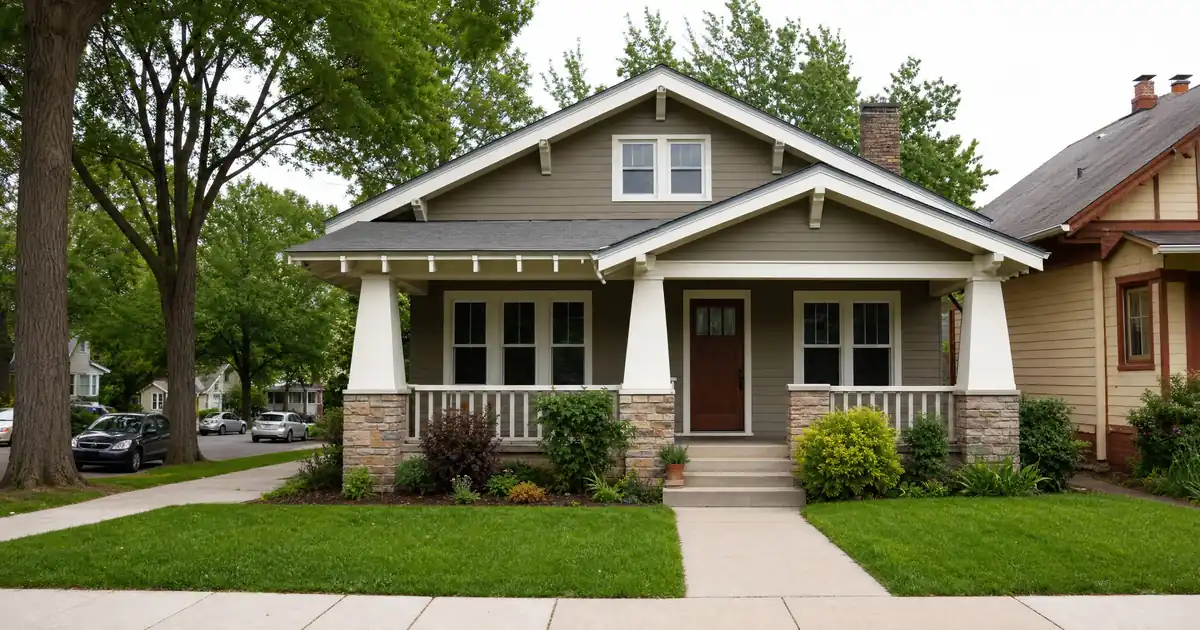
The Quick Read: A residential hard money loan is short-term financing secured by a property’s value, not by the borrower’s income, traditional personal-income documentation, or debt-to-income ratio. The lender underwrites the deal around what the property is worth today, or what it will be worth after repairs, then charges points and fees upfront and expects repayment within months. The hard money loan is sized against total project cost — up to 93% of purchase plus rehab for investors with five or more completed projects, capped at 75% of after-repair value — with up to 100% of the rehab budget funded in draws against completed work, not at closing. It’s a bridge tool, not a hold strategy — and the exit has to be planned before the loan closes, not after.
Here’s what actually matters if you’re weighing one:
What this loan actually costs to carry in your market.
Hard money is sized against the project and priced by time. Enter the deal and see how much the program will lend, the cash required at closing, the carry while you hold it, and what is left at the exit.
Leverage tiers on the current program: up to 85% of project cost with fewer than two completed projects, 90% with two or more, 93% with five or more — every tier capped at 75% of after-repair value. Loan amounts up to $5,000,000, larger by exception; terms of 6 to 18 months, interest-only, no prepayment penalty. The rehab portion funds in draws against completed work, not at closing.
Program parameters shown update from Lendmire’s centralized guideline source. Rate, points, and months are editable assumptions, not quoted terms.
Cost cap sets the loan · positive spread
Illustrative estimate only — not a quote, Loan Estimate, approval, or commitment to lend. Rate, points, and months are editable assumptions. Hard money is business-purpose financing for real estate investors, not a consumer mortgage. Leverage on the current program tops out at 93% of project cost for investors with a documented track record, capped at 75% of after-repair value, with rehab funding up to 100% of the documented budget released in draws; actual terms vary by lender, borrower experience, property, and exit. Lendmire is a mortgage broker, not a lender.
- The property is the collateral. Personal income documentation isn’t the qualifying metric.
- Up to 93% of project cost for investors with 5+ completed projects (90% at 2+), capped at 75% of after-repair value.
- Fix-and-flip structures can finance up to 100% of the rehab budget, separate from the purchase LTV.
- Terms are short by design — 6 to 18 months on the current program, interest-only, with no prepayment penalty — and investors who need longer runway refinance into a DSCR loan once the property qualifies.
- Every deal needs a defined exit before it closes: sell the property, or refinance into a longer-term loan.
What Counts as a Residential Hard Money Loan?
It’s a loan on a 1-4 unit residential property where the lender’s decision is driven by the asset, not the applicant. Trade coverage from Scotsman Guide describes the underwriting logic plainly: the decision to lend is based on the subject property, which usually results in the lender offering less leverage on the “as is” purchase price than a conventional bank would.
That’s the whole trade-off in one sentence. A bank wants years of income history and a low debt-to-income ratio. A hard money lender wants equity cushion and a credible plan to exit the loan — through a sale or a refinance — inside a defined window.
These loans are business-purpose by design. They’re written for non-owner-occupied investment property — fix-and-flip deals, bridge purchases, cash-out on a stabilized rental — not for a primary residence. That distinction matters more than most borrowers realize, and it comes back later in a big way.
Fix-and-flip is the most common use case, but it’s not the only one. Investors also use hard money to close on a property fast while a conventional file is still being assembled, to pull cash out of a stabilized rental before a DSCR refinance is ready, or to fund ground-up construction and land deals where conventional lenders won’t go near the collateral type.
Key Terms Defined
A few terms of art show up constantly in this space. Here’s what they actually mean.
LTV (loan-to-value) — the loan amount expressed as a percentage of what the property is worth. A $300,000 loan on a $400,000 property is 75% LTV. Final terms depend on lender guidelines, property type, leverage, and the borrower’s complete credit picture.
ARV (after-repair value) — what the property is expected to be worth once renovations are complete, used to size fix-and-flip loans instead of the current as-is value.
LTC (loan-to-cost) — the loan amount as a percentage of total project cost (purchase price plus rehab budget), a separate ratio from LTV that lenders often check alongside it.
Points — upfront fees charged at closing, expressed as a percentage of the loan amount. One point equals 1% of the loan.
Draw schedule — the staged release of rehab funds as renovation phases are completed and verified, rather than handing over the full rehab budget at closing.
Balloon payment — the full remaining loan balance due at the end of the term, common on interest-only bridge structures where monthly payments don’t reduce principal.
Business-purpose loan — a loan made for investment or commercial reasons rather than personal, family, or household use — the classification that determines which consumer-lending rules apply.
How Does Underwriting Actually Work?
Underwriting starts with the property, not the person. The lender orders a valuation — often a broker price opinion or a full appraisal — and, on fix-and-flip deals, a second projected valuation based on comparable renovated sales nearby. That as-is value and that projected ARV are the two numbers everything else gets built on.
From there, the process runs in a fairly consistent order:
1. Valuation. As-is value for bridge and cash-out deals; as-is plus ARV for renovation deals.
2. Leverage cap applied. The lender sets the loan amount as a percentage of whichever value figure governs the transaction — as-is for bridge loans, ARV for fix-and-flip.
3. Deal review. The lender looks at the borrower’s experience level, title status, and whether reserves exist to carry the project through completion.
4. Term sheet. If the deal clears, the lender issues terms covering loan amount, structure, and the draw schedule for any rehab funds.
5. Closing. Funds move to complete the purchase or refinance.
6. Draws (if applicable). Rehab money releases in stages as work is completed and inspected — not all at once.
7. Exit. The borrower sells or refinances before or at loan maturity.
Notice what’s missing from that list: pay stubs, traditional personal-income documentation, a DTI calculation. The current program carries a 620 minimum credit score, with additional conditions under 660; credit is one input among several in an asset-based review that centers on the property, the plan, and the exit. Nobody should read “asset-based” as “no documentation.” The lender still verifies title is clean, confirms the borrower has skin in the game, and checks that reserves exist to carry taxes, insurance, and draws until the exit happens.
How Much Can You Actually Borrow?
Across the wholesale network Lendmire places files through, fix-and-flip leverage on the current program runs up to 93% of project cost for investors with five or more completed projects and up to 90% with two or more, with every tier capped at 75% of after-repair value; bridge purchases without rehab run up to 80% of purchase price, and cash-out or refinance files top out at 65% of value. Most files land somewhat below that ceiling once credit, experience, and property type get factored in, and every number here varies by lender, property, and borrower experience.
Industry-wide, the picture looks more conservative. Scotsman Guide reports that hard money loans, on average, run about 65% loan-to-value with roughly a 75% loan-to-cost ratio across the broader private lending market — a reminder that the 93% ceiling is a strong-file outcome, not a market average. The gap between what a lender advances and what the property is worth is the lender’s cushion; the wider that gap, the more room there is to absorb a value decline before principal is at risk.
On a fix-and-flip deal specifically, the rehab budget is financed separately from the purchase LTV — and select lenders in the network will finance up to 100% of that rehab budget on top of the purchase advance. That’s a meaningfully different number than an 85% purchase-price loan, and the two shouldn’t be confused. There is no version of this product that finances 100% of the purchase price. Anyone who claims otherwise is either describing the rehab-budget piece loosely or selling something that doesn’t hold up in underwriting.
Loan sizes on the current program run up to $5,000,000, with larger amounts considered by exception. Terms are short by design — 6 to 18 months on the current program, interest-only, with no prepayment penalty — and investors who need longer runway refinance into a DSCR loan once the property qualifies.
For investors trying to understand the underwriting logic behind this asset class in more depth, residential hard money lenders breaks down how lenders in this space actually evaluate a file.
What Structures and Variations Exist?
Not every hard money loan is a fix-and-flip deal. The collateral and the purpose of the loan shape which structure applies.
Bridge loans on stabilized property are underwritten off the as-is value rather than a projected ARV, since there’s no renovation lifting the value — this typically produces a somewhat lower advance rate than a renovation deal gets against its ARV.
Fix-and-flip loans lean on the ARV appraisal and layer rehab-budget financing on top of the purchase advance, released through draws as work completes. Anyone tackling a heavier renovation scope should look closely at lenders that specialize in residential rehab hard money loans before assuming a standard bridge structure will cover the project.
Cash-out refinances on stabilized rental property pull equity out of a property the investor already owns, generally underwritten similarly to a purchase but against current value rather than a purchase price. Investors evaluating this path should understand how the leverage math shifts once a property has seasoned and rents have stabilized.
Collateral types stretch beyond single-family and small multifamily. Eligible collateral on the current program is non-owner-occupied residential property of one to four units, with ground-up construction up to ten units.
Points and fees get charged at closing across all of these structures, and broker compensation in this space is structurally higher than on a conventional bank loan — a reflection of the underwriting effort and risk involved in a short-term, asset-based file. Tax treatment can depend on how the funds are used and how the property is held, so investors should keep clear records and talk to a qualified tax professional before assuming any interest or fee is deductible.
Where Does the General Rule Break Down?
The asset-based framework holds up well right until the collateral is a primary residence — and that single fact changes almost everything about how the loan gets treated.
Residential hard money, as described throughout this article, is a business-purpose loan. It’s designed for non-owner-occupied investment property. Because it’s business-purpose, it’s reviewed differently than a standard owner-occupied mortgage — which is exactly why most hard money and private lenders decline owner-occupied collateral outright. Federal consumer-lending protections attach to owner-occupied residential loans in ways that don’t apply to a loan secured by a rental property or a flip. Lexology covers this distinction directly: business-purpose loans secured by residential real estate are commonly — and mistakenly — assumed to be exempt from consumer-lending law simply because a private lender made them, and regulators have been paying closer attention to that assumption in recent years.
A common risk-management practice across this industry is to lend only to entities — LLCs, S-corps — and only against property used for investment purposes, which keeps a file cleanly on the business-purpose side of the line rather than drifting toward consumer-purpose territory.
State licensing is not uniform. A handful of states apply lender licensing to business-purpose real estate lending regardless of the borrower’s occupation, and the rules aren’t identical from state to state — what’s exempt in one jurisdiction can require a license in another. This is one area where “hard money is unregulated” turns out to be false; it’s regulated unevenly, which is arguably more confusing.
There is no true 100% financing. It bears repeating because it’s the most common source of investor confusion: no program in this space advances 100% of purchase price. The rehab-budget financing on a fix-and-flip deal is a separate number from purchase leverage, not a workaround to it.
Bridge loans on stabilized property underwrite differently than renovation deals. Because there’s no ARV lift to lean on, the as-is value governs leverage — generally producing a more conservative advance than a comparable fix-and-flip file gets against its projected value.
Hard Money vs. DSCR vs. Conventional: How They Actually Compare
| Factor | Hard Money | DSCR Loan | Conventional |
|---|---|---|---|
| Underwriting basis | Property value, equity, exit plan | Property’s rental income vs. payment | Borrower income, W-2s, traditional personal-income documentation |
| Term | 6–18 months, interest-only, no prepayment penalty; no multi-year notes on the current program | Long-term, typically 30-year fixed | Long-term, typically 30-year fixed |
| Best use | Purchase, renovate, or bridge, then exit | Long-term buy-and-hold rental | Owner-occupied or conforming rental |
| Occupancy | Non-owner-occupied only | Non-owner-occupied only | Either |
Hard money and DSCR financing aren’t really competitors — they’re sequential tools. A hard money loan gets the property acquired and repositioned fast; a DSCR loan takes over once the property is stabilized and producing rent. Investors who understand this progression plan their exit before the first loan even closes, which is a very different mindset than shopping loans one at a time.
What Does the Investor Decision Look Like in Practice?
The real underwriting question on any hard money deal isn’t “can I close” — it’s “can I exit.” Margins on flipping have been compressing, which raises the stakes on that question. Per ATTOM’s year-end flipping report, the typical flipped home nationally netted $65,981 in gross profit for a 25.5% return — the lowest ROI recorded since 2008, down from 32.1% the year before, on 297,045 flips completing nationwide. Flips accounted for 7.4% of all home sales. In a market where the margin for error is shrinking, the lender’s LTV cushion is doing real work: it’s forced discipline against over-leveraging a deal that has less room to absorb a mistake than it did a few years ago.
Because hard money is interest-only with a balloon at maturity, the total cost of capital is front-loaded — points at closing, carrying costs during the hold, then repayment at exit. That makes the hold-period math the central calculation: how many months of carrying cost can this specific deal absorb before the sale or refinance has to happen. Files that skip this step and assume the exit will sort itself out are the ones that run into trouble mid-project.
For a buy-and-hold rental strategy that started with a hard money purchase, the natural next step is a refinance into permanent financing once the property is stabilized and renting. Lendmire (NMLS# 2371349) arranges that path for investors across a wholesale footprint spanning 40 states plus Washington, D.C. — connecting borrowers to select lenders whose DSCR programs qualify primarily on the property’s rental income covering the payment, subject to lender guidelines, rather than personal income documentation. On the refinance side of that pivot, cash-out leverage typically tops out around 75% LTV with roughly six months of seasoning expected on most files, and coverage floors on select programs start around 1.00x — a starting point for eligibility, not a guarantee of approval, since credit, reserves, and property type all factor into the final terms. Investors working the BRRRR model in particular should look at how a hard money loan converts to permanent financing after the rehab is complete before assuming the transition will be seamless. Lendmire’s complete DSCR loans guide covers that qualification process in more depth for investors planning the exit side of the deal.
Investors considering a cash-out move on an already-stabilized rental — rather than a ground-up flip — should look closely at how residential hard money cash-out refinancing is structured before assuming standard bridge-loan leverage applies; cash-out math often runs more conservatively than a purchase file.
Nothing here is a commitment to lend, and loan approval is never guaranteed. Every scenario described is subject to lender approval and to the specific borrower, property, and program guidelines in effect at the time of application. This article is general information, not financial, legal, or tax advice, and investors should confirm current program terms directly before relying on any figure in their own deal math.
Frequently Asked Questions
Is a residential hard money loan the same as a bridge loan?
They overlap heavily but aren’t identical terms. A bridge loan is one type of hard money structure — short-term financing on stabilized as-is value — while “hard money” also covers fix-and-flip loans underwritten against a projected after-repair value, plus cash-out and construction structures. Bridge is a subset, not a synonym.
Can I use a hard money loan on a property I plan to live in?
Generally, no. Residential hard money in this context is a business-purpose product built for investment property, and most lenders decline owner-occupied collateral because it pulls in consumer-lending protections that don’t apply to investment purchases. Anyone considering owner-occupied financing needs a different loan category entirely.
Do I need good credit to get a hard money loan?
Credit still matters, but it’s not the deciding factor the way it is on a conventional mortgage. Credit is one input among several on the current program: a 620 minimum score applies, with additional conditions under 660, and the review centers on the property, the plan, and the exit.
How does rehab-budget financing work on a fix-and-flip loan?
Rehab funds get financed separately from the purchase advance and released in draws as renovation phases are completed and verified. Select lenders in the network will finance up to 100% of the rehab budget on top of the purchase leverage — a different number entirely from a 100% purchase-price loan, which doesn’t exist in this product category.
This article is provided for general informational purposes and does not constitute financial, legal, or tax advice. Loan programs, leverage, and eligibility criteria described here reflect select lender guidelines within Lendmire’s wholesale network and are subject to change, borrower qualification, property review, and lender approval. Nothing here is a commitment to lend.
Many investors treat hard money as the acquisition tool and plan the exit up front — see refinancing out of a hard money loan with a DSCR loan.
About Lendmire
Lendmire (NMLS# 2371349) is a mortgage brokerage built around DSCR investor lending, with programs available in 41 markets, including Washington, D.C. DSCR lenders commonly evaluate rental-income coverage instead of personal income paperwork — a practical fit for LLC-owned and multi-property investors. Terms vary by lender, property, leverage, and program. Scotsman Guide named Lendmire a Top Mortgage Workplace in both 2025 and 2026.
The exit plan matters as much as the purchase price on short-term financing.
Get Started
Ready to find the right loan for you?
In about 30 seconds you can review financing options available for your investment property. No commitment required.
Informational only. Not a Loan Estimate, approval, or commitment to lend. Program availability and eligibility are subject to lender guidelines, credit approval, property review, and underwriting.
References
1. Scotsman Guide — “Take a Tutorial on Hard Money Loans”
2. Scotsman Guide — “Hard Money, Soft Landing”
3. Lexology — “Beware of Business Purpose”
4. ATTOM — 2025 U.S. Year-End Home Flipping Report
This article is part of Lendmire’s hard money loan program — full qualification details, guidelines, and scenarios live on the program page.
Related reading: Residential Rehab Hard Money Lenders · Hard Money Lenders · Residential Hard Money Cash Out Refinance Pennsylvania
Brandon Miller
Founder & CEO, Mortgage Loan Originator, Lendmire LLC
- Mortgage Loan Originator · NMLS# 1129696 · Verify on NMLS Consumer Access
- North Carolina Real Estate Broker · License# 343312 · Verify on NCREC
- North Carolina Insurance Producer · License# 19053198 · Property, Casualty, Life, Health · Verify on NAIC SBS
- Lendmire LLC · Firm NMLS# 2371349 · Verify firm licensure
Legal disclosures. Lendmire (NMLS# 2371349) is a state-licensed mortgage brokerage that arranges financing through wholesale lender relationships. Lendmire is not a direct lender, depository institution, or registered financial advisor. The discussion above is general informational content about real estate financing — it is not financial, legal, or tax advice, and readers should consult licensed professionals for guidance on their individual circumstances. Loan inquiries are subject to lender underwriting; this article does not represent a commitment to lend. Loan terms, rates, and qualification standards vary by borrower, property, and state, and are subject to change at any time. Equal Housing Opportunity. NMLS Consumer Access: nmlsconsumeraccess.org.