
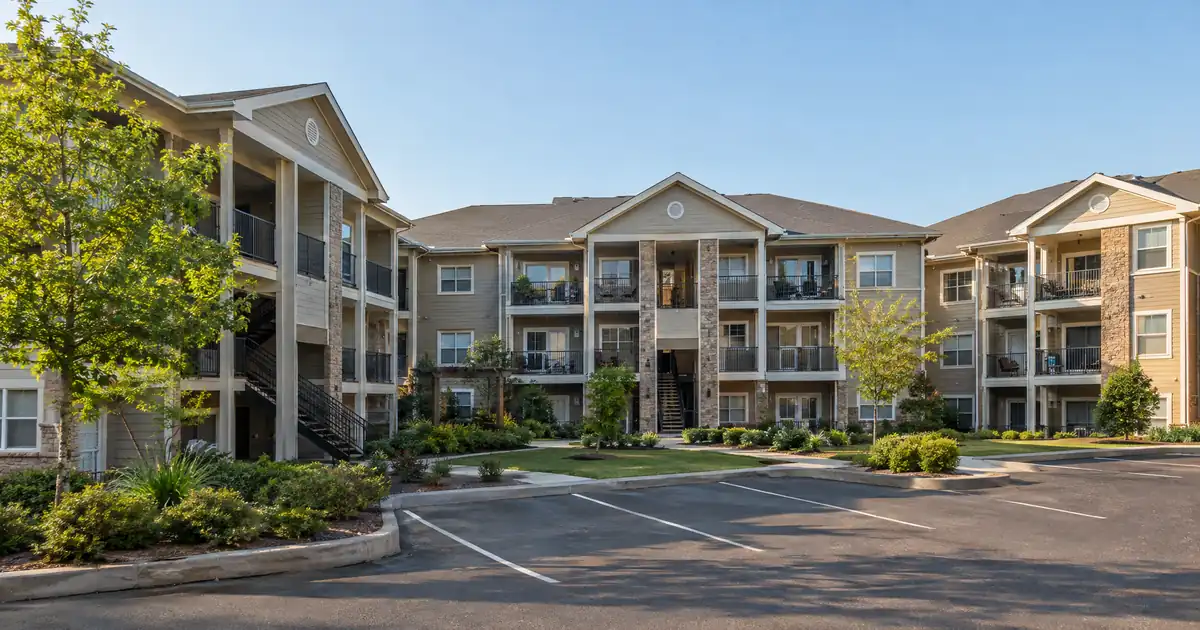
The Quick Read: Refinancing an apartment property works two different ways. It depends on how many units the building has. A 2-4 unit building usually refinances through residential-style DSCR or non-QM programs. These programs qualify the property based on rental income and a coverage ratio. A 5+ unit building falls into commercial territory instead. There, debt yield, operating statements, and agency or bank execution take over. Figure out which lane your property sits in before you shop for a refinance. That one step saves weeks of wasted underwriting.
Which Lane Is Your Property In?
Unit count decides everything else about how an apartment refinance gets underwritten. Properties with two to four units usually qualify under residential-style investor programs. Lenders evaluate them using the same appraisal framework as a single-family rental. Fannie Mae even has a specific form for this: the Small Residential Income Property Appraisal Report. It exists “for the appraisal of two- to four-unit properties,” according to Stewart Valuation Services. That same 2-4 unit line is what most DSCR and non-QM lenders use to define residential-scale investment financing.
DSCR Calculator
Run the numbers in your market
Rate source: Freddie Mac 30-yr average via FRED® — Federal Reserve Bank of St. Louis · effective Aug 20, 2026
Prefilled with starting assumptions — enter your own rent or nightly figures, taxes, insurance, and HOA for a more accurate picture.
Program parameters update from Lendmire’s centralized guideline source. Taxes and insurance are editable estimates.
As of Aug 20, 2026 · General Freddie Mac market benchmark, not a Lendmire loan offer. Rent, nightly rate, occupancy, taxes, and insurance are editable estimates. Short-term rental figures are estimates only and vary significantly by season, property type, management approach, and local short-term-rental rules — confirm local regulations before relying on them. Qualifying income for short-term rentals varies by program — some use appraisal market rent, others use documented STR history or projections — and is confirmed in underwriting. Not a Loan Estimate, approval, or commitment to lend. Program availability and eligibility are subject to lender guidelines, credit approval, property review, and underwriting.
Cross that line into five or more units, and everything changes. The property stops using sales-comparison appraisal logic. It moves into income-approach commercial valuation instead. This isn’t just a lender preference — it comes down to which appraisal form even applies. A 5+ unit apartment building typically routes to bank balance-sheet lending, agency multifamily programs (Fannie Mae or Freddie Mac’s multifamily platforms), HUD-insured execution, or CMBS-style commercial financing. It won’t go through the residential DSCR/non-QM channels this article covers.
Key takeaways before going further:
- 2-4 unit properties generally qualify on property income through residential-style DSCR programs — no traditional personal-income documentation required.
- 5+ unit buildings move to commercial-style underwriting, where debt yield often supplements or replaces a straight rent-to-payment ratio.
- Cash-out refinances on the DSCR side typically cap around 75% LTV, versus 75-80% (and occasionally 85%) on purchase leverage.
- A coverage ratio below 1.00 doesn’t automatically kill a deal — select lenders in the network still work these files, just with adjusted leverage and terms.
- Seasoning (how long the current owner has held title) matters more on cash-out refinances than on rate-and-term.
Key Terms Defined
DSCR (Debt Service Coverage Ratio): This ratio compares gross monthly rent to the property’s total monthly housing payment. That payment includes principal, interest, taxes, insurance, and association dues (PITIA). A ratio at or above 1.00 means the rent covers that payment.
PITIA: This stands for principal, interest, taxes, insurance, and association dues. Together, they make up the full monthly housing obligation used to calculate DSCR. It does not include repairs, vacancy loss, property management, or capital expenditures.
NOI (Net Operating Income): This is a commercial-property metric. It equals rental income minus operating expenses, before debt service. Lenders use it to calculate debt yield on larger apartment deals.
Debt Yield: Take NOI and divide it by the total loan amount. Express that as a percentage — that’s debt yield. Unlike DSCR, debt yield doesn’t move with interest rate or amortization. It stays fixed no matter how the loan is priced. That’s why commercial lenders often size a loan to whichever metric is more restrictive, per Wall Street Prep.
Seasoning: This is the length of time a borrower has held title before a refinance closes. It matters most on cash-out transactions. Lenders want to confirm the equity being pulled isn’t from an artificially inflated recent purchase.
Recourse vs. Non-Recourse: This describes whether the lender can go after a borrower’s personal assets beyond the property if the loan defaults. Non-recourse structures show up more often on larger commercial and agency multifamily loans. DSCR loans on smaller properties are typically recourse to the borrowing entity’s guarantor.
Rate-and-Term or Cash-Out?
This decision comes down to what the investor needs most: a cleaner payment structure, or liquid equity to redeploy elsewhere. Rate-and-term refinancing swaps the existing loan for one with better terms. That might mean a different amortization schedule, or a fixed structure replacing an adjustable one. It could just mean resetting the loan without pulling out any cash. Cash-out refinancing does all that, plus it lets the investor extract equity. On DSCR programs across most of the network, that’s generally capped around 75% LTV. Lenders also want roughly six months of title seasoning before they’ll consider it.
Here’s how the math might play out on a hypothetical fourplex appraised at $780,000. At 75% LTV, a rate-and-term refinance simply resets the loan against that value. Now say the investor wants to pull cash out instead. The same 75% ceiling still applies. The loan amount doesn’t grow just because the purpose changed. But any proceeds left over, after the existing loan gets paid off, become available to the borrower. The DSCR calculation stays the same either way: rent divided by the new PITIA. A file where rent clears the payment with real room to spare might show coverage in the 1.20x-1.30x range. A tighter file — where rent barely covers the new payment after cash-out — might land closer to 1.00x-1.05x. That gap in cushion is exactly what shapes pricing and leverage on the file. Exact terms depend on the lender’s guidelines, the property type, the leverage, and a full review of the borrower’s file.
Here’s the honest part: clearing 1.00 on paper isn’t the same as positive cash flow. DSCR only measures rent against PITIA. It says nothing about vacancy, repairs, management fees, capex reserves, or utilities the owner covers. A property that clears 1.25x on the DSCR calculation can still run tight — or even negative — once you factor in those real operating costs. Investors comparing refinance offers should build their own operating pro forma. Don’t just rely on whatever coverage ratio shows up on the lender’s file.
How Underwriting Actually Treats This Refinance
Underwriting on a 2-4 unit apartment refinance follows a defined sequence. Most files in the network follow it closely, no matter which lender is involved.
1. Unit count confirms the lane. Two to four units routes to residential-style DSCR/non-QM underwriting. Five or more routes to commercial execution.
2. Appraisal establishes value and market rent. An independent appraiser sets the current value. Where an income approach applies, the appraiser also produces a supported rent conclusion. Fannie Mae’s Form 1007 uses this same rent-schedule logic for single-family rentals — and it extends functionally into how DSCR lenders across the network build their own rent figures.
3. The coverage ratio gets calculated. Gross monthly rent (or the appraiser-supported market rent) gets measured against the projected new PITIA. Some programs in the network still move forward even when this ratio falls below 1.00. They just adjust leverage and pricing to reflect the added risk.
4. Everything else gets verified independently of personal income. Lenders check title, credit, entity documents for LLC-held properties, insurance, reserves, and property condition. But traditional personal-income documentation and W-2s generally aren’t part of the file.
5. Refinance-specific checks apply. Seasoning and payoff verification of the existing loan are steps unique to refinances — they don’t show up on a purchase file.
6. Closing pays off the old loan and funds the new one. Any cash-out proceeds go to the borrower or the borrowing entity.
Why does the underwriting focus on the property instead of the borrower? Because these loans are structured as business-purpose credit, not owner-occupied consumer mortgages. DSCR loans are built for non-owner-occupied investment properties. Since they’re reviewed as business-purpose investor loans rather than personal mortgages, they fall outside the disclosure and ability-to-repay framework — the Regulation Z business-purpose exemption — that governs a standard owner-occupied refinance. That’s also why TRID disclosures (Loan Estimates, Closing Disclosures, the three-day waiting period) don’t apply to these files the way they would on a primary-residence refinance.
Loan Programs Compared
Once unit count sorts a property into its lane, the loan-type landscape breaks out fairly cleanly by property size and borrower goal.
| Program | Typical Fit | Recourse | Income Basis |
|---|---|---|---|
| DSCR / non-QM | 2-4 units | Usually recourse | Property rent vs. PITIA |
| Bank portfolio loan | 2-4 or small 5+ | Often recourse | Rent roll + borrower credit |
| Agency multifamily (Fannie/Freddie) | 5+ units | Often non-recourse | NOI, debt yield, DSCR |
| HUD/FHA-insured | 5+ units | Non-recourse | NOI-driven, long-term fixed |
| Bridge/short-term | Any size, transitional | Varies | Stabilization plan + exit |
DSCR and bank portfolio programs make up nearly all of the small-multifamily refinance activity this article focuses on. Agency, HUD, and CMBS execution exist for the true apartment building — a property large enough that debt yield, not a simple rent-to-payment ratio, drives how much the lender will size the loan.
Where the General Rule Breaks
The 2-4 unit rule is the backbone of this financing lane. But a few situations push a file outside the standard path.
The unit cliff. Cross from four units to five, and the entire underwriting framework changes. Sales-comparison appraisal gives way to income-approach valuation. DSCR alone frequently gets supplemented by debt yield. A property just one unit over that line can look identical on the ground, yet require a completely different lending process.
Debt yield can cap leverage even when DSCR looks fine. On larger commercial-scale deals, debt yield strips out rate and amortization assumptions entirely. What’s left is a static NOI-to-loan-amount percentage. Most commercial lenders prefer that figure at 10% or higher, per Wall Street Prep. Because debt yield doesn’t flex with pricing the way DSCR does, it can cap the loan amount even when the DSCR math would otherwise support more.
Sub-1.00 coverage isn’t an automatic decline. Select lenders in the network still work files where rent falls short of the full PITIA. They generally offset the gap with reduced leverage and adjusted terms, not a flat denial. No-ratio qualification — skipping the coverage calculation entirely — exists too. But it’s only available through select lenders in the network, and generally only for borrowers who already own a primary residence.
Delayed financing changes the seasoning question. An investor who bought a property in cash faces a different timing test than one refinancing an existing loan. Non-QM and DSCR programs aren’t bound to any single agency framework here. Each lender in the network sets its own seasoning treatment for cash purchases rather than following a uniform rule.
Short-term rental income requires its own math. A property with an established short-term rental history can qualify on that income. But purchase, rate-and-term refinance, and cash-out refinance each carry different ceilings. Purchase leverage generally tops out near 75% LTV. Refinance and cash-out sit closer to 70%. Lenders typically also want a 640+ credit score, roughly twelve months of hosting history, and a 1.00 coverage floor evaluated separately for purchase and refinance scenarios.
Investment-property HELOC lines have a hard ceiling. Home equity lines on rental property cap at $500,000 total across the network. There’s no larger tier above that for investment property equity lines, no matter how much equity the property carries.
A handful of states carry overlays. Connecticut, Florida, Illinois, and New Jersey purchases generally cap near 75% LTV. Overlay-state deals in the network typically top out around $2,000,000 in loan size.
Some property types simply aren’t offered. Manufactured homes (single- and double-wide), log homes, and barndominiums fall outside DSCR programs across the network. That’s a hard eligibility boundary, not just a “harder to finance” situation.
What Qualifies You
Qualification on a 2-4 unit apartment refinance scales with credit, leverage, and loan size — not personal income documents. Most programs across the network want a credit score around 660. A 620 floor exists in parts of the network for weaker files. A 700-plus score is generally what unlocks the strongest leverage tiers, including select high-leverage purchase programs that can reach 85% LTV.
Reserve requirements move with the file. Conservative rate-and-term refinances at moderate leverage under $1,500,000 sometimes see reserves waived entirely. Most files carry roughly six months of PITIA in reserves. Loans above $1,500,000 typically step up to around nine months. Loan sizes across standard programs generally run up to $3,000,000. Larger balances above $2,500,000 usually get structured as 30-year fixed loans rather than shorter or adjustable terms. The 30-year fixed is the spine of the network’s DSCR structures. Extended 40-year amortization, interest-only periods, and ARM structures are available too, through select lenders, for investors who want them.
DSCR files across the network qualify primarily on the property’s rental income covering the payment, subject to lender guidelines. That’s different from a conventional owner-occupied refinance, which relies on personal income verification. A larger down payment (or, on refinance, more equity retained) lowers the payment and can lift the coverage ratio. But it never overrides a leverage cap, a credit floor, reserve requirements, or property eligibility rules. The strongest files clear both tests at once: enough equity to satisfy the LTV cap, and enough rent to satisfy the coverage ratio.
Compare lenders in this space for long, and you’ll notice how much guideline variation exists file to file. Across a wholesale network with dozens of DSCR lenders, the same fourplex refinance can price and leverage very differently depending on which lender reviews the file. One might waive reserves on a conservative rate-and-term deal under $1,500,000. Another holds firm at six months regardless of leverage. That’s exactly why shopping the file across multiple lenders — rather than taking a single quote — tends to produce a meaningfully better outcome on borderline coverage deals.
The Refinance Decision in Practice
Scale matters more than almost anything else in deciding how an apartment refinance gets structured. Say you’re holding a duplex or fourplex with a solid rent roll and clean credit. You’re usually best served shopping DSCR and non-QM programs. Refinancing an apartment investment property through this lane skips personal income documentation entirely. It moves fast on the underwriting side because the file hinges on the property, not the borrower’s traditional personal-income documentation. Now say you’re holding a true 20-unit building instead. That’s a different game. Debt yield, NOI, and possibly non-recourse structuring through agency or bank channels become the relevant variables. A DSCR-style rent-to-payment calculation is only part of the underwriting picture there.
For investors deciding between rate-and-term and cash-out, the honest answer depends on the exit timeline as much as the numbers. An investor planning to hold five or more years generally has more room to accept a slightly tighter coverage ratio. That trade-off makes sense in exchange for pulling equity to acquire the next property. An investor planning to sell within a year or two should think harder about it. Weigh the cost of disturbing a low-leverage position against how much that equity is actually worth deploying elsewhere. Cash-out refinancing that just sits in a bank account rarely justifies the added leverage.
Lendmire, a mortgage broker (NMLS# 2371349) working with select lenders across a wholesale network spanning 40 states plus Washington, D.C., arranges DSCR and non-QM financing for these transactions rather than funding them directly. Investors evaluating apartment investment property refinance loans can review how leverage, coverage, and reserves interact across different property sizes in Lendmire’s complete DSCR loans guide. Files involving apartment refinance mortgage lending across multiple lenders in the network can be compared side by side before committing to one structure.
Loan approval is never guaranteed, and nothing here is a commitment to lend. Every scenario described here is subject to lender approval and to the specific borrower, property, and program guidelines in effect at the time of application. Tax treatment can depend on how refinance proceeds are used and how the property is titled. Investors should keep clear records and speak with a qualified tax professional before relying on any deduction. This article is general information, not financial, legal, or tax advice.
Investors with questions about how a specific apartment refinance would structure can reach Lendmire at 828-256-2183 or request a quote to compare options based on the property’s income, credit profile, leverage, and investment goals.
Non-QM origination — the broader category DSCR loans sit inside — reached roughly $239 billion in volume. That’s about 10% of total U.S. mortgage origination. Lenders closed an estimated 697,605 non-QM loans, according to Polygon Research. That scale is one reason apartment refinance shoppers now find real pricing choice across DSCR lenders, rather than a single fallback option.
Frequently Asked Questions
Can a fourplex refinance use the same DSCR program as a single-family rental?
Yes, in most cases. Two-to-four unit properties generally qualify under the same residential-style DSCR framework as a single-family rental. Lenders use the property’s rent and a coverage ratio, not the borrower’s personal income.
What happens if my apartment building has 5 or more units?
It moves into commercial-style underwriting. Instead of a simple rent-to-payment ratio, lenders typically evaluate net operating income and debt yield. Financing usually routes through bank, agency multifamily, HUD, or CMBS execution rather than residential DSCR programs.
Is a cash-out refinance on an apartment property treated differently than rate-and-term?
Yes. Cash-out refinances typically cap around 75% LTV and carry a seasoning expectation of roughly six months on title before a lender will consider pulling equity. Rate-and-term refinances generally move forward without that seasoning hurdle.
Do lenders require personal income documentation for an apartment refinance?
Generally not, on DSCR programs. Qualification runs primarily on the property’s rental income covering the payment, subject to lender guidelines, rather than traditional income documentation or W-2s. Credit, reserves, and entity documentation are still reviewed independently, though.
Can I refinance if my coverage ratio comes in under 1.00?
Possibly, through select lenders in the network. Sub-1.00 coverage doesn’t automatically disqualify a file. It typically means adjusted leverage and terms rather than an outright decline. Eligibility still depends on credit, reserves, and the specific program.
For current guidelines and terms, see Lendmire’s DSCR loan programs page.
About Lendmire
Lendmire, NMLS# 2371349, is a mortgage brokerage focused on investor financing. It arranges DSCR loans in 40 states plus Washington, D.C. — 41 markets total. Qualification is based on the property’s income rather than personal income documentation, subject to lender guidelines. That makes it a fit for LLC-held rentals and scaling portfolios. Scotsman Guide named Lendmire a Top Mortgage Workplace in both 2025 and 2026.
Get Started
Ready to find the right loan for you?
In about 30 seconds you can review financing options available for your investment property. No commitment required.
Informational only. Not a Loan Estimate, approval, or commitment to lend. Program availability and eligibility are subject to lender guidelines, credit approval, property review, and underwriting.
References
1. Stewart Valuation Services — Small Residential Income Property Appraisal Report
2.
3. eCFR — 12 CFR 1026.3 Exempt Transactions
4. Polygon Research — How Big Is the Non-QM Market?
This article is part of Lendmire’s DSCR loan program — full qualification details, guidelines, and scenarios live on the program page.
Related reading: Apartment Investment Property Refinance Lenders · Apartment Investment Property Refinance Mortgage · Apartment Investment Property Refinance Loan
Brandon Miller
Founder & CEO, Mortgage Loan Originator, Lendmire LLC
- Mortgage Loan Originator · NMLS# 1129696 · Verify on NMLS Consumer Access
- North Carolina Real Estate Broker · License# 343312 · Verify on NCREC
- North Carolina Insurance Producer · License# 19053198 · Property, Casualty, Life, Health · Verify on NAIC SBS
- Lendmire LLC · Firm NMLS# 2371349 · Verify firm licensure
Disclosure information. Lendmire is a state-licensed mortgage brokerage under NMLS# 2371349. Lendmire is not a depository institution, direct lender, or financial advisor — all loans referenced are placed through wholesale lender partners and are subject to each lender's underwriting standards. This article is provided for general informational purposes and is not a commitment to lend, nor does it constitute financial, legal, or tax advice. Loan programs, terms, rates, and qualification standards change without notice and depend on borrower profile, property type, and the state in which the subject property is located. Equal Housing Opportunity provider. NMLS Consumer Access: nmlsconsumeraccess.org.