
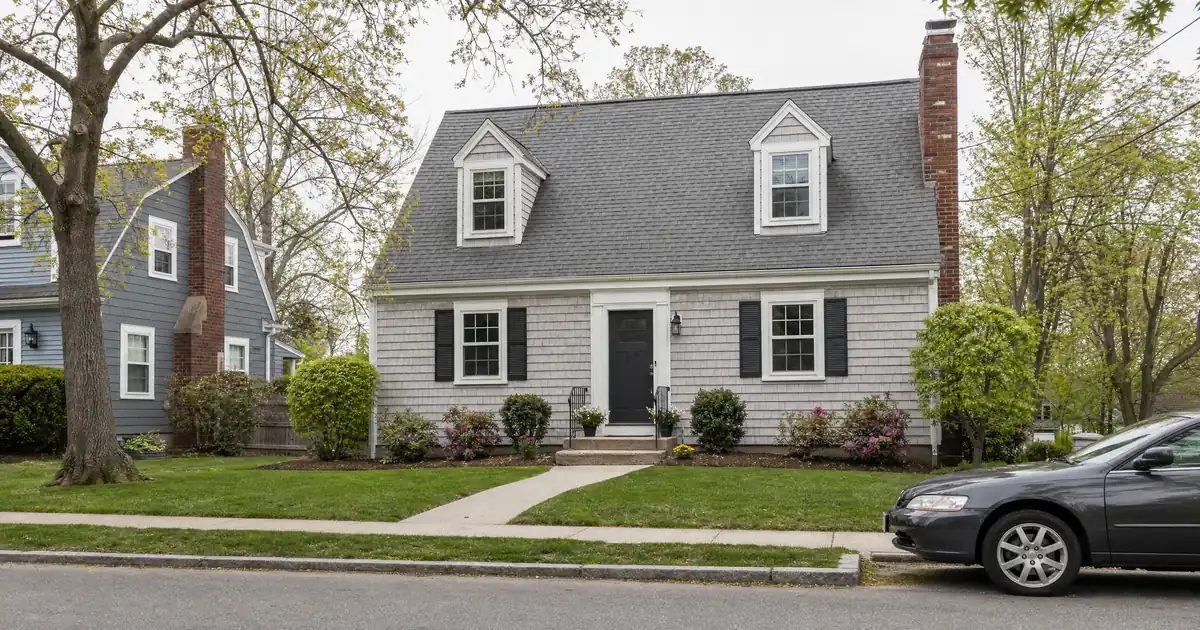
Morris Invest HELOC To Buy More Rentals — The Quick Read: Clayton Morris’s company, Morris Invest, made this strategy popular. It uses a home equity line of credit — usually on a primary residence — as the down payment for buying rental properties. Those rentals get financed with DSCR loans. The mechanics are legitimate. Small investors use this approach all the time. But here’s the catch: the actual credit line you can get depends on the lender’s own rules, not on some company’s marketing example. The rental purchase itself runs through completely separate DSCR underwriting.
Key Takeaways
- A HELOC and a DSCR purchase loan are two different products. Each one gets underwritten on a different basis. The HELOC looks at your personal credit and home equity. The DSCR loan looks at the property’s rental income.
- Investment-property CLTV caps at 70% across the network with a $500,000 maximum line and a hard 700 credit floor — second homes carry the same 70% ceiling from a 640 floor. That’s true no matter what a company’s own example suggests is possible.
- Title matters here. HELOC and home equity lines generally require the property to sit in an individual’s name or a revocable living trust. LLCs and corporations typically can’t hold title on this product. This is the sharpest structural break from a DSCR loan.
- The HELOC payment on your primary residence sits completely outside the DSCR math on the new rental. Clearing 1.00x coverage on the rental says nothing about whether you can also carry the HELOC.
- Sub-1.00 coverage and reduced-documentation structures may be available for the destination purchase through select lenders. But they typically come with adjusted leverage and terms. Approval stays subject to underwriting — it’s never assured in advance.
What Is the Morris Invest HELOC Strategy?
Morris Invest is a real estate education company built around former Fox & Friends host Clayton Morris. For years, the company has promoted HELOC-funded rental buying as a repeatable wealth-building tactic on its podcast and blog. Here’s the pitch: a homeowner opens a home equity line against a primary residence. They draw against it. They use that cash as a down payment on a rental. Then they repeat the process as equity builds in the new property.
How large a line the equity supports in your market.
An equity line is sized by combined loan-to-value, occupancy, and credit — not by rental coverage. Switch the occupancy or the credit band and the ceiling moves with it.
Investment-property lines require a 700 minimum credit score. Second-home tiers reach 640; primary-residence tiers reach 600.
A debt-to-income ratio above 45% requires 680+ credit. Profiles under 640 are limited to single-family homes. At least 75% of the approved line is drawn at closing. Ceilings, floors, and caps update from Lendmire’s centralized guideline source.
Line estimate
Illustrative estimate only — not a quote, Loan Estimate, approval, or commitment to lend. The rate is an editable assumption; equity-line pricing is variable through both the draw and repayment periods and never converts to fixed. Investment-property CLTV caps at 70% across the network with a $500,000 maximum line and a hard 700 credit floor — second homes carry the same 70% ceiling from a 640 floor. Lines above $500,000 require a full appraisal. Credit, debt-to-income, property type, and full underwriting review all affect the final line.
Morris Invest’s own content makes a direct claim. It says a HELOC’s stated purpose doesn’t restrict how you actually spend the funds. Even a line marketed for home improvement, the company argues, can go toward “a performing asset like a rental property.” The company also admits the strategy has friction. Getting a HELOC approved for eventual investment use “might take some tenacity.” Morris Invest tells investors to shop smaller banks and credit unions if the first few lenders say no.
Separate from the HELOC mechanic, Morris Invest’s turnkey rental business has drawn public scrutiny. An investigative report cited investors who said their renovated, tenant-ready properties didn’t match what got advertised. One buyer’s property, the report said, resembled “a ‘crack house'” rather than the finished product shown in marketing (Yahoo News). That’s a reputational issue tied to one specific turnkey seller. It’s not a flaw in the underlying financing tool. But it’s worth separating the two before you judge any “buy more rentals” pitch on its own merits.
How the HELOC-to-Rental Loop Actually Works, Step by Step
This process breaks into four steps. Each one gets underwritten on its own.
Step one — the equity gets appraised or modeled. A lender figures out your home’s current value and your existing mortgage balance. That tells them how much equity you have available. For lines up to $500,000, that valuation usually happens through an automated model rather than a full appraisal. You can still ask for a full appraisal if you want one.
Step two — the draw period opens. A HELOC is revolving, not a lump-sum loan. During the draw period, you can pull funds up to your credit limit, pay it back, and draw again. Morris Invest calls this the “rinse and repeat” mechanic — it’s the loop’s engine.
Step three — the funds move to the new acquisition. Once you draw the money, it works like any other cash-to-close: down payment, closing costs, or reserves on the rental purchase. Investors typically pair this step with a DSCR loan. Why? DSCR financing qualifies mainly on the property’s own rental income covering the payment — not on your personal income or debt-to-income ratio.
Step four — the destination loan underwrites the new property on its own terms. DSCR loans are business-purpose investor loans. Lenders review them differently than a standard owner-occupied mortgage. The new property’s rent gets measured against its own principal, interest, taxes, insurance, and any HOA dues. The HELOC payment on your primary residence isn’t part of that math at all — you have to service it separately. A lot of casual “use other people’s money” talk glosses over this point. It’s the single most important mechanical fact for anyone running this loop.
What an Investment-Property HELOC Looks Like Through Lendmire’s Network
The lender’s own program rules govern the credit line you can actually access. A hypothetical percentage from a blog post doesn’t set the ceiling. There’s no higher tier for investment collateral, no matter how strong your credit runs. A 720 credit profile gets the same 70% ceiling as a 700 profile on an investment line. Above 700, your score buys eligibility — not extra leverage. The minimum credit score for an investment-property line is 700.
Morris Invest uses its own worked example: a $100,000 home with a $50,000 balance producing a $45,000 credit line. That implies a combined 95% of value. That example shows how a HELOC can work in general — it’s not a figure this network extends on investment collateral. On non-owner-occupied properties, the ceiling here is 70% CLTV. Full stop.
Two draw structures exist across the wholesale network: a 3-year interest-only draw with a 17-year repayment on the higher-leverage path, and a 5-year interest-only draw with a 25-year repayment on the longer-runway path — a quoted CLTV always carries its own structure. Lendmire (NMLS# 2371349)’s home-equity product is available through 16 full-service states: Alabama, California, Colorado, Florida, Georgia, Indiana, Michigan, Montana, New Mexico, North Carolina, Ohio, Pennsylvania, Tennessee, Texas, Virginia, and Washington. That’s narrower than the 41-market footprint — 40 states plus Washington, D.C. — where Lendmire arranges DSCR investor loans. Say your primary residence sits outside those 16 states. You may still qualify for a DSCR purchase on the destination rental. You just won’t get a home-equity line through this particular network for the down payment.
Lendmire brokers this financing through select lenders in its wholesale network. It doesn’t fund or approve loans directly. Every figure here stays subject to full underwriting and lender guidelines. If you’re weighing this against a straight cash-out refinance to fund your next purchase, know that exposure limits apply too.
Key Terms Defined
HELOC (home equity line of credit): A revolving, open-end credit line secured by your home’s equity. Draw, repay, and draw again during a set draw period — similar to a credit card.
CLTV (combined loan-to-value): The total of all liens against a property — your existing mortgage plus the new line — measured against the property’s appraised or modeled value.
Draw period: The window, typically several years, during which you can access a HELOC’s credit line. Payments are often interest-only on whatever balance you carry.
DSCR (debt-service coverage ratio): A comparison of a rental property’s income to its own monthly principal, interest, taxes, insurance, and HOA payment. This is the core qualifying number on a DSCR purchase loan.
Business-purpose loan: A loan made for an investment or income-producing purpose rather than personal use. This is how DSCR loans qualify for exemption from many consumer-mortgage disclosure rules.
Seasoning: The minimum wait time a lender requires before you can reuse certain funds — or a certain property — in a new transaction. It’s commonly around six months on a DSCR cash-out refinance.
Where the Strategy Runs Into Real Limits
The loop breaks in a handful of specific, predictable spots. Check each one before you assume the strategy will scale cleanly.
Vesting and LLC ownership. This is the sharpest structural difference between the two products in this whole strategy. A HELOC or investment-property home-equity line generally requires the property to sit in an individual’s name or an inter vivos revocable living trust. LLCs, corporations, partnerships, and irrevocable trusts typically can’t hold title on this product. Plenty of Morris Invest-style investors hold rentals inside LLCs for liability reasons. If that’s your situation, the property needs a vesting change back to individual or trust ownership before a HELOC can attach to it. Or you pivot to a DSCR cash-out refinance instead — DSCR loans commonly accommodate LLC-titled entities, subject to program eligibility.
Coverage below 1.00 on the destination property. Not every rental purchase pencils to full coverage on day one. Sub-1.00 DSCR structures are available through select lenders in the network, with leverage and terms adjusted to offset the shortfall. That’s a real path, not a dead end. But it typically means more equity down and tighter pricing — not the same leverage a 1.20x file would get. No-ratio qualification is also available, but only through select lenders, and generally only for borrowers who already own a primary residence. It never comes with a stated numeric floor.
Overlay states on the purchase side. A few states carry tighter guidelines on the destination DSCR loan, no matter how strong the file looks otherwise. Connecticut, Florida, Illinois, and New Jersey purchases generally cap near 75% LTV. Overlay-state deals commonly cap around $2 million in loan size.
Property type mismatches. Manufactured homes (single- and double-wide), log homes, and barndominiums fall outside DSCR programs in this network entirely. They’re not offered — no matter how strong your file is. If your HELOC-funded target property is one of these, the strategy stalls before underwriting even starts.
The Reg Z classification underneath it all. DSCR loans on non-owner-occupied rentals get designed as business-purpose loans. That means lenders review them under a different framework than an owner-occupied mortgage. Compliance Alliance notes that the exemption actually depends on occupancy, loan purpose, and unit count together — not just on the word “investment.” The HELOC on your primary residence stays a consumer-purpose product. Only the downstream rental purchase shifts into business-purpose underwriting.
HELOC vs. Cash-Out Refinance vs. DSCR Cash-Out
When you’re deciding how to fund your next acquisition, you’re usually choosing between three structurally different tools.
| Factor | HELOC (Investment Product) | Cash-Out Refinance | DSCR Cash-Out |
|---|---|---|---|
| Collateral | Investor’s existing home/rental | Primary residence | An existing rental property |
| Structure | Revolving line, IO draw then amortizing | Single lump-sum first mortgage | Single lump-sum first mortgage |
| Qualifying basis | Personal credit, income, equity | Personal credit, income, DTI | Subject property’s rental income |
| Title/vesting | Individual or revocable trust only | Individual or trust | LLC entities commonly accepted, subject to eligibility |
| Typical ceiling | 70% CLTV, $500,000 line max | Set by conventional/agency guidelines | Around 75% LTV on most cash-out files |
| First-lien impact | Leaves primary first mortgage untouched | Replaces the entire first mortgage | Replaces the rental’s existing loan |
The HELOC’s appeal is simple: it lets you keep your existing first mortgage on the primary residence while still tapping new capital. That’s useful when your first loan carries better terms than what’s out there today. A cash-out refinance on the primary makes more sense if you don’t mind restructuring that first mortgage entirely. A DSCR cash-out refinance on a rental you already own — explained in more depth in Lendmire’s complete DSCR loans guide — tends to fit best once your portfolio has grown enough that qualifying on personal income and DTI becomes the real bottleneck, not the property’s own numbers.
Scaling the Loop: From One Rental to Several
Picture an investor whose primary residence has built solid equity over years of paydown and gradual value growth. That equity, drawn against at the network’s 70% CLTV ceiling, becomes the down payment source for a DSCR-financed rental purchased at a typical 75-80% LTV. Once that first rental has seasoned and built its own equity — through amortization, value growth, or both — the investor may qualify for a second investment-property HELOC. This time it’s secured by that rental instead of the primary home. That leaves the primary residence’s first-lien position untouched while recycling capital toward a third acquisition. All of this stays subject to lender guidelines and a full review of property, leverage, and credit.
This is the real mechanic behind “buy more rentals.” It only works cleanly if two things hold true at every step: you need enough equity to draw against within the CLTV ceiling, and you need enough rental coverage on the new purchase to clear the destination lender’s DSCR threshold. A property that clears one test but not the other stalls the loop. A common failure point: an investor with plenty of equity but a rental market where achievable rents don’t comfortably cover the new payment at the leverage they’re requesting.
Across files like this, one pattern shows up again and again. Investors who’ve run this loop more than once tend to underestimate how much the primary home’s HELOC payment competes with reserve requirements on the next purchase. A destination DSCR lender isn’t looking at the HELOC payment directly. But reserve requirements — commonly around six months of the new property’s PITIA, sometimes waived on modest-leverage rate-term files under $1.5 million and stepping up toward nine months above that threshold — get harder to satisfy in cash when a chunk of your liquidity is already earmarked for the HELOC.
Is This Strategy Right for Your Portfolio?
This loop suits an equity-rich homeowner who’s comfortable carrying a second, typically variable-rate lien against the primary residence. In exchange, they get to keep the terms on their first mortgage. It’s a weaker fit if you have thin equity, if you need payment certainty across every lien you carry, or if your target rentals sit in overlay states or fall into an ineligible property category from the start.
Investors already holding several rentals inside LLCs face the vesting mismatch head-on. Restructuring title just to access a HELOC is often more trouble than it’s worth. A straight DSCR cash-out on an existing rental usually gets you to the same capital faster, without touching how the property is held.
The broader market backs up why this loop has gained traction. Nonconforming loan share — which includes non-QM and DSCR products — reached 17.3% of all mortgage originations as of August, according to Scotsman Guide. Investor activity accounted for 30% of single-family purchases at the close of the most recent year tracked by Cotality’s Home Investor Report. And non-QM borrowers aren’t a subprime pool either. The average non-QM borrower carried a 776 FICO score, per Scotsman Guide — essentially on par with conventional conforming borrowers. Terms vary by lender guidelines, property type, leverage, credit profile, and full file review.
Tax treatment can depend on how you use the funds and how you hold the property. Keep clear records and talk to a qualified tax professional before you rely on any deduction.
If you are buying or refinancing a rental property and want to see how the numbers work, Lendmire can help compare DSCR loan options based on the property’s income, your credit profile, target leverage, and portfolio goals — reach the team at 828-256-2183 or request a quote to start that review.
Loan approval is never guaranteed, and nothing here is a commitment to lend. Every scenario described here is subject to lender approval and full review of borrower, property, and program guidelines, which can change without notice. This article is general information only and shouldn’t be treated as financial, legal, or tax advice.
Frequently Asked Questions
Can a HELOC on a primary residence really be used to buy a rental?
Yes — a HELOC’s stated purpose doesn’t legally restrict how you spend the drawn funds, as long as your specific agreement doesn’t contractually limit use. Most investors run the HELOC draw as the down payment on a separate DSCR purchase loan, with the two products underwritten completely independently.
Does the rental purchase have to close as a DSCR loan?
No, but it’s the most common pairing. DSCR financing gets reviewed on the property’s own rental income rather than your personal income or debt-to-income ratio — which matters, since the HELOC payment already sits on your personal obligations. A conventional investment mortgage is also possible if your income and DTI support it.
What if the property I want to buy is already titled to an LLC?
An investment-property HELOC through this network generally requires vesting in an individual borrower or a revocable living trust, not an LLC. If your target property (or the source property providing the equity) is already deeded to an entity, you have two practical paths: change vesting back to individual ownership, or shift to a DSCR cash-out refinance instead, which commonly accommodates LLC-titled entities subject to program eligibility.
Can I get an investment-property HELOC on a rental I already own instead of my primary home?
Yes — that’s a separate line secured by the rental itself rather than the primary residence. It keeps your primary residence’s first mortgage completely untouched while still tapping equity for the next acquisition.
Is the interest on a HELOC used to buy a rental tax deductible?
It can be, depending on how you actually use and document the funds — deductibility generally follows the use of the proceeds rather than what secures the loan. Because this involves individual tax circumstances, confirm treatment with a qualified tax professional before you rely on any deduction.
About Lendmire
Lendmire is a DSCR-focused mortgage brokerage, NMLS# 2371349, placing investor loans across 41 markets, including Washington, D.C. Lenders generally review DSCR eligibility around a property’s rental income rather than personal income documentation. That fits LLC-held rentals, self-employed investors, and portfolios scaling past conventional financed-property limits. Scotsman Guide named Lendmire a Top Mortgage Workplace in both 2025 and 2026.
Get Started
Ready to find the right loan for you?
In about 30 seconds you can review financing options available for your investment property. No commitment required.
Informational only. Not a Loan Estimate, approval, or commitment to lend. Program availability and eligibility are subject to lender guidelines, credit approval, property review, and underwriting.
References
1. Yahoo News — Investors say ex-Fox & Friends host turned them into slumlords
2. Compliance Alliance — Regulation Z and “Investment” Properties
3. Scotsman Guide — Investor-owned homes surge as brokers pivot to nonconforming loans
4. Cotality — Home Investor Report Q4 2025
5. Scotsman Guide — Which groups are driving non-QM lending?
This article is part of Lendmire’s investment property HELOC program — full qualification details, guidelines, and scenarios live on the program page.
Related reading: The Morris Invest HELOC Strategy for Real Estate Investing · HELOC To Invest · How To Use Home Equity To Invest
Brandon Miller
Founder & CEO, Mortgage Loan Originator, Lendmire LLC
- Mortgage Loan Originator · NMLS# 1129696 · Verify on NMLS Consumer Access
- North Carolina Real Estate Broker · License# 343312 · Verify on NCREC
- North Carolina Insurance Producer · License# 19053198 · Property, Casualty, Life, Health · Verify on NAIC SBS
- Lendmire LLC · Firm NMLS# 2371349 · Verify firm licensure
Legal disclosures. Lendmire (NMLS# 2371349) is a state-licensed mortgage brokerage that arranges financing through wholesale lender relationships. Lendmire is not a direct lender, depository institution, or registered financial advisor. The discussion above is general informational content about real estate financing — it is not financial, legal, or tax advice, and readers should consult licensed professionals for guidance on their individual circumstances. Loan inquiries are subject to lender underwriting; this article does not represent a commitment to lend. Loan terms, rates, and qualification standards vary by borrower, property, and state, and are subject to change at any time. Equal Housing Opportunity. NMLS Consumer Access: nmlsconsumeraccess.org.