
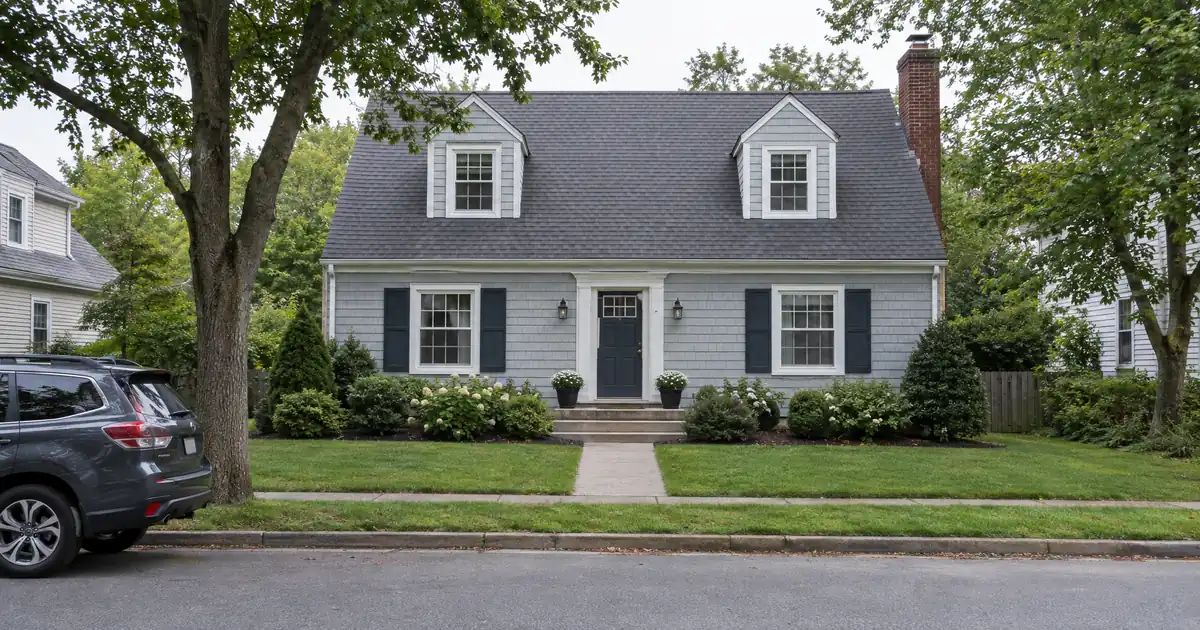
How To Use Home Equity To Invest — The Quick Read: Home equity turns into investable cash through three main doors: a standalone equity line against the property, a lump-sum home equity loan, or a cash-out refinance that replaces the first mortgage outright. Each door treats leverage, credit, and occupancy differently, and the ceiling on how much an owner can pull out shifts hard depending on whether the property is a primary residence, a second home, or a rental. For property investors specifically, a DSCR cash-out refinance skips personal income documents and is reviewed on the rental income the property itself produces, subject to lender guidelines.
Key Takeaways
- Tapping equity to invest is a leverage decision, not a paperwork question — lien position, draw structure, and occupancy rules matter more than the label on the product.
- Ceilings scale hard by occupancy: investment properties get capped tighter than primary residences on every product covered here.
- LLC-titled rentals generally cannot sit behind a standalone equity line — that split is the sharpest structural difference between an equity line and a DSCR cash-out refinance.
- DSCR-based cash-out refinancing on a rental qualifies primarily on the property’s own rent-to-payment math, not traditional personal-income documentation.
- Property type and state overlays — manufactured homes, acreage limits, active-listing status — knock some deals out before underwriting even starts.
What Counts as Home Equity, and How Do You Measure It?
Equity is simply the gap between what a property is worth and what’s still owed against it. An appraisal or an automated valuation model sets the value side; the payoff on any existing loans sets the debt side. Whatever’s left over is the equity a lender will let an owner borrow against, and how much of it gets released depends entirely on the product chosen and the occupancy of the property.
How large a line the equity supports in your market.
An equity line is sized by combined loan-to-value, occupancy, and credit — not by rental coverage. Switch the occupancy or the credit band and the ceiling moves with it.
Investment-property lines require a 700 minimum credit score. Second-home tiers reach 640; primary-residence tiers reach 600.
A debt-to-income ratio above 45% requires 680+ credit. Profiles under 640 are limited to single-family homes. At least 75% of the approved line is drawn at closing. Ceilings, floors, and caps update from Lendmire’s centralized guideline source.
Line estimate
Illustrative estimate only — not a quote, Loan Estimate, approval, or commitment to lend. The rate is an editable assumption; equity-line pricing is variable through both the draw and repayment periods and never converts to fixed. Occupancy and credit drive the ceiling together: investment property runs to 70% combined LTV with a 700 credit floor and a $500,000 cap; a second home runs to 90% at a 640 floor with a $500,000 cap; a primary residence reaches up to 90% at a 600 floor, and its $750,000 maximum line applies only at 75% combined LTV or below with 720+ credit and a full appraisal. Lines above $500,000 require a full appraisal. Credit, debt-to-income, property type, and full underwriting review all affect the final line.
Lenders express how much of that gap they’ll advance as a combined loan-to-value (CLTV) figure — every loan against the property, stacked together, divided by the property’s value. A rental property sitting at 45% CLTV has plenty of room left; one already stacked to 68% CLTV has far less, and the next lender in line will factor in every existing lien before quoting a ceiling.
Key Terms Defined
Home equity is what’s left after subtracting every loan balance from the property’s current value.
CLTV (combined loan-to-value) stacks the first mortgage plus any new line or loan and divides the total by the property’s value — the single number that drives how much more an owner can borrow.
DSCR (debt service coverage ratio) divides the property’s monthly rent by its full monthly payment — principal, interest, taxes, insurance, and HOA dues where they apply. A ratio at or above 1.00 means the rent covers the payment on paper.
Draw period is the window a revolving equity line stays open for withdrawals before it locks into a fixed repayment schedule.
Business-purpose loan is financing extended to acquire, improve, or maintain a property that isn’t owner-occupied. DSCR loans are built for non-owner-occupied investment properties, so they’re reviewed differently than a standard owner-occupied mortgage.
Seasoning is the minimum amount of time a lender wants an owner to have held a property before that property’s equity becomes eligible to tap again.
How Do Investors Actually Access Their Equity?
Three structures cover almost every real-world case, and they behave nothing alike once a lender starts underwriting the file.
A standalone equity line sits behind — or occasionally in front of — the existing mortgage as its own lien, without disturbing that first loan at all. Across Lendmire’s wholesale network, this line runs one of two structures: a shorter draw period paired with a compressed repayment schedule, or a five-year interest-only draw followed by a 25-year fully amortizing repayment period. At least 75% of the approved line gets drawn at closing on both structures, and pricing floats through the entire draw and repayment window rather than converting to anything fixed. On primary residences, the ceiling climbs with credit: a 600 score supports up to 60% CLTV on lines as large as $400,000, and the ladder tops out at 90% CLTV only for borrowers at 720 or better, on lines up to $500,000. Second homes follow a similar ladder capped at $500,000, reaching 90% CLTV only at that same 720-plus tier. Investment properties drop off that ladder entirely: the network holds a flat 70% CLTV ceiling with a 700 minimum credit score and a $500,000 maximum line, and a stronger score above 700 doesn’t buy a higher ceiling the way it does on an owner-occupied file.
A home equity loan is the lump-sum cousin of the line above. It gives one draw and one fixed balance. It amortizes on its own schedule, behind the existing first mortgage. Up-front costs, like an appraisal fee, are typical whenever a lender opens either kind of second-lien product. The CFPB’s HELOC consumer booklet walks through the standard closing-cost list homeowners should expect before signing.
A cash-out refinance doesn’t stack a second lien — it replaces the entire first mortgage with a new, larger one and disburses the difference at closing. For a rental property, that’s where a DSCR cash-out refinance comes in: qualification runs primarily on the property’s rental income covering the payment, subject to lender guidelines, rather than on the borrower’s traditional personal-income documentation. On most files in the network, standard rental collateral tops out around 75% LTV on a cash-out refinance, while short-term rental collateral tops out around 70%, and roughly six months of ownership seasoning is the common expectation before that cash-out becomes available.
| Feature | Equity Line | Home Equity Loan | DSCR Cash-Out Refinance |
|---|---|---|---|
| Lien position | Own lien, first mortgage untouched | Own lien, first mortgage untouched | Replaces the first mortgage entirely |
| Funds released | Revolving draw | Single lump sum | Single lump sum at closing |
| Reviewed on | Credit, CLTV, occupancy | Credit, CLTV, occupancy | Property’s rent-to-payment ratio |
| Investment-property ceiling | 70% CLTV, 700+ credit, $500K max | Varies by lender | ~75% LTV standard rental, ~70% short-term rental |
| Title requirement | Individual or revocable trust only | Individual or revocable trust only | LLC-titled properties eligible, subject to program eligibility |
What Can You Actually Invest In With Home Equity?
Rental Real Estate
This is where DSCR financing earns its keep. An investor who already owns a stabilized rental with meaningful equity can pull cash out through a DSCR refinance. That cash can then serve as the down payment on the next property. The new deal’s eligibility review doesn’t depend on traditional personal-income documentation at all. Coverage below 1.00 isn’t automatically a dead end, either. Select lenders in the network allow sub-1.00 scenarios, though leverage and terms adjust accordingly. A narrower set of lenders also offers no-ratio structures, generally for borrowers who already own a primary residence. Reserve requirements shift with the transaction. Conservative rate-and-term files with modest leverage under roughly $1.5 million sometimes have reserves waived. Loans above about $2.5 million typically require closer to nine months of PITIA in reserves. Lendmire’s complete DSCR loans guide walks through how that qualification works, file by file. The pull-equity-from-rental breakdown covers the cash-out mechanics in more depth.
Here’s a practical note worth flagging. DSCR files that pull equity to fund a second acquisition tend to go smoothest when the outgoing property’s rent roll and lease documentation are already in order. A fresh Form 1007 rent schedule or an updated lease helps avoid a stall later in underwriting. Fannie Mae’s Form 1007 Single-Family Comparable Rent Schedule is the appraisal industry’s standard tool for setting that market-rent figure. Most non-QM lenders use the same form, even though the loan itself never touches an agency.
Stocks, Bonds, and Funds
Pulling home equity to buy securities is a completely different risk. Housing values move slowly. Markets don’t. An investor who takes this route trades a relatively stable, amortizing debt for exposure to an asset class that can swing sharply in a short window. A margin call on the investment side doesn’t pause the mortgage payment on the house. Lendmire’s coverage of using home equity to invest in stocks goes deeper into that mismatch.
Business Funding
Equity can seed a business the same way it seeds a rental purchase, but the underwriting risk shifts to the business itself rather than a property with a lease in place. There’s no rent roll backing the debt — just the owner’s ability to keep both the new obligation and the original mortgage current if the business takes longer to turn a profit than planned.
Renovation as an Investment
Financing a renovation with equity is the most self-contained use case on this list, since the money goes back into the same collateral securing the debt. It’s also the one use case where interest tracing tends to be simplest, since funds spent improving the home that secures the loan generally stay easiest to document.
Where the Standard Rule Breaks: Edge Cases Worth Knowing
LLC-titled rentals don’t fit the standalone equity line. Title on the network’s equity line has to sit with an individual borrower or an inter vivos revocable living trust — LLCs, corporations, partnerships, and irrevocable or land trusts can’t hold title on this product. That’s the sharpest structural gap between an equity line and a DSCR cash-out refinance, which can close with the property titled to an LLC, subject to program eligibility. An investor who already deeded a rental into an LLC needs either a vesting change back to their own name or a DSCR cash-out refinance instead.
Property type knocks some deals out entirely. Manufactured homes (single- and double-wide), co-ops, condotels, log homes, and barndominiums fall outside the network’s standalone equity line, and DSCR programs in the same network don’t finance manufactured homes, log homes, or barndominiums either — these property types simply aren’t offered, not “harder to finance.” Modular factory-built homes and non-warrantable condos, on the other hand, remain eligible on select equity-line structures.
Valuation method changes with loan size. Lines at or below $500,000 typically run on an automated valuation with no traditional appraisal, though a higher CLTV request can trigger a secondary valuation check. Anything above $500,000 requires a full appraisal, and a borrower can request one at any leverage level.
Seasoning isn’t uniform across the industry. Fannie Mae’s Selling Guide requires an existing first mortgage to be at least 12 months old before a standard agency cash-out refinance, with a separate delayed-financing exception for documented all-cash purchases. DSCR loans aren’t agency products, so that 12-month clock doesn’t automatically apply — most files in the network work off roughly six months of ownership seasoning instead, though every lender sets its own standard.
State overlays layer on top of everything above. Texas applies a 12-day waiting period, a one-lien-at-a-time rule, and 12-month seasoning to primary residences specifically, while Texas second homes and investment properties are treated as non-homestead transactions with a 10-acre property limit. New Mexico and Ohio tie the CLTV cap to the borrower’s credit profile, and a property actively listed for sale — or listed within the prior 60 days — is ineligible in Indiana, North Carolina, Pennsylvania, Tennessee, Texas, and Washington.
The Step-by-Step Path From Equity to Deployed Capital
1. Confirm the actual equity available, factoring in every existing lien, not just the first mortgage — CLTV is calculated on the total stack.
2. Decide the time horizon. A single acquisition or lump renovation usually points toward a cash-out refinance or home equity loan; a rolling, repeat-use strategy points toward a revolving line.
3. Match occupancy and title to the right product. A rental already sitting in an LLC generally rules out the standalone equity line and points toward a DSCR cash-out refinance instead.
4. Check credit and property eligibility before applying — the ceiling on an investment property drops hard compared to a primary residence, and certain property types aren’t offered at all.
5. Model the coverage, not just the leverage. DSCR compares rent to the payment only; it doesn’t account for vacancy, repairs, management, or capital expenditures, so clearing a 1.00 ratio on paper isn’t the same as positive cash flow in practice.
6. Apply, close, and keep clean documentation of how the funds were spent — that paper trail matters later if the interest is ever claimed as a deductible expense.
Is This Strategy Right for You?
Before signing on to any of these structures, an investor should be able to answer a few questions honestly:
- Does the property still have enough equity cushion left after the new loan or line closes, at the occupancy-specific ceiling that actually applies?
- Can the household carry two payments — the existing mortgage and the new debt — if the investment takes longer than expected to produce a return?
- Is the target property titled correctly for the product being used, or does vesting need to change first?
- Does the investment have any realistic exit if it underperforms, separate from selling the home that secured the borrowed capital?
Tax treatment can depend on how the funds are used and how the property is held; investors should keep clear records and speak with a qualified tax professional before relying on any deduction.
If the plan involves buying or refinancing a rental property and the real question is how the numbers pencil out, Lendmire can help compare DSCR loan options based on the property’s income, the investor’s credit profile, target leverage, and overall goals — reach the team at 828-256-2183 or request a pricing quote to see how a specific file lines up.
Frequently Asked Questions
Can a lender restrict what I use borrowed home equity for?
Sometimes, depending on how the loan is structured. Consumer-purpose equity lines and loans on an owner-occupied home usually don’t restrict use once funds are disbursed, but a business-purpose loan on a rental property is documented around that business use from the start, and lenders in the network generally expect the stated purpose to match how the funds actually get spent.
Is a standalone equity line on an investment property harder to get than one on my primary home?
Yes, materially. The network’s investment-property ceiling holds flat at 70% CLTV with a 700 minimum credit score and a $500,000 cap, while a primary residence at 720-plus credit can reach a 90% CLTV ceiling on the same product — a much wider gap than most owners expect going in.
What’s the minimum equity needed before any of this makes sense?
There’s no single number — it depends on the CLTV ceiling for the specific occupancy type and product chosen. A rental at 40% CLTV has more room to work with under the investment-property 70% ceiling than a primary residence sitting at 55% CLTV has under its own tier-based ladder, since the ceilings themselves aren’t equal across occupancy types.
Does clearing a 1.00 DSCR mean the property is cash-flow positive?
Not automatically. DSCR only compares rent to the payment itself — principal, interest, taxes, insurance, and HOA dues. Vacancy, repairs, property management, utilities, and capital expenditures all sit outside that ratio, so a 1.00 reading on paper can still mean thin or negative cash flow once real operating costs get factored in.
What happens if the property I want to tap is already titled to an LLC?
The standalone equity line won’t work as-is, since that product requires title in an individual’s name or a revocable living trust. The practical paths are changing vesting back to the individual borrower or using a DSCR cash-out refinance instead, which can accommodate LLC-titled rentals subject to program eligibility.
About Lendmire
Lendmire (NMLS# 2371349) is a mortgage brokerage focused on DSCR investor financing, helping arrange programs through wholesale and investor-lending channels in 40 markets, including Washington, D.C. DSCR loans are evaluated by the lender on property cash flow rather than personal income, subject to lender guidelines, supporting LLC closings and accommodating investors with four or more financed properties. Scotsman Guide Top Mortgage Workplace in both 2025 and 2026.
Get Started
Ready to find the right loan for you?
In about 30 seconds you can review financing options available for your home or investment property. No commitment required.
Informational only. Not a Loan Estimate, approval, or commitment to lend. Program availability and eligibility are subject to lender guidelines, credit approval, property review, and underwriting.
References
1. Fannie Mae — Form 1007 Single-Family Comparable Rent Schedule
Brandon Miller
Founder & CEO, Mortgage Loan Originator, Lendmire LLC
- Mortgage Loan Originator · NMLS# 1129696 · Verify on NMLS Consumer Access
- North Carolina Real Estate Broker · License# 343312 · Verify on NCREC
- North Carolina Insurance Producer · License# 19053198 · Property, Casualty, Life, Health · Verify on NAIC SBS
- Lendmire LLC · Firm NMLS# 2371349 · Verify firm licensure
Disclosure information. Lendmire is a state-licensed mortgage brokerage under NMLS# 2371349. Lendmire is not a depository institution, direct lender, or financial advisor — all loans referenced are placed through wholesale lender partners and are subject to each lender's underwriting standards. This article is provided for general informational purposes and is not a commitment to lend, nor does it constitute financial, legal, or tax advice. Loan programs, terms, rates, and qualification standards change without notice and depend on borrower profile, property type, and the state in which the subject property is located. Equal Housing Opportunity provider. NMLS Consumer Access: nmlsconsumeraccess.org.


