
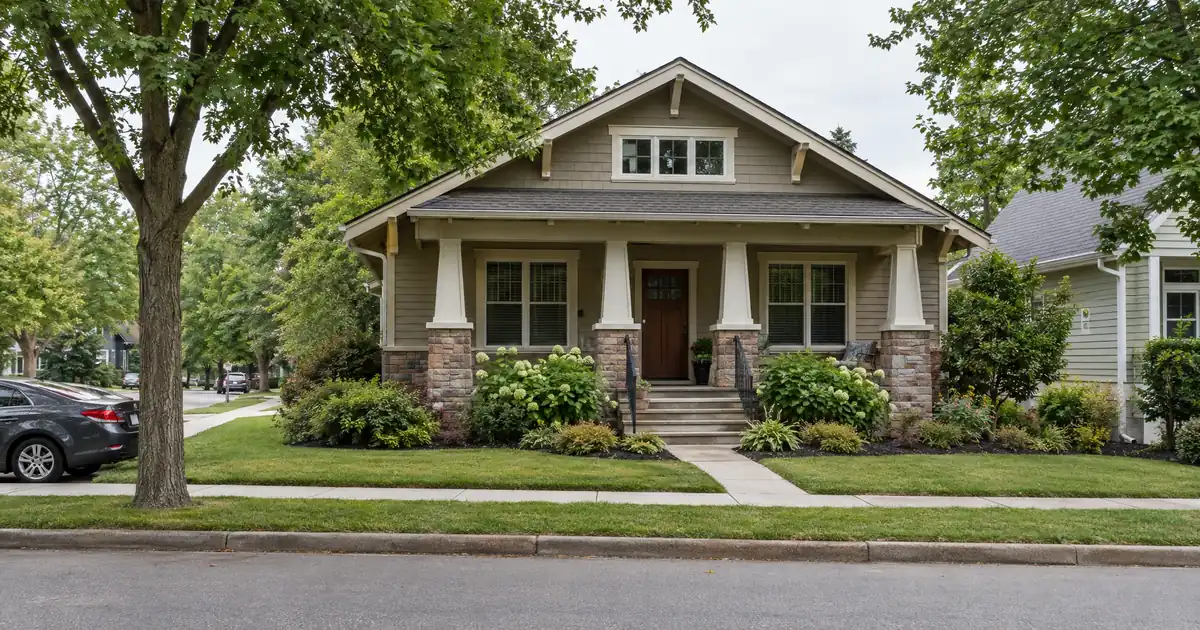
Can You Cash Out Refinance Investment Property — The Quick Read: Yes, you can pull equity out of a rental, and most investors do it through a DSCR loan that qualifies off the property’s rent rather than a personal paycheck. Standard cash-out leverage on a long-term rental tops out around 75% loan-to-value, seasoning generally runs about 6 months of ownership, and the rent typically needs to cover the new payment at roughly 1.00x or higher. What follows is the actual mechanics, the exceptions worth knowing, and what happens to the equity once it’s out.
Key Terms Defined
DSCR (debt-service coverage ratio) compares a property’s rent to its full monthly obligation — principal, interest, taxes, insurance, and any HOA dues — and a ratio at or above 1.00 means the rent covers that payment.
DSCR Cash-Out Calculator
Run the cash-out numbers in your market
Rate source: Freddie Mac 30-yr average via FRED® — Federal Reserve Bank of St. Louis · effective Sep 17, 2026
Prefilled with local estimates — enter your property’s value, balance, taxes, and insurance for a more accurate picture.
Program parameters update from Lendmire’s centralized guideline source. Taxes and insurance are editable estimates.
As of Sep 17, 2026 · General Freddie Mac market benchmark, not a Lendmire loan offer. Property value, balance, taxes, and insurance are editable estimates. Maximum loan-to-value varies by lender, program, property type, and seasoning. Not a Loan Estimate, approval, or commitment to lend. Program availability and eligibility are subject to lender guidelines, credit approval, property review, and underwriting.
LTV (loan-to-value) is the loan amount expressed as a percentage of the property’s appraised value; a lower LTV means more equity stays in the deal.
Cash-out refinance replaces an existing loan with a new, larger one and sends the investor the difference in cash after payoff and closing costs.
Seasoning is the minimum time a lender wants an investor to have held title before allowing a cash-out.
Business-purpose loan is financing made for an investment, not for a home the borrower lives in — the category almost every rental cash-out falls into.
PITIA stands for principal, interest, taxes, insurance, and association dues — the full monthly figure a DSCR ratio is measured against.
Reserves are the extra months of PITIA a lender wants sitting in the borrower’s accounts after closing, as a cushion against vacancy or repairs.
What Makes This Different From a Primary-Residence Refinance?
A rental cash-out refinance is underwritten around the property’s income, not just the borrower’s. DSCR loans are designed for non-owner-occupied investment properties. Because they are business-purpose investor loans, they are reviewed differently from a standard owner-occupied mortgage.
That distinction shows up in three places: how leverage is capped, how the rent gets verified, and how flexible the credit and income requirements are. A DSCR loan lets an investor qualify primarily on the property’s rental income covering the payment, subject to lender guidelines — not on W-2s, traditional personal-income documentation, or a personal debt-to-income calculation. Lendmire, a DSCR-focused mortgage broker arranging DSCR investor loans across 39 states plus Washington, D.C., treats this structure as the default path for rental cash-outs, not a workaround. Anyone new to the category should start with Lendmire’s complete DSCR loans guide, which lays out how the ratio itself gets built.
How Much Cash Can You Actually Pull Out?
The honest answer: whatever the appraisal, the existing payoff, and the leverage ceiling leave behind. Never a fixed number. Standard cash-out refinances on a long-term rental generally cap out around 75% loan-to-value across the network’s programs, which is tighter than the leverage available on a purchase.
Purchase leverage on most files lands at 75%-80% LTV, with select high-leverage programs reaching 85% for borrowers around a 700+ credit score. Cash-out sits on a separate, more conservative schedule by design — pulling equity out of an asset the lender already carries a lien on prices differently than financing a fresh acquisition. Credit floors vary by lender too: a 620 floor exists in parts of the network, most programs want closer to 660, and a 700+ score tends to unlock the strongest leverage tiers.
Loan sizes on most cash-out files run up to $3,000,000, and above $2,500,000 lenders in the network generally require a 30-year fixed structure rather than a shorter-term or adjustable option. Not every property type qualifies for this, either — manufactured homes (single- and double-wide), log homes, and barndominiums fall outside standard DSCR cash-out programs.
A bigger equity position lowers the new payment and can lift the DSCR ratio, but it doesn’t override the LTV ceiling, the credit floor, or the reserve requirement. The strongest files clear two tests at once: enough equity to stay under the cap, and enough rent to clear the coverage floor. These specifics are subject to lender guidelines and a full review of property, leverage, and credit.
How Long Do You Have to Own the Rental First?
Most lenders in the network want about 6 months of ownership, counted from the date title recorded, before considering a cash-out refinance. That clock exists because DSCR loans are non-QM, business-purpose products never sold to Fannie Mae or Freddie Mac, so no single agency guide governs the wait — each lender sets its own window.
For contrast, the conventional side runs a published federal framework. Fannie Mae requires at least one borrower to have been on title for 6 months before disbursement, per its Selling Guide on cash-out refinance transactions, and it separately requires any existing first mortgage being paid off to be at least 12 months old — a rule effective for note dates on or after April 2023, according to Fannie Mae’s capital markets update. Those two tests run independently, and neither applies to a DSCR file directly, but they explain why so many investors shifted toward DSCR cash-outs once the agency rule tightened.
Real exceptions exist inside the network, too. A property acquired through inheritance or a legal award, like a divorce settlement, can sometimes skip the standard seasoning clock entirely. Delayed-financing-style structures — for an investor who bought in cash and wants to refinance sooner — also show up as lender-specific programs. They aren’t identical across lenders, so confirm the exact terms file by file rather than assuming a set waiting period.
How Does the Lender Get to the Rent Number?
The rent figure driving the DSCR ratio comes from an appraiser’s opinion combined with the investor’s actual lease or tax return — not a rent estimate pulled from thin air. For a single-unit rental, appraisers commonly use Fannie Mae’s Form 1007, the standard rent schedule used across the industry to compare a property’s market rent to similar rentals nearby, per Blueprint’s overview of the form. Two-to-four-unit properties use a related form built around both rental income and market value.
On a refinance, that rent opinion doesn’t stand alone. It gets checked against the lease agreement or traditional personal-income documentation, according to McKissock Learning’s appraisal guidance. The rent number the appraiser assigns often matters more than investors expect. If a unit sits vacant at appraisal time, or a lease is priced under market, the rent used for lender review can drop — even if the property is worth more when fully leased.
This is where pattern-recognition across many files pays off. Deals with heavy vacancy exposure or below-market leases at refinance time tend to come in tighter on DSCR than the investor expected, because the rent schedule reflects a snapshot, not the unit’s best-case lease. Getting a fresh lease signed — or documenting a market-rent comparable — before the appraisal goes out tends to produce a cleaner number.
What If the Rent Doesn’t Quite Cover the Payment?
A DSCR under 1.00 doesn’t automatically kill the refinance — it changes the structure. Not a decline. A different structure. Coverage below 1.00 is available through select lenders in the network, with leverage and terms adjusted to offset the thinner ratio: usually a lower LTV, more equity left in the deal, or different pricing rather than an outright pass.
There’s also a path for a narrower group of borrowers. Some lenders in the network review the loan mainly on whether the property’s rental income covers the payment, subject to lender guidelines. They don’t anchor approval to a specific DSCR number. But this option is generally reserved for investors who already own a primary residence, and it typically comes with its own leverage and reserve adjustments. For a deeper breakdown of how leverage and terms shift on a sub-1.00 file, see Lendmire’s DSCR cash-out refinance guide. It walks through how those programs are typically structured.
It’s worth being precise about what 1.00 actually measures. Clearing it means the rent covers principal, interest, taxes, insurance, and association dues. Full stop. It says nothing about vacancy, repairs, property management fees, or capital expenditures — all of which sit outside the ratio entirely. A property clearing 1.10 on paper can still run negative in a real month once the roof needs work. Budget for those costs separately rather than treating DSCR as a stand-in for actual cash flow.
Cash-Out Refinance vs. HELOC vs. Selling the Property
Investors weighing how to access equity in a rental generally have three real paths, and each one trades speed of access for cost and how much of the asset stays theirs.
| Factor | Cash-Out Refinance | HELOC (investment property) | Selling the Property |
|---|---|---|---|
| Existing loan | Paid off and replaced | Stays in place, line sits behind it | Paid off at closing |
| Access to equity | Lump sum at closing | Draw as needed, up to line limit | Full net proceeds |
| Ceiling | ~75% LTV on most rental files | Caps around $500,000 total | No cap — market sets it |
| Keeps the asset? | Yes | Yes | No |
| Best fit | Recapitalizing while keeping the rental | Smaller, flexible draws over time | Exiting the position entirely |
HELOCs deserve their own note. Investment-property home equity lines cap around $500,000 total across the network, and there’s no higher tier for rental collateral. That makes a HELOC a reasonable tool for a smaller draw, but a poor fit if you’re trying to pull six figures out of a higher-value property. A cash-out refinance is usually the better mechanism at that size. If you’re comparing all three routes — including where a best-fit cash-out refinance structure applies to your portfolio — run the numbers against your actual equity rather than assuming one option automatically wins.
Does a Short-Term Rental Change the Math?
Yes — short-term rental collateral runs a different leverage and documentation schedule than a standard long-term rental. Purchases on short-term rentals top out around 75% LTV. A short-term rental cash-out tops out closer to 70%, compared with roughly 75% for a standard long-term rental cash-out. Refinances on short-term rentals sit in that same 70% range. Terms vary by lender guidelines, property type, leverage, credit profile, and full file review.
Most programs also want a track record before nightly income counts toward the ratio. That means a 700+ credit score, roughly 12 months of hosting history, and a coverage floor around 1.00 for both purchases and refinances. Lenders calculate this off trailing rental performance, not a projected nightly rate. Appraisers face a real limitation here too. The standard rent-schedule forms were built for long-term rentals and weren’t designed around nightly bookings. That’s part of why short-term rental files lean more on the investor’s own hosting-platform data. Short-term rental rules can also vary by city, county, HOA, and property type. Confirm local rules before you rely on projected rental income.
Three Misconceptions Worth Killing
“The cash I pull out counts as taxable income.” It doesn’t. A cash-out refinance is debt, not earnings — the money has to be repaid, so it isn’t treated as income the year it’s received. Tax treatment can depend on how the funds are used and how the property is held, though, so keep clear records and speak with a qualified tax professional before relying on any deduction.
“DSCR borrowers are lower credit quality than conventional borrowers.” Trade data doesn’t back that up — non-QM borrowers carried an average FICO score of 776 in one recent industry snapshot, comparable to conventional mortgage borrowers. DSCR is a documentation pathway built around the property’s income, not a signal about the borrower’s creditworthiness.
“A cash-out refinance gets the same leverage as a purchase loan on the same property.” It doesn’t, and the gap is deliberate. Purchase and cash-out transactions sit on different leverage schedules across the industry because pulling equity out of an asset the lender already holds a lien on is priced as a different kind of risk than financing a fresh acquisition. Never assume the cash-out ceiling matches the purchase ceiling on the same property type.
Is Pulling the Equity Out Worth It?
Before you sign anything, run this math. Will the cash produce more value than the cost of carrying a bigger loan on the property you’re refinancing? Investors who buy, renovate, refinance, and repeat use cash-out refinances to recycle equity into their next purchase. This strategy leans on DSCR loans because the seasoning window is typically shorter than the conventional 12-month loan-age rule.
Investor purchasing activity gives some sense of scale here. Investors bought an average of 18% of all U.S. home sales in a recent year — down from the pandemic-era peak but still well above the roughly 15% share investors held a decade earlier and the 7% share from two decades earlier, according to Redfin’s housing market year in review. That level of ongoing activity is exactly why efficient equity recycling matters — a slow refinance process compounds across a whole portfolio, not just one property.
Before you pull cash out, check three things. First, does your new DSCR ratio still meet what the specific program requires? Second, will the reserve requirement — commonly around 6 months of PITIA, sometimes closer to 9 months above $1,500,000 — leave enough money in the bank after closing? Third, is the intended use of funds worth the larger balance on the property you’re refinancing? If a rental is titled to an LLC, cash-out refinancing is still commonly available, subject to lender program eligibility. But the documentation shifts slightly compared with a personal-name file.
If you’re weighing a cash-out refinance against other ways to tap equity, Lendmire’s team can help match a property’s rental income, credit profile, and leverage to the right DSCR program — reach out at 828-256-2183. Equity sitting in a rental doesn’t do anything until it moves; a cash-out refinance is simply the mechanism that puts it back to work, at whatever pace the seasoning clock and the rent number allow.
Frequently Asked Questions
Can you cash-out refinance a rental you bought with all cash? Yes — this is the delayed-financing style scenario, and several lenders in the network offer their own version that lets an investor refinance sooner than the standard seasoning window. Exact terms are lender-specific, so confirm them before assuming a set waiting period.
Does an LLC-titled rental qualify for a cash-out refinance? Generally yes, subject to lender program eligibility. DSCR programs are built around business-purpose lending, so LLC titling is common rather than unusual, though documentation and guarantor requirements vary by lender.
What credit score do you need for a cash-out refinance on a rental? It varies by lender — some programs in the network go as low as 620, most want around 660, and a 700+ score typically unlocks the strongest leverage tiers and pricing.
Is the cash from a cash-out refinance taxable? No — the IRS treats it as debt restructuring rather than income. How the funds are later used can affect what interest is deductible, so it’s worth reviewing with a tax professional.
Can a short-term rental do a cash-out refinance? Yes, though the leverage ceiling runs lower — typically around 70% for short-term rental collateral compared with roughly 75% for a standard long-term rental — and lenders generally want at least 12 months of hosting history before counting nightly income toward the ratio.
About Lendmire
Lendmire — NMLS# 2371349 — is a DSCR and non-QM mortgage brokerage with investor loan programs in 40 markets, including Washington, D.C. DSCR eligibility is commonly reviewed by the lender around property-level rent rather than personal income documentation, subject to lender guidelines, and the brokerage helps arrange financing for LLC-owned portfolios beyond conventional financed-property limits. Recognized by Scotsman Guide as a Top Mortgage Workplace in 2025 and 2026.
Lendmire’s Top Mortgage Workplace recognition is documented by Scotsman Guide 2025 Top Mortgage Workplace and Scotsman Guide 2026 Top Mortgage Workplace.
Get Started
Ready to find the right loan for you?
In about 30 seconds you can review financing options available for your home or investment property. No commitment required.
Informational only. Not a Loan Estimate, approval, or commitment to lend. Program availability and eligibility are subject to lender guidelines, credit approval, property review, and underwriting.
References
1. Fannie Mae Selling Guide B2-1.3-03 — Cash-Out Refinance Transactions
2. Fannie Mae Capital Markets — Updates to Cash-Out Refinance Eligibility
3. Blueprint — What Is Form 1007
4. McKissock Learning — Form 1007 and Its Impact on Short-Term Rental Appraisals
5. Redfin — 2025 Housing Market Year in Review
Brandon Miller
Founder & CEO, Mortgage Loan Originator, Lendmire LLC
- Mortgage Loan Originator · NMLS# 1129696 · Verify on NMLS Consumer Access
- North Carolina Real Estate Broker · License# 343312 · Verify on NCREC
- North Carolina Insurance Producer · License# 19053198 · Property, Casualty, Life, Health · Verify on NAIC SBS
- Lendmire LLC · Firm NMLS# 2371349 · Verify firm licensure
Compliance and disclosures. Lendmire (NMLS# 2371349) is a licensed mortgage broker and is not a direct lender, depository institution, financial advisor, or tax professional. Content in this article is general market analysis and educational information — not financial, legal, or tax advice for any specific situation. Lendmire does not guarantee loan approval; every transaction is subject to underwriting by the funding lender. Mortgage pricing and loan program guidelines are subject to change at any time without notice and vary by borrower characteristics, property type, and state regulations. Lendmire complies with Equal Housing Opportunity. Licensure verification: NMLS Consumer Access.


