
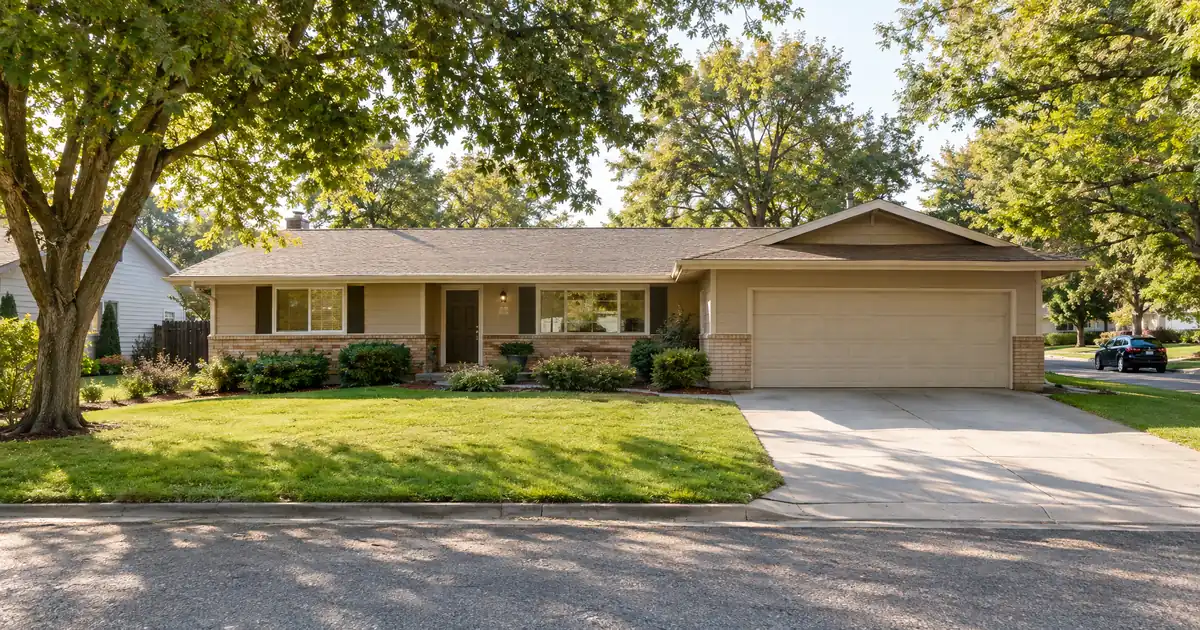
The Quick Read: It depends on the collateral. On a primary residence, a mid-range score of roughly 620 to 699 can fit a bank statement HELOC through select wholesale lenders, with leverage stepping up as the score climbs. Pricing and available terms vary by lender, borrower profile, property type, and full underwriting review. On a rental property, the investment floor in Lendmire’s network is 700, so a mid-range score usually points to a DSCR cash-out refinance instead. Every figure below is subject to lender guidelines and full file review.
What Does “Mid-Range” Actually Change?
Occupancy sets the credit floor before anyone looks at your income. That is the first filter on every file, and the income path comes second.
How large a line the equity supports.
An equity line is sized by combined loan-to-value, occupancy, and credit — not by rental coverage. Switch the occupancy or the credit band and the ceiling moves with it.
Investment-property lines require a 700 minimum credit score; second-home lines start at a 640 minimum and primary-residence lines at 600, and the combined-LTV ceiling steps down as the credit band drops on primary-residence and second-home lines and holds on investment-property lines; the line cap steps down on primary-residence lines and holds at every tier on investment-property and second-home lines.
A debt-to-income ratio above 45% requires 680+ credit. Profiles under 640 are limited to single-family homes. At least 75% of the approved line is drawn at closing. Ceilings, floors, and caps update from Lendmire’s centralized guideline source.
Rate assumption as of November 9, 2026.
Line estimate
Illustrative estimate only — not a quote, Loan Estimate, approval, or commitment to lend. The rate is an editable assumption; equity-line pricing is variable through both the draw and repayment periods and never converts to fixed. Occupancy and credit drive the ceiling together: an investment property tops out at 70% combined LTV (minimum credit 700, line cap $500,000); a second home tops out at 90% combined LTV (minimum credit 640, line cap $500,000), with the ceiling stepping down as the credit band drops (the cap holds at every tier); a primary residence tops out at 90% combined LTV (minimum credit 600), and its $750,000 maximum line is available only at 75% combined LTV or below with a 700-or-better credit profile (720 on the longer-runway program) and a full appraisal. Lines above $500,000 require a full appraisal. Credit, debt-to-income, property type, and full underwriting review all affect the final line.
Estimate only, not a loan offer or a commitment to lend. The rate is variable and can go up. The payment shown is interest only. Full calculator disclaimer.
Across the wholesale network, the minimum score is not one number. It moves with the property:
- Primary residence: the program floor is 600.
- Second home: the floor is 640.
- Investment property: the floor is 700.
A bank statement path changes how income is counted. It does not lower these floors. For an investor with a 680 score and a rental, the income method never becomes the problem. The occupancy floor stops the file first.
Tier Table: Score Band by Occupancy
This is how maximum combined leverage (CLTV) steps up by score band. The figures come from the network’s guideline ranges. Two wholesale programs sit behind them, and each figure applies only within its own program’s terms.
| Score band | Primary residence | Second home | Investment |
|---|---|---|---|
| 620–639 | 70% CLTV, to $400,000 | Not eligible | Not eligible |
| 640–659 | 80% CLTV, to $500,000 | 75% CLTV, to $500,000 | Not eligible |
| 660–679 | 85% CLTV, to $500,000 | 80% CLTV, to $500,000 | Not eligible |
| 680–699 | 85% CLTV, to $500,000 | 85% CLTV, to $500,000 | Not eligible |
| 700–719 | 85% CLTV, to $500,000 | 85% CLTV, to $500,000 | 70% CLTV, to $500,000 |
| 720+ | 90% CLTV, to $500,000 | 90% CLTV, to $500,000 | 70% CLTV, to $500,000 |
Two notes keep the table honest. The 90% CLTV ceiling exists only on primary residences and second homes at a 720 or better profile. It is not a mid-range number. And on investment lines, 70% is the ceiling with no tier above it.
Primary-residence lines above $500,000 need a credit profile of 700 or better (720 on the longer-runway program), cap at 75% CLTV, and require a full appraisal. Those lines are primary-residence only.
Why Do Rental HELOCs Run Higher?
Rental collateral carries a higher floor because lenders treat it as riskier. Experian says a HELOC on a rental is harder to qualify for and reports that a good score is typically at least 720. That is a market-wide figure. In Lendmire’s network, the investment floor is 700 and the ceiling is 70% CLTV.
Investor forums show the same pattern. A BiggerPockets thread on investment-property HELOCs has investors steering each other toward community banks and credit unions. It also shows lender-specific score floors in the low 700s. Policies are uneven from lender to lender.
Network lines have their own limits. A borrower is limited to three lines, and a borrower with more than 15 financed properties is not eligible. Investment lines cap at $500,000 total.
Which Lender Type Fits a Mid-Range Score?
The right lender type depends on the occupancy and on how the lender underwrites income. Most mid-range borrowers are choosing between three types. The table shows how each tends to treat a file in that band.
| Lender type | How it underwrites | Mid-range fit |
|---|---|---|
| Big banks and large retail lenders | Often full documentation, set score minimums | Weak for bank statement income |
| Credit unions and community banks | Relationship-driven, policy varies | Mixed; depends on property count |
| Wholesale network of specialty lenders | Bank statement income, tiered leverage | Strongest for self-employed primary and second homes |
A broker sees many lenders’ guidelines side by side. That is the practical advantage here. Most programs want somewhere around the 660 range or better for decent leverage. The strictest overlays on the broader market want more. Across the network, a mid-range score does not close the door on a primary or second-home line. It sets how much leverage you can reach.
Use this short decision list:
- Primary residence, self-employed, score 620–699: a bank statement HELOC through the network is a real option.
- Second home, score 640–699: eligible, with leverage stepping up across the band as the score rises. Maximum combined loan-to-value at the low end of the band is more conservative than at the top.
- Rental, score under 700: the HELOC route is closed. Look at a DSCR cash-out refinance.
- Property held in an LLC: a HELOC is not possible without a vesting change.
How Does Bank Statement Income Get Counted?
Lenders average 12 to 24 months of personal or business statements. They then apply an expense factor to the deposits. With a 50% factor, half of average deposits count as qualifying income.
Underwriters look for steady deposits. They flag overdrafts, large one-off deposits, and transfers between your own accounts. Mixed personal and business funds slow a file down because someone has to sort them out.
Qualifying debt-to-income (DTI) is capped at 50%. For credit profiles from 600 to 679, the cap is 45%. A ratio above 45% requires a 680 minimum. The payment is calculated on the interest-only amount at the maximum draw, not on what you plan to borrow. That means a mid-range borrower should size the line request carefully.
A Mid-Range Worked Example
Run the numbers on a self-employed borrower with a 665 score who wants a line on a primary residence. The tier table puts that file in the 660–679 band, which reaches 85% CLTV, up to $500,000.
Combined leverage counts every lien. The first mortgage balance plus the new line, divided by the home’s value, must fit under 85%. If the existing mortgage already uses most of that room, the line shrinks. If the file lands at a DTI above 45%, the 665 score cannot carry it, because that threshold requires a 680 minimum.
Now change one input. A score of 680 on the same file keeps the 85% ceiling and lifts the DTI allowance. That is the kind of boundary that matters. A few points of score, a smaller line request, or a lower existing balance can change the outcome. These tiers show how a file reads. They are not a promise of terms.
Line sizes at or below $500,000 ordinarily run an automated valuation instead of a full appraisal. A higher CLTV may require a secondary valuation. A borrower may also ask for a full appraisal.
Levers Near a Tier Boundary
Most boundary files can be moved. Try these in order:
1. Pay down card balances a cycle early. Utilization can spike before an application, and personally guaranteed business cards may report to personal credit.
2. Request a smaller line. A smaller line can keep combined leverage under the tier cap.
3. Clean up the deposit trail. Separate business and personal funds and document one-off deposits.
4. Check housing history. Mortgage lates carry weight, especially below 640.
5. Wait a cycle if the file sits just under a threshold. A short delay costs less than a decline.
Reports must be no more than 90 days old at closing, and there are no rescores. Time the credit pull to match the file.
What Are the Structural Catches?
A bank statement HELOC is a standalone line in first or second lien position. Pricing floats during both the draw and the repayment period and never converts to fixed. Primary and second-home lines offer a 3-year interest-only draw with a 17-year repayment, or a 5-year draw with a 25-year repayment. Investment lines use the 5-year draw only. At least 75% of the line is drawn at closing.
That draw rule changes the payment profile from day one. The CFPB notes that HELOCs usually carry a variable rate and that repayment often runs ten or 20 years after the draw period. Its HELOC booklet adds that payments can change even if you draw no more. The booklet is older, so treat it as a concept guide only. For a rental, a payment jump at the end of the draw can strain cash flow.
Title is the sharp edge. The property must be held by the individual borrower or a revocable living trust. LLCs, corporations, partnerships, and irrevocable or land trusts cannot hold title. A property already deeded to an LLC needs a vesting change or a different product. Availability is also narrower than for DSCR loans. HELOC lines are offered in 16 states only: AL, CA, CO, FL, GA, IN, MI, MT, NM, NC, OH, PA, TN, TX, VA, and WA.
When Another Path Fits Better
If the collateral is a rental and the score is under 700, a DSCR cash-out refinance is the practical move. It is a closed-end loan, and it qualifies primarily on property-level rental income covering the payment, subject to lender guidelines. Personal bank statements do not drive the decision. Across the network, cash-out tops out around 75% LTV with about six months of seasoning. A 660 score is what most programs want, and a 620 floor exists in parts of the network. Reserves commonly run around six months of PITIA but vary by lender, leverage, and loan size.
Coverage of 1.00 is where many select programs start. A separate select-lender path takes coverage below 1.00, with leverage and terms adjusted. Clearing 1.00 is not the same as positive cash flow, because repairs, vacancy, and management sit outside the calculation. The complete DSCR loans guide covers the full mechanics. Title can also sit in an LLC on a DSCR file, per lender program requirements.
For the score side of the story, Lendmire’s breakdown of the minimum credit score on a bank statement loan shows how the floor moves with the amount borrowed.
Tax treatment can depend on how the funds are used and how the property is held; investors should keep clear records and speak with a qualified tax professional before relying on any deduction.
Key Terms Defined
Bank statement income: Qualifying income built from average deposits over 12 to 24 months, reduced by an expense factor.
CLTV (combined loan-to-value): All liens on the property divided by its value.
DTI (debt-to-income): Monthly debt payments divided by qualifying monthly income.
Draw period: The stretch when you can borrow from the line, before full repayment begins.
Frequently Asked Questions
Can I get a bank statement HELOC with a 640 score?
On a primary residence or second home, yes, subject to lender guidelines. At 640, primary-residence leverage reaches 80% CLTV up to $500,000, and second-home leverage starts lower, at 75% CLTV up to $500,000. A 640 score does not clear the investment floor, which is 700.
Does bank statement income lower the score I need?
No. The score floor follows the property’s occupancy, not the income path. Bank statement income changes how your income is measured. A DTI above 45% still requires a 680 minimum.
Can I use a HELOC on a rental if my score is 690?
Not through this network, because the investment floor is 700. Market surveys report higher scores for rentals; Experian puts the typical figure at 720 for a good score. A DSCR cash-out refinance is the usual alternative, and it qualifies primarily on rental income, per program guidelines.
Will a higher score raise my leverage on a rental line?
No. Investment lines cap at 70% CLTV and $500,000 at both 700 and 720. A higher score can help on other occupancy types, where the ceiling reaches 90% CLTV at 720 or better.
Can my LLC hold title on a HELOC property?
No. Title must sit with the individual borrower or a revocable living trust. A property already in an LLC needs a vesting change or a DSCR cash-out refinance instead.
Next Step
If you are weighing a home equity line against a cash-out refinance and want to see how the numbers work, Lendmire can help you compare HELOC options based on the property, the equity available, credit profile, combined leverage, and your goals.
About Lendmire
Lendmire, LLC, NMLS# 2371349, is a mortgage brokerage that arranges home equity lines of credit through wholesale lending partners in its 16 full-service states. Lines on primary residences, second homes and investment properties are each reviewed individually by the lender under the program’s occupancy, credit and combined-loan-to-value guidelines. Scotsman Guide named Lendmire a Top Mortgage Workplace in both 2025 and 2026.
Get Started
Ready to find the right loan for you?
See your offer in seconds. No credit pull, no obligation.
Informational only. Not a Loan Estimate, approval, or commitment to lend. Program availability and eligibility are subject to lender guidelines, credit approval, property review, and underwriting.
References
1. Experian: Can you get a HELOC on an investment property?
2. BiggerPockets: HELOC on investment rental properties
3. CFPB: What is a home equity line of credit (HELOC)?
This article is part of Lendmire’s bank statement HELOC program — full qualification details, guidelines, and scenarios live on the program page.
Related reading: How High Does Your Credit Score Need to Be for a Bank Statement HELOC? · How Much Can You Borrow on a Bank Statement HELOC Across Lenders and Credit Tiers? · How to Qualify for a Bank Statement HELOC Across Lenders and Credit Tiers · Bank Statement HELOC Credit Tiers for a Locked-in Mortgage · How Much Can You Borrow on a Bank Statement HELOC for Investment Property Credit Score?
Brandon Miller
Founder & CEO, Mortgage Loan Originator, Lendmire, LLC
- Mortgage Loan Originator · NMLS# 1129696 · Verify on NMLS Consumer Access
- North Carolina Real Estate Broker · License# 343312 · Verify on NCREC
- North Carolina Insurance Producer · License# 19053198 · Property, Casualty, Life, Health · Verify on NAIC SBS
- Lendmire, LLC · Firm NMLS# 2371349 · Verify firm licensure
Required disclosures. Lendmire, LLC (NMLS# 2371349) operates as a licensed mortgage broker, not a direct lender or depository. The discussion in this article is general in nature and should not be relied upon as financial, legal, or tax advice — every investment scenario is unique and should be reviewed by a qualified professional. Any loan inquiry is subject to lender underwriting, and this article is not a commitment to lend or a guarantee of approval. Mortgage rates, loan terms, and program guidelines vary by borrower, property, and state, and may change without notice. Equal Housing Opportunity. Verify licensure at NMLS Consumer Access.