
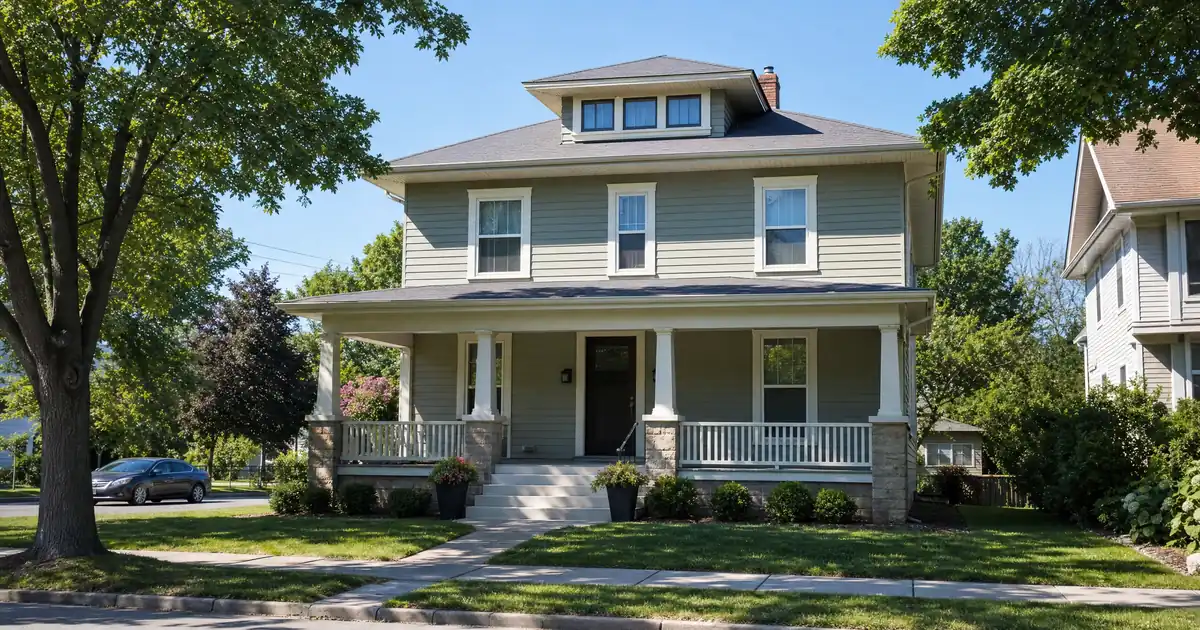
The Quick Read: A short-term rental loan program is financing built around properties that earn income from nightly or weekly guest stays instead of a signed 12-month lease. Most of these loans are structured as DSCR loans — investor mortgages that qualify on the property’s income rather than the borrower’s paycheck. Underwriting treats that income differently than a long-term rental, pulling from host history, market-data tools, or a specialized appraisal instead of a standard rent schedule. Which structure fits depends on hosting history, leverage needs, and how cleanly the projected income can be documented.
What Investors Need to Know First
- STR financing usually runs through DSCR loans, not conventional mortgages — the property’s income, not the borrower’s traditional personal-income documentation, drives the decision.
- Purchase leverage on short-term rentals typically tops out lower than on long-term rental DSCR files, and refinance leverage tops out lower still.
- A property’s nightly rate can’t just be multiplied by 30 to produce a qualifying monthly rent — that method is explicitly rejected in appraisal guidance.
- Local legality, insurance type, and hosting history all function as underwriting inputs, not just operating details.
- Below-1.00 coverage and no-ratio paths exist through select lenders, but they come with adjusted leverage and stricter borrower profiles — never a blanket approval.
Key Terms Defined
DSCR (debt-service coverage ratio) — a single number comparing the property’s rental income to its full monthly housing payment (principal, interest, taxes, insurance, and any HOA dues). A ratio of 1.00 means the rent exactly covers that payment; above 1.00 means it covers more.
Short-Term Rental Calculator
Run the STR numbers in your market
Rate source: Freddie Mac 30-yr average via FRED® — Federal Reserve Bank of St. Louis · effective Aug 20, 2026
Prefilled with starting assumptions — enter your nightly rate, occupancy, taxes, and insurance for a more accurate picture.
Short-term rental income is documented with a 12-month history or a market data report. Program parameters update from Lendmire’s centralized guideline source.
As of Aug 20, 2026 · General Freddie Mac market benchmark, not a Lendmire loan offer. Nightly rate, occupancy, taxes, and insurance are editable estimates. Qualifying income for short-term rentals varies by program — some use appraisal market rent, others use documented STR history or projections — and is confirmed in underwriting. Not a Loan Estimate, approval, or commitment to lend. Program availability and eligibility are subject to lender guidelines, credit approval, property review, and underwriting.
LTV (loan-to-value) — the loan amount expressed as a percentage of the property’s purchase price or appraised value. Lower LTV means more equity in the deal and generally an easier file.
Non-QM (non-qualified mortgage) — a loan that doesn’t meet the standardized “qualified mortgage” rules built for owner-occupied home loans. DSCR loans fall under non-QM because they’re built for investors, not homeowners.
Business-purpose loan — a loan made to a borrower for an investment or rental property rather than a primary residence. DSCR loans are business-purpose loans, and that classification is what exempts them from many consumer-mortgage disclosure rules that apply to a standard home purchase.
Seasoning — the amount of time a lender wants a borrower to hold or operate a property before certain transactions, like a cash-out refinance, become available.
No-ratio loan — a DSCR structure where the lender doesn’t run a coverage calculation on the subject property at all. It’s a narrow path, available only through select lenders in the network, and it’s generally reserved for borrowers who already own a primary residence.
Why STR Properties Don’t Fit a Standard Rental Loan
A short-term rental doesn’t have a lease, so there’s no fixed monthly rent figure to hand a lender. That single fact reshapes almost everything about how the loan gets underwritten.
Long-term rental DSCR files lean on a signed lease or a standard appraisal rent schedule. STR files can’t do that, because nightly income swings by season, by weekend, and by platform demand. The appraisal industry has been explicit about the fix that doesn’t work: it would be incorrect for an appraiser to take a nightly STR rate and simply multiply it by 30 to estimate monthly rent, because that approach ignores furniture and equipment costs, other guest services, vacancy, and business expenses baked into hospitality-style income (per Fannie Mae guidance reproduced by the Nevada Real Estate Division). Appraisers preparing the standard rental-income form for a subject property are instead expected to use comparables with monthly lease rates, not nightly booking data.
That single rule explains why STR-specific DSCR programs exist at all. A generic long-term-rental DSCR file, run against a 1007 rent schedule, will often understate what a well-run short-term rental actually earns — which is exactly why specialized STR underwriting layers in platform history and market-data tools instead of leaning on that form alone.
The naming convention matters here too. When a property produces rental income used for qualifying purposes, Fannie Mae’s own guide specifies the standard forms lenders reference — the Single-Family Comparable Rent Schedule (Form 1007) for one-unit properties or the Small Residential Income Property Appraisal Report (Form 1025) for two-to-four-unit properties (Fannie Mae Selling Guide B3-3.1-08). DSCR lenders reference these forms as a documentation convention. It’s worth saying plainly: these are agency form names, not agency rules — a DSCR loan on an STR property is not a Fannie Mae loan, and conventional guidelines don’t govern how it gets approved.
How STR Underwriting Actually Works, Step by Step
Across the wholesale network of DSCR lenders Lendmire places files with, STR underwriting tends to move through the same sequence regardless of which lender ends up on the file.
Step one — establish an income basis. The lender needs a number to compare against the payment. That number typically comes from one of a few sources: a specialized appraisal analysis built for short-term use, a trailing income history pulled from the booking platform or property manager, or third-party market-rate data for comparable STR listings in the area. Some programs will also look at the borrower’s own deposit history if hosting has already been underway for a while.
Step two — confirm hosting experience. Most STR programs in the network want to see roughly 12 months of landlord or host history before treating projected nightly income as reliable. A first-time host without that track record isn’t automatically shut out, but the file usually leans harder on the appraisal or market-data side to compensate.
Step three — run the coverage math. The lender divides the qualifying monthly income by the full monthly payment — principal, interest, taxes, insurance, and HOA if applicable — to get the DSCR. On STR purchases, a 1.00 coverage floor is where several programs in the network start; that’s a program floor, not a universal standard, and it applies specifically to the purchase transaction. Refinances carry their own separate 1.00 floor, evaluated independently — a purchase clearing 1.00 doesn’t automatically mean a later refinance clears the same bar, since the income basis and leverage assumptions get reassessed fresh.
Step four — verify the insurance. A standard landlord policy is built around a long-term tenant, not a rotating string of paying guests. The moment a host is collecting payment from short-stay guests, that gap becomes a real underwriting issue — most programs expect a commercial or STR-specific policy rather than a standard dwelling-form landlord policy, since a landlord policy is written for long-term occupancy and doesn’t contemplate business-style guest turnover. A file that shows up at closing with the wrong policy type is a common last-minute snag.
Step five — check local legality. Whether short-term rental use is currently permitted at the property’s address gets treated as a documentable fact, not an assumption. Rules here vary widely by city, county, HOA, and even by building — investors should confirm local rules directly rather than relying on projected rental income alone.
Step six — reserves and closing conditions. Reserve requirements — liquid funds held after closing, expressed in months of the full payment — vary by lender, leverage, loan size, and transaction type. On conservative rate-and-term files at modest leverage under roughly $1.5 million, some lenders in the network will waive reserves entirely; above that threshold, expect the requirement to step up toward roughly nine months. There’s no single reserve number that applies across every STR file — it’s genuinely case by case.
Loan-Type Comparison
STR investors don’t have one financing lane — they have several, and the right one depends on operating history and strategy.
| Loan Type | Reviewed on | Typical Fit |
|---|---|---|
| STR DSCR loan | Property’s projected/documented rental income | Stabilized or near-stabilized STR with hosting history |
| Long-term rental DSCR | Standard lease-based market rent | Property that could work as either STR or LTR |
| Hard money / bridge | Property value and exit plan | Acquisition, renovation, or fast turnaround before refinancing into DSCR |
| Conventional second-home | Borrower’s personal income (W-2s, traditional personal-income documentation) | Borrower who occupies part-time and rents occasionally, with occupancy limits |
| Investment-property HELOC | Existing equity in another rental | Smaller draws against an already-owned property, capped at $500,000 total |
Conventional second-home loans come with real strings attached — occupancy requirements and rental-day limits that don’t fit a full-time STR operation. A pure investment play that’s rented out full-time almost always moves toward DSCR instead, precisely because DSCR loans are built for non-owner-occupied investment property and reviewed on that basis rather than under owner-occupied rules.
Leverage, Credit, and the Structures That Vary
Purchase leverage on short-term rentals typically tops out around 75% LTV on the strongest files — meaning roughly 25% down at minimum — while cash-out refinances and rate-and-term refinances on STR collateral generally cap closer to 70% LTV. That gap between purchase and refinance leverage is standard across the network; refinances are priced more conservatively because the lender is re-underwriting income that’s already been operating, not projecting it fresh.
Credit requirements run tighter on STR files than on plain-vanilla long-term-rental DSCR loans. Most programs in the network want to see roughly a 640 credit score before treating a property as a full STR-qualifying file. Loan sizes on standard STR programs generally run up to $3,000,000; larger balances above roughly $2,500,000 typically hold to 30-year fixed structures rather than adjustable terms, and smaller-balance deals route through select lenders that specialize in that segment.
Term structures aren’t one-size-fits-all either. The 30-year fixed is the backbone of most files, but extended 40-year amortization and interest-only periods are available through select lenders for investors chasing lower monthly carry, and adjustable-rate structures exist for investors who specifically want them. A handful of states — including Connecticut, Florida, Illinois, and New Jersey — carry lender overlays that cap purchase leverage a bit lower than the 75% ceiling and limit maximum loan size, so an STR file in one of those states should be sized with that overlay in mind from the start.
A larger down payment helps in a real way — it lowers the monthly payment and can lift the DSCR — but it doesn’t erase a credit floor, a reserve requirement, or an ineligible property type. The strongest STR files clear two separate tests at once: enough equity to satisfy leverage limits, and enough documented income to clear the coverage floor. A big down payment on a file with thin, undocumented income still has a real problem to solve. Exact terms depend on the lender’s guidelines, property type, leverage, and a full review of the borrower’s file.
Lendmire’s complete DSCR loans guide walks through how these coverage mechanics apply across property types more broadly, and the site’s dedicated breakdown of short-term rental loans covers program structure in more depth than fits here.
Where Coverage Runs Below 1.00 — and Where It Doesn’t Apply at All
Coverage below 1.00 is a real, available path through select lenders in the network — it’s not a dead end, but leverage and terms adjust to compensate for the thinner cushion. A property that clears 0.85x on projected income, for example, might still get financed, just at lower leverage or with pricing adjusted to reflect the added risk.
No-ratio structures — where the lender skips the coverage calculation altogether — are narrower still. They’re available only through select lenders, and they’re generally reserved for borrowers who already own a primary residence. There’s no published DSCR floor for a no-ratio file, because the whole point is that ratio isn’t the qualifying test.
Neither of these paths is automatic, and neither should be assumed available on any given file without a lender actually reviewing it. What matters practically is that a coverage number under 1.00 doesn’t automatically disqualify a property — it changes the conversation about leverage rather than ending it.
Where the General Rule Breaks: Named Edge Cases
The framework above holds for most STR files, but several situations genuinely bend it.
Coverage isn’t cash flow. A 1.00 DSCR means rent equals the payment — it says nothing about repairs, vacancy weeks between guests, cleaning fees, platform commissions, utilities, or capital expenses. An STR property clearing 1.15x on paper can still run thin in practice once hospitality-style operating costs are layered on top, because those costs sit entirely outside the DSCR calculation.
Legality can shift mid-loan. Short-term rental rules can vary by city, county, HOA, and property type, and those rules aren’t frozen at closing. A property purchased as a legal STR can face a change in local permitting or licensing rules later in the loan term — a risk that sits with the borrower, not the lender, but one that directly affects the income the loan was built around. Investors should confirm current local rules before relying on projected rental income for a purchase or refinance decision.
The insurance mismatch is common and preventable. A standard landlord policy fails the moment a host starts collecting guest payments on a short-stay basis — that gap catches more files by surprise at closing than almost anything else on an STR file.
Some property types are simply outside the box. Manufactured homes — both single- and double-wide — along with log homes and barndominiums aren’t offered under these DSCR programs at all. That’s not a “harder to finance” situation; it’s a flat exclusion, and it’s worth ruling out early rather than shopping a property that was never eligible.
Tax classification doesn’t follow the marketing label. A property advertised as a “short-term rental” doesn’t automatically get short-term tax treatment. Under the federal rule tied to the seven-day average, an activity generally is not treated as a rental activity for a given tax year if the average customer stay is seven days or less (IRS Office of Chief Counsel Memorandum 202151005). A property with a mix of weekend stays and multi-week guests can push that yearly average above seven days without the owner realizing it, which changes how the income gets classified for tax purposes even though nothing about the financing changes. Tax treatment can depend on how a property is used and held, and investors should keep clear records and speak with a qualified tax professional before relying on any specific tax outcome.
A Worked Scenario — Reading the Ratio, Not the Rate
Picture an investor purchasing a short-term rental listed near $340,000 in a market with steady year-round booking demand. At 75% purchase leverage, roughly a quarter of the price comes in as the down payment. If the property’s documented and appraised income comfortably clears a 1.15x coverage ratio against the full monthly payment, that file sits in solid territory relative to the 1.00 floor several programs use as a starting point.
Now run the same property at 70% leverage instead — the more common ceiling on an STR refinance. Less loan means a smaller monthly payment, which can push the same income figure toward a stronger ratio, maybe closer to 1.25x. That’s the mechanical relationship between leverage and coverage: pulling leverage down tends to push the ratio up, holding income constant. Every figure here varies by lender and program — guidelines, property type, leverage, and credit profile all apply.
Neither number here is a promise. It’s a model to show how the math moves, not a projection tied to any real property, and every actual file gets priced and reviewed on its own credit, income documentation, and reserve profile.
DSCR files on properties with heavy short-term-rental concentration tend to come in tight on long-term rent assumptions but clear more comfortably once trailing twelve-month host income or a market-data platform gets layered in — which is exactly why the stronger files usually run both the conservative long-term number and the STR-specific number side by side before choosing a program.
Alternative Paths When STR DSCR Doesn’t Fit
Not every STR file clears a standard DSCR program on the first pass, and there are fallback routes worth knowing.
A borrower without 12 months of hosting history might route through a bridge or short-term acquisition loan first, then refinance into a stabilized DSCR structure once income history exists. An investor with equity already built in another rental can tap an investment-property HELOC instead — those lines cap at $500,000 total across the network, which makes them a tool for smaller draws rather than a primary acquisition vehicle. A borrower who plans to occupy the property part of the year might look at a conventional second-home loan, accepting the occupancy and rental-day restrictions that come with it in exchange for owner-occupied pricing terms.
For refinance timing specifically, most cash-out programs in the network expect around six months of seasoning — meaning ownership time — before a cash-out refinance is available at all, separate from the 12-month hosting-history expectation used to qualify projected STR income.
Lendmire’s breakdown of what counts as short-term rental income for a lender goes deeper into how income documentation gets scored across these different paths, and investors still deciding which strategy fits a given property should compare short-term and long-term rental cash flow before committing.
Frequently Asked Questions
Does every DSCR lender offer short-term rental programs?
No. Short-term rental DSCR is a narrower product than standard long-term-rental DSCR, and not every lender in a wholesale network prices it the same way. Some lenders decline STR collateral entirely, while others specialize in it and offer more flexible income documentation. That’s part of why working through a broker with access to multiple lenders matters on an STR file specifically.
Can I use a property manager’s income statement instead of my own bank records?
Generally, yes — a 12-month statement from a property manager or booking platform is one of several accepted income sources on most STR programs. Lenders also accept a specialized appraisal analysis, market-rate data tools, or the borrower’s own deposit history, and which one gets used often depends on how long the property has been operating as an STR.
Is a short-term rental loan the same thing as a vacation-home mortgage?
No, and this trips up a lot of first-time investors. A vacation or second-home mortgage is reviewed on the borrower’s personal income and comes with occupancy requirements and rental-day limits. A short-term rental DSCR loan is reviewed on the property’s income and is built for a full-time rental operation with no personal-occupancy requirement.
Do I need 12 months of hosting history before I can even apply?
Not necessarily, but it helps significantly. Programs generally expect around 12 months of landlord or host experience to lean fully on projected STR income. A first-time host can still be considered, but the file typically relies more heavily on a specialized appraisal or third-party market-data analysis to support the income figure instead.
If you’re buying or refinancing a short-term rental and want to see how the numbers actually work on your file, Lendmire can help compare DSCR loan options based on the property’s income, your credit profile, target leverage, and overall investment goals. Reach the team at 828-256-2183 or request a quote to start the conversation.
This article is for general informational purposes only and does not constitute financial, legal, or tax advice. Loan approval, program availability, and specific terms are never guaranteed and remain subject to lender review, borrower qualification, property eligibility, and current program guidelines. Speak with a qualified mortgage and tax professional before making financing decisions.
Investors focused on short-term rentals can review DSCR loans for Airbnb and short-term rentals.
About Lendmire
Lendmire (NMLS# 2371349) arranges these loans as a broker working through select lenders across 41 markets, including Washington, D.C. — it doesn’t fund or underwrite files directly, and every scenario above is subject to the specific lender’s guidelines, the borrower’s credit profile, and the property review. Nothing here is a commitment to lend, and loan approval is never guaranteed; this article is general information, not financial, legal, or tax advice. Scotsman Guide named Lendmire a Top Mortgage Workplace in both 2025 and 2026.
Get Started
Ready to find the right loan for you?
In about 30 seconds you can review financing options available for your investment property. No commitment required.
Informational only. Not a Loan Estimate, approval, or commitment to lend. Program availability and eligibility are subject to lender guidelines, credit approval, property review, and underwriting.
References
1. Fannie Mae Short-Term Rental Appraisal Guidance, via Nevada Real Estate Division
2. Fannie Mae Selling Guide B3-3.1-08
This article is part of Lendmire’s short-term rental loan program — full qualification details, guidelines, and scenarios live on the program page.
Related reading: DSCR Loan Denied Because The Appraiser Used Long-term Rent Instead Of Airbnb Income · Buying Your First Airbnb Property Complete Guide · Best Lender To Refinance Investment Property
Brandon Miller
Founder & CEO, Mortgage Loan Originator, Lendmire LLC
- Mortgage Loan Originator · NMLS# 1129696 · Verify on NMLS Consumer Access
- North Carolina Real Estate Broker · License# 343312 · Verify on NCREC
- North Carolina Insurance Producer · License# 19053198 · Property, Casualty, Life, Health · Verify on NAIC SBS
- Lendmire LLC · Firm NMLS# 2371349 · Verify firm licensure
Compliance and disclosures. Lendmire (NMLS# 2371349) is a licensed mortgage broker and is not a direct lender, depository institution, financial advisor, or tax professional. Content in this article is general market analysis and educational information — not financial, legal, or tax advice for any specific situation. Lendmire does not guarantee loan approval; every transaction is subject to underwriting by the funding lender. Mortgage pricing and loan program guidelines are subject to change at any time without notice and vary by borrower characteristics, property type, and state regulations. Lendmire complies with Equal Housing Opportunity. Licensure verification: NMLS Consumer Access.