
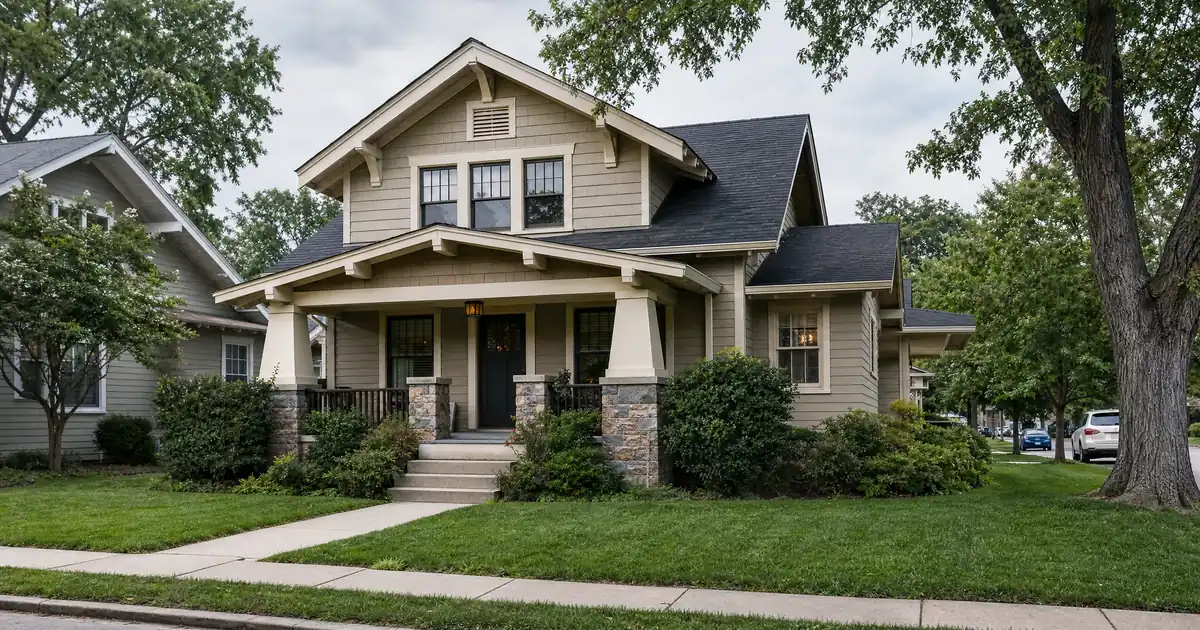
The Quick Read on Buying a Short-term Rental: Most investors use a DSCR loan to buy a short-term rental. This is a non-QM investment loan. It qualifies the property’s rental income instead of your personal income or W-2s. These loans usually go up to 75% loan-to-value on a purchase. Lenders want a credit score around 700. They also want the property’s income to cover its own payment at roughly a 1.00x ratio or better. A conventional or second-home mortgage can work in narrow cases. But most pure investment-purpose STR purchases end up using a DSCR loan, because agency underwriting was never built to read nightly-rate income.
Short-term rental purchases sit in an odd spot in the mortgage world. The property has no lease. Its income comes from a booking calendar, not a tenant. Most retail loan officers have never underwritten a deal like this. That gap is exactly why the DSCR loan category exists. It has become the default way to finance an STR purchase for buyers who aren’t paying cash.
Short-Term Rental Calculator
Run the STR numbers in your market
Rate source: Freddie Mac 30-yr average via FRED® — Federal Reserve Bank of St. Louis · effective Aug 20, 2026
Prefilled with starting assumptions — enter your nightly rate, occupancy, taxes, and insurance for a more accurate picture.
Short-term rental income is documented with a 12-month history or a market data report. Program parameters update from Lendmire’s centralized guideline source.
As of Aug 20, 2026 · General Freddie Mac market benchmark, not a Lendmire loan offer. Nightly rate, occupancy, taxes, and insurance are editable estimates. Qualifying income for short-term rentals varies by program — some use appraisal market rent, others use documented STR history or projections — and is confirmed in underwriting. Not a Loan Estimate, approval, or commitment to lend. Program availability and eligibility are subject to lender guidelines, credit approval, property review, and underwriting.
Key Terms Defined
DSCR (debt-service coverage ratio): lenders divide the property’s qualifying rental income by its monthly housing payment to get this number. A ratio at or above 1.00 means the income covers the payment on paper. Below 1.00 means it doesn’t fully cover it.
PITIA: this stands for principal, interest, taxes, insurance, and association dues. It’s the full monthly payment used in the DSCR calculation — not just principal and interest.
Non-QM loan: a mortgage category that falls outside the Qualified Mortgage rules built for agency underwriting. DSCR loans fall here because they qualify on property cash flow, not a debt-to-income ratio.
Business-purpose loan: a loan made for an investment or business use, not a personal home purchase. DSCR loans on non-owner-occupied rental property fall into this group.
Seasoning: how long an investor has owned or run a property — or how long it has generated documented income — before a lender will count that history against it, or allow a cash-out refinance.
How the Loan Actually Gets Documented
Short-term rental income doesn’t come from a lease. It gets built from one of three sources, and which one applies depends on whether the property already has a booking history.
For a purchase with no operating history, lenders and appraisers usually rely on third-party market data instead of a leased comparable. AirDNA gathers short-term rental performance from comparable listings and projects what a subject property should earn. The platform says its market-level revenue estimates have historically matched reported Airbnb revenue within 95% to 99% accuracy. That projection — not the appraiser’s standard rent schedule — usually drives the qualifying income figure on a purchase file.
For a property that already runs as an STR, most lenders in the network pull twelve months of platform payout statements, property-management statements, or deposit records. They average the actual trailing performance, usually with a discount applied to smooth out seasonal swings. That’s a stronger file than a projection, because it’s documented history rather than a model.
Some programs also require the appraiser to independently support a short-term rental income opinion, instead of just deferring to a market-data report. This matters because the standard single-family rent schedule — Fannie Mae’s Form 1007 — was built around monthly lease comparables, not nightly rates. Appraisal-industry guidance is clear about the risk here: an appraiser should never multiply a nightly rate by 30 days to estimate monthly rent on that form, since that ignores personal property, business expenses, and vacancy. Instead, the number should come from comparable monthly-lease properties (McKissock Learning). That’s a real appraisal error, and it shows up on files that get flagged for a reconsideration of value.
Investors want to know exactly what counts before they apply. Lendmire covers this in more depth in its explainer on “What Counts As Short-term Rental Income for a Lender”.
What the Numbers Look Like: Leverage, Credit, and Coverage
Across the lenders Lendmire works with, STR purchase leverage typically tops out around 75% loan-to-value on the strongest files — meaning a down payment around 25% for a well-qualified borrower. Refinance and cash-out deals on an existing short-term rental generally cap lower, closer to 70% LTV, because the income isn’t backed by a lease, which adds uncertainty.
Credit requirements run tighter on STR files than on a standard long-term-rental DSCR loan. Most programs in the network want a score around 700 for the strongest terms. Lenders also generally want to see roughly 12 months of landlord or host experience — proof the borrower has actually run a short-term rental before, not just thought about it.
Coverage expectations are usually set separately for each type of transaction. On a purchase, most programs want the property’s projected income to clear around 1.00x against the full payment. On a refinance, lenders generally hold to that same 1.00x target, but they check it against trailing, documented host income instead of a projection. This tends to make the refinance number more solid, even though the target ratio looks the same on paper.
A ratio below 1.00 isn’t automatically a dead end. Select lenders in the network will still look at sub-1.00 coverage on a case-by-case basis, though leverage and terms get adjusted to make up for it — a smaller loan amount, more equity, or stronger reserves. What this network doesn’t offer is a true no-ratio short-term rental program. No-ratio structures exist only through select lenders, and they generally require the borrower to already own a primary residence — something most first-time STR buyers don’t have.
Loan sizes on standard STR programs generally run up to $3,000,000, with smaller balances routing through specific lenders that specialize in that range. Above roughly $2,500,000, the network tends to stick with 30-year fixed structures rather than shorter or adjustable terms. That’s worth knowing before an investor shops a larger vacation-home purchase expecting the same flexibility available at lower loan amounts.
Not every property qualifies for this financing, no matter how much income it could earn. Manufactured homes — single- or double-wide — along with log homes and barndominiums, are not offered through the network’s DSCR programs. Full stop. Investors eyeing one of those structures for a rental need a different financing path entirely. Property eligibility for short-term rental financing comes down to what does and doesn’t clear underwriting, and the complete DSCR loans guide covers the broader mechanics of how these loans get structured.
Reserves and Seasoning: The Details That Trip Up Buyers
Reserve requirements aren’t a flat number. They shift with the lender, the leverage, the loan size, and the transaction type. On most STR files, six months of PITIA in reserve is a reasonable expectation. Larger loan amounts, generally above $1,500,000, tend to step up to closer to nine months. Conservative files at modest leverage can occasionally see reserves waived on a rate-term refinance, but that’s the exception — not something to plan around on a purchase.
Seasoning is another detail buyers underestimate. An investor who buys a property and wants to pull cash out later generally needs around six months of ownership before that refinance becomes available. On an STR specifically, the lender also wants to see enough operating history to trust the trailing income, not just the ownership clock. Investors thinking ahead to a future cash-out should understand how DSCR refinancing works on a short-term rental before finalizing the purchase structure, since how the property is titled and documented at closing affects the refinance later.
Why This Isn’t Underwritten Like a Regular Mortgage
DSCR loans are designed for non-owner-occupied investment properties. Because they are business-purpose investor loans, they get reviewed differently than a standard owner-occupied mortgage. Federal consumer-credit rules draw that same line. The Consumer Financial Protection Bureau’s Regulation Z treats business-purpose credit — including loans to expand a rental operation — as its own category, separate from consumer-purpose lending. That’s part of why lenders qualify these files on cash flow instead of a personal debt-to-income calculation.
Can a Conventional or Second-Home Loan Work Instead?
A conventional mortgage can finance an STR purchase, but only within narrow rules. It generally underwrites the borrower’s personal income and debt-to-income, not the booking calendar. Second-home financing requires the borrower to occupy the property part of the year. That conflicts with a full-time nightly-rental strategy on paper, even when the actual use looks similar. A common workaround is a 2-4 unit purchase where the owner lives in one unit and rents the others short-term. That structure can sometimes qualify under owner-occupied terms while the non-occupied units still generate income.
Once that occupancy condition isn’t in play — a pure investment purchase, no owner living on site — most files move to DSCR financing. Agency guidelines built around Fannie Mae’s Form 1007 rent schedule simply weren’t built to capture nightly-rate, occupancy-driven income the way a DSCR underwriter reads it.
This shift shows up clearly in the numbers. Non-QM origination volume reached $239 billion across nearly 700,000 loans in the most recent full year measured (Polygon Research). Industry forecasting projects non-QM originations climbing to $175 billion in the year ahead, up from roughly $108 billion the year prior, with DSCR and investor products expected to make up close to half of that collateral (HousingWire). Investment property loans, in other words, aren’t a fringe product anymore — they’re a mainstream lane that agency guidelines don’t cover.
Where Zoning and HOA Rules Intersect With the Loan
Legal operability is a loan condition, not a footnote. If a property can’t lawfully operate as a short-term rental, its projected income generally can’t support the loan. The underwriter needs the income stream to be legitimate collateral, and a city ban or an HOA restriction breaks that. Governing documents on condos and HOA-controlled communities can independently prohibit or limit short-term rentals, no matter what local zoning allows, since those covenants run with the property (LegalClarity). Short-term rental rules can vary by city, county, HOA, and property type, so investors should confirm local rules before relying on projected rental income to qualify.
An investor buying under an entity — an LLC purchasing the property rather than an individual — adds a documentation layer that lenders review separately from the income analysis, covered in Lendmire’s guide to LLC documentation for a short-term rental purchase.
A Practical Example
Consider an investor purchasing a $415,000 vacation-market property with no prior booking history. At 75% LTV, the projected income from a market-data platform supports coverage in the neighborhood of 1.15x against the full monthly payment. That’s a workable file on most programs, assuming credit clears around 700 and reserves are documented. Now consider the same investor a year later, filing a cash-out refinance on that same property using twelve months of actual platform payouts instead of a projection. LTV on that refinance caps closer to 70%, and the lender is now scoring the file against real deposits rather than a model — often a cleaner conversation, even at the same nominal 1.00x-plus target ratio.
If an investor is comparing that math across a purchase or a refinance, and wants to see how leverage, credit, and coverage interact on a specific property, Lendmire can help compare DSCR loan options based on the property’s income, the borrower’s credit profile, and the leverage the deal calls for. Lendmire (NMLS# 2371349) arranges DSCR investor loans through select lenders across a wholesale network spanning 41 markets, including Washington, D.C., and can be reached at 828-256-2183 to talk through a specific scenario.
Loan approval is never guaranteed, and nothing here is a commitment to lend. Every scenario described here is subject to lender approval and to borrower, property, and program guidelines that vary by file. This article is general information, not financial, legal, or tax advice, and tax treatment can depend on how funds are used and how a property is held — investors should keep clear records and speak with a qualified tax professional before relying on any deduction.
Frequently Asked Questions
Do I need a booking history before a lender will consider the property’s income?
Not for a purchase. On a purchase with no operating history, lenders typically rely on third-party market-data projections rather than trailing bookings. Once the property has been operating, usually around twelve months, lenders shift to actual platform payout statements for a refinance, which generally produces a stronger, more defensible number than a projection.
Can I buy a short-term rental with no landlord experience at all?
It’s harder, but not automatically disqualifying. Most STR programs in the network want to see roughly 12 months of prior host or landlord experience, since it’s a proxy for whether the borrower can actually run the operation. An investor without that history may still find a path through select lenders, though leverage and terms often adjust to compensate.
Does a bigger down payment guarantee approval if the coverage ratio is weak?
No. A larger down payment lowers the payment and can lift the coverage ratio, but it doesn’t erase a credit floor, a reserve requirement, or a property-eligibility issue. The strongest files clear both leverage and coverage — extra equity alone doesn’t substitute for either. Every figure here varies by lender and program — guidelines, property type, leverage, and credit profile all apply.
Is a 1.00 DSCR the same thing as positive cash flow?
No, and this trips up a lot of first-time STR buyers. DSCR only compares rental income to the property’s PITIA payment. It says nothing about repairs, vacancy, property management fees, utilities, or capital expenses — all of which sit outside that ratio and still come out of the investor’s pocket.
What if the HOA or the city doesn’t allow short-term rentals at all?
Then the property generally can’t be underwritten on STR income, regardless of how strong the projected numbers look. Local zoning bans and HOA covenants operate independently of each other and independently of the loan itself, so both need to be cleared before the income projection means anything to an underwriter.
Investors focused on short-term rentals can review DSCR loans for Airbnb and short-term rentals.
About Lendmire
Lendmire is a non-QM mortgage brokerage (NMLS# 2371349) arranging DSCR investor loans in 41 markets, including Washington, D.C., through wholesale and investor-lending channels. DSCR loans are evaluated by the lender on rental income rather than personal income, subject to lender guidelines — a fit for LLC-owned portfolios, self-employed investors, and operators scaling beyond conventional loan caps. Recognized as a Scotsman Guide Top Mortgage Workplace in 2025 and 2026.
Get Started
Ready to find the right loan for you?
In about 30 seconds you can review financing options available for your investment property. No commitment required.
Informational only. Not a Loan Estimate, approval, or commitment to lend. Program availability and eligibility are subject to lender guidelines, credit approval, property review, and underwriting.
References
1. AirDNA — Short-Term Rental Market Data
2. McKissock Learning — Form 1007’s Impact on Short-Term Rental Appraisals
3. Consumer Financial Protection Bureau — Regulation Z, 12 CFR 1026.3
4. Fannie Mae Selling Guide — Rental Income (Form 1007/1025)
5. Polygon Research — Non-QM Market Data
6. HousingWire — Non-QM Originations Projected at $175B in 2026
7. LegalClarity — Short-Term Rental Regulations: Local and Municipal Rules
This article is part of Lendmire’s short-term rental loan program — full qualification details, guidelines, and scenarios live on the program page.
Related reading: How Do I Get A Short Term Rental DSCR Loan? · Can I Use A DSCR Loan For Short-term Rentals? · Converting A Long Term Rental To An Airbnb
Brandon Miller
Founder & CEO, Mortgage Loan Originator, Lendmire LLC
- Mortgage Loan Originator · NMLS# 1129696 · Verify on NMLS Consumer Access
- North Carolina Real Estate Broker · License# 343312 · Verify on NCREC
- North Carolina Insurance Producer · License# 19053198 · Property, Casualty, Life, Health · Verify on NAIC SBS
- Lendmire LLC · Firm NMLS# 2371349 · Verify firm licensure
Disclosure information. Lendmire is a state-licensed mortgage brokerage under NMLS# 2371349. Lendmire is not a depository institution, direct lender, or financial advisor — all loans referenced are placed through wholesale lender partners and are subject to each lender's underwriting standards. This article is provided for general informational purposes and is not a commitment to lend, nor does it constitute financial, legal, or tax advice. Loan programs, terms, rates, and qualification standards change without notice and depend on borrower profile, property type, and the state in which the subject property is located. Equal Housing Opportunity provider. NMLS Consumer Access: nmlsconsumeraccess.org.