
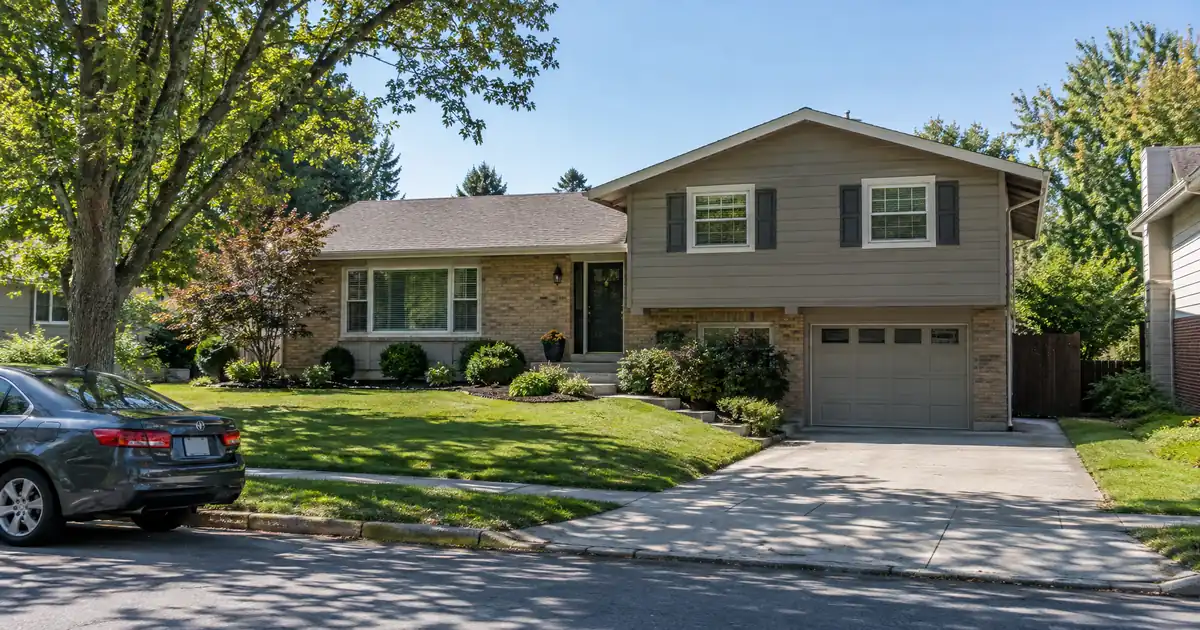
The Quick Read: Yes, a home equity line of credit on a rental property exists, but very few lenders offer one. Most of the ones that do want strong credit, a low combined loan-to-value, and title in your personal name. On the investment lines Lendmire arranges, the ceiling is 70% combined LTV and a $500,000 line, and the loan is reviewed on your personal debt-to-income ratio rather than the property’s rent. If your rental sits in an LLC or you want to qualify on rent, a DSCR cash-out refinance is usually the better tool.
Key Takeaways
- A HELOC on a rental is a revolving line secured by the rental itself. It is tighter than a primary-residence HELOC on leverage and credit.
- On the investment lines Lendmire arranges, the cap is 70% CLTV and $500,000, with a 700 credit score minimum.
- Underwriting runs on your personal debt-to-income ratio, not the property’s rent.
- Title generally has to sit in your name or a revocable living trust. LLC-owned rentals hit a wall.
- A DSCR cash-out refinance is the main alternative when the HELOC won’t fit.
What Is a HELOC on an Investment Property, Really?
A HELOC on a rental is a revolving credit line secured by a lien on a property you don’t live in. You draw, repay, and draw again, up to a limit. That part works like the HELOC on your own home.
How large a line the equity supports in your market.
An equity line is sized by combined loan-to-value, occupancy, and credit — not by rental coverage. Switch the occupancy or the credit band and the ceiling moves with it.
Investment-property lines require a 700 minimum credit score. Second-home tiers reach 640; primary-residence tiers reach 600.
A debt-to-income ratio above 45% requires 680+ credit. Profiles under 640 are limited to single-family homes. At least 75% of the approved line is drawn at closing. Ceilings, floors, and caps update from Lendmire’s centralized guideline source.
Line estimate
Illustrative estimate only — not a quote, Loan Estimate, approval, or commitment to lend. The rate is an editable assumption; equity-line pricing is variable through both the draw and repayment periods and never converts to fixed. Occupancy and credit drive the ceiling together: investment property runs to 70% combined LTV with a 700 credit floor and a $500,000 cap; a second home runs to 90% at a 640 floor with a $500,000 cap; a primary residence reaches up to 90% at a 600 floor, and its $750,000 maximum line applies only at 75% combined LTV or below with 720+ credit and a full appraisal. Lines above $500,000 require a full appraisal. Credit, debt-to-income, property type, and full underwriting review all affect the final line.
The differences show up in underwriting. Experian explains why: lenders assume a borrower in trouble pays the home they live in before the rental. So they tighten credit, debt-to-income, and reserve standards. Experian also notes that not every lender offers these lines and that they are generally harder to qualify for. If you default, the rental is on the line for foreclosure.
Across the wholesale network Lendmire places files with, the picture is consistent. The line can sit in first or second lien position. A second lien leaves your existing first mortgage untouched. A cash-out refinance, by contrast, replaces that first mortgage entirely.
Lendmire is a broker. It arranges these lines through select wholesale partners and does not lend. Every figure below is subject to lender guidelines and full file review, and none of it is a commitment to lend.
How Does Underwriting Treat It, Step by Step?
Underwriting on an investment HELOC follows a fixed sequence: lien position, then qualification track, then credit, then title, then valuation, then draw terms. Each step can end the file. Know them in order and you will know where your deal stands before you apply.
Step 1: Lien position. The line is standalone. It sits first or second, depending on your situation. If a first mortgage exists and its lender requires sign-off on a second lien, expect a subordination request.
Step 2: The qualification track. This is where investors get surprised. The line is reviewed on your personal debt-to-income ratio. The lender tests the interest-only payment on the maximum draw, not the amount you actually take. Maximum DTI is 50%. Profiles between 600 and 679 are held to 45% on programs that go that low, and anything above 45% needs a 680 minimum.
That means your traditional employment income, other mortgages, and monthly debts all count. The rent the property produces is not the test. A DSCR loan flips this. It qualifies primarily on property-level rental income covering the payment, subject to lender guidelines.
Step 3: Credit. On an investment line the minimum score is 700. Here’s the catch for people hoping to buy their way up: 720 and 700 both reach the same 70% CLTV. Credit above 700 buys eligibility, not extra leverage. Most programs pull a single-bureau report keyed to the primary wage earner, and it can be no more than 90 days old at closing. No rescores.
Step 4: Title and vesting. Title must be held by you individually or by a revocable living trust. LLCs, corporations, partnerships, and irrevocable, blind, or land trusts cannot hold title. This is the sharpest structural difference from a DSCR loan.
Step 5: Valuation. Investment lines top out at $500,000. Full appraisals begin only above that size. So an investment HELOC generally runs on an automated valuation, and commonly no traditional appraisal is ordered. You can ask for a full appraisal anyway.
Step 6: The draw structure. Investment lines run one structure: a 5-year interest-only draw, then a 25-year fully amortizing repayment period. At least 75% of the line is drawn at closing. Pricing on the line floats through both phases and never converts to fixed. After closing, expect a small minimum for later draws (about $1,000 on the program that states one).
That 75% draw requirement matters. The old advice, “just draw what you need,” does not hold. You are borrowing most of the line on day one, so size it to a real use.
Why Are There So Few Lenders?
Few lenders offer investment-property HELOCs because the risk sits with the borrower’s willingness to pay a property they don’t live in, and the collateral is harder to value and resell. Most large retail lenders skip the product. Those that offer it price it tightly.
Community banks and credit unions are the usual places borrowers find these lines. A broker with wholesale access sees more of the market than any single lender’s page can show. That is the practical edge of working through a broker: the same file can be measured against several programs’ overlays at once.
Some sources pushing a rental HELOC are really selling their own alternative. Read the “it’s nearly impossible to find” pages with that in mind. It is hard, not impossible.
Market surveys report tougher benchmarks than many borrowers expect. Experian’s write-up points to a credit score of 720 or higher and DTI in the 40% to 50% range as the harder bars. The network figures Lendmire works with are a 700 minimum score and a 50% DTI maximum. Exact terms depend on the lender’s guidelines, property type, leverage, and a full review of the borrower’s file.
Availability is also narrower for the HELOC than for DSCR. These lines are offered only in Lendmire’s 16 full-service states: AL, CA, CO, FL, GA, IN, MI, MT, NM, NC, OH, PA, TN, TX, VA, and WA. Lendmire’s DSCR investor programs cover 41 markets, including Washington, D.C.
Structures and Variations
Investment HELOCs come in a narrow set of shapes, and the differences from primary-residence lines are worth seeing side by side. Investment lines get one draw structure, one leverage tier, and a tighter loan-size ceiling.
Leverage first. Market surveys report 70-75% LTV for investment properties. The investment ceiling in Lendmire’s network is 70% CLTV, with no tier above it. Every figure here varies by lender and program — guidelines, property type, leverage, and credit profile all apply.
Draw periods differ in the wider market too. On an investment line in the network, the structure is fixed at 5 years of interest-only draw and 25 years of repayment.
Here is how the pieces compare in the network:
| Feature | Investment line | Primary residence line |
|---|---|---|
| Max CLTV | 70% | Up to 90% (720+ only) |
| Minimum credit | 700 | 600 program floor |
| Max line | $500,000 | $750,000 |
| Draw structure | 5-year draw, 25-year repay | Two structures available |
| Valuation | Usually automated | Full appraisal above $500,000 |
Notice the last column is a different animal. Never read a primary-residence figure as describing a rental.
Eligible collateral on the investment side includes single-family homes, 2-4 unit properties, PUDs, townhomes, and condominiums, including non-warrantable ones. Some programs want a 640 minimum score on 2-4 units. Not eligible: manufactured homes, co-ops, condotels, log homes, commercial, mixed-use, or agriculturally zoned property.
Where the General Rule Breaks
The general rule is “personal name, personal income, 70% CLTV.” These are the named cases where investors bump into it.
The property is in an LLC. The HELOC generally will not work until you change the vesting. The alternative is a DSCR cash-out refinance, subject to program eligibility. Many investors take the second route rather than re-deed a property they placed in an entity on purpose.
You want to qualify on rent, not your paycheck. A HELOC tests your DTI. If you’re self-employed with heavy write-offs, or you carry many mortgages, DTI may block you even when the rental cash-flows nicely. A DSCR cash-out often fits better here. The complete DSCR loans guide walks through how that qualification works.
Your existing first mortgage has favorable terms you’d rather not give up. Keeping it and adding a second lien can beat resetting the whole loan. If your current first mortgage is priced at or above today’s market, a cash-out refinance tends to win. It’s a judgment call, and worth running both.
You recently bought the property. Most programs want roughly six months of ownership before appraised value replaces your cost basis. Some lenders make exceptions for cash purchases. Ask early.
You have a lot of financed properties. A borrower is limited to three lines, with combined exposure capped by program. A borrower with more than 15 financed properties is not eligible.
Your credit history has a scar. Bankruptcy seasons in four years from discharge or dismissal. On investment files, a foreclosure seasons in seven years, and a deed-in-lieu, pre-foreclosure, or short sale in four.
The property is listed for sale. A property listed, or listed within the past 60 days, is ineligible in Indiana, North Carolina, Pennsylvania, Tennessee, Texas, and Washington. New Mexico and Ohio also apply a CLTV cap that depends on the credit profile.
You want to use the equity from another property. A HELOC on your primary residence can fund a rental’s down payment. The rental is then financed separately, often with a DSCR loan. That is a different lien on a different asset, and it follows primary-residence rules, not the investment ones above.
HELOC or DSCR Cash-Out? How the Choice Actually Looks
The choice is between a revolving second lien that is reviewed on your income and a first-lien refinance that qualifies primarily on the property’s rent. Neither is better in the abstract. Your ownership structure, income picture, and existing mortgage decide it.
| Factor | Investment HELOC | DSCR cash-out refinance |
|---|---|---|
| Reviewed on | Personal DTI | Property rent vs. payment |
| Lien | Second (or first) | Replaces first |
| Title | Individual or revocable trust | LLC possible, per program terms |
| Leverage cap | 70% CLTV | Around 75% LTV, standard rentals |
| Access | Revolving line | Lump sum |
The cash-out numbers deserve a footnote. On most files across the network, cash-out refinances top out around 75% LTV on standard rentals, and 70% on short-term-rental collateral. About six months of seasoning is the common expectation. Pricing and available terms vary by lender, borrower profile, property type, and full underwriting review. Most programs want around 660, and 700 or better opens the strongest leverage tiers. Reserves vary by lender, leverage, loan size, and transaction type, commonly around six months of PITIA (principal, interest, taxes, insurance, and any HOA dues) on typical files.
On coverage, 1.00 is where select programs start. It is a floor for specific programs, not a rule. Below 1.00, coverage is available through select lenders in the network, with leverage and terms adjusted. Stronger ratios open better pricing and leverage.
One caution deserves plain words. DSCR compares rent to PITIA only. Clearing 1.00 is not the same as positive cash flow. Repairs, vacancy, management, utilities, and capital expenses sit outside the calculation. A property can pass the test and still bleed cash.
A practitioner’s observation: the files that go sideways are usually structure problems, not credit problems. An investor holds three rentals in an LLC, wants a line for the fourth purchase, and applies for a HELOC on one of them. Vesting kills it. The same investor, pointed at a DSCR cash-out or a HELOC on the primary residence, finds a path. Sorting title out first saves the wasted application.
What Should You Do Next?
Start with three questions. Who holds title? Where does your personal income land against a 50% DTI ceiling? Do you want a revolving line or a lump sum?
If title is personal, DTI is healthy, and your first mortgage is worth keeping, price the HELOC. If the property sits in an LLC or your income is complicated, price the DSCR route. If you’re unsure, run both side by side. The DSCR loan vs HELOC comparison lays out that decision.
Watch the variable pricing. The line floats through both the draw and repayment period and never converts to fixed. That’s a real exposure if you plan to hold the balance for years. Investors who later want certainty often ask whether a bank will refinance a HELOC into a 30-year fixed. Plan that exit before you draw.
If DSCR is where you land, the network’s structures give you options. The 30-year fixed is the spine. Extended terms (40-year) and interest-only periods are available through select lenders, and ARM structures exist for investors who want them. Loan sizes run roughly up to $3,000,000 on standard programs (smaller balances available through select lenders), and above $2,500,000 the network generally holds to 30-year fixed structures. DSCR is not offered on manufactured homes (single- and double-wide), log homes, or barndominiums.
Finally, keep the proceeds clean. Tax treatment can depend on how the funds are used and how the property is held, as IRS Publication 527 frames it for rental interest; investors should keep clear records and speak with a qualified tax professional before relying on any deduction.
If you are buying or refinancing a rental property and want to see how the numbers work, Lendmire can help you compare DSCR loan options based on the property income, credit profile, leverage, and investor goals. Reach the team at 828-256-2183.
Key Terms Defined
HELOC: A home equity line of credit, a revolving loan secured by property equity that you can draw on, repay, and draw again.
CLTV (combined loan-to-value): All loans secured by the property added together, divided by its value.
DTI (debt-to-income ratio): Your monthly debts divided by your monthly income, the main test for a HELOC.
DSCR (debt service coverage ratio): Monthly rent divided by the full monthly obligation (PITIA), the main test for a DSCR loan.
Lien position: Your loan’s place in line for repayment. A first lien is paid before a second.
Subordination: A first lender’s written agreement to let a second lien sit behind it.
Seasoning: The waiting period a lender wants after you buy a property before it will lend against its appraised value.
Vesting: How title to a property is held, such as in your name, a trust, or an LLC.
Frequently Asked Questions
What credit score and LTV do investment HELOCs need?
On the network’s investment lines, the minimum score is 700, and the ceiling is 70% CLTV up to $500,000. A 720 score reaches the same 70%, so higher credit buys eligibility, not extra leverage. Market surveys report a wider spread. Those describe the broader market, not this network. Final terms depend on lender guidelines, property type, leverage, and the borrower’s complete credit picture.
Does a rental HELOC qualify on the property’s rent?
No. The standalone line generally is reviewed on your personal DTI, tested against the interest-only payment on the maximum draw. Rent is not the test. Some outside lenders market rent-qualified “DSCR HELOCs,” but a dedicated second-lien version behind a DSCR first is a narrow niche. A DSCR cash-out refinance qualifies primarily on rental income, subject to lender guidelines.
Do I have to draw the whole line at closing?
At least 75% of the line is drawn at closing on the network’s programs. After that, you can draw more in small increments, and later draws carry a modest minimum. Size the line to a real need, because most of it becomes debt on day one. Pricing is variable through the draw and repayment periods and does not convert to fixed.
What if my rental doesn’t fit a HELOC at all?
Look at a DSCR cash-out refinance, a HELOC on your primary residence to fund a down payment, or a different structure entirely. Other options exist in the market, including home equity investments and unsecured loans, each with trade-offs. Which fits depends on your title, income, property type, and existing first mortgage.
About Lendmire
Lendmire, NMLS# 2371349, is a mortgage brokerage focused on investor financing, arranging DSCR loans in 40 states plus Washington, D.C. — 41 markets total. Qualification is based on the property’s income rather than personal income documentation, subject to lender guidelines, making it a fit for LLC-held rentals and scaling portfolios. Scotsman Guide named Lendmire a Top Mortgage Workplace in both 2025 and 2026.
Get Started
Ready to find the right loan for you?
In about 30 seconds you can review financing options available for your investment property. No commitment required.
Informational only. Not a Loan Estimate, approval, or commitment to lend. Program availability and eligibility are subject to lender guidelines, credit approval, property review, and underwriting.
References
1. Experian – Can you get a HELOC on an investment property?
This article is part of Lendmire’s investment property HELOC program — full qualification details, guidelines, and scenarios live on the program page.
Related reading: Luxury Rental DSCR Loans In New Jersey · Jersey Shore Vacation Rental Loans: DSCR Financing In Ocean City, Cape May And Long Beach Island · DSCR Cash-out Refinance In New Jersey: Pulling Equity From A Rental
Brandon Miller
Founder & CEO, Mortgage Loan Originator, Lendmire LLC
- Mortgage Loan Originator · NMLS# 1129696 · Verify on NMLS Consumer Access
- North Carolina Real Estate Broker · License# 343312 · Verify on NCREC
- North Carolina Insurance Producer · License# 19053198 · Property, Casualty, Life, Health · Verify on NAIC SBS
- Lendmire LLC · Firm NMLS# 2371349 · Verify firm licensure
Important disclosures. Lendmire (NMLS# 2371349) is a licensed mortgage brokerage. Lendmire is not a direct lender, depository institution, or financial advisor. All loan inquiries are subject to lender underwriting; this article does not constitute a commitment to lend. Rates, terms, and program guidelines are subject to change without notice and vary by borrower profile, property type, and state. Information in this article is general in nature and is not financial, legal, or tax advice. Equal Housing Opportunity. NMLS Consumer Access: nmlsconsumeraccess.org.