
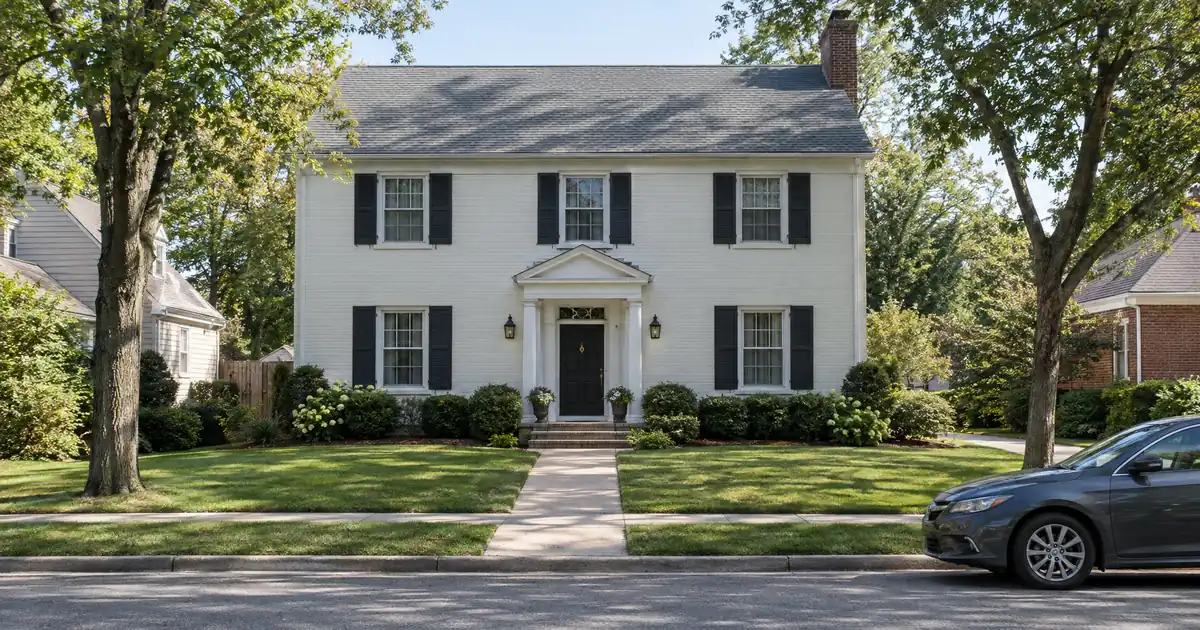
The Quick Read: It depends on whether the rental still performs and whether you want to keep owning it: cash out when rent can carry a larger loan on a property you want to hold, and sell when the asset is weak, needs heavy capital work, or you want every dollar of equity rather than a capped share. A cash-out refinance is a financing event. A sale is a tax event. That difference drives most of the decision.
- Cash out when the property performs, the rent can carry a bigger loan, and it still fits your plan.
- Sell when the asset is marginal, needs major capital work, or sits in a market you want to leave.
- A cash-out refinance on a standard rental tops out around 75% LTV across most of our network, so you never pull all your equity.
- Selling can free more equity, but it ends the rent, the appreciation, and the depreciation deductions on that property.
- Clearing the coverage test is not the same as earning positive cash flow. Each figure is subject to lender guidelines and a complete review of property type, leverage, and credit.
What Is the Real Question Behind This Choice?
You are deciding how to turn equity you already own into down payments for more doors. Each route has a different price in ownership, tax, debt, and risk.
DSCR Cash-Out Calculator
Run the cash-out numbers in your market
Rate source: Freddie Mac 30-yr average via FRED® — Federal Reserve Bank of St. Louis · effective Oct 8, 2026
Prefilled with starting assumptions — enter your property’s value, balance, taxes, and insurance for a more accurate picture.
Program parameters update from Lendmire’s centralized guideline source. Taxes and insurance are editable estimates.
As of Oct 8, 2026 · General Freddie Mac market benchmark, not a Lendmire loan offer. Property value, balance, taxes, and insurance are editable estimates. Maximum loan-to-value varies by lender, program, property type, and seasoning. Not a Loan Estimate, approval, or commitment to lend. Program availability and eligibility are subject to lender guidelines, credit approval, property review, and underwriting.
A cash-out refinance replaces your current first mortgage with a larger loan and pays you the difference. You keep the property and its rent. A sale ends your ownership and converts the whole equity position into cash, minus selling costs and any tax owed.
LTV means loan-to-value, the loan balance as a share of the property’s value. It is the number that caps how much equity a refinance can release. Scaling investors tend to miss one point here. The refinance route is limited by what the rent can support, not only by equity.
Five Questions to Ask, in Order
Run these in sequence. The first “no” often settles it.
1. Do you still want this property in this market? If the answer is no, selling is usually the cleaner exit. A refinance adds debt to an asset you were already planning to drop.
2. How much cash does the next deal actually need? Many purchases need only 20% to 25% down, and select high-leverage programs reach 85% LTV with roughly a 700+ score. A modest cash-out may cover that without selling anything.
3. Can the rent carry the larger payment? This is the test most investors skip until the lender runs it. More on it below.
4. Is your current loan worth keeping? A refinance replaces the existing first lien, favorable terms included. Lendmire’s piece Should a Scaling Investor Preserve a Low First Lien or Cash Out the Rental covers that tradeoff.
5. What is your tax picture on a sale? The gain, the depreciation you took, and your holding plans all change the answer.
Sell vs. Cash Out, Side by Side
| Factor | Sell | Cash-Out Refinance |
|---|---|---|
| Equity released | All of it, after costs and tax | Capped by LTV, reserves, and rent |
| Tax event | Yes, on the gain | No, proceeds are borrowed money |
| What you own after | Cash, no property | Property, larger loan, new cash |
| Cash-flow effect | Lose that rent | Higher payment cuts margin |
| Appreciation | Given up | Kept |
| Main risk | Tax bill and lost asset | Thin coverage if rent or value slips |
The table shows the trade. A sale gives you more capital and fewer assets. A refinance gives you less capital and more assets, but also more debt.
What a Cash-Out Actually Looks Like on a DSCR Loan
DSCR stands for debt service coverage ratio. The lender divides the property’s rent by its full monthly obligation, called PITIA: principal, interest, taxes, insurance, and association dues. The loan is reviewed primarily on property-level rental income covering the payment, subject to lender guidelines, not on your personal pay stubs.
Here is how the program looks across the wholesale network we place files with. All of it is subject to lender guidelines, credit approval, and property review.
- Leverage: Cash-out tops out around 75% LTV on a standard rental. On short-term-rental collateral, cash-out is capped at 70%, and standard rentals stay at 75%.
- Seasoning: Seasoning is the waiting period between buying a property and refinancing it. Expect about six months of ownership, measured from title recording.
- Coverage: 1.00 is where many select programs start. A separate select-lender path goes below 1.00, with leverage and terms adjusted.
- Credit: A 620 floor exists in parts of the network. Most programs want around 660, and 700+ opens the strongest tiers.
- Reserves: Commonly about six months of PITIA. Loans above $1,500,000 typically step up to about nine months.
- Loan size: Up to $3,000,000 on standard programs.
Manufactured homes, log homes, and barndominiums are not offered in these DSCR programs. If one of those is the property you are thinking of cashing out, selling is likely the only path of the two.
You can read more about how these loans work in the complete DSCR loans guide.
Will the Rent Still Cover a Bigger Loan?
Often the rent caps the loan before equity does. A larger loan means a larger payment, and the same rent then covers it by a smaller margin.
Picture a rental that clears about 1.5x coverage on its current loan. The table below uses modeled assumptions, with payment scaling roughly in step with the loan balance. Real files differ because taxes and insurance do not move with the loan.
| Loan as share of value | Modeled coverage |
|---|---|
| 50% | about 1.5x |
| 65% | about 1.15x |
| 75% | about 1.0x |
On this example, the refinance reaches the program ceiling right as coverage hits the floor many select programs use. That is the break point. If your own numbers land there, a smaller cash-out, a sale, or a different structure deserves a look.
Extended terms such as 40-year amortization and interest-only periods are available through select lenders in the network. They can lift the ratio. They do not change the underlying debt.
Clearing 1.00 is not the same as positive cash flow. The coverage test counts rent against PITIA only. Repairs, vacancy, management, utilities, and capital expenses sit outside it. A property can pass the lender’s test and still leave you with almost nothing in your pocket each month.
One Property, Both Paths
Run the numbers on a rental worth 100 units of value, with a loan at 40% of value. Your equity is 60 units before costs.
Path A, sell: You collect up to 60 units, less selling costs and tax on the gain. You own no property afterward. Your next deal is funded with whatever remains.
Path B, cash-out: The loan rises to 75% of value, so you receive up to 35 units before closing costs and reserve requirements. You still own the property, now with a much larger loan. Your next purchase uses part of that cash as a down payment, so you end up owning two properties and carrying two loans. Leverage, reserves, and pricing vary by lender and program; the final terms follow the full file review.
A sale puts more cash in your hands. A refinance leaves you more doors. Which matters more depends on whether the cash is the constraint or the doors are.
Both properties then need to hold up. The refinanced one carries a thinner coverage margin. The new one is judged on its own rent against its own payment. A DSCR loan sizes each file on that property’s rent, which helps investors whose personal debt-to-income is already full from other financed properties.
What Does a Sale Cost in Tax?
A sale triggers tax that a refinance does not. This is the main reason investors lean toward cash-out when they want to keep the asset.
Part of your gain equals the depreciation you previously deducted. The IRS says this unrecaptured Section 1250 gain is taxed at a maximum of 25%. The rest of the gain is ordinary long-term capital gain. A CPA firm’s explainer notes recapture does not apply when you sell at a loss.
Cost segregation can make a sale costlier. Components reclassified by cost segregation can be recaptured at ordinary rates up to 37%, per a cost-segregation firm. The same source says recapture applies even to depreciation you were allowed to claim but never did.
A refinance works differently. A CPA explainer on cash-out refinances says borrowed proceeds are not income, so a refinance does not trigger capital gains tax or recapture. It also does not erase future gain. The exposure stays until you eventually sell.
Tax treatment can depend on how the funds are used and how the property is held; investors should keep clear records and speak with a qualified tax professional before relying on any deduction.
Where Does a 1031 Exchange Fit?
A 1031 exchange lets you sell and defer the tax by buying like-kind replacement property. It defers the unrecaptured gain. It does not eliminate it, and basis carries over to the new property.
The deadlines are rigid. Under IRS Form 8824 instructions, you must identify replacement property within 45 days of transferring the property you gave up. You must receive it within 180 days, or by your return’s due date including extensions if that comes first. A qualified intermediary holds the funds, because you cannot touch them. A missed deadline can leave the gain taxable that year.
An exchange cannot pull cash out. Any cash or non-like-kind property you receive is called boot, and it is taxable in the year of the exchange. If you want cash too, the common workaround is to refinance the replacement property after the exchange closes. Refinancing right before a sale can look like taking profit early. Confirm sequencing with your intermediary and CPA before you act.
Third Options Worth a Look
You do not have to choose only between a sale and a cash-out.
| Option | Where it fits |
|---|---|
| Investment-property HELOC | Smaller, flexible draws; lines cap at $500,000 total |
| Sell one, cash out another | Prune the weak asset, keep the strong one |
| Partners | Split equity and risk on a bigger purchase |
| Bridge funding | Short gap between a sale and a purchase |
The hybrid often fits scaling investors best. Sell the property that underperforms and cash out the one that carries itself. You prune the portfolio and keep your strongest asset working.
One practical pattern from our desk: files built around cash-out often stall on coverage, not equity. The investor has the equity but the rent cannot carry the bigger loan. Checking coverage first, before choosing a path, saves weeks of chasing the wrong plan.
Which Investor Are You?
| Profile | Usual lean |
|---|---|
| Strong rent, low loan, long-term hold | Cash out |
| Thin margin, heavy repairs ahead | Sell |
| Leaving a market or asset class | Sell, maybe with a 1031 |
| Recently bought, improved, now stabilized | Cash out after seasoning |
| LLC-held rental | Either path; confirm title requirements with the lender |
These are leanings, not rules. A refinance will never make a marginal performer perform better. If a property needs a roof, has chronic vacancy, or sits where you no longer want to own, adding debt does not fix it.
Key Terms Defined
DSCR: Debt service coverage ratio, the property’s rent divided by its full monthly obligation.
LTV: Loan-to-value, the loan balance as a share of the property’s value.
PITIA: Principal, interest, taxes, insurance, and association dues, the full monthly obligation.
Seasoning: The waiting period between buying a property and refinancing it.
Depreciation recapture: Tax owed on the part of a gain that equals depreciation you previously deducted.
Boot: Cash or non-like-kind property received in a 1031 exchange, which is taxable.
Qualified intermediary: The third party who holds sale proceeds during a 1031 exchange so you never touch them.
Frequently Asked Questions
What if I plan to sell the property soon anyway?
A cash-out is hard to justify. You would pay closing costs on a new loan and then pay off that loan at sale. If a sale is likely within a short window, selling directly, or pairing a sale with a 1031 exchange, usually costs less.
Will a cash-out on one rental hurt my next approval?
It can affect it. The larger loan on the old property adds to your obligations, and reserves are reviewed across your portfolio. The new rental is judged mainly on its own rent against its own payment, so a DSCR file for the next purchase does not depend on your personal income the way a conventional file does. Lenders still look at credit, reserves, and the property, subject to their guidelines.
Do I give up appreciation by selling?
Yes. Once you sell, future gains belong to the next owner. A cash-out keeps you in the asset, so you keep the appreciation and the depreciation deductions. If the property is in a rising area and still cash-flows, that is a strong reason to hold.
Can I do both, selling one rental and cashing out another?
Yes, and many scaling investors do. Selling the weaker asset and cashing out the stronger one can fund a purchase while shrinking the problem property. Sequence matters if a 1031 exchange is involved, so plan the order before you list.
Does a cash-out refinance reset my depreciation?
No. A refinance changes the financing, not the property’s tax treatment, so your depreciation schedule and eventual recapture exposure stay as they were.
What To Do Next
If you want to keep the property, check coverage against a 75% LTV loan first, then confirm you meet the six-month seasoning and reserve expectations. If you are leaning toward selling, get a CPA to model the gain and any exchange before you list. Terms vary by lender guidelines, property type, leverage, credit profile, and full file review.
If you are buying or refinancing a rental property and want to see how the numbers work, Lendmire can help you compare DSCR loan options based on the property income, credit profile, leverage, and investor goals. As a broker, it arranges financing through select lenders in its wholesale network across 41 markets, including Washington, D.C.
The better path is usually the one your rent can support on the day you need the money, not the one that sounds smartest in the abstract.
Investors weighing their equity options can start with Lendmire’s guide to cash-out refinance on an investment property.
About Lendmire
Lendmire is a non-QM mortgage brokerage (NMLS# 2371349) arranging DSCR investor loans in 41 markets, including Washington, D.C. DSCR eligibility is generally reviewed around property-level rental income rather than personal income, subject to lender and program guidelines, a fit for self-employed investors and LLC-owned portfolios. Lendmire was recognized as a Scotsman Guide Top Mortgage Workplace in 2025 and 2026.
Get Started
Ready to find the right loan for you?
In about 30 seconds you can review financing options available for your investment property. No commitment required.
Informational only. Not a Loan Estimate, approval, or commitment to lend. Program availability and eligibility are subject to lender guidelines, credit approval, property review, and underwriting.
References
1. IRS Topic No. 409, Capital Gains and Losses
3. Recostseg – depreciation recapture
4. The Real Estate CPA, Cash-Out Refinance Tax Implications for Rental Property Investors
5. IRS Instructions for Form 8824
This article is part of Lendmire’s investment property cash-out refinance program — full qualification details, guidelines, and scenarios live on the program page.
Related reading: How to Refinance Out of Hard Money at Cost and Cash Out Later · How to Cash Out One Short-Term Rental to Buy in Another Market · Rental Cash-Out Refinance Closing and Entity Rules in Several States
Brandon Miller
Founder & CEO, Mortgage Loan Originator, Lendmire LLC
- Mortgage Loan Originator · NMLS# 1129696 · Verify on NMLS Consumer Access
- North Carolina Real Estate Broker · License# 343312 · Verify on NCREC
- North Carolina Insurance Producer · License# 19053198 · Property, Casualty, Life, Health · Verify on NAIC SBS
- Lendmire LLC · Firm NMLS# 2371349 · Verify firm licensure
Compliance and disclosures. Lendmire (NMLS# 2371349) is a licensed mortgage broker and is not a direct lender, depository institution, financial advisor, or tax professional. Content in this article is general market analysis and educational information — not financial, legal, or tax advice for any specific situation. Lendmire does not guarantee loan approval; every transaction is subject to underwriting by the funding lender. Mortgage pricing and loan program guidelines are subject to change at any time without notice and vary by borrower characteristics, property type, and state regulations. Lendmire complies with Equal Housing Opportunity. Licensure verification: NMLS Consumer Access.