
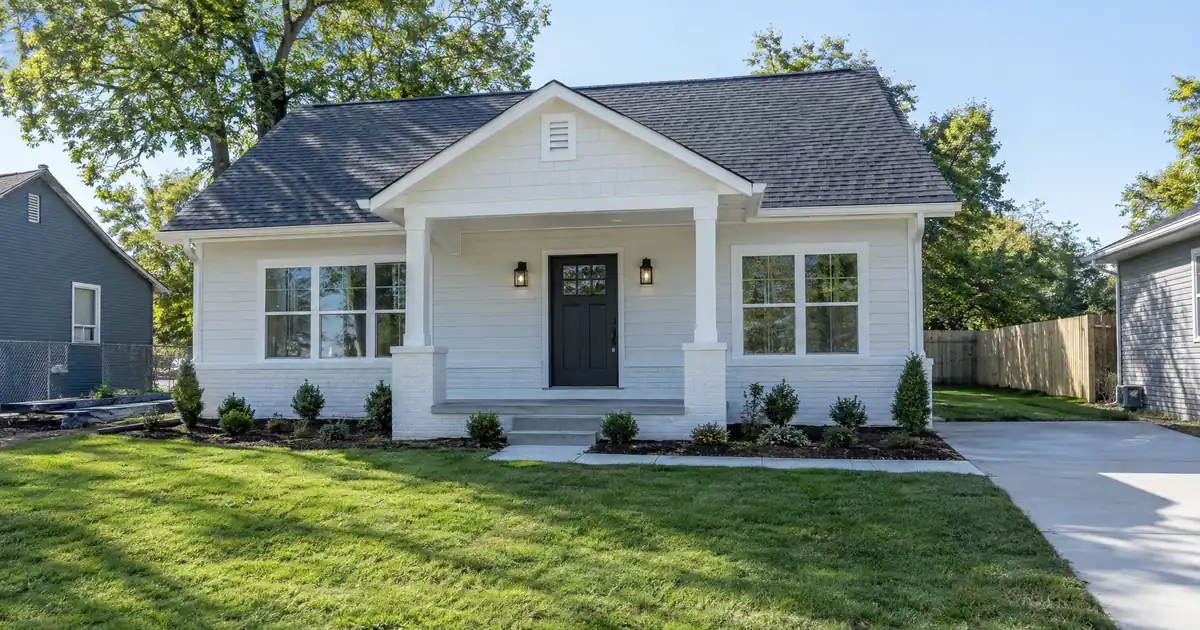
The Quick Read: A DSCR cash-out refinance fits a rental that is finished, leased and owned long enough to meet the lender’s waiting period. A bridge loan fits a property that still needs time before it can qualify for permanent financing. The smaller of two numbers sets the loan size: what the property appraises for and what the rent can support, subject to lender guidelines.
- A DSCR (debt service coverage ratio) loan is reviewed primarily on property-level rental income covering the payment, subject to lender guidelines.
- Seasoning, the waiting period between buying a property and refinancing it, is often the deciding clock. About 6 months is a common expectation for cash-out across most of the network.
- A DSCR cash-out generally tops out around 75% of value on standard rentals. A hard money refinance is typically sized lower, up to 65% of value, and the figures vary by lender, property, and experience.
- A bridge buys time but adds a second set of closing costs and a second maturity date.
- Clearing a coverage ratio of 1.00 does not mean the property produces positive cash flow.
Here is the honest answer on who each option is for. A DSCR cash-out suits the investor whose rehab is done, whose tenant is in place, and whose ownership clock has run. The loan is long-term, it pays off the hard money note, and it can return extra cash. A bridge suits the investor whose project ran late, whose lease-up is incomplete, or whose seasoning window has not opened. Hard money is a short, collateral-backed loan, usually interest-only, built to be repaid by a refinance or a sale. When maturity arrives, the first question is whether the property can pass a permanent lender’s tests today. If it can, the DSCR route is usually cleaner. If it cannot, a bridge or extension may be the only way to avoid a forced sale.
Side-by-Side
The table below describes the maturing hard money or bridge loan using published industry norms, and the DSCR column using the guidelines that most programs in Lendmire’s wholesale network follow. Both can be placed through that network. Every figure varies by lender, property, and borrower experience, and nothing here is a commitment to lend. Pricing is deliberately left out of the comparison.
| Factor | Hard money / bridge (industry norms) | DSCR cash-out refinance |
|---|---|---|
| Review basis | Collateral, plan, and exit | Rent measured against full payment (PITIA) |
| Documentation | Contract, scope of work, collateral | Appraisal with rent schedule, lease, insurance, title, entity papers |
| Property condition | Distressed or unfinished is common | Habitable, leased or lease-ready |
| Property types | Typically 1-4 unit residential | 1-4 unit rentals; manufactured homes not offered |
| Entity vesting | LLC borrowers are common | LLC common, with a personal guaranty typical |
| Timeline | Short fixed term built around an exit | Long-term permanent loan |
| Credit | Around 620 minimum, with conditions under 660 | 620 floor in parts of network; most want about 660 |
| Reserves | Vary by lender and project | Commonly about 6 months of PITIA, varying by lender |
| Refinance leverage | Up to 65% of value | Around 75% of value on standard rentals |
PITIA means principal, interest, taxes, insurance, and any association dues. DSCR is monthly rent divided by that full monthly obligation. A ratio above 1.00 means the rent covers the payment on paper.
When DSCR Cash-Out Is the Better Fit
DSCR cash-out wins when three things are true at once. The property is finished and leased, the seasoning window is met, and the appraisal supports the loan size. In that case, the DSCR lender pays off the bridge lender directly, and any surplus goes to the investor.
Picture an investor who bought a duplex with hard money, finished the rehab, and placed tenants in both units. Eight months have passed, and the note matures soon. The rent schedule suggests coverage around 1.2x on the new loan, and the appraisal comes in at a level that supports leverage near the 75% ceiling for standard rentals. This file clears both tests. The permanent loan replaces a balloon-style maturity with a long-term structure. The spine of the product is the 30-year fixed. Extended terms and interest-only periods are available through select lenders in the network.
DSCR also has a structural edge on leverage at the refinance. Hard money refinances are typically sized up to about 65% of value, while a DSCR cash-out reaches around 75% on standard rentals. That gap can be the difference between merely paying off the note and pulling out real equity.
Expect these qualifications on most files:
- A credit score around 660 on most programs. A 620 floor exists in parts of the network, and 700 or higher unlocks the strongest leverage tiers.
- Reserves commonly around 6 months of PITIA. Conservative rate-and-term files at modest leverage under $1,500,000 can see reserves waived, and larger loans typically step up to about 9 months.
- Loan sizes of up to $3,000,000 on standard programs (smaller balances available through select lenders). Above $2,500,000 the network generally holds to 30-year fixed structures.
- Coverage of 1.00, where many select programs start. A separate select-lender path accepts coverage below 1.00, with leverage and terms adjusted.
LLC borrowers are common, subject to lender program eligibility. Expect the members to sign a personal guaranty, so an LLC does not remove personal liability. Check the vesting rules before changing title. Moving a property into an entity in the middle of the seasoning clock can trigger a title review or a clock reset at some lenders.
Lendmire’s piece Rate-and-Term vs Cash-Out DSCR Refi at Hard Money Balloon walks through the payoff-only decision in more depth.
When a Bridge Loan Is the Better Fit
A bridge wins when the property cannot yet pass a permanent lender’s tests, and the cost of waiting is lower than the cost of a forced sale. Bridge loans are short-term, collateral-backed financing meant to be repaid by longer-term financing, as Corporate Finance Institute describes them. In the hard money context, the common terms run 6 to 18 months, interest-only, with no prepayment penalty on the program Lendmire’s network places. Those terms vary by lender, property, and experience.
Three situations point toward a bridge:
1. The rehab is not done. A DSCR lender expects a habitable, stabilized property. An unfinished unit is not a candidate.
2. The lease-up fell through. Rent evidence matters. Depending on the program, it may come from the lease, from the appraiser’s market rent, or from the lower of the two. An asking rent in a listing is not evidence.
3. The seasoning clock has not opened. If the note matures before the DSCR lender will size on appraised value, the early window may size on cost basis. That traps the equity the rehab created.
A second bridge has costs. It adds closing costs, a new maturity date, and the risk of stacking one short loan on another. Size the new term to the real timeline for finishing, leasing, and seasoning, not to the best case. A bridge that matures before DSCR eligibility only moves the problem.
An extension from the current lender is the other way to buy time. Read the note first for the extension terms, any exit fees, and default provisions. Then compare the full cost of extending against the full cost of replacing. A rental HELOC is one more alternative, and Lendmire’s rental HELOC vs DSCR cash-out vs bridge for a hard money payoff covers how it stacks up.
Which Path Fits Your Property Status?
Property status usually settles the question before the numbers do. This table maps the four common situations to the likely path. Each outcome stays subject to lender guidelines, credit approval, and property review.
| Property status | Likely path | Main risk |
|---|---|---|
| Unfinished | Extension, bridge, or sale | Running out of time again |
| Finished, not leased | Short bridge or extension | Rent evidence is missing |
| Leased, not seasoned | Payoff-only refi, or extension until seasoned | Cash-out blocked by the clock |
| Leased and seasoned | DSCR cash-out or payoff-only | Appraisal shortfall |
The “leased, not seasoned” row is the one that surprises people. Strong rent helps coverage and leverage, but it does not shorten the ownership clock. Coverage and seasoning are separate tests.
Two Clocks, Two Tests
At maturity, two clocks run: the bridge’s maturity date and the DSCR lender’s seasoning window. Two tests also apply. The value test compares the new appraisal to the leverage cap. The rent test compares rent used for lender review to the new payment. The tighter test sets the loan size.
The new lender sizes the loan on its own appraisal, not on the investor’s after-repair value, or ARV, the projected value after the rehab. For 1-unit rentals, the appraiser’s rent schedule is typically Form 1007. For 2-4 units it is Form 1025. If the appraisal lands below expectations, the cash-out shrinks. In a worse case, the loan may not cover the full payoff, and the investor has to bring cash to close the gap.
A cash-out also enlarges the loan, so coverage falls as proceeds rise. Run the ratio both ways: once for a payoff-only loan and once for the cash-out. An investor who wants cash may find that the rent supports less than the equity does. Higher coverage opens better leverage and terms, so a smaller loan can be the stronger file.
One caution on what the ratio means. DSCR compares rent to PITIA only. Repairs, vacancy, management, utilities, and capital expenses sit outside it. A property can clear 1.00 and still lose money each month.
A larger down payment lowers the monthly payment and can lift the ratio. It never erases leverage caps, credit floors, reserve rules, or property eligibility. The strongest files clear both tests: enough equity and enough rental coverage.
Payoff-Only or Cash-Out?
A payoff-only refinance, also called rate-and-term, retires the old loan and the costs, and nothing more. Cash back to the borrower makes it a cash-out. Some lenders treat any bridge payoff as a cash-out, so confirm how each program labels the transaction before relying on its seasoning rules.
Payoff-only has a practical advantage at maturity. It protects the investor from default or a forced sale, and a cash-out can follow later once the seasoning and value requirements are met. The trade-off is a second closing and its costs.
DSCR vs. conventional financing
There are two common ways to finance an investment property, and they qualify you differently — here’s how investors weigh them.
Why investors choose it
- Qualifies on the property’s rental income — no personal tax returns, W-2s, or pay stubs needed to document income.
- No personal debt-to-income ceiling to clear, so existing mortgages and obligations don’t cap your borrowing the same way.
- Can be closed in an LLC, keeping the property inside a business entity.
- Built for scaling — not held to the limit on number of financed properties that conventional financing applies.
- Underwriting centers on the deal: generally qualifies when the rent covers the payment, a 1.00x coverage ratio being a common baseline (confirmed in underwriting).
- Designed specifically for investment property, including long-term and, where the program allows, short-term rentals.
Where it’s strong
- Often the lowest ongoing financing cost for a buyer who fully qualifies on personal income — a fit for a first property or a cost-first purchase.
Trade-offs for investors
- Requires full personal income documentation and must fit within a debt-to-income limit — salary, existing debts, and other mortgages all count.
- Typically held in your personal name rather than a business entity.
- Caps how many financed properties you can carry, which can become a ceiling as a portfolio grows.
- Evaluates you as a borrower as much as the property, which usually means more paperwork.
How investors usually choose: a first or single property often optimizes for the lowest financing cost; portfolio builders often optimize for leverage, vesting in an LLC, and scaling past conventional caps. The right answer depends on your goals, the property, and current guidelines — both paths run through select lenders in Lendmire’s wholesale network, with eligibility and terms confirmed in underwriting.
The Agency Six-Month Rule Is Not a DSCR Rule
Many investors have heard that cash-out needs six months of ownership. That idea traces to agency lending. The Fannie Mae eligibility matrix says a borrower who bought within the prior six months is ineligible for cash-out unless the delayed financing exception is met. That exception requires an arm’s-length purchase with no mortgage financing used.
A hard money purchase generally breaks that fact pattern, because the loan secures the property. Delayed financing is an agency concept and does not govern DSCR loans. Seasoning on DSCR files is lender policy. The network commonly expects about 6 months, but a few lenders set it differently, and whether a program offers a similar path varies.
The regulatory side is simple. DSCR loans are designed for non-owner-occupied investment properties. Because they are business-purpose investor loans, they are reviewed differently from a standard owner-occupied mortgage. The CFPB’s Truth in Lending guide treats credit to acquire or improve non-owner-occupied rental property as business-purpose credit. That is why the DSCR test is a property cash-flow test set by lenders, not a federal standard. Credit, reserves, appraisal, title, and a guaranty still apply.
What Happens If You Miss Maturity?
Three outcomes recur when the exit falls through: an extension, a replacement bridge, or default. A replacement bridge costs a second round of closing fees. Default brings penalty interest and foreclosure exposure.
Start the refinance well before maturity and plan backward. The calendar needs room for rehab, lease-up, seasoning, appraisal, and underwriting. Ask the hard money lender for a written payoff statement early. It includes accrued interest and any extension or exit fees, so the figure grows with time.
Sometimes the right answer is a sale. If rent at the projected value does not support the new loan, a DSCR refinance may not work, and selling can protect the equity better than stacking more short-term debt.
Tax treatment can depend on how the funds are used and how the property is held. Investors should keep clear records and speak with a qualified tax professional before relying on any deduction.
A Balanced Verdict
Choose DSCR cash-out when the property is finished, leased, seasoned, and appraised well enough to support the loan, and when the investor wants long-term financing instead of another maturity date. Choose a bridge or extension when one of those conditions is missing and a sale would give up equity the project earned.
The decision is rarely a matter of preference. It follows from the property’s status, the calendar, and the two tests. The investors who do best check the seasoning rule and the rent evidence before maturity gets close, not after. Many investors refinance out of hard money into long-term DSCR financing once the property is stabilized, and Lendmire brokers that path through select lenders in its network. The complete DSCR loans guide covers the full program.
Frequently Asked Questions
Can I take cash out if my hard money loan matures before the seasoning window opens?
Often not. A payoff-only refinance, an extension, or a sale are the usual alternatives. Some lenders size early on cost basis instead of appraised value, which can trap the equity the rehab created. Program rules differ, so confirm the seasoning rule in writing before relying on it.
Is a payoff of hard money automatically a cash-out refinance?
No, though it depends on the program. A refinance that only retires the loan and its costs is generally treated as payoff-only. Some lenders label any bridge payoff a cash-out, so ask each lender how it classifies the transaction.
Does a DSCR above 1.00 mean the rental makes money?
No. The ratio compares rent to PITIA only. Treat 1.00 as where many select programs start, not as a profit measure.
Can I close a DSCR cash-out in an LLC?
Often yes, subject to lender program eligibility. Expect a personal guaranty from the members. Ask about title and vesting timing before you record anything, because moving title mid-clock can trigger a review at some lenders.
What if the appraisal comes in low?
The loan shrinks. A smaller cash-out may still cover the payoff, but if it does not, the investor has to bring cash or choose an extension or sale. Appraisal risk is the main hazard in plans that rely on projected value.
Next Step
If you are buying, rehabbing or refinancing an investment property on a short timeline and want to see how the numbers work, Lendmire can help you compare hard money options based on the project, the exit plan, leverage, and your goals. Lendmire is a broker that arranges financing through select lenders in its wholesale network, covering 41 markets, including Washington, D.C. Nothing here is a commitment to lend, and every file is underwritten individually.
About Lendmire
Lendmire, NMLS# 2371349, is a mortgage brokerage focused on investor financing, arranging DSCR loans in 40 states plus Washington, D.C. — 41 markets total. Qualification is based on the property’s income rather than personal income documentation, subject to lender guidelines, making it a fit for LLC-held rentals and scaling portfolios. Scotsman Guide named Lendmire a Top Mortgage Workplace in both 2025 and 2026.
Get Started
Ready to find the right loan for you?
In about 30 seconds you can review financing options available for your investment property. No commitment required.
Informational only. Not a Loan Estimate, approval, or commitment to lend. Program availability and eligibility are subject to lender guidelines, credit approval, property review, and underwriting.
References
1. Corporate Finance Institute, Bridge Loan
2. Fannie Mae Eligibility Matrix
3. CFPB Truth in Lending Act guide
This article is part of Lendmire’s hard money loan program — full qualification details, guidelines, and scenarios live on the program page.
Related reading: Florida Rental HELOC Doc Stamps and Intangible Fees at Closing · Should a Landlord With a Low First Lien Use a Home HELOC? · DSCR Cash-Out vs Bridge Loan When a Money Partner Wants Out
Brandon Miller
Founder & CEO, Mortgage Loan Originator, Lendmire LLC
- Mortgage Loan Originator · NMLS# 1129696 · Verify on NMLS Consumer Access
- North Carolina Real Estate Broker · License# 343312 · Verify on NCREC
- North Carolina Insurance Producer · License# 19053198 · Property, Casualty, Life, Health · Verify on NAIC SBS
- Lendmire LLC · Firm NMLS# 2371349 · Verify firm licensure
Compliance and disclosures. Lendmire (NMLS# 2371349) is a licensed mortgage broker and is not a direct lender, depository institution, financial advisor, or tax professional. Content in this article is general market analysis and educational information — not financial, legal, or tax advice for any specific situation. Lendmire does not guarantee loan approval; every transaction is subject to underwriting by the funding lender. Mortgage pricing and loan program guidelines are subject to change at any time without notice and vary by borrower characteristics, property type, and state regulations. Lendmire complies with Equal Housing Opportunity. Licensure verification: NMLS Consumer Access.