
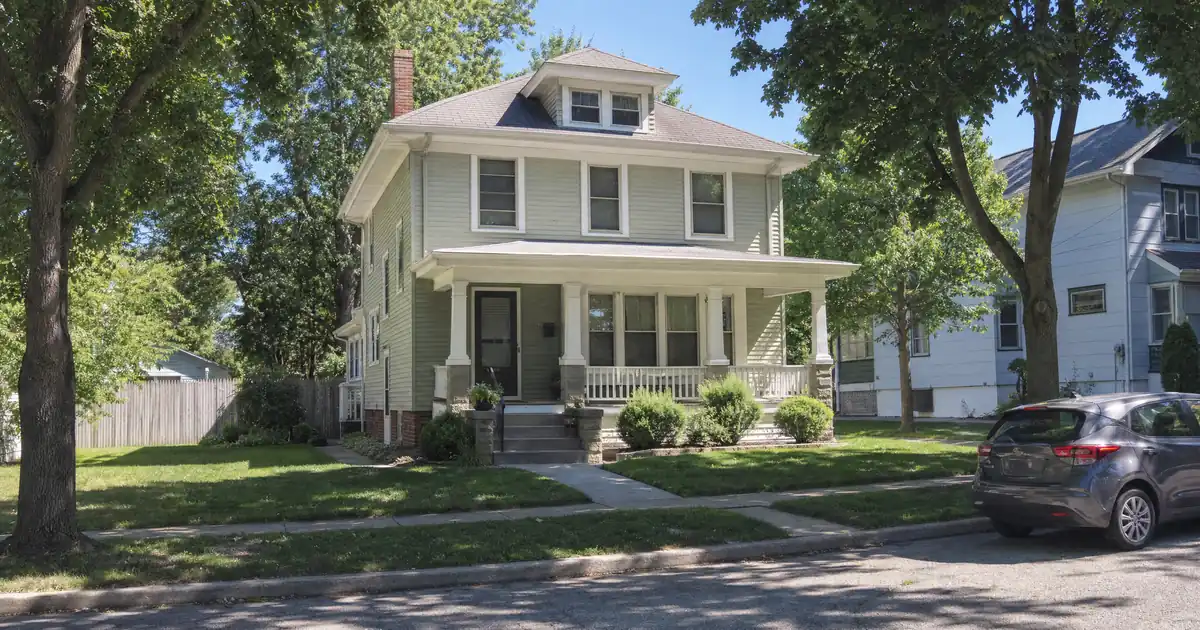
The Quick Read: Refinancing a rental property works through two different systems. The first is agency-style bank lending. It looks at your personal income and your debt-to-income ratio. The second is non-QM/DSCR lending. It looks at the property’s rent instead. Big banks, credit unions, and community banks usually sit in the first camp. That camp caps how many financed properties a borrower can carry. DSCR lenders sit in the second camp. They don’t have that ceiling. That’s why most refinancing on larger rental portfolios ends up moving there.
That split is usually the real decision point for an investor comparing options. It matters more than interest rate. It matters more than credit score.
DSCR Calculator
Run the numbers in your market
Rate source: Freddie Mac 30-yr average via FRED® — Federal Reserve Bank of St. Louis · effective Aug 20, 2026
Prefilled with starting assumptions — enter your own rent or nightly figures, taxes, insurance, and HOA for a more accurate picture.
Program parameters update from Lendmire’s centralized guideline source. Taxes and insurance are editable estimates.
As of Aug 20, 2026 · General Freddie Mac market benchmark, not a Lendmire loan offer. Rent, nightly rate, occupancy, taxes, and insurance are editable estimates. Short-term rental figures are estimates only and vary significantly by season, property type, management approach, and local short-term-rental rules — confirm local regulations before relying on them. Qualifying income for short-term rentals varies by program — some use appraisal market rent, others use documented STR history or projections — and is confirmed in underwriting. Not a Loan Estimate, approval, or commitment to lend. Program availability and eligibility are subject to lender guidelines, credit approval, property review, and underwriting.
Key Takeaways
- Big banks, credit unions, and community/portfolio banks generally underwrite an investment property refinance the same way they underwrite a purchase loan. They look at personal income, debt-to-income, and traditional personal-income paperwork.
- Agency-sold loans — the kind most large retail lenders originate — cap out at roughly 10 financed properties per borrower under Fannie Mae Selling Guide B2-2-03. This is a hard ceiling. It has nothing to do with your credit quality.
- DSCR/non-QM refinancing bases lender review on the property’s rent-to-payment ratio instead of your paycheck. That’s why it doesn’t hit that same ceiling.
- Seasoning is how long you’ve held title. Lenders measure it from the recorded deed date — not the closing date and not the day tenants moved in. It can shrink or disappear entirely for cash purchases, inheritance, and divorce awards.
- Coverage below 1.00x and no-ratio structures both exist through select lenders. But each comes with its own tradeoffs in leverage, pricing, and eligibility.
Key Terms Defined
DSCR (debt-service-coverage ratio): Take the property’s monthly rent and divide it by the full monthly housing payment. A ratio above 1.00 means the rent covers the payment with room to spare.
PITIA: Principal, interest, taxes, insurance, and association dues. This is the full monthly obligation used in the DSCR calculation — not just principal and interest.
LTV (loan-to-value): The loan amount shown as a percentage of the property’s appraised value. Cash-out refinances usually cap lower than purchase loans.
Seasoning: The minimum time you must hold recorded title before a lender will release cash-out equity.
Business-purpose loan: Financing for a non-owner-occupied rental property. Consumer protection law treats it differently than a loan on your primary home.
No-ratio loan: A structure where the lender skips the rent-to-payment calculation altogether. This is a narrow, select-lender option — not something you’ll find on most programs.
What Actually Happens When You Refinance a Rental Property
An investment property refinance replaces the existing loan on a non-owner-occupied property. You do it either to change the payment structure (rate-and-term) or to pull equity out in cash (cash-out). On the surface, it looks a lot like refinancing your primary home — appraisal, title search, underwriting. But the qualifying logic underneath is what actually differs. And it differs by lender type more than by anything else.
That’s the part most explainers skip. The real question isn’t “which bank.” It’s which lending system your file falls into.
The Two Lending Worlds
There isn’t one system for refinancing rental property. There are two, and they run on completely different logic.
The first is the agency-adjacent world. Big banks, large retail lenders, and most credit unions live here. They originate loans meant for sale to Fannie Mae or Freddie Mac, or they underwrite using debt-to-income math. These lenders look at your traditional personal-income paperwork — W-2s or 1099s — and your overall DTI. They’re also bound by the financed-property ceiling described above.
The second is the non-QM/DSCR world. Here, the property’s own rent drives lender review. DSCR loan volume grew more than 50% year over year. It surpassed bank statement loans to become the largest share of non-agency mortgage production, according to Scotsman Guide. Investor-purpose loans have also grown into a meaningful slice of the broader non-agency market. They made up roughly 28.5% of nonconforming originations in one recent monthly snapshot, per Optimal Blue data reported by Scotsman Guide.
| Lender Type | Underwriting Basis | Financed-Property Limit | Best Fit |
|---|---|---|---|
| Big banks / large retail lenders | Personal income & DTI | ~10 financed properties (agency cap) | W-2 borrowers, 1-4 rentals |
| Credit unions | Personal income, relationship-based | Varies by institution | Long-standing members, simple files |
| Community / portfolio banks | Lender’s own in-house guidelines | Varies, often more flexible | Unusual properties, local relationships, ARM comfort |
| DSCR / non-QM lenders | Property’s rental income | No agency-style ceiling | Scaling portfolios, self-employed, LLC-titled entities |
Community and portfolio banks need a separate note here. They don’t fit neatly in either column. Because they hold the loan themselves instead of selling it, they can write their own rules. Sometimes that means more flexibility for an odd property or an unusual borrower. But that flexibility depends on the relationship — it’s not guaranteed. And it often comes wrapped in an adjustable structure. Many community bank investment loans are 5-year ARMs, 7-year ARMs, or 10/20 hybrids. That creates its own refinance decision down the road at the reset date. That’s a fundamentally different risk than a fixed DSCR loan carried for the full term.
How Underwriting Actually Treats the File, Step by Step
The process starts with a classification decision. Everything downstream follows from it.
Step 1 — Loan purpose classification. The file gets sorted into agency/conventional (income-based) or non-QM/business-purpose (rent-based) before a single document gets reviewed. This decision sets the entire underwriting path.
Step 2 — The coverage math. For DSCR loans, the coverage figure is simple. Take the monthly rent and divide it by the full monthly obligation. Select DSCR programs in Lendmire’s wholesale network set a coverage threshold near 1.00x — the point where rent covers the payment. This is a program-level guideline, not a universal rule. On most files, stronger ratios unlock better leverage and pricing.
Step 3 — Rent gets verified through the appraisal. On a DSCR file, the property’s income is the qualifying metric. So the appraisal does double duty. Agency guidelines require the Single-Family Comparable Rent Schedule (Form 1007) for one-unit properties, plus the matching form for two-to-four-unit properties. Non-QM underwriting borrows this same documentation habit, even though the loan never gets sold to an agency.
Step 4 — The seasoning clock. For cash-out refinances, most programs in Lendmire’s network expect around six months of ownership seasoning. That clock starts at the recorded deed date at the county recorder’s office — not the closing date, not the contract date, and not the day a tenant moved in.
Step 5 — LTV runs independently of the coverage ratio. Leverage and coverage are two separate hurdles. Most purchase files land in the 75%–80% LTV range. Select high-leverage programs reach 85% for stronger-credit borrowers. Cash-out refinances generally top out around 75% LTV across most of the network. A strong rent-to-payment ratio doesn’t automatically buy back leverage that a program guideline caps elsewhere.
Step 6 — Credit, reserves, and entity documentation. A 620 floor exists in parts of the network. Most programs want something closer to 660. A 700+ score typically unlocks the strongest leverage tiers. Reserve requirements vary by lender, leverage, and loan size. They commonly land around six months of PITIA. Conservative rate-and-term files under $1,500,000 sometimes see reserves waived. Loans above that threshold generally step up to closer to nine months. If the property closes in an LLC, the managing member typically still signs as personal guarantor. Titling in an entity organizes ownership — it doesn’t remove you from underwriting.
Lendmire, a multi-state mortgage broker (NMLS# 2371349) that arranges DSCR investor financing through select lenders across 40 states plus Washington, D.C., walks investors through exactly this sequence before a file goes out. That’s because the classification decision in Step 1 quietly determines everything that follows.
Where the Coverage Ratio Isn’t the Full Story
A DSCR at or above 1.00 is not the same thing as positive cash flow. Treating it that way is a common mistake. The ratio only measures rent against PITIA. It says nothing about repairs, vacancy, property management, utilities, or capital expenses. All of that sits outside the calculation entirely. A file can clear 1.00x on paper and still run tight once you add real operating costs back in.
Coverage below 1.00x is available through select lenders in the network. But leverage and terms adjust to compensate for the added risk. No-ratio qualification — where the lender skips the rent-to-payment calculation entirely — is also available. But it’s generally limited to select lenders, and usually only for borrowers who already own a primary residence. Neither structure is common on a first file. Both usually trade some leverage or pricing for the added flexibility.
A larger down payment lowers the monthly obligation and can lift the DSCR. But it never erases a leverage cap, a credit floor, a reserve requirement, or a property-eligibility rule. The strongest files clear both tests at once — enough equity and enough rental coverage. They don’t lean on one to make up for a weak showing on the other. Every figure here varies by lender and program. Guidelines, property type, leverage, and credit profile all play a role.
Where the General Rule Breaks: Six Edge Cases
The step-by-step process above describes the typical file. Real portfolios don’t always look typical. Several situations bend the rules in ways worth knowing before you assume you’re stuck.
Delayed financing on all-cash purchases. Say you bought a property outright — no mortgage, no HELOC, no private loan of any kind. You can often skip the standard seasoning wait entirely. Here’s the tradeoff: proceeds typically cap at the lower of the appraised value at the applicable LTV or the documented cash purchase price. So forced appreciation from renovations generally doesn’t count toward your payout the way it would after standard seasoning has run its course.
Inheritance and legal-award transfers. Say you got a property through inheritance, or through a divorce settlement. On the agency side, this commonly waives the ownership-seasoning test outright, since you didn’t buy your way into the deal.
LLC-held title before closing. Here’s a detail people often miss: if an LLC majority-owned or controlled by you owned the property before closing, that time inside the entity can often count toward the seasoning requirement. Flag this early. Don’t assume the clock resets when the property transfers to your personal name.
Co-owner buyouts run the opposite direction. Buying out a co-owner doesn’t shorten seasoning — it lengthens it. Agency guidelines generally require the property to have been jointly owned for at least 12 months before the buyout counts as a limited cash-out instead of a full cash-out. That distinction carries real pricing implications.
Short-term rentals and the rent-schedule form’s limits. Form 1007 was built to document monthly rent on a long-term lease, not nightly rental income. It doesn’t account for vacancy rates or business expenses the way an STR operator actually experiences them. Because of that gap, STR files in Lendmire’s network typically move through purchase leverage up to around 75% LTV, refinance leverage closer to 70%, and cash-out around 70%. Lenders generally expect a 640+ credit score, roughly 12 months of hosting history, and a coverage floor near 1.00x. That floor gets checked independently on the purchase side and again on the refinance side — these are evaluated separately, not blended into one number.
High-LTV refinance carve-out. On the agency side specifically, high-LTV refinance loans are exempt from Fannie Mae’s multiple-financed-property policy. This is a narrow exception. It only matters to borrowers already inside the conventional system, not to non-QM borrowers.
The Investor Decision, in Practice
Say you hold a small number of financed rentals — call it one to three. A bank or credit union refinance often stays viable for you, and it can carry a lower nominal cost, especially if your personal DTI still has room. Here’s the flip point worth naming honestly: DSCR isn’t automatically the better answer for every investor. It becomes the better answer once the conventional lane starts closing.
Every financed property adds debt to a conventional DTI calculation. Most investors hit that wall somewhere around the fourth or fifth acquisition, no matter how strong their credit looks on paper. Beyond that, the agency ceiling near 10 financed properties becomes the hard stop. Reserve requirements climb as the count rises. Past that ceiling, conventional refinancing simply isn’t available — no matter how good the file looks. Final terms depend on lender guidelines, property type, leverage, and your complete credit picture.
Documentation burden tells the same story from a different angle. A conventional bank file still looks like a conventional file: income documents, traditional personal-income paperwork, a DTI calculation, the full personal-finance packet. A DSCR file swaps most of that out. Instead, it uses lease documentation, credit, reserves, and title. It qualifies primarily on whether the property’s rental income covers the payment, subject to lender guidelines — not on your personal income statement. If you’re self-employed, or you’ve already maxed out your personal DTI on paper despite genuinely strong cash flow, that swap can be the difference between qualifying and not.
Entity ownership matters here too. DSCR programs more commonly let you close directly in an LLC’s name, which many portfolio-focused investors use for liability separation. Conventional bank refinancing more typically requires personal title. And the cost tradeoff is real, not a footnote. DSCR/non-QM pricing generally runs above conventional pricing to compensate for reduced income documentation and its non-QM risk classification. Weigh that premium against the value of preserved DTI capacity and a documentation path that doesn’t require re-proving your personal income on every file.
If you’re weighing local bank options specifically, check Lendmire’s breakdown of local banks willing to refinance investment property and its overview of fixed-rate cash-out refinancing programs — both dig into that comparison in more detail. Lendmire’s full guide for investors on refinancing a rental property walks through the decision end to end.
DSCR loans are built for non-owner-occupied investment properties. Because they’re business-purpose investor loans, lenders review them differently than a standard owner-occupied mortgage. That distinction is rooted in the business-purpose exemption under Regulation Z — and it’s why the property’s rent, not your paycheck, can carry the qualification.
Common Misconceptions
“There’s one best bank for this.” There isn’t. The real question is a decision tree: how many financed properties you already carry, how long you’ve held title, and whether you want the lender looking at your personal income or the property’s income.
“DSCR loans are only for distressed properties or bad credit.” Not true. Many DSCR loans finance stable, high-performing rentals. Plenty of DSCR borrowers carry strong credit — they simply prefer the documentation flexibility over a conventional file.
“DSCR is just an easier version of a conventional loan.” It skips personal income documentation, sure. But it still runs through real qualification hurdles on credit, reserves, leverage, and property eligibility. It’s a different underwriting model — not a shortcut version of the same one.
“Seasoning starts when the tenant moves in.” No — it starts when the deed records at the county recorder’s office. This trips up a lot of investors timing a fast-turn refinance after a renovation.
A few property types fall outside DSCR programs entirely, no matter the rent or coverage. Manufactured homes (single- and double-wide), log homes, and barndominiums aren’t offered through Lendmire’s wholesale network. Loan sizes on standard DSCR programs generally run up to roughly $3,000,000, with smaller-balance files routing through select lenders in the network. Above roughly $2,500,000, most programs settle into 30-year fixed structures instead of shorter-term or adjustable options. Tax treatment can depend on how you use refinance proceeds and how you hold the property. Keep clear records, and talk with a qualified tax professional before you rely on any deduction assumption. Want to see how these numbers apply to a specific property? Review Lendmire’s complete DSCR loans guide or request a comparison directly at 828-256-2183.
Loan approval is never guaranteed. Nothing here should be read as a commitment to lend. Every scenario described here is subject to lender approval, underwriting review, and the specific borrower, property, and program guidelines in effect at the time of application. Those guidelines can change, so confirm them directly with Lendmire. This content is general information only — not financial, legal, or tax advice. Talk with your own advisors before making a financing decision.
Frequently Asked Questions
Can a bank refinance a rental property the same way it refinances a primary home?
The process looks similar on the surface — appraisal, title, underwriting. But the qualifying basis is different. Most banks still underwrite a rental refinance on your personal income and DTI, and the financed-property ceiling under Fannie Mae guidelines applies here in a way it never would on a primary residence.
What happens once an investor hits the financed-property limit at a conventional bank?
Conventional and agency-sold refinancing generally isn’t available past that ceiling, no matter how strong your credit or cash flow looks. That’s the point where DSCR financing — which qualifies off the property’s rent instead of your personal debt load — becomes the practical path forward.
Does a credit union offer more flexibility than a big bank on an investment property refinance?
Sometimes, since approval decisions at credit unions tend to be more relationship-based. But they generally still underwrite on personal income and DTI, and they remain subject to the same agency-style financed-property considerations as larger retail lenders.
Is a DSCR refinance more expensive than a conventional bank refinance?
Non-QM and DSCR pricing typically runs above conventional pricing. That reflects the reduced income documentation and the non-QM risk classification. Weigh that premium against the value of preserved DTI capacity and a qualification path built around the property’s income instead of repeated personal-income verification.
Can an LLC-titled rental property still get refinanced through these programs?
Yes, subject to lender program eligibility. DSCR programs commonly allow closing in an entity’s name, though the managing member typically still signs as personal guarantor. Titling in an LLC organizes ownership for liability purposes — it doesn’t remove you from underwriting review.
About Lendmire
Lendmire is a non-QM mortgage brokerage (NMLS# 2371349) arranging DSCR investor loans in 41 markets, including Washington, D.C., through wholesale and investor-lending channels. Lenders evaluate DSCR loans on rental income rather than personal income, subject to lender guidelines. That makes them a fit for LLC-owned portfolios, self-employed investors, and operators scaling beyond conventional loan caps. Lendmire has been recognized as a Scotsman Guide Top Mortgage Workplace in 2025 and 2026.
Get Started
Ready to find the right loan for you?
In about 30 seconds you can review financing options available for your investment property. No commitment required.
Informational only. Not a Loan Estimate, approval, or commitment to lend. Program availability and eligibility are subject to lender guidelines, credit approval, property review, and underwriting.
References
1. Fannie Mae Selling Guide B2-2-03 — Multiple Financed Properties for the Same Borrower
2. Scotsman Guide — DSCR Lending Is Surging
3. Scotsman Guide — Investors Anchor Housing Market as Non-QM Loans Surge
4. Fannie Mae Selling Guide B3-3.8-01 — Rental Income
5. Doss Law — Business Purpose Exemption Simplified
This article is part of Lendmire’s DSCR loan program — full qualification details, guidelines, and scenarios live on the program page.
Related reading: Banks That Will Refinance Investment Properties · Best Lenders For Investment Property Cash Out Refinance · Best Bank To Refinance Investment Property
Brandon Miller
Founder & CEO, Mortgage Loan Originator, Lendmire LLC
- Mortgage Loan Originator · NMLS# 1129696 · Verify on NMLS Consumer Access
- North Carolina Real Estate Broker · License# 343312 · Verify on NCREC
- North Carolina Insurance Producer · License# 19053198 · Property, Casualty, Life, Health · Verify on NAIC SBS
- Lendmire LLC · Firm NMLS# 2371349 · Verify firm licensure
Important disclosures. Lendmire (NMLS# 2371349) is a licensed mortgage brokerage. Lendmire is not a direct lender, depository institution, or financial advisor. All loan inquiries are subject to lender underwriting; this article does not constitute a commitment to lend. Rates, terms, and program guidelines are subject to change without notice and vary by borrower profile, property type, and state. Information in this article is general in nature and is not financial, legal, or tax advice. Equal Housing Opportunity. NMLS Consumer Access: nmlsconsumeraccess.org.