
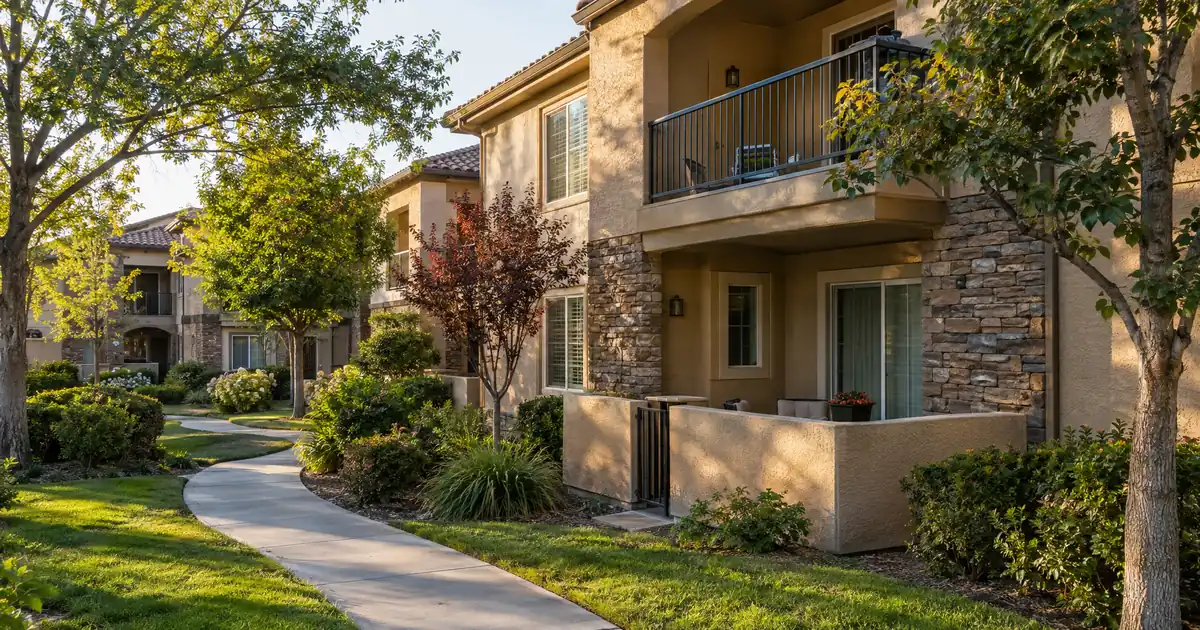
The Quick Read: No, because on Lendmire’s wholesale network a condotel is a property type that is not offered for an investment home equity line, and that is true whether you are a first-time landlord or a veteran with a dozen doors.
- The block is the building, not your experience level. A condotel is not on the eligible list, however strong the rent.
- A standard condo is eligible, including a non-warrantable one. Condotel and non-warrantable are different things.
- An investment line tests you (credit, debt load, title) and the equity in the property, not the property’s rent.
- For a condotel, the realistic equity tool is usually a DSCR cash-out refinance, subject to program terms and a building review.
Here is the full picture, including the exceptions that trip people up.
How large a line the equity supports.
An equity line is sized by combined loan-to-value, occupancy, and credit — not by rental coverage. Switch the occupancy or the credit band and the ceiling moves with it.
Investment-property lines require a 700 minimum credit score; second-home lines start at a 640 minimum and primary-residence lines at 600, and the combined-LTV ceiling steps down as the credit band drops on primary-residence and second-home lines and holds on investment-property lines; the line cap steps down on primary-residence lines and holds at every tier on investment-property and second-home lines.
A debt-to-income ratio above 45% requires 680+ credit. Profiles under 640 are limited to single-family homes. At least 75% of the approved line is drawn at closing. Ceilings, floors, and caps update from Lendmire’s centralized guideline source.
Line estimate
Illustrative estimate only — not a quote, Loan Estimate, approval, or commitment to lend. The rate is an editable assumption; equity-line pricing is variable through both the draw and repayment periods and never converts to fixed. Occupancy and credit drive the ceiling together: an investment property tops out at 70% combined LTV (minimum credit 700, line cap $500,000); a second home tops out at 90% combined LTV (minimum credit 640, line cap $500,000), with the ceiling stepping down as the credit band drops (the cap holds at every tier); a primary residence tops out at 90% combined LTV (minimum credit 600), and its $750,000 maximum line is available only at 75% combined LTV or below with a 700-or-better credit profile (720 on the longer-runway program) and a full appraisal. Lines above $500,000 require a full appraisal. Credit, debt-to-income, property type, and full underwriting review all affect the final line.
Why the Property Type Decides This
The property gets screened before you do. A lender sorts the unit and the building into eligible or not offered, and only then looks at your credit and debt load.
Across Lendmire’s network, an investment HELOC (home equity line of credit, a revolving line secured by a property you own) accepts single-family homes, 2-4 unit properties, townhomes, PUDs (planned unit developments), and condos. Non-warrantable condos are included. Not offered: condotels, manufactured homes, co-ops, log homes, and commercial, mixed-use, or agriculturally zoned property.
Lendmire brokers these lines through select wholesale partners. It does not lend, and every figure here is subject to lender guidelines and full file review. Availability is also narrower than the DSCR side: investment HELOCs are placed in 16 states, while DSCR investor loans run across 41 markets, Washington, D.C. included.
Rent cannot fix a property-type problem. A HELOC underwrites the borrower, not the property’s cash flow. Strong rent from a condotel unit changes nothing, because the unit never gets past the first screen.
What Is a Condotel, Exactly?
A condotel is a condominium that operates like a hotel. Each unit has its own deed, but a central operator runs the property, often with a front desk, housekeeping, and a pool of rental units that owners can join.
The line between a condo and a condotel is about operations, not labels. This table shows where the lines fall.
| Feature | Standard condo | Condotel |
|---|---|---|
| Front desk and check-in | Rare | Common |
| Rental pool with the manager | Not required | Often offered or required |
| Owner’s own use | Unrestricted | May have blackout dates |
| Daily cleaning services | No | Often |
| Rental HELOC on Lendmire’s network | Eligible | Not offered |
For contrast only: conventional agency guidelines draw a similar line. Fannie Mae’s Selling Guide section on ineligible projects lists hotel-type traits such as registration services, daily or short-term rentals, daily cleaning, central key systems, and rental pooling that limits an owner’s own use. Those are agency rules and have no bearing on what a non-QM network allows. They do show how the industry thinks about the category.
Many lenders carry that same wariness into their own programs. Income depends on tourism and occupancy, and the owner often depends on a management contract. Lenders price that risk or decline it.
Key Terms Defined
HELOC: A revolving line of credit secured by property you own, with a draw period followed by a repayment period.
CLTV (combined loan-to-value): All loans against the property added together, divided by its value.
Condotel: A condominium run like a hotel, with central management and often a rental pool.
Non-warrantable condo: A condo building that falls outside standard agency project rules, for example because of heavy investor ownership or pending litigation. It is still eligible for an investment HELOC on this network.
Vesting: The name or entity that holds legal title to the property.
AVM (automated valuation model): A software estimate of value used in place of a full appraisal.
DSCR (debt service coverage ratio): Monthly rent divided by the monthly principal, interest, taxes, insurance, and any HOA dues (PITIA).
How Does a Lender Sort the File?
The review runs in a set order, and a failure at any step ends it. Here is the sequence.
1. Property type. Condotel is a hard stop. Condo, townhome, PUD, 2-4 units, and single-family move on.
2. Condo project review. A normal condo gets a second look at the building. Heavy investor ownership, one owner holding many units, pending litigation, or a large commercial component push a building toward non-warrantable. That label does not disqualify it here.
3. Title. The property must be held by you personally or by a revocable living trust. LLCs, corporations, partnerships, and irrevocable, blind, or land trusts cannot hold title. Plenty of investors hit this wall first (wry but true: the LLC you set up for liability protection is the thing that blocks the line).
4. Borrower underwriting. On an investment property, the minimum credit score is 700. Debt-to-income tops out at 50%, and a ratio above 45% needs a 680 minimum. The lender reviews your file on the interest-only payment calculated at the maximum draw.
5. Exposure. You can hold up to three lines. Anyone with more than 15 financed properties is not eligible.
6. Valuation. An investment line caps at $500,000, so it almost always runs an automated valuation instead of a traditional appraisal. You can request a full appraisal. If you want to weigh that choice, Lendmire’s article Should a First-Time Landlord Order a Second Appraisal for a Rental HELOC? covers it.
The investment ceiling is 70% CLTV, with a maximum line of $500,000. A 700 and a 720 score reach the same 70%, so credit above 700 buys eligibility, not extra leverage. (A primary-residence line can reach 90% CLTV, but only at a 720-or-better credit profile. That figure never applies to a rental.)
Does Being a First-Time Landlord Hurt?
Not directly. Landlord history is not the gating item on an investment HELOC, because the lender is judging your credit, your debt, your housing history, and your equity. A track record of collecting rent does not appear anywhere on that list.
DSCR loans work the same way on this point: a first-timer is generally judged on the property’s rent, not on landlord history.
What actually hurts new owners is timing and equity. Picture an investor who just bought a unit with 20% down. That is an 80% first mortgage. The investment HELOC ceiling is 70% CLTV across both loans. The new owner is already past the ceiling before a single dollar is drawn. The exact numbers vary by lender and program and follow a full review of property, leverage, and credit.
Even with 25% down, the combined leverage sits at 75%. Still over. A new purchase at typical purchase leverage almost never leaves room for a line, because purchase programs lend up to 75%-80% LTV on most files while the investment HELOC stops at 70%.
So a first-timer usually needs one of three things. They need a large down payment, time and appreciation to build equity, or a different property to borrow against. For a deeper look at whether the product suits a new landlord at all, see Lendmire’s piece Is a Rental HELOC Right for a First-Time Landlord With One Rental?.
The structure matters too. Investment lines run a 5-year interest-only draw followed by a 25-year repayment period. At least 75% of the line is drawn at closing, and pricing floats through both periods and never converts to fixed. That is less flexible than the word “line” suggests.
What If the Label Is Wrong?
The label on a listing does not decide the classification; operations do. A condo that appears on Airbnb or Booking.com is not automatically a hotel-style project. The traits that matter are a front desk, a rental pool, and a management company that books stays for owners.
Buildings do get tagged as condotels anyway, sometimes because of a past rental program or a name with “resort” in it. If you suspect that is your situation, get the HOA documents before you apply. Ask whether the project has a rental program, hotel management, or a front desk. Then ask the lender to classify the building up front.
One test is useful in practice: who controls occupancy? If you independently list, rent, and manage your own unit, you look like an ordinary condo investor. If an operator controls the calendar, expect a decline on an equity line.
Two more edge cases are worth knowing.
Short-term rental use on an eligible condo. Short-term rental use may be restricted on HELOC collateral. Short-term rental rules also vary by city, county, HOA, and property type, so investors should confirm local rules before relying on projected rental income.
Your own use of the unit. Condotel owners like to use their units. Federal commentary treats credit for a non-owner-occupied rental as business purpose, but that treatment does not apply if you expect to occupy the property more than 14 days in the coming year. Heavy personal use can change how a lender classifies the loan. Raise it early rather than late.
Where Does the Equity Come From Instead?
For a condotel, the usual answer is a DSCR cash-out refinance. DSCR loans qualify primarily on property-level rental income covering the payment, subject to lender guidelines. They are built for investors, and they accept property types that equity lines do not.
Select lenders in the network review condotels on DSCR files, but expect a tighter file. Lenders typically want an HOA questionnaire and condo documents covering finances, reserves, litigation, and delinquency. Leverage on a condotel refinance generally steps down compared with a standard rental. The exact terms depend on the building, the lender, and the loan.
The headline comparison looks like this.
| Factor | Investment HELOC | DSCR cash-out refinance |
|---|---|---|
| What gets tested | Borrower: credit, debt, equity | Property rent against payment |
| Condotel eligible | No | Select lenders, with building review |
| Title | Individual or revocable trust | LLC allowed* |
| Leverage | 70% CLTV on an investment property | Around 75% LTV on a standard rental cash-out |
| Structure | Floating line, 5-year draw, 25-year repayment | Typically fixed, 30-year spine |
| Size | $25,000 to $500,000 line | Up to $3,000,000 on standard programs |
*LLC title is accepted subject to program terms and lender eligibility.
A few program ranges matter for planning. A cash-out refinance usually expects about 6 months of seasoning, meaning you have owned the property that long. Most programs want a credit score near 660, and 700 and up opens the strongest leverage. Reserves commonly run around 6 months of PITIA, though they vary by lender, leverage, and loan size. Coverage of 1.00 is where many select programs start. A separate select-lender path goes below 1.00, with leverage and terms adjusted. For the mechanics, Lendmire’s complete DSCR loans guide walks through each piece.
One caution. A DSCR number above 1.00 means rent covers the mortgage payment, taxes, insurance, and HOA dues. It does not mean the property cash flows. Repairs, vacancy, management, utilities, and capital expenses sit outside the calculation. On a condotel, with its higher HOA dues and swinging occupancy, that gap deserves extra attention.
Practitioner note: on files where the building is the concern, the strongest ones arrive with the HOA documents, the rental program rules, and the management agreement in hand. Lenders can then classify the building without a long back-and-forth, and any problem surfaces before you spend money on anything else.
What About Borrowing Against Your Own Home?
This is the common workaround. A HELOC on your primary residence is a different product with different limits, and it can fund a down payment or a renovation on a condotel. The line then sits on a home you own, not on the condotel.
The tradeoff is exposure. You are securing investment risk with the roof over your head. A condotel that underperforms in a slow season still leaves you owing on the line. Tax treatment can depend on how the funds are used and how the property is held; investors should keep clear records and speak with a qualified tax professional before relying on any deduction.
Pre-Application Checklist
Gather these before you talk to any lender.
- The condo documents and HOA questionnaire, plus any rental program rules.
- The management agreement, if an operator runs the building.
- Current title: your name, a revocable trust, or an LLC?
- Your mortgage balance and a realistic property value, to estimate combined leverage.
- Credit score and a list of financed properties.
Then ask the lender three questions.
1. How do you classify this building: condo, non-warrantable condo, or condotel?
2. Does this property type work with my title structure?
3. Does short-term rental use limit eligibility on this collateral?
What Are the Risks?
Equity lines on rentals carry real downsides. NerdWallet’s explainer notes that not every lender offers investment-property HELOCs, that requirements are strict, and that lenders see higher default risk. It also describes the usual structure of a long interest-only draw at a variable rate.
Three risks are specific to this topic.
- A second payment on top of the first. A floating line adds a payment that can rise while your rent stays flat.
- Income swings. Hotel-style units depend on occupancy and tourism. A thin DSCR in the off season is a warning sign worth running before you commit.
- Contract dependence. If an operator controls your calendar, your income depends on their performance.
Stress test the numbers. If a weak quarter breaks the plan, the leverage is too high.
Frequently Asked Questions
Can I get a HELOC on a condotel?
Not through Lendmire’s network. Condotels are listed as not offered for investment HELOCs, and the rent does not change that. Lenders set their own guidelines, but many lenders steer away from the category. A DSCR cash-out refinance reviewed by select lenders is the more realistic route.
Does being a first-time landlord matter?
Not much. A HELOC is underwritten on your credit, debt, housing history, and equity. New owners more often run into the leverage ceiling, because a recent purchase rarely leaves room under 70% CLTV on an investment property.
Can I use a HELOC on my home to buy or improve a condotel?
Yes, in many cases, because the collateral is your primary residence rather than the condotel. On this network a primary-residence line can reach 90% CLTV only at a 720-or-better credit profile. You are putting your home behind the investment, so size it carefully.
What if my unit is held in an LLC?
An LLC cannot hold title on an investment HELOC. You would need to move title to yourself or a revocable living trust, or use a DSCR cash-out refinance instead, where LLC title is generally accepted subject to program terms.
How do I know whether my unit counts as a condotel?
Check operations. A front desk, a rental pool, hotel-style management, and owner-use blackout dates point toward a condotel. A building whose owners list and manage their own units looks like a standard condo. Get the HOA documents and ask the lender to classify the building before you apply.
Next Step
If you are considering a home equity line and want to see how the numbers work, Lendmire can help you compare HELOC options based on the property, the equity available, credit profile, combined leverage, and your goals. For a condotel, the team can also walk through DSCR cash-out options. Reach Lendmire at 828-256-2183.
About Lendmire
Lendmire is a mortgage brokerage (NMLS# 2371349) arranging home equity lines of credit — primary-residence, second-home and investment-property lines — through a wholesale lending network in its 16 full-service states. Eligibility is determined by the lender on each file. Scotsman Guide named Lendmire a Top Mortgage Workplace in both 2025 and 2026.
Get Started
Ready to find the right loan for you?
In about 30 seconds you can review financing options available for your home or investment property. No commitment required.
Informational only. Not a Loan Estimate, approval, or commitment to lend. Program availability and eligibility are subject to lender guidelines, credit approval, property review, and underwriting.
References
1. Fannie Mae Selling Guide: Ineligible Projects
2. CFPB Regulation Z, Comment on Scope (Section 1026.3)
3. NerdWallet: Can You Get a HELOC on an Investment Property?
This article is part of Lendmire’s investment property HELOC program — full qualification details, guidelines, and scenarios live on the program page.
Related reading: Cash Out Refinance Investment Property Laws · Should I Pay Off My HELOC or Invest? · Cash Out Refinance Balloon LLC Property
Brandon Miller
Founder & CEO, Mortgage Loan Originator, Lendmire LLC
- Mortgage Loan Originator · NMLS# 1129696 · Verify on NMLS Consumer Access
- North Carolina Real Estate Broker · License# 343312 · Verify on NCREC
- North Carolina Insurance Producer · License# 19053198 · Property, Casualty, Life, Health · Verify on NAIC SBS
- Lendmire LLC · Firm NMLS# 2371349 · Verify firm licensure
Compliance and disclosures. Lendmire (NMLS# 2371349) is a licensed mortgage broker and is not a direct lender, depository institution, financial advisor, or tax professional. Content in this article is general market analysis and educational information — not financial, legal, or tax advice for any specific situation. Lendmire does not guarantee loan approval; every transaction is subject to underwriting by the funding lender. Mortgage pricing and loan program guidelines are subject to change at any time without notice and vary by borrower characteristics, property type, and state regulations. Lendmire complies with Equal Housing Opportunity. Licensure verification: NMLS Consumer Access.