
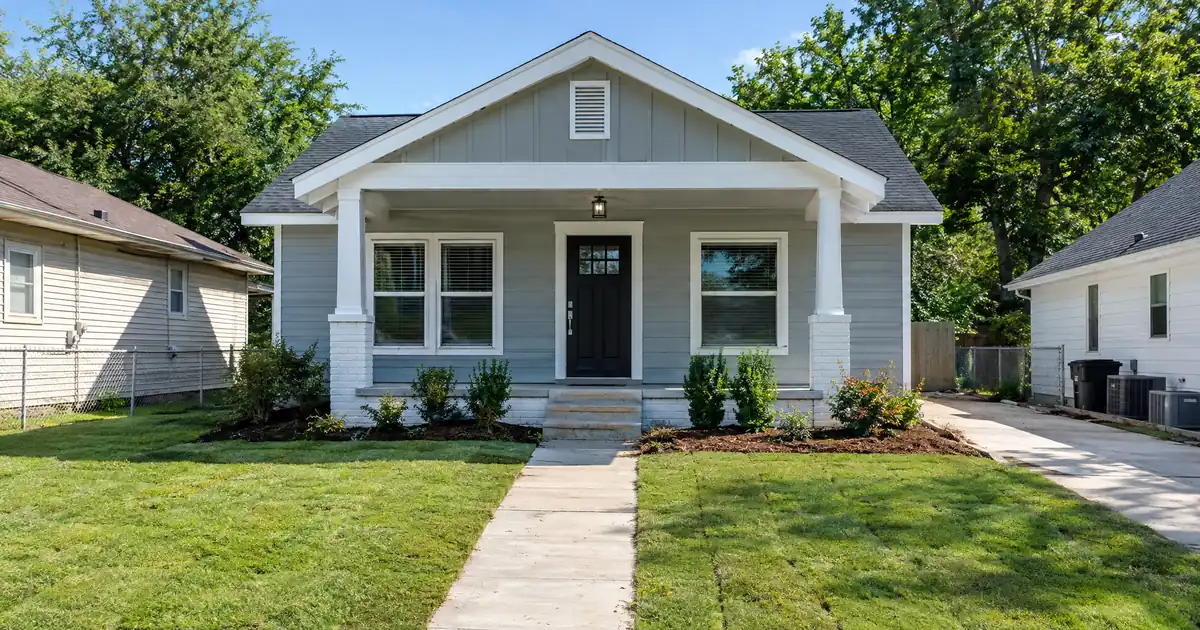
The Quick Read: A new first-lien loan on the rental pays off the old mortgage and the HELOC at closing, so you end up with one note and one payment. The HELOC is not merged in. It is paid off and released.
- The new loan must fit under the leverage cap on the lender’s own appraised value.
- Rent must cover the new, larger payment, and the lower of those two limits governs.
- If any cash comes back to you, the loan is usually treated as cash-out, which brings seasoning and a lower cap.
- The HELOC must be formally closed after payoff, or the lien and the open line can survive.
- A HELOC secured by a different property is not retired by a refinance of the rental unless you route proceeds to it.
Key Terms Defined
HELOC: A home equity line of credit, a revolving loan you draw on and repay as you go, secured by property. Rates on these lines float.
Debt service coverage ratio (DSCR): Monthly rent divided by the monthly PITIA. A DSCR loan is reviewed primarily on property-level rental income covering the payment, subject to lender guidelines.
PITIA: Principal, interest, taxes, insurance, and any association dues, which together make up the full monthly housing obligation.
LTV and CLTV: Loan-to-value is the loan divided by the property value. Combined loan-to-value adds every lien on the property together.
Seasoning: The waiting period a lender wants between buying or owning a property and refinancing it with cash out.
Payoff-only refinance: A new loan that retires existing liens and costs with no cash back to you. Lenders often classify it as rate-and-term.
Lien release: The document the old lender records to show its claim on the property is gone.
How large a line the equity supports.
An equity line is sized by combined loan-to-value, occupancy, and credit — not by rental coverage. Switch the occupancy or the credit band and the ceiling moves with it.
Investment-property lines require a 700 minimum credit score; second-home lines start at a 640 minimum and primary-residence lines at 600, and the combined-LTV ceiling steps down as the credit band drops on primary-residence and second-home lines and holds on investment-property lines; the line cap steps down on primary-residence lines and holds at every tier on investment-property and second-home lines.
A debt-to-income ratio above 45% requires 680+ credit. Profiles under 640 are limited to single-family homes. At least 75% of the approved line is drawn at closing. Ceilings, floors, and caps update from Lendmire’s centralized guideline source.
Line estimate
Illustrative estimate only — not a quote, Loan Estimate, approval, or commitment to lend. The rate is an editable assumption; equity-line pricing is variable through both the draw and repayment periods and never converts to fixed. Occupancy and credit drive the ceiling together: an investment property tops out at 70% combined LTV (minimum credit 700, line cap $500,000); a second home tops out at 90% combined LTV (minimum credit 640, line cap $500,000), with the ceiling stepping down as the credit band drops (the cap holds at every tier); a primary residence tops out at 90% combined LTV (minimum credit 600), and its $750,000 maximum line is available only at 75% combined LTV or below with a 700-or-better credit profile (720 on the longer-runway program) and a full appraisal. Lines above $500,000 require a full appraisal. Credit, debt-to-income, property type, and full underwriting review all affect the final line.
How Does the Absorption Work at Closing?
The new lender wires payoff money through the title company to the old first lender and the HELOC lender. Each issues a release, and one new first lien remains. Nothing rolls over. The old notes end.
In practice the sequence runs like this:
1. Get a formal payoff statement. The online balance is not enough. A payoff statement includes accrued interest, fees, and any early-closure charge, and per-diem interest keeps running until funds arrive.
2. Freeze the line. An open HELOC can be drawn until it is closed, and every draw raises the payoff. Title companies typically want a signed close-out letter.
3. Let the new lender underwrite the property. It orders its own appraisal and its own rent schedule. Your after-repair estimate does not carry over.
4. Title searches every lien. A forgotten second lien shows up here and can stall the file.
5. Classify the loan. No cash back usually means payoff-only. Cash back means cash-out. Each lender draws its own line on small amounts.
6. Close and confirm. The HELOC lender records its release, and you confirm the line is closed so it cannot be redrawn.
After closing, the HELOC’s floating interest-only payment and its later step-up into full amortization are gone. This is the step many BRRRR investors plan for from day one, since a HELOC is typically bridge money, not a permanent loan.
What Does the New Loan Have to Cover?
The new loan must cover two things at once, plus closing costs: the existing first lien and the HELOC payoff. If you also want rehab cash back, that becomes another item on top of those. Then the loan has to clear two tests. The lower of the two limits sets your maximum.
- The value test. The lender takes its appraised value and applies its leverage cap. On a cash-out refinance of a standard rental, the network tops out around 75% LTV. On a short-term rental, a cash-out tops out around 70%.
- The rent test. Rent divided by the new full payment must reach the lender’s coverage floor. For many select programs, 1.00 is where coverage starts. A separate select-lender path takes coverage below 1.00, with leverage and terms adjusted. Each figure is subject to lender guidelines and a complete review of property type, leverage, and credit.
Value caps the loan size first on most flips that were bought well. Rent caps it first when the rehab pushed total debt high relative to what the unit can lease for. The stronger files clear both tests: enough equity and enough rental coverage.
One caution on the rent test. Clearing 1.00 is not the same as positive cash flow. DSCR compares rent to PITIA only, so repairs, vacancy, management, utilities, and capital reserves sit outside it. The lenders in the network commonly want about 6 months of PITIA in reserves, though this varies with leverage, loan size, and transaction type. Credit expectations typically start near 660 for most programs, with a 620 floor in parts of the network and 700+ unlocking the strongest leverage tiers. For the full picture, see the complete DSCR loans guide.
One Payment, Before and After
Investors usually carry a first mortgage plus a floating interest-only HELOC payment. The refinance replaces both with one amortizing payment. Here is what changes:
| Item | Before | After |
|---|---|---|
| Loans | First mortgage plus HELOC | One new first lien |
| Payment type | Amortizing plus floating interest-only | One fixed-term, amortizing |
| Rate behavior | HELOC floats | Fixed (30-year spine) |
| Lien position | First and second | Single first lien |
| Coverage test | None on the HELOC | Rent vs. full new payment |
The new payment can be larger than the first mortgage was by itself, because it now carries the rehab debt. That is where a payoff can break a deal that looked fine on paper. Extended 40-year terms and interest-only periods exist through select lenders in the network, and some investors use them to lift coverage. Prepayment penalties on a DSCR loan are common in the early years, so check the note before you plan a second refinance.
A Worked Example
Run the numbers on this modeled case. Assume the lender’s appraisal sets value at 100 units, and the standard-rental cash-out cap is 75%.
- Existing first lien: 50% of value.
- HELOC payoff: 15% of value.
- Closing costs: 3% of value.
- Total needed: 68% of value.
That fits under the 75% cap with room to spare. The seven points of room could be returned as cash, but that makes the loan a cash-out, which triggers the seasoning rules.
Now the shortfall version. The appraisal comes in light, and the same debts equal 80% of the lower value. The loan is five points over the cap. You can bring cash to the table, wait for a stronger valuation, or carry part of the balance another way. Any rehab dollar the appraiser does not recognize stays in the deal as your own cash. A rehab may support a higher appraised value, depending on comps and underwriter review, but it is never a given.
Where the Plan Breaks
When a refinance fails, it is usually one of four gates. Here is each gate, what you see, and what to do.
| Gate | Symptom | Fix or Plan B |
|---|---|---|
| Appraisal | Value below your estimate | Bring cash, wait, or re-bid |
| Seasoning | Lender sizes on cost, not value | Wait out the clock |
| Coverage | Rent falls short of the new payment | Lower the loan, extend the term, or review sub-1.00 options |
| Paperwork | Open line or surprise lien | Close the line; clear title |
Seasoning deserves its own note. About 6 months is the common expectation on cash-out files across the network, and some lenders size on cost basis inside that window. The clock and its trigger vary by lender, so confirm yours before the rehab ends.
Payoff-Only or Cash-Out?
Investors argue about this label, and the answer turns on whether money comes back to you. If the new loan only pays liens and costs, it is typically payoff-only. If it returns cash to you, it is cash-out. Lender policy sets the exact line on small amounts.
The label matters because cash-out carries the lower leverage cap and the seasoning expectation described above. A HELOC drawn for something unrelated to the property may also be treated as cash-out. Ask the lender how it classifies your payoff before you set your target loan size.
What If the HELOC Is on a Different Property?
Then the refinance on the rental does not automatically retire it. Where the lien sits changes the mechanics:
| Where the HELOC sits | What the rental refi does |
|---|---|
| On the rental being refinanced | Pays it off and releases the lien directly |
| On your primary home | No lien to release on the rental; proceeds repay it, usually as cash-out |
| On another rental | Same as above; the loan is a cash-out of the rental |
Using rental proceeds to repay a line on your home is common. It works only if the rental has the equity and the rent to support a larger loan.
Title, LLC, and Lien-Release Issues
Entity matters on both sides. The investment-property HELOC lines placed through the network cannot be held by an LLC, a corporation, or a land trust, so a property deeded to an LLC needs a vesting change first. A DSCR refinance can often keep the LLC on title, subject to program terms. Many investors use the DSCR refinance as the exit for exactly that reason. The HELOC side of the network is available only in 16 full-service states, narrower than the 41-market DSCR footprint, which includes Washington, D.C.
On the HELOC itself, the Consumer Financial Protection Bureau’s HELOC booklet notes that payments often jump once the repayment period begins, and that some plans require a balloon payment. A rehab line that has reached repayment turns the refinance from a convenience into a rescue. The same booklet notes that lenders may freeze or reduce a line if home value falls or finances worsen. Do not count on a line being open for your next purchase.
Check the agreement for early-closure fees too. Bankrate reports these tend to be charged by banks and are disclosed as part of loan costs.
Lender policy on a few related situations is worth confirming:
- Paying a HELOC to zero does not close it. The line and lien stay until you request closure.
- Delayed financing is designed for all-cash buyers. A purchase funded by a loan on the same property usually does not qualify.
- Manufactured homes, log homes, and barndominiums are not offered in the network’s DSCR programs.
Lendmire’s piece Will Bank Refi HELOC Into 30 Year Fixed Investment Property? covers the bank route in more depth.
Is Absorbing the HELOC the Right Move?
It usually is when the rehab is done, the unit is leased, and the line is floating. A fixed note is safer than a variable line, and one payment is easier to manage. It makes less sense if the HELOC is cheap, the rehab is unfinished, or you would pay closing costs twice with no BRRRR exit behind it.
The tradeoff is liquidity. The refinance ends the line as a source of next-deal money. Some investors treat refinance cash as reserves instead, since a HELOC can be frozen or cut. That is a judgment call, and it depends on how much cash you would actually keep after closing. Tax treatment can depend on how the funds are used and how the property is held; investors should keep clear records and speak with a qualified tax professional before relying on any deduction.
Frequently Asked Questions
Should I refinance right after the rehab ends?
Often not before the seasoning clock and the lease are in place. Many lenders want a stabilized rental, and some size on cost inside the seasoning window, with about 6 months common on cash-out files. A refinance too early can leave you short on value.
Does a payoff-only refinance count as cash-out?
Usually not, if no money comes back to you. Lenders classify the loan by whether cash returns to the borrower, and each sets its own line on small amounts. Ask how yours treats it.
Can the HELOC stay open after the refinance?
Only if the new lender allows the second lien, which most first-lien DSCR lenders do not. Plan on closing the line at payoff. An open line can also be frozen by its own lender, so it is not a reliable backup.
Does rent have to cover both payments?
No. After closing, only one payment remains, and rent is tested against that full new payment. Before closing, the HELOC payment is simply a cost you carry.
What loan size does an investment HELOC reach?
Through the network, investment-property lines cap at $500,000 total, at 70% CLTV on an investment property, with a 700 minimum credit profile. These lines float during the 5-year interest-only draw and the 25-year repayment period, and every line is subject to lender guidelines and full file review.
If you are considering a home equity line or a rental refinance and want to see how the numbers work, Lendmire can help you compare options based on the property, the equity available, credit profile, combined leverage, and your goals. Lendmire is a broker that arranges financing through select lenders in its wholesale network, not a lender, and nothing here is a commitment to lend.
About Lendmire
As a mortgage broker (NMLS# 2371349), Lendmire helps homeowners and real estate investors in its 16 full-service states open home equity lines of credit arranged through wholesale lenders. Lendmire is never the lender; line amounts, ceilings and terms are set by the lender under its guidelines. Scotsman Guide named Lendmire a Top Mortgage Workplace in both 2025 and 2026.
Get Started
Ready to find the right loan for you?
In about 30 seconds you can review financing options available for your home or investment property. No commitment required.
Informational only. Not a Loan Estimate, approval, or commitment to lend. Program availability and eligibility are subject to lender guidelines, credit approval, property review, and underwriting.
References
1. CFPB – What you should know about HELOCs
2. Bankrate – HELOC prepayment penalty
This article is part of Lendmire’s investment property HELOC program — full qualification details, guidelines, and scenarios live on the program page.
Related reading: How a First-Time Equity Pull Absorbs a Rental HELOC · How Much Down Payment Cash Five Rental Cash-Outs Can Release · How to Pay Off Hard Money With a Rental HELOC Before a DSCR Refinance
Brandon Miller
Founder & CEO, Mortgage Loan Originator, Lendmire LLC
- Mortgage Loan Originator · NMLS# 1129696 · Verify on NMLS Consumer Access
- North Carolina Real Estate Broker · License# 343312 · Verify on NCREC
- North Carolina Insurance Producer · License# 19053198 · Property, Casualty, Life, Health · Verify on NAIC SBS
- Lendmire LLC · Firm NMLS# 2371349 · Verify firm licensure
Legal disclosures. Lendmire (NMLS# 2371349) is a state-licensed mortgage brokerage that arranges financing through wholesale lender relationships. Lendmire is not a direct lender, depository institution, or registered financial advisor. The discussion above is general informational content about real estate financing — it is not financial, legal, or tax advice, and readers should consult licensed professionals for guidance on their individual circumstances. Loan inquiries are subject to lender underwriting; this article does not represent a commitment to lend. Loan terms, rates, and qualification standards vary by borrower, property, and state, and are subject to change at any time. Equal Housing Opportunity. NMLS Consumer Access: nmlsconsumeraccess.org.