
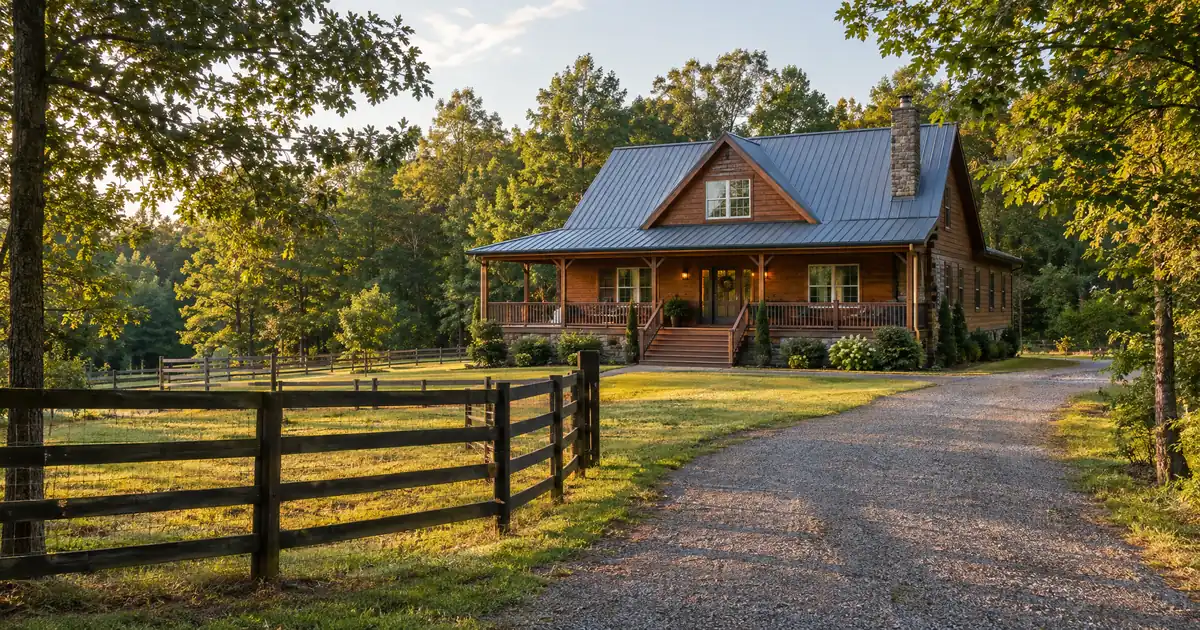
The Quick Read: Often yes, but only when the property reads as a residential rental rather than a working farm, the acreage fits the program’s cap, and the rent evidence holds up on appraisal. A cash-out on standard rental collateral tops out around 75% LTV, and rural status usually trims leverage below that.
- Working farms, ranches and orchards are not eligible.
- Acreage above a program’s cap is often carved out of the appraised value instead of ending the file.
- Manufactured homes, log homes and barndominiums are not offered in the network.
- Thin rent comps can hurt more than the acreage does.
- Select programs handle rural and acreage files; many do not.
Rural acreage files are rarely a flat no. They are a screening problem, and the screen happens before the appraisal, not after.
DSCR Cash-Out Calculator
Run the cash-out numbers in your market
Rate source: Freddie Mac 30-yr average via FRED® — Federal Reserve Bank of St. Louis · effective Oct 8, 2026
Prefilled with starting assumptions — enter your property’s value, balance, taxes, and insurance for a more accurate picture.
Program parameters update from Lendmire’s centralized guideline source. Taxes and insurance are editable estimates.
As of Oct 8, 2026 · General Freddie Mac market benchmark, not a Lendmire loan offer. Property value, balance, taxes, and insurance are editable estimates. Maximum loan-to-value varies by lender, program, property type, and seasoning. Not a Loan Estimate, approval, or commitment to lend. Program availability and eligibility are subject to lender guidelines, credit approval, property review, and underwriting.
Key Terms Defined
DSCR (debt service coverage ratio): monthly rent divided by the full monthly housing obligation.
PITIA: principal, interest, taxes, insurance and association dues, the payment that rent is measured against.
LTV (loan-to-value): the loan balance as a percentage of appraised value.
Seasoning: how long you have owned the property, measured from title recording, before a cash-out is allowed.
Comps: recent sales and rentals near the property that support the appraiser’s value and rent conclusions.
Excess acreage: land above a program’s cap, which the appraiser may exclude from value.
How Does a DSCR Cash-Out Work on Any Rental?
A DSCR cash-out replaces your current loan with a larger one and pays you the difference. It qualifies primarily on property-level rental income covering the payment, subject to lender guidelines, rather than on your traditional personal-income documentation.
Across the wholesale network Lendmire works with, cash-out tops out around 75% LTV on standard rentals, with about six months of seasoning as the common expectation. Pricing and available terms vary by lender, borrower profile, property type, and full underwriting review. Reserves commonly run around six months of PITIA, stepping up to about nine months on loans above $1,500,000.
Coverage is re-tested on the new, larger payment. That matters. A bigger loan raises the denominator, so a rental that cleared easily on the old balance can land thinner after you pull cash. Many select programs start at 1.00 coverage, and a separate select-lender path takes coverage below 1.00, available with leverage and terms adjusted.
For the full mechanics, see Lendmire’s complete DSCR loans guide.
What Makes a Rental “Rural” to a DSCR Lender?
No single official definition exists. Rural is a judgment built from several data points, and the appraisal is where it gets written down.
| Factor | What the appraiser notes | Why it matters |
|---|---|---|
| Surrounding development | How built-up the neighborhood is | Mostly undeveloped areas push the file toward rural |
| Comp distance | How far sales and rentals sit | Wide search radii weaken value and rent conclusions |
| Land use | Residential, agricultural, mixed | Agricultural character can disqualify |
| Outbuildings | Type, size, typical for area | Minor typical buildings are usually fine |
| Town size and access | Nearby population, road surface | Feeds the rural designation |
Lendmire’s guidance on which properties are ineligible for DSCR loans says appraisers generally want the neighborhood at least a quarter developed. Its appraisal requirements page notes that comparable-sale search radii can stretch to ten miles or more in rural areas.
Here’s the catch: a mid-size town can still get flagged rural by a designation tool, even when it feels like a real market on the ground. Intuition and the tool don’t always agree.
How Is Acreage Treated?
Acreage is checked against the program cap, and any excess land is typically excluded from the value rather than killing the deal. Caps vary by program, so the parcel size that works on one program may not on another.
Think of three zones:
- Within the cap. The parcel is appraised as a whole. Rural leverage adjustments may still apply.
- Near the cap. This is where early screening pays. Flag it before you go under contract.
- Over the cap. The appraiser carves the excess out. Value drops, and so does the loan.
Cash-out files list acreage and rural properties as limited-eligibility types, eligible on select programs. In practice, the stronger the compensating factors, such as lower leverage, the better the odds on a borderline parcel.
What Does a Carve-Out Do to Your Proceeds?
It lowers the value the loan is sized against. Run the logic with percentages, not dollars.
Picture an investor with a rural house on acreage over the cap. The appraiser values the house plus the allowed land, not the full parcel. The 75% ceiling (or lower, if rural leverage is reduced) now applies to that smaller figure. Your payoff stays the same. So cash out shrinks twice: once from the smaller value, once from any rural leverage reduction.
Then coverage gets re-tested on the new loan. Because the loan is smaller than it would have been on the full parcel, the ratio may hold up better, but the cash available for the next purchase is thinner. That tradeoff is the real cost of a carve-out.
Some investors find the math only works if they skip the cash-out and consider a rate-and-term refinance, which carries a higher LTV ceiling of 85% but returns no cash at closing. Whether that fits depends on what the cash was for.
Thin Rent Comps: The Quieter Problem
A rural rental with few comparable rentals nearby can produce a weak rent schedule, and a weak rent schedule lowers the coverage number. For one-unit properties, the appraiser’s rent schedule is Form 1007. If it comes in low, the DSCR drops no matter how well the property performs.
Documentation helps. Keep a signed lease and rent payment history ready. If the property runs as a short-term rental, expect additional requirements: a 640+ score, about 12 months of hosting history, and cash-out leverage around 70% on short-term-rental collateral, versus 75% on standard long-term rentals. Each figure is subject to lender guidelines and a complete review of property type, leverage, and credit.
Practitioner observation: on rural files, the rent conclusion often decides the outcome more than acreage does. A modest parcel with thin rent evidence can fail where a larger parcel with a documented lease history passes.
Which Land Features Disqualify, and Which Just Reduce Value?
| Situation | Eligible? | Alternative |
|---|---|---|
| Working farm, ranch or orchard | Not offered | Agricultural lending |
| Commercially used barn | Not eligible | Agricultural or commercial financing |
| House with typical storage outbuildings | Often yes | Appraiser documents they fit the area |
| Over-cap acreage | Often yes, land excluded | Smaller loan sized to remaining value |
| Manufactured, log or barndominium | Not offered | A different program outside the network |
| Raw land with no dwelling | Not a rental candidate | Land or construction financing |
The line is use. A house with extra land and a hobby barn is a residential rental. A parcel with income-producing agricultural character is not. Government rural housing guidance draws a similar line: USDA’s rural housing handbook sets no acreage limit but bars income-producing agricultural buildings. Mortgage-insurer appraisal training likewise says agricultural uses such as farms and orchards are generally not allowed. Those are owner-occupant and agency-style frameworks, so treat them as contrast only. DSCR programs set their own acreage caps.
Rural-Specific Items That Slow Files Down
Well and septic condition, access easements, title and survey questions, and insurance on outbuildings all surface more often on acreage. None of them changes the DSCR formula, but each can change whether the appraisal and closing package come back clean. Line them up early. Budget for taxes and insurance, which vary by county.
DSCR vs. conventional financing
There are two common ways to finance an investment property, and they qualify you differently — here’s how investors weigh them.
Why investors choose it
- Qualifies on the property’s rental income — no personal tax returns, W-2s, or pay stubs needed to document income.
- No personal debt-to-income ceiling to clear, so existing mortgages and obligations don’t cap your borrowing the same way.
- Can be closed in an LLC, keeping the property inside a business entity.
- Built for scaling — not held to the limit on number of financed properties that conventional financing applies.
- Underwriting centers on the deal: generally qualifies when the rent covers the payment, a 1.00x coverage ratio being a common baseline (confirmed in underwriting).
- Designed specifically for investment property, including long-term and, where the program allows, short-term rentals.
Where it’s strong
- Often the lowest ongoing financing cost for a buyer who fully qualifies on personal income — a fit for a first property or a cost-first purchase.
Trade-offs for investors
- Requires full personal income documentation and must fit within a debt-to-income limit — salary, existing debts, and other mortgages all count.
- Typically held in your personal name rather than a business entity.
- Caps how many financed properties you can carry, which can become a ceiling as a portfolio grows.
- Evaluates you as a borrower as much as the property, which usually means more paperwork.
How investors usually choose: a first or single property often optimizes for the lowest financing cost; portfolio builders often optimize for leverage, vesting in an LLC, and scaling past conventional caps. The right answer depends on your goals, the property, and current guidelines — both paths run through select lenders in Lendmire’s wholesale network, with eligibility and terms confirmed in underwriting.
Cash-Out or Something Else?
| Option | Best when | Tradeoff |
|---|---|---|
| DSCR cash-out | You want cash for the next deal | Rural flag may lower leverage |
| Rate-and-term refinance | You want better terms, no cash | No cash back at closing |
| Investment HELOC | You need a smaller line | Capped at $500,000 total |
| Selling excess land | The acreage drags value and loan size | Permanent; changes the asset |
For a comparison with other equity tools, see Lendmire’s piece Should an Investor Cash Out a Rental, Open a HELOC or Bundle?.
Pre-Application Checklist
1. Confirm the property is residential in use, with no income-producing agricultural character.
2. Confirm it is not a manufactured home, log home or barndominium.
3. Check the acreage against the target program’s cap before going under contract.
4. Count recent rental comps nearby. Few comps within a reasonable radius signals trouble.
5. Gather the lease and payment history.
6. Confirm ownership is at least about six months from title recording.
7. Ask whether the program applies a lower rural LTV on cash-out, and size your plan to that.
8. Stress-test coverage on the new, larger payment.
Common Mistakes
Assuming 1.00 means cash flow. Coverage compares rent to PITIA only. Repairs, vacancy, management, well and septic upkeep, and land maintenance sit outside it. Clearing the number is not the same as profit.
Applying to the wrong lender. A rural overlay discovered after the appraisal means you paid for it. That’s the costliest way to learn.
Ignoring the carve-out. Investors plan around full-parcel value, then watch proceeds shrink.
Over-pulling cash. A flip from comfortable coverage to borderline after a large cash-out is common. Leave room.
If an LLC will hold the property, entity-owned rural files are reviewed subject to lender program eligibility, and a personal guarantee is typical. Tax treatment can depend on how the funds are used and how the property is held; investors should keep clear records and speak with a qualified tax professional before relying on any deduction.
Frequently Asked Questions
Can I cash out a rural rental?
Often, on select programs, when the property is residential, the acreage fits the cap and rent evidence supports coverage. Expect leverage at or below the 75% cash-out ceiling on standard rentals, and sometimes lower for rural. Eligibility depends on the lender, credit profile, reserves and property review.
What if my parcel is over the acreage cap?
The excess land is typically carved out of the appraisal rather than ending the file. The loan is then sized to the remaining value, so proceeds shrink. Compensating factors such as lower leverage can sometimes help on borderline parcels.
Does a barn hurt eligibility?
Not necessarily. Minor outbuildings that are typical for the area and of modest value are generally acceptable when the appraiser documents it. A commercially used barn or any agricultural income use is a different matter and can make the property ineligible.
Can I do this on a short-term rental?
Yes on select programs, with tighter terms: cash-out around 70% LTV, a 640+ score and about 12 months of hosting history. A rural designation on a short-term rental can reduce leverage further. Leverage, reserves, and pricing vary by lender and program; the final terms follow the full file review.
How long must I own it first?
About six months of ownership, measured from title recording, is the common expectation for a cash-out, though it varies by lender.
If you are buying or refinancing a rental property and want to see how the numbers work, Lendmire, a broker arranging DSCR loans through select lenders across 41 markets including Washington, D.C., can help you compare options based on property income, credit profile, leverage and investor goals. Programs change and every file is underwritten individually; this is not a commitment to lend.
For the mechanics of pulling equity out of a rental property, see Lendmire’s guide to cash-out refinance on an investment property.
Get Started
Ready to find the right loan for you?
In about 30 seconds you can review financing options available for your investment property. No commitment required.
Informational only. Not a Loan Estimate, approval, or commitment to lend. Program availability and eligibility are subject to lender guidelines, credit approval, property review, and underwriting.
About Lendmire
Lendmire — NMLS# 2371349 — is a mortgage brokerage specializing in DSCR investor loans, helping arrange financing across 41 markets, including Washington, D.C., through wholesale and investor-lending channels. The model centers on property-level rental income reviewed by the lender rather than W-2 documentation, subject to lender guidelines, suiting entity-owned and multi-property investors. Lendmire holds Scotsman Guide Top Mortgage Workplace recognition for 2025 and 2026.
This article is part of Lendmire’s investment property cash-out refinance program — full qualification details, guidelines, and scenarios live on the program page.
Related reading: Cash-Out Refinance Title Requirements on an Inherited Tenanted Rental · Probate and Title Requirements for an LLC-Held Inherited Rental Refinance · How to Stress-Test DSCR on a Short-Term Rental Cash-Out Refinance
Brandon Miller
Founder & CEO, Mortgage Loan Originator, Lendmire LLC
- Mortgage Loan Originator · NMLS# 1129696 · Verify on NMLS Consumer Access
- North Carolina Real Estate Broker · License# 343312 · Verify on NCREC
- North Carolina Insurance Producer · License# 19053198 · Property, Casualty, Life, Health · Verify on NAIC SBS
- Lendmire LLC · Firm NMLS# 2371349 · Verify firm licensure
Compliance and disclosures. Lendmire (NMLS# 2371349) is a licensed mortgage broker and is not a direct lender, depository institution, financial advisor, or tax professional. Content in this article is general market analysis and educational information — not financial, legal, or tax advice for any specific situation. Lendmire does not guarantee loan approval; every transaction is subject to underwriting by the funding lender. Mortgage pricing and loan program guidelines are subject to change at any time without notice and vary by borrower characteristics, property type, and state regulations. Lendmire complies with Equal Housing Opportunity. Licensure verification: NMLS Consumer Access.