
The Quick Read: Owner-use blocks, the nights you hold back for yourself, can sit inside a short-term rental cash-out when they are modest, documented and honestly disclosed, but heavy personal use can push the file out of investor financing altogether. Here is what matters most:
- A DSCR loan is an investor product, so lenders want the property run as a rental, not as your vacation home with occasional bookings.
- Underwriters read your calendar and booking history, and blocked nights shrink the income they can count.
- Tolerance for owner stays varies by lender, so a few well-documented stays can work with one program and fail with another.
- Resort units add a second layer: the rental program or association rules may cap your own nights.
- On a short-term-rental cash-out, leverage tops out around 70% LTV, with a 640+ score and about 12 months of hosting history typically expected.
Key Terms Defined
DSCR (debt service coverage ratio): monthly rent divided by the full monthly housing payment: principal, interest, taxes, insurance and any association dues.
LTV (loan-to-value): the loan balance as a percentage of the property’s appraised value.
Owner block: a set of dates you close on the booking calendar so guests cannot reserve them.
Owner stay: nights you, family or friends use the property for personal purposes.
Occupancy certification: the signed statement at closing that says how the property will be used.
Rental pool: an arrangement where an operator rents your unit with others and splits the revenue.
Blackout date: a date when owners cannot use the unit because the program holds it for guests.
Non-warrantable: a condo project that falls outside standard agency lending rules, which is why many resort units need non-QM financing.
Cash-out refinance: a new loan that pays off the old one and hands you the extra equity.
DSCR Cash-Out Calculator
Run the cash-out numbers in your market
Rate source: Freddie Mac 30-yr average via FRED® — Federal Reserve Bank of St. Louis · effective Oct 8, 2026
Prefilled with starting assumptions — enter your property’s value, balance, taxes, and insurance for a more accurate picture.
Program parameters update from Lendmire’s centralized guideline source. Taxes and insurance are editable estimates.
As of Oct 8, 2026 · General Freddie Mac market benchmark, not a Lendmire loan offer. Property value, balance, taxes, and insurance are editable estimates. Maximum loan-to-value varies by lender, program, property type, and seasoning. Not a Loan Estimate, approval, or commitment to lend. Program availability and eligibility are subject to lender guidelines, credit approval, property review, and underwriting.
What an Owner Block Is and Why Lenders Care
An owner block is a calendar entry, and the lender cares because it signals how you use the property. A rental that is open to guests most of the year looks like a business. A rental that is blocked for long stretches looks like a second home with a side income.
That difference matters because the loans are built differently. DSCR loans are designed for non-owner-occupied investment properties. Because they are business-purpose investor loans, they are reviewed differently from a standard owner-occupied mortgage. The loan is reviewed primarily on property-level rental income covering the payment, subject to lender guidelines. Your personal stays work against that picture.
Not every block is an owner stay. Maintenance, a roof repair, a seasonal closure and a stay held for a friend are different things. Underwriters can only separate them if you do.
How Underwriting Treats Owner Blocks, Step by Step
Underwriting turns your calendar into a number, then checks whether that number covers the new payment. The process runs in a predictable order, and owner blocks touch most of the steps.
Step 1: Classify the use. The lender asks whether this is an investment property or a second home that rents occasionally. You sign an occupancy certification at closing. Misstating personal use on that document is a serious problem, so describe it accurately.
Step 2: Confirm the property type is eligible. Cabins are a normal STR property type, with one hard exception covered below: log-built homes are not offered.
Step 3: Confirm short-term renting is legal. Association covenants carry legal force separate from what a city allows. AirROI’s HOA glossary lists the common limits: outright bans, minimum lease terms, annual rental caps, board approval and owner-occupancy waiting periods. Short-term rental rules can vary by city, county, HOA and property type, so confirm local rules before relying on projected rental income.
Step 4: Establish the income. On a short-term-rental cash-out, income is usually evidenced by booking history, typically about 12 months of hosting experience. Booking history already reflects your blocks, because blocked nights earned nothing. Projection-based methods may not, so the underwriter will ask whether the figure is net of owner nights.
Step 5: Test coverage. The lender divides the income by the full payment on the new loan. On an STR refinance, 1.00 is where many select programs start. A separate select-lender path takes coverage below 1.00, with leverage and terms adjusted.
Step 6: Size the loan. Leverage, credit and reserves set the ceiling, and coverage sets the payment the rent has to support.
Here is how the common block types usually read in a file:
| Block type | Likely treatment | What to document |
|---|---|---|
| Your own stay | Counts as personal use | Dates and total nights |
| Repair or maintenance | Usually neutral | Invoices, contractor dates |
| Seasonal closure | Reduces rentable nights | Road, snow or utility reasons |
| Held for family or friends | Treated as personal use | Dates; be honest |
| Operator blackout | Program rule, not your choice | Rental agreement terms |
Treat that table as the typical pattern. A lender’s own guidelines decide each row.
Two Different Tests: Tax and Lender
The tax test and the lender test are separate, and passing one does not satisfy the other. The IRS looks at personal-use days against rental days to decide whether a dwelling counts as a home. IRS Publication 527 lays out that test, and the University of Illinois Tax School gives a practitioner view of the same threshold. A lender’s occupancy rule is a different matter, set by each program and enforced through your certification.
Tax treatment can depend on how the funds are used and how the property is held; investors should keep clear records and speak with a qualified tax professional before relying on any deduction.
The practical lesson is simple. Staying within a tax-safe number does not mean a lender will accept the same number. Ask the lender directly.
The Cabin Case
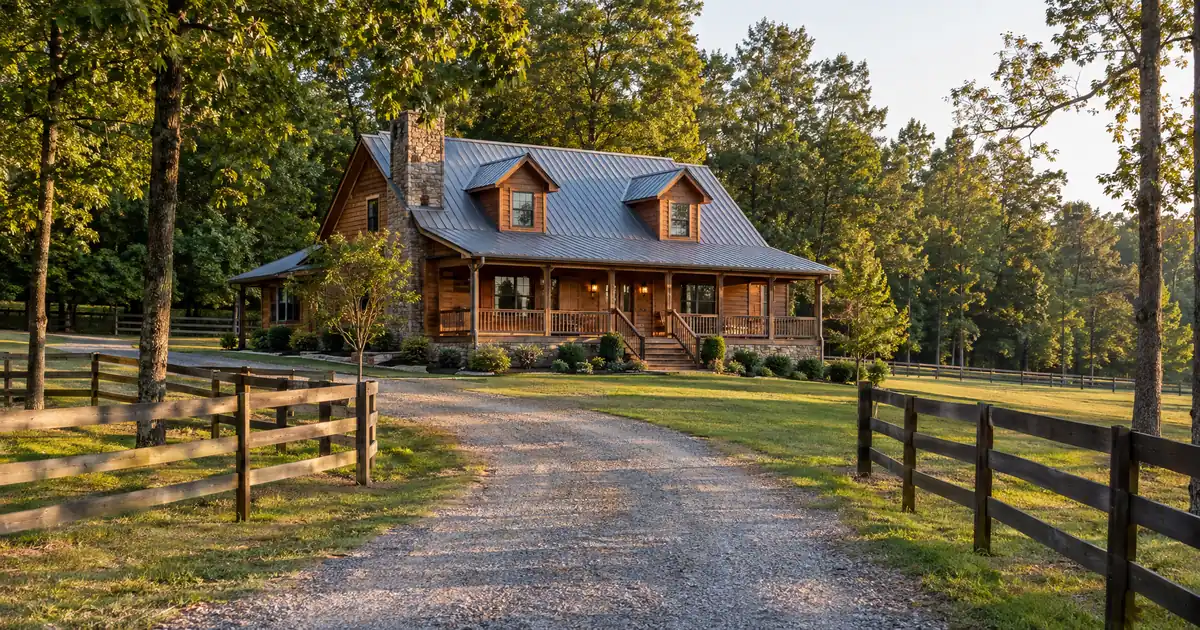
A standalone cabin has no operator, so the rules come from three places: the lender’s occupancy standards, the community covenants and the local permit. You control the calendar, which is both the advantage and the risk.
Cabins carry their own quirks. Many have a short season, so a long off-season block may reflect real closure rather than personal use. Owner-stay tools in management software make it easy to block dates casually, and those entries show up in exports. Some cabins sit on leased ground or have access limits that affect rentals.
One property type needs a plain flag. Log homes are not offered in the network’s DSCR programs, and neither are manufactured homes or barndominiums. If your cabin is log-built, owner-use blocks are the least of the problem, because the property type itself falls outside these programs. A conventionally framed cabin with log-style siding is a different question, so check the construction with your broker before you spend money on an appraisal.
The Resort Unit Case
Resort units add a second set of rules on top of your own. The key question is who controls the calendar. When you decide independently which nights are open, the unit behaves like any other condo. When an operator decides who stays and when, the lender may see the unit as part of a hotel operation.
Rental pools, mandatory participation and blackout dates all push in that direction. Agency lending draws a hard line here: Fannie Mae’s Selling Guide treats projects with pooling arrangements and owner-occupancy restrictions as ineligible. That is contrast only, since DSCR files follow the individual program’s rules. It does explain why so many resort units end up in the non-QM lane.
| Factor | Standalone cabin | Resort or condo-hotel unit |
|---|---|---|
| Who sets owner-use limits | Lender, covenants, permit | Add rental program and declaration |
| Calendar control | Usually yours | May belong to the operator |
| Pool participation | None | Voluntary or mandatory |
| Key document | Permit, covenants | Rental agreement, HOA questionnaire |
| Typical risk | Seasonality, local rules | Eligibility of the whole project |
A unit that sits near a resort but has no pool and normal occupancy rights is usually treated like an ordinary condo. A mandatory pool that strips your usage rights is the structure that most often causes trouble. A voluntary program where you keep control is the easier file.
Association rules also change over time. The Florida Realtors association notes that a Florida condo association can adopt amendments limiting rentals, and those apply to owners who consent or who buy after the effective date. Read the current declaration, not the one from your purchase.
Read the rental agreement before the appraisal is ordered. It decides eligibility, and your credit cannot override it.
Where the Loan Numbers Land
Across the wholesale network, short-term-rental collateral gets its own leverage tier. A short-term-rental purchase tops out at 75% LTV, while a short-term-rental cash-out or refinance runs around 70%. A standard long-term rental cash-out tops out around 75%, so the STR tier is lower by design. Expect a 640+ credit score and about 12 months of hosting history, and the coverage floor on a refinance is 1.00 on select programs. Terms depend on the lender’s guidelines, the property type, the leverage, and a full review of the credit profile.
Standard programs reach $3,000,000, and smaller balances route through select lenders in the network. Most files also want about 6 months of seasoning before a cash-out. Reserves vary by lender, leverage and loan size, and commonly sit around 6 months of PITIA, the full payment including taxes, insurance and dues. All of this is subject to lender guidelines, and none of it is a commitment to lend. The complete DSCR loans guide covers the full program picture.
One point is easy to miss. Clearing 1.00 on coverage is not the same as positive cash flow. DSCR compares rent to the housing payment only, so repairs, vacancy, management, utilities and capital costs sit outside it.
Owner blocks affect these numbers in two ways. They cut documented income, which lowers coverage. They can also shift the property’s classification, which changes the loan product. A property held in an LLC can work, subject to lender program eligibility, and lenders typically still ask for a personal guarantee. Lendmire’s piece Can a Trust-Held Short-Term Rental Qualify for a DSCR Cash-Out Refinance? covers the entity side in more depth.
Three Scenarios: Go, Conditional, No-Go
These are modeled examples for illustration, with no real file behind them.
Go. A frame cabin has 12 months of platform history and a handful of owner-blocked nights, all noted. The remaining calendar is open and booked. The investor holds a 700+ score. Coverage clears 1.00 on documented income, and the requested cash-out stays at or under 70% LTV on short-term-rental collateral. This is a clean file, still subject to the lender’s review. The exact numbers vary by lender and program and follow a full review of property, leverage, and credit.
Conditional. A resort unit in a voluntary rental program lets the owner reserve a set number of nights. The calendar is partly operator-controlled. Income is documented through the operator’s statements, and coverage lands near 1.0x. This file may work with a lender that accepts voluntary pools. It needs the rental agreement and the HOA questionnaire reviewed first. If coverage dips below 1.00, a select-lender path exists with leverage and terms adjusted.
No-Go. A log-built cabin is blocked for much of the year, and the owner calls it a weekend retreat that rents when convenient. It fails twice. The property type is not offered, and the use pattern reads as a second home. A different product, such as second-home financing or a home equity line, fits better. Investment-property lines cap at $500,000 total.
Before You Apply: A Checklist
1. Export 12 months of calendars from every platform and from your management company. 2. Tag each blocked night: owner stay, maintenance, seasonal closure or held for others. 3. Reconcile the calendar to management statements and payout reports. 4. Add up your own nights, including stays by relatives and friends. 5. Pull the permit, covenants, declaration and any rental agreement. 6. Confirm the property type and construction are eligible. 7. Ask your broker how the target lender treats owner use before you sign anything. 8. Decide whether to reduce personal use before applying, since a cleaner history strengthens the file.
Mistakes to Avoid
- Labeling the property a short-term rental and assuming personal stays follow automatically.
- Using the tax threshold as if it were the lender’s limit.
- Deleting blocks from the calendar to improve the numbers, which creates a mismatch with platform records.
- Assuming a strong market projection overrides covenants or permits.
- Treating every resort unit as a condo-hotel, or the reverse, without reading the documents.
- Planning to move in during a slow stretch after the loan closes.
- Skipping the rental agreement until after the appraisal.
What If Your Owner Use Is Too High?
If your honest use exceeds what investor programs tolerate, the answer is to change the structure, not the paperwork. You have four paths.
First, reduce blocks and build a season of cleaner history. Lenders can then look at a rental that behaves like one. Lendmire’s piece How to Time Cash-Out After Seasoning a Luxury Short-Term Rental shows how that waiting period fits the plan.
Second, move to second-home financing, which fits real personal use. It usually restricts property management companies and multi-unit properties, and leverage and pricing follow a different set of rules.
Third, use a home equity line for the cash. It does not depend on rental income, though investment-property lines cap at $500,000 total.
Fourth, keep the property as a pure investment and use a different place for your own vacations. Many investors end up here.
Frequently Asked Questions
Can I stay in my cabin and still get a DSCR cash-out?
Often yes, if the stays are limited, documented and disclosed. Programs differ on how much personal use they accept, and you sign an occupancy certification either way. Ask your broker how a specific lender treats owner stays before you apply, since the answer can change which lender fits.
Does the IRS 14-day rule set the lender’s owner-use limit?
No. The IRS test decides how the property is treated for tax purposes, while lender limits come from each program. The two numbers can coincide, but one does not derive from the other. A qualified tax professional can speak to the tax side.
Do owner blocks lower my documented income?
They can. Blocked nights earn nothing, and booking history reflects that. If a lender uses a projection method, it may ask whether the figure is net of owner nights. Clean tagging of block types helps the underwriter see why nights were closed.
Can a resort unit in a rental pool qualify?
Sometimes. A voluntary program where you keep control is the easier structure. A mandatory pool that removes your usage rights is the version most likely to be ineligible. Eligibility turns on the rental agreement and HOA questionnaire, and every file is underwritten individually.
What if my cabin is log-built?
Log homes are not offered in the network’s DSCR programs, so owner use becomes a secondary issue. A cabin with conventional framing is a different question. Confirm the construction with your broker before ordering an appraisal.
Running the Numbers
If you are buying or refinancing a rental property and want to see how the numbers work, Lendmire can help you compare DSCR loan options based on the property income, credit profile, leverage and investor goals. Lendmire is a mortgage broker arranging financing through select lenders in its wholesale network, covering 41 markets, including Washington, D.C. Investors can request a quote on the site or call 828-256-2183. A cabin or resort unit with a clean calendar and a clear rental agreement gives the underwriter the least to question.
For the mechanics of pulling equity out of a rental property, see Lendmire’s guide to cash-out refinance on an investment property.
About Lendmire
Lendmire (NMLS# 2371349) is a mortgage brokerage built around DSCR investor lending, with programs available in 41 markets, including Washington, D.C. DSCR lenders commonly evaluate rental-income coverage instead of personal income paperwork — a practical fit for LLC-owned and multi-property investors. Terms vary by lender, property, leverage, and program. Scotsman Guide named Lendmire a Top Mortgage Workplace in both 2025 and 2026.
Get Started
Ready to find the right loan for you?
In about 30 seconds you can review financing options available for your investment property. No commitment required.
Informational only. Not a Loan Estimate, approval, or commitment to lend. Program availability and eligibility are subject to lender guidelines, credit approval, property review, and underwriting.
References
1. AirROI HOA restrictions glossary
3. University of Illinois Tax School
4. Fannie Mae Selling Guide B4-2.1-03
5. Florida Realtors condominium rules library
This article is part of Lendmire’s investment property cash-out refinance program — full qualification details, guidelines, and scenarios live on the program page.
Related reading: Rental HELOC Calculator for a Portfolio Down Payment Strategy · Digital Rental HELOC vs Bank HELOC on a 2 to 4 Unit · Rental HELOC Fees When You Are Protecting a Low First Lien
Brandon Miller
Founder & CEO, Mortgage Loan Originator, Lendmire LLC
- Mortgage Loan Originator · NMLS# 1129696 · Verify on NMLS Consumer Access
- North Carolina Real Estate Broker · License# 343312 · Verify on NCREC
- North Carolina Insurance Producer · License# 19053198 · Property, Casualty, Life, Health · Verify on NAIC SBS
- Lendmire LLC · Firm NMLS# 2371349 · Verify firm licensure
Disclosures. The information presented in this article is general market commentary, not financial, legal, or tax advice. Lendmire is a mortgage brokerage (NMLS# 2371349) — not a direct lender or depository institution — and loan placement is subject to lender underwriting. Nothing in this content represents a commitment to lend. Loan terms, pricing, and program availability vary based on borrower qualifications, property characteristics, and state of subject property, and are subject to change at any time. Lendmire complies with Equal Housing Opportunity requirements. Consumer access: nmlsconsumeraccess.org.