
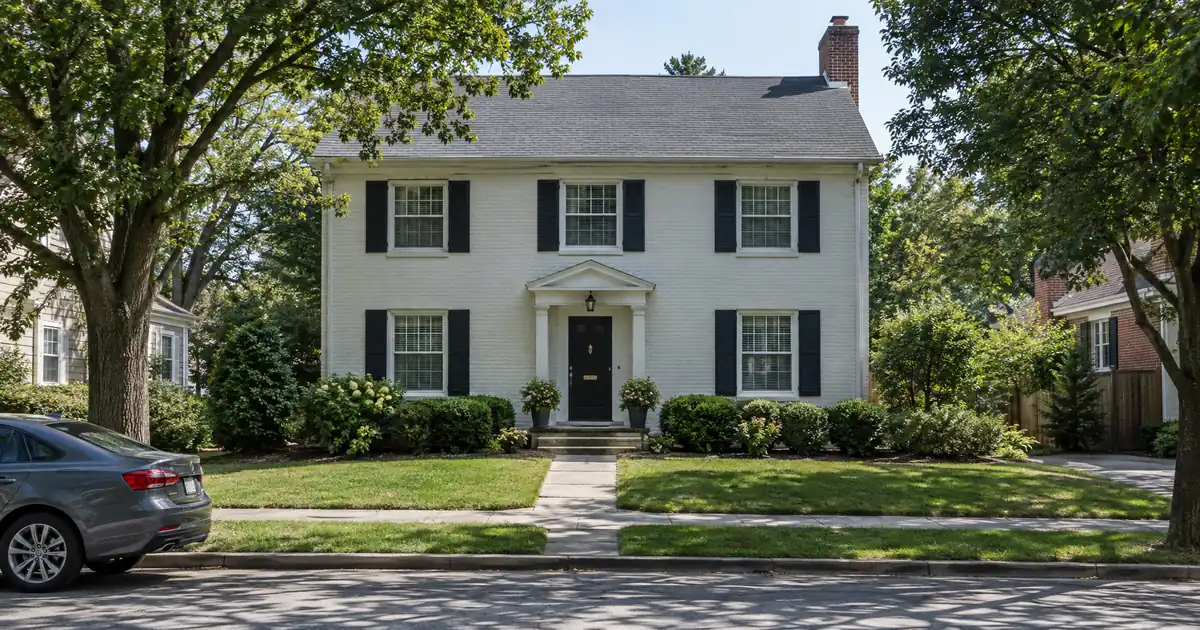
The Quick Read: Yes, but only once the borrower holds clear title or signs as the trustee or executor with full authority, because a home equity line is a lien and the lender must know who can sign it. Being named in a will does not make someone the owner. Credit, equity after existing liens, and income review then follow, subject to lender guidelines.
- Title comes first: you need a deed, a probate close-out, or a trust that names you as trustee.
- Being a first-time borrower is not a special class. Title, occupancy, equity, and credit decide the file.
- An existing mortgage stays attached to the house, so it eats into your usable equity.
- On an investment property, this network’s HELOC ceiling is 70% combined loan-to-value, with a 700 credit minimum.
- If the home becomes a rental, a DSCR cash-out refinance is often the better fit.
Gate One: Who Legally Owns the House?
Ownership is the gate, and a will does not pass it. Heirs who skip probate may possess a property without holding the clear title needed to prove they own it, and Iowa State’s Center for Agricultural Law and Taxation notes that such heirs may be unable to sell the home or use it as collateral for financing.
How large a line the equity supports.
An equity line is sized by combined loan-to-value, occupancy, and credit — not by rental coverage. Switch the occupancy or the credit band and the ceiling moves with it.
Investment-property lines require a 700 minimum credit score; second-home lines start at a 640 minimum and primary-residence lines at 600, and the combined-LTV ceiling steps down as the credit band drops on primary-residence and second-home lines and holds on investment-property lines; the line cap steps down on primary-residence lines and holds at every tier on investment-property and second-home lines.
A debt-to-income ratio above 45% requires 680+ credit. Profiles under 640 are limited to single-family homes. At least 75% of the approved line is drawn at closing. Ceilings, floors, and caps update from Lendmire’s centralized guideline source.
Line estimate
Illustrative estimate only — not a quote, Loan Estimate, approval, or commitment to lend. The rate is an editable assumption; equity-line pricing is variable through both the draw and repayment periods and never converts to fixed. Occupancy and credit drive the ceiling together: an investment property tops out at 70% combined LTV (minimum credit 700, line cap $500,000); a second home tops out at 90% combined LTV (minimum credit 640, line cap $500,000), with the ceiling stepping down as the credit band drops (the cap holds at every tier); a primary residence tops out at 90% combined LTV (minimum credit 600), and its $750,000 maximum line is available only at 75% combined LTV or below with a 700-or-better credit profile (720 on the longer-runway program) and a full appraisal. Lines above $500,000 require a full appraisal. Credit, debt-to-income, property type, and full underwriting review all affect the final line.
The route to title decides what happens next. Here is how the common paths sort out.
| Title status | Standard HELOC available? | Next step |
|---|---|---|
| Probate open, letters issued | Generally not in an heir’s name | Wait for the deed, or ask about an estate-level loan |
| Named executor, no letters | No one can sign yet | Get letters from the court |
| Probate closed, deed recorded | Yes, subject to review | Order valuation, gather income documents |
| Living trust, you are trustee | Possible, subject to program terms | Confirm trust language and vesting |
| Transfer-on-death or survivorship | Probate may not apply | Record the transfer, then apply |
Iowa State’s probate overview describes probate as a court-supervised process for transferring assets after death. It also lists assets that pass outside it, including payable-on-death or transfer-on-death designations and joint tenancy with right of survivorship. Iowa Legal Aid gives one state’s example: when the decedent was the sole owner of real property, the estate generally has to be probated for heirs to have clear title. Joint tenancy with a spouse is the exception it notes. Other states differ, so this is an illustration, not a national rule.
One vesting point matters on this network’s HELOC programs. Title must sit with the individual borrower or an inter vivos revocable living trust. An LLC, corporation, or irrevocable trust cannot hold title on the line. A trust that holds the home through a successor trustee is a different animal, and the file turns on the trust document.
Can You Borrow Before Probate Ends?
Usually not on a standard line. Until an heir holds title, the person with signing power is the personal representative or successor trustee, not the beneficiary. A standard heir-name HELOC generally has nothing to attach to yet.
Some lenders offer a specialty estate or trust loan that the fiduciary signs. It is a different product from a HELOC, and the beneficiary cannot apply for it directly. Most heirs are better served by finishing the title work. Rushing a loan against a house you do not yet legally own tends to produce a denial, or a loan on terms that cost more than the wait.
What Lenders Review Once You Hold Title
Once the deed is recorded, the file looks like any other equity line. Across the select wholesale partners Lendmire works with, the checks are credit, combined leverage, valuation, and debt-to-income. Every figure below is subject to lender guidelines and full file review.
Occupancy changes the ceiling. Don’t quote one number for all inherited homes. It depends on how you use the house.
| Occupancy | Max CLTV | Credit floor | Max line |
|---|---|---|---|
| Primary residence | Up to 90% (720+ only) | 600 | $750,000 |
| Second home | Up to 90% (720+ only) | 640 | $500,000 |
| Investment property | 70% | 700 | $500,000 |
Those caps are tiered by credit score, so a 640 profile on a primary residence sits well below the 90% top tier. A line above $500,000 is for primary residences only. It needs a 700 credit profile or better (720 on the longer-runway structure) and a full appraisal.
Other items a first-time borrower should expect:
- Debt-to-income. Capped at 50%, with 45% for credit profiles from 600 to 679. The line is qualified on the interest-only payment calculated at the maximum draw.
- Valuation. Lines at or below $500,000 ordinarily use automated valuation, though a higher CLTV may require a secondary valuation. You can request a full appraisal in any case. Above $500,000, it is required.
- Credit report. One bureau score keyed to the primary wage earner, no more than 90 days old at closing.
- Property type. Single-family, 2-4 units, PUD, townhome, and condominium qualify. Manufactured homes, co-ops, condotels, and log homes do not.
Self-employed or irregular income. Heirs who run a business can document income through alternative methods under some programs. Lendmire’s piece Can a First-Time HELOC Borrower Use Bank Statements on an Inherited Home? covers that step. Know what it changes. It changes how income is documented. Credit, equity, DTI, and property review still apply.
Availability. Lendmire places HELOC files in 16 full-service states only (AL, CA, CO, FL, GA, IN, MI, MT, NM, NC, OH, PA, TN, TX, VA, WA). That is narrower than the 41-market DSCR footprint.
Why Existing Liens Shrink Your Line
A line’s ceiling is the CLTV cap times the home’s value, minus every lien already on the property. A parent’s first mortgage does not disappear at death or at probate. The heir takes the house with the lien attached, and the new loan has to account for it.
Picture an heir who inherits a home with a modest first mortgage still outstanding. Cap the line at 70% CLTV on an investment property, and the existing balance comes off the top before any new line is sized. A heavily mortgaged house may leave very little room. A paid-off house leaves a lot.
The structure also matters. This network’s HELOC is a standalone line in first or second lien position. A second lien keeps the old mortgage in place. A cash-out refinance replaces it. Heirs sitting on a low legacy mortgage often prefer the second-lien route for that reason.
Don’t confuse servicing rights with borrowing rights. Federal rules define a successor in interest and a confirmed successor in interest for the existing loan. They cover servicing of that loan, not a new line of credit. Being a confirmed successor does not qualify anyone for a fresh HELOC, and a successor who never assumes the loan is not personally liable for the debt, though the lien stays.
Co-Heirs: Everyone on Title Signs
Several heirs usually take title together. Expect every owner on title to sign the lien, so one heir cannot borrow against a jointly held house alone. Sibling disagreement is the most common stall.
Buyouts are the usual solution. A cash-out refinance can fund a buyout of the other heirs. So can a line drawn on a different, equity-rich home that the buying heir already owns. Run the buyout math as the home’s value minus the mortgage balance, times the buyout share.
HELOC, Cash-Out Refinance, or DSCR: Which Fits an Inherited Rental?
Occupancy drives the product. If the heir moves in, a primary-residence HELOC or cash-out refinance fits. If the home becomes a rental, the question changes.
| Factor | HELOC | DSCR cash-out refinance |
|---|---|---|
| Reviewed on | Personal credit, income, DTI | Property rent against its payment |
| Funds | Revolving line | Lump sum |
| Investment cap | 70% CLTV, $500,000 line | Around 75% LTV on standard rentals |
| Entity title | Individual or revocable trust only | LLC permitted, subject to lender program eligibility |
NerdWallet reports that investment-property HELOCs draw a smaller lender pool and stricter terms than primary-home lines, because lenders see higher default risk on rentals. That matches what the wholesale network shows. Equity lines on rentals are narrower than most first-time landlords expect.
A DSCR cash-out refinance qualifies primarily on property-level rental income covering the payment, subject to lender guidelines. Around 6 months of seasoning is the common expectation across most of the network, and 1.00 coverage is where select programs start. Clearing 1.00 does not equal positive cash flow, since repairs, vacancy, and management sit outside the ratio. Lendmire’s complete DSCR loans guide explains the mechanics. An LLC-titled rental can use the DSCR route, depending on program guidelines, which is the sharpest structural difference from the HELOC.
Keep estate distributions out of operating accounts. Inherited cash landing in a business account can read as revenue.
Your First 90 Days as a New Heir
Order matters more than speed here.
1. Confirm the title route. Probate, trust, transfer-on-death, or survivorship.
2. Record the deed or obtain letters. Letters give an executor authority. They do not make an heir an owner.
3. Pull the lien picture. Find every mortgage and line still attached to the property.
4. Set the occupancy plan. Live in it, rent it, or sell it. This decides the product.
5. Gather income documents. Do this before you apply, especially if you are self-employed.
6. Apply, and expect a valuation. The inherited home’s tax basis does not set the loan size.
Costs, Risks, and When a HELOC Is the Wrong Tool
Draw-period payments are interest-only, and the line floats. On this network’s investment structure, the draw runs 5 years with a 25-year repayment, and pricing never converts to fixed. At least 75% of the line is drawn at closing. That is a poor fit for someone who needs a small, occasional credit line.
Skip the HELOC when you plan to sell soon, when the property sits in an LLC, or when the numbers only work on rent. Borrowing against a house you plan to sell adds cost with no payoff.
Tax treatment can depend on how the funds are used and how the property is held. Investors should keep clear records and speak with a qualified tax professional before relying on any deduction.
For a related walkthrough on multi-unit inherited homes, see Lendmire’s article on a bank statement HELOC for a first-time equity borrower on a 2-4 unit home.
Key Terms Defined
Heirs’ property: a home passed down without probate, so no one holds clear title.
Probate: the court-supervised process for transferring a dead owner’s assets.
CLTV: combined loan-to-value, which counts every lien on the home against its value.
Successor in interest: a relative who takes the home and gains servicing rights on the old loan.
Seasoning: how long you must own a property before certain loans are available.
Frequently Asked Questions
Can I get a HELOC before probate finishes?
Usually not in an heir’s name. The executor or administrator holds the authority until title transfers, and a standard line needs a borrower who can sign the lien. Estate-level loans exist, but they are a different product that the fiduciary signs.
Does a living trust change the answer?
It can speed things up, since the property may skip probate. A trust does not erase an existing lien, though. On this network, title may sit in an inter vivos revocable living trust. Irrevocable, blind, and land trusts cannot hold title on the line.
What if my siblings won’t agree?
Then the line stalls, because every owner on title signs. A buyout through a cash-out refinance, or a line drawn on a different property you own, can resolve it. A co-heir who sells their share also ends the standoff.
Am I personally liable for the dead owner’s mortgage?
Not unless you assume it. A successor who does not assume the loan is not liable for the debt, though the lender keeps its lien and foreclosure rights. You still need to deal with the lien, since it reduces your usable equity.
Is a HELOC on an inherited rental as easy as one on my own home?
No. Investment lines top out at 70% CLTV with a 700 credit minimum on this network, and a $500,000 maximum line. Many rental owners find a DSCR cash-out refinance fits better.
If you are considering a home equity line and want to see how the numbers work, Lendmire can help you compare HELOC options based on the property, the equity available, credit profile, combined leverage, and your goals. Lendmire is a broker, not a lender, and all terms are subject to lender guidelines and full file review.
About Lendmire
As a mortgage broker (NMLS# 2371349), Lendmire helps homeowners and real estate investors in its 16 full-service states open home equity lines of credit arranged through wholesale lenders. Lendmire is never the lender; line amounts, ceilings and terms are set by the lender under its guidelines. Scotsman Guide named Lendmire a Top Mortgage Workplace in both 2025 and 2026.
Get Started
Ready to find the right loan for you?
In about 30 seconds you can review financing options available for your home or investment property. No commitment required.
Informational only. Not a Loan Estimate, approval, or commitment to lend. Program availability and eligibility are subject to lender guidelines, credit approval, property review, and underwriting.
References
1. Iowa State CALT – The Problem with Heirs’ Property
2. Iowa State CALT – Overview of the Probate Process
3. Iowa Legal Aid – Wills and Probate Q&A
4. CFPB Regulation X § 1024.31
5. NerdWallet – HELOC on an Investment Property
6. CFPB Regulation X § 1024.32
This article is part of Lendmire’s home equity line of credit program — full qualification details, guidelines, and scenarios live on the program page.
Related reading: Can Heirs Who Won’t Sell an Inherited Home Get a Bank Statement HELOC? · Can Heirs Who Will Not Sell Get a HELOC on an Inherited Home? · How to Get a HELOC on an Inherited Home as a Retiree
Brandon Miller
Founder & CEO, Mortgage Loan Originator, Lendmire LLC
- Mortgage Loan Originator · NMLS# 1129696 · Verify on NMLS Consumer Access
- North Carolina Real Estate Broker · License# 343312 · Verify on NCREC
- North Carolina Insurance Producer · License# 19053198 · Property, Casualty, Life, Health · Verify on NAIC SBS
- Lendmire LLC · Firm NMLS# 2371349 · Verify firm licensure
Legal disclosures. Lendmire (NMLS# 2371349) is a state-licensed mortgage brokerage that arranges financing through wholesale lender relationships. Lendmire is not a direct lender, depository institution, or registered financial advisor. The discussion above is general informational content about real estate financing — it is not financial, legal, or tax advice, and readers should consult licensed professionals for guidance on their individual circumstances. Loan inquiries are subject to lender underwriting; this article does not represent a commitment to lend. Loan terms, rates, and qualification standards vary by borrower, property, and state, and are subject to change at any time. Equal Housing Opportunity. NMLS Consumer Access: nmlsconsumeraccess.org.