
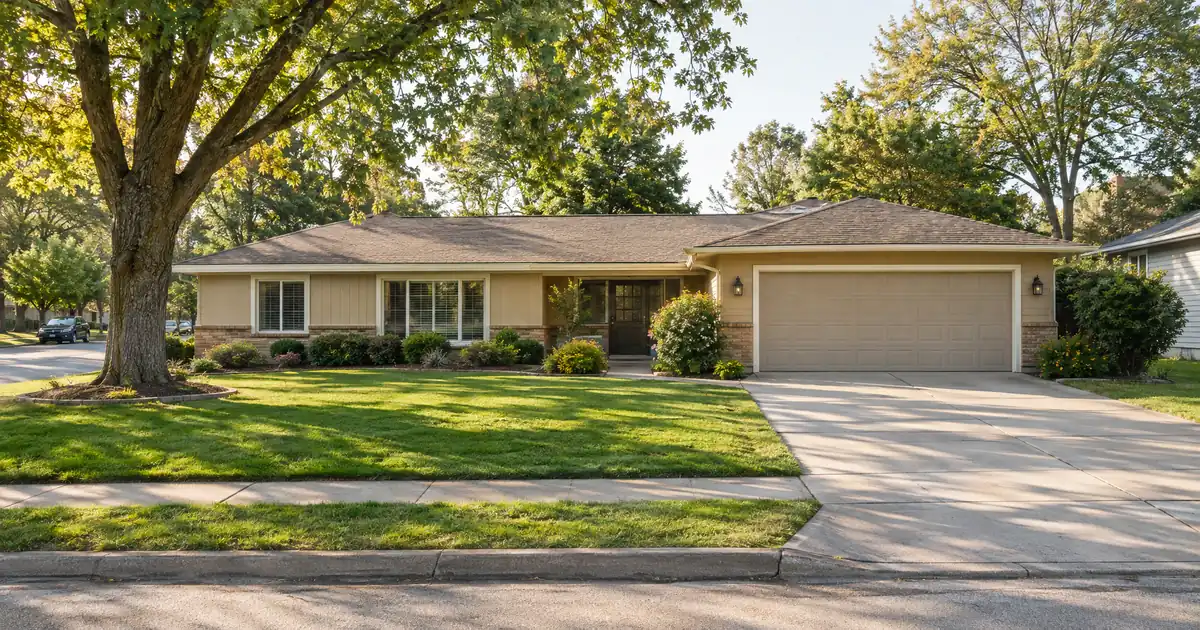
The Quick Read: Usually yes, but only on the right file: a home equity line can be recorded behind your existing first mortgage as a separate loan, leaving the first loan’s balance, term, and payment untouched, though on a rental the real hurdles are finding a lender that writes non-owner-occupied lines, fitting the combined leverage, and holding title in your own name.
- The first mortgage stays in place. The new line records behind it and is repaid second in a sale or foreclosure.
- Across Lendmire’s wholesale network, an investment-property line tops out at 70% combined loan-to-value (CLTV) and $500,000, with a 700 minimum credit score.
- Title is the wall for many investors. LLCs and corporations cannot hold title on these lines.
- A HELOC is underwritten on the borrower, not on rent. It is not a DSCR product, whatever the market label suggests.
- Adding a second payment lowers coverage on the property and complicates a later refinance of the first.
Plenty of investors hold a first mortgage they like. The balance is manageable, the terms are good, and a prepayment penalty makes replacing it expensive. Pulling cash out with a second lien is the obvious move. Here is how it works, where it breaks, and when a cash-out refinance is the better tool.
How large a line the equity supports.
An equity line is sized by combined loan-to-value, occupancy, and credit — not by rental coverage. Switch the occupancy or the credit band and the ceiling moves with it.
Investment-property lines require a 700 minimum credit score; second-home lines start at a 640 minimum and primary-residence lines at 600, and the combined-LTV ceiling steps down as the credit band drops on primary-residence and second-home lines and holds on investment-property lines; the line cap steps down on primary-residence lines and holds at every tier on investment-property and second-home lines.
A debt-to-income ratio above 45% requires 680+ credit. Profiles under 640 are limited to single-family homes. At least 75% of the approved line is drawn at closing. Ceilings, floors, and caps update from Lendmire’s centralized guideline source.
Line estimate
Illustrative estimate only — not a quote, Loan Estimate, approval, or commitment to lend. The rate is an editable assumption; equity-line pricing is variable through both the draw and repayment periods and never converts to fixed. Occupancy and credit drive the ceiling together: an investment property tops out at 70% combined LTV (minimum credit 700, line cap $500,000); a second home tops out at 90% combined LTV (minimum credit 640, line cap $500,000), with the ceiling stepping down as the credit band drops (the cap holds at every tier); a primary residence tops out at 90% combined LTV (minimum credit 600), and its $750,000 maximum line is available only at 75% combined LTV or below with a 700-or-better credit profile (720 on the longer-runway program) and a full appraisal. Lines above $500,000 require a full appraisal. Credit, debt-to-income, property type, and full underwriting review all affect the final line.
What Does “Second Position” Actually Mean?
Second position describes where a loan sits in line, not what kind of product it is. The first mortgage holds first position. A line recorded after it holds second position and gets repaid after the first lender in a sale or foreclosure.
The federal consumer-finance regulator notes that when you already have a mortgage, a HELOC or home equity loan counts as a second mortgage, paid in addition to the first. Two loans, two payments, two sets of terms.
Some lenders also write standalone lines in first position when a property is free and clear. Lendmire’s network has programs that work in either first or second lien position. That matters when you are shopping, because a lender that only writes first-lien lines will turn down a file with a mortgage already on it.
What Stays the Same and What Changes?
Skipping the refinance leaves the first loan intact, but it does not leave your finances unchanged. The table shows what moves.
| Item | Untouched? | What actually happens |
|---|---|---|
| First mortgage balance and term | Yes | Stays as written |
| First mortgage payment | Yes | Unchanged |
| Total debt on the property | No | Rises by the line’s drawn amount |
| Foreclosure exposure | No | A default on either loan hits the same collateral |
| Rental coverage | No | A second payment lowers the ratio |
| Later refinance of the first | No | The line must be paid off or subordinated |
The first loan’s note and its rate stay exactly as they were. Everything around it shifts.
How Is the Line Sized?
The ceiling is a combined loan-to-value test. Add the first-mortgage balance to the full line limit, divide by the property value, and the result must land under the lender’s CLTV cap. Any other recorded lien counts too.
Two details trip people up. Lenders generally size on the full credit limit, not the amount you plan to draw. And on Lendmire’s network, at least 75% of the line is drawn at closing, so the “I’ll just open it and leave it unused” plan does not hold. The federal consumer-finance regulator also warns that a lender can freeze or reduce a line if the property value drops or your finances change.
Here is the investment-property picture across the network we broker through:
| Factor | Investment property line |
|---|---|
| Maximum CLTV | 70% |
| Minimum credit score | 700 |
| Maximum line | $500,000 |
| Draw structure | 5-year interest-only draw, 25-year repayment |
| Pricing | Floats through draw and repayment |
| Valuation | Automated at or below $500,000, full appraisal available on request |
There is no tier above 70% on an investment line. Primary residences and second homes reach higher ceilings, up to 90% CLTV at a 720-or-better profile, but those numbers belong to owner-occupied and second-home collateral and never describe a rental.
Run the logic on a property worth, say, a round $500,000 with a first mortgage already sitting near 55% of value. At a 70% cap, only about 15 points of value remain for the entire line. Investors who bought with 80% leverage have already blown through the ceiling and have no room at all. Equity is the real gate, and it is usually tighter than people expect.
How Is It Underwritten?
The line is underwritten on you, not on the rent. Lenders review credit, debt-to-income, equity, and how the property is titled. The network caps debt-to-income at 50%, with 45% for profiles between 600 and 679, and qualifies the borrower on the interest-only payment calculated on the maximum draw. That last detail catches investors off guard: the test assumes you borrow the full line.
A DSCR first mortgage works differently. It qualifies primarily on property-level rental income covering the payment, subject to lender guidelines. Dividing monthly rent by principal, interest, taxes, insurance, and association dues (PITIA) gives the coverage ratio. A line behind that loan does not borrow the DSCR logic. This is why the phrase “DSCR HELOC” causes trouble. Depending on who uses it, it can mean:
1. A rent-qualified cash-out refinance that replaces the first loan.
2. A closed-end second lien that adds a lump sum behind it.
3. A revolving line.
Only the second and third leave your first mortgage in place. If someone offers a DSCR HELOC, ask which of the three they mean before anything else.
Will Adding a Second Lien Trigger the Due-on-Sale Clause?
Generally no, for small residential property, but the protection is narrower for investors than most summaries suggest. The Garn-St Germain Act, codified at 12 U.S.C. § 1701j-3, lets lenders enforce due-on-sale clauses while carving out exceptions, including creating a subordinate lien that does not transfer occupancy rights. That framing applies to residential property with fewer than five dwelling units.
The implementing regulation at 12 CFR § 191.5 repeats the exception, but its “specific limitations” are written for loans on a home occupied or to be occupied by the borrower. A non-owner-occupied rental may sit outside that safe harbor. For an investor, the contract and the first lender’s own policy matter more than the statute.
A loan on a property with five or more units, or a commercial-purpose loan, is outside this protection entirely. That is not legal advice. Have counsel read your first loan’s documents before you record anything.
What Can Stop the Deal?
Four things stop most files.
Title. On Lendmire’s network, the line must be held by an individual or a revocable living trust. LLCs, corporations, partnerships, and irrevocable, blind, or land trusts cannot hold title. For an LLC-held rental, this is the sharpest structural difference from a DSCR loan. The workarounds are a vesting change (which carries its own risks, including how the first lender and your insurer treat the transfer), a closed-end second from a different source, or a cash-out refinance of the first.
Lender appetite. Many lenders simply do not write non-owner-occupied second-position lines. A decline here is often a product-policy answer, not a verdict on you. Lien-position risk makes junior lines on rentals unattractive to a lot of lenders.
Property type. The network accepts single-family, 2-4 units, PUDs, townhomes, and condos, including non-warrantable condos. Manufactured homes, co-ops, condotels, log homes, commercial, mixed-use, and agricultural-zoned properties are not offered.
Existing liens. A prior second lien or a tax lien consumes CLTV before you start. A third-position line behind an existing mortgage and HELOC is widely declined. Financedevil says there is no legal limit on lien count, but most lenders refuse to sit third. Treat that as directional, not a guideline.
What Is the Step-by-Step Process?
1. Check equity. Estimate value, subtract the first balance and any other liens, then test the combined figure against the 70% ceiling.
2. Read the first loan’s documents. Look at the note and security instrument for due-on-sale language, covenants against additional liens, and prepayment terms. Get the servicer’s position in writing.
3. Confirm vesting. If an LLC holds title, solve that first.
4. Apply and underwrite. Credit, debt-to-income, and equity are reviewed. Expect title work that surfaces every recorded lien.
5. Close and record. The line’s deed of trust or mortgage records behind the first.
Consumer-protection rules like the right to cancel are designed around consumer-purpose lines on a principal dwelling. They generally do not carry over to business-purpose rental loans, so confirm that with counsel rather than assuming.
What Happens If You Refinance the First Later?
The new first lender will require the junior holder to subordinate, meaning agree in writing to stay behind the new loan. Not every junior lender will. If it refuses, the line must be paid off at the refinance.
This is a trap for investors running a BRRRR-style strategy, because the refinance has to clear every lien. It is also relevant if you plan a DSCR cash-out later. Layering a line now narrows your options then. Sequence matters: a HELOC added after a DSCR first is manageable, but a line already sitting on title before a refinance is a different problem entirely. Levitin and Wachter explain why mortgage contracts rarely restrict junior liens, which is exactly why the burden lands on subordination at refinance time.
Second-Position Line vs. Cash-Out Refinance: Which Fits?
This one is a genuine toss-up for many investors, and the answer depends on what the first mortgage is worth keeping.
| Factor | Second-position line | DSCR cash-out refinance |
|---|---|---|
| First mortgage | Stays as is | Replaced |
| Review basis | Borrower credit and debt-to-income | Property rent coverage, subject to lender guidelines |
| Title | Individual or revocable trust | LLC often workable, subject to lender program eligibility |
| Maximum leverage (investment) | 70% CLTV | Typically up to 75% LTV on a cash-out |
| Amount | $25,000 to $500,000 | Up to $3,000,000 on standard programs |
The second-position route makes sense if you hold a first mortgage with favorable terms or a heavy prepayment penalty, you hold title personally, and you need a modest amount. A cash-out refinance makes more sense if the property sits in an LLC, you want more cash than $500,000 allows, your debt-to-income is stretched, or you are consolidating liens anyway. Cash-out files on the network typically want about six months of seasoning, so timing counts. Lendmire’s complete DSCR loans guide covers the refinance side in detail.
What Does a Second Payment Do to Your Coverage?
It lowers it, and you should model both loans together before you commit. Say rent on a duplex covers the first mortgage’s PITIA at a comfortable 1.3x. Add a second payment calculated on the full line, and that same rent might drop toward 1.0x or below. Cash-flow coverage is not the same as cash flow, since repairs, vacancy, management, and capex sit outside the ratio, so a line that pushes coverage near 1.0 leaves almost no cushion.
Pricing on these lines floats through both the draw and repayment periods and never converts to fixed. Stress the combined payments at full draw, and again after the repayment period starts. The investment line’s 25-year amortization begins after five interest-only years, so the payment can step up noticeably. And the CFPB is blunt on the downside: fall behind and you can lose the property. A default on either loan exposes the same collateral.
Tax treatment can depend on how the funds are used and how the property is held; investors should keep clear records and speak with a qualified tax professional before relying on any deduction.
Where Most Investors Get It Wrong
Most of the mistakes are assumptions.
- “Any bank will write a line on my rental.” Many will not.
- “I can keep the property in my LLC.” That is commonly the wall.
- “CLTV is based on what I draw.” Lenders size on the full limit.
- “The first mortgage is unaffected.” Its terms are, but your total debt, exposure, and refinance flexibility are not.
- “This leaves my DSCR files alone.” A new lien shows up on title and can complicate the next DSCR transaction.
Also remember that a HELOC supplies cash only. The next property still needs its own purchase loan or an all-cash closing. On a DSCR purchase, most files land at 75%-80% LTV, and select programs reach 85% LTV at roughly a 700+ score. Reserves vary by lender, leverage, and loan size, commonly around six months of PITIA.
Availability is also narrower here than for DSCR lending. The HELOC programs described above are offered through Lendmire’s 16 full-service states, not across the 41-market DSCR footprint, and every figure remains subject to lender guidelines and full file review.
Key Terms Defined
CLTV (combined loan-to-value): The first-mortgage balance plus the full line limit, divided by the property value.
Subordination: A written agreement by a junior lien holder to stay behind a new first loan.
Junior lien: A loan recorded behind another loan and repaid after it.
Draw period: The early stretch of an open-end line when you can borrow and typically pay interest only.
PITIA: Principal, interest, taxes, insurance, and association dues, the monthly obligation a DSCR calculation measures rent against.
Frequently Asked Questions
Can I get a HELOC on a rental held in an LLC?
Usually not directly. On Lendmire’s network, LLCs, corporations, partnerships, and irrevocable, blind, and land trusts cannot hold title on these lines. An individual or revocable living trust can. Investors with an LLC-held rental typically choose between a vesting change, a closed-end second from another source, or a DSCR cash-out refinance, subject to lender program eligibility.
How much can I borrow against an investment property?
Lines run from $25,000 up to $500,000 on investment collateral, with a 70% CLTV ceiling and a 700 minimum credit score. The ceiling counts your first mortgage and the full line limit, so equity decides the amount more often than the line maximum does. Eligibility is subject to lender guidelines and full file review.
Does a second lien make my first lender call the loan?
Generally not for small residential property under federal law, but the regulatory protection is written around owner-occupied homes, so a rental may not get it. Read your note and security instrument for due-on-sale and additional-lien language, get your servicer’s position in writing, and talk to counsel.
What happens to the line if I refinance the first mortgage?
The new first lender will require the line holder to subordinate or require you to pay the line off at closing. Not every junior lender agrees to subordinate. Plan the sequence before you open a line, especially if a DSCR cash-out is on your horizon.
Is a “DSCR HELOC” qualified on rent?
Often not. The label is used loosely for a rent-qualified cash-out refinance, a closed-end second, or a revolving line. A line behind a DSCR first is usually underwritten on the borrower’s credit and debt load, not the property’s rent coverage.
If you are weighing a home equity line against a cash-out refinance and want to see how the numbers work, Lendmire can help you compare HELOC options based on the property, the equity available, credit profile, combined leverage, and your goals. Reach the team at 828-256-2183 or request a quote.
The investors who get the most out of a second-position line are usually the ones who ran the combined-leverage math before they shopped, because equity left under the cap, not lender enthusiasm, is what ends most of these files.
About Lendmire
Lendmire (NMLS# 2371349) is a mortgage brokerage serving homeowners and real estate investors in its 16 full-service states. Home equity lines of credit are arranged through wholesale lending channels; Lendmire brokers the line and the lender underwrites each application under its occupancy-based guidelines. Scotsman Guide named Lendmire a Top Mortgage Workplace in both 2025 and 2026.
Get Started
Ready to find the right loan for you?
In about 30 seconds you can review financing options available for your home or investment property. No commitment required.
Informational only. Not a Loan Estimate, approval, or commitment to lend. Program availability and eligibility are subject to lender guidelines, credit approval, property review, and underwriting.
References
1. CFPB – HELOC vs. home equity loan
3. Cornell LII – 12 U.S.C. § 1701j-3
4. Financedevil
This article is part of Lendmire’s home equity line of credit program — full qualification details, guidelines, and scenarios live on the program page.
Related reading: Refinance vs HELOC in Second Position for a Lower Payment · First Position HELOC Lenders For Investment Properties · Can a Bank Statement HELOC Sit in First Position on a Paid-Off Home?
Brandon Miller
Founder & CEO, Mortgage Loan Originator, Lendmire LLC
- Mortgage Loan Originator · NMLS# 1129696 · Verify on NMLS Consumer Access
- North Carolina Real Estate Broker · License# 343312 · Verify on NCREC
- North Carolina Insurance Producer · License# 19053198 · Property, Casualty, Life, Health · Verify on NAIC SBS
- Lendmire LLC · Firm NMLS# 2371349 · Verify firm licensure
Disclosure information. Lendmire is a state-licensed mortgage brokerage under NMLS# 2371349. Lendmire is not a depository institution, direct lender, or financial advisor — all loans referenced are placed through wholesale lender partners and are subject to each lender's underwriting standards. This article is provided for general informational purposes and is not a commitment to lend, nor does it constitute financial, legal, or tax advice. Loan programs, terms, rates, and qualification standards change without notice and depend on borrower profile, property type, and the state in which the subject property is located. Equal Housing Opportunity provider. NMLS Consumer Access: nmlsconsumeraccess.org.