
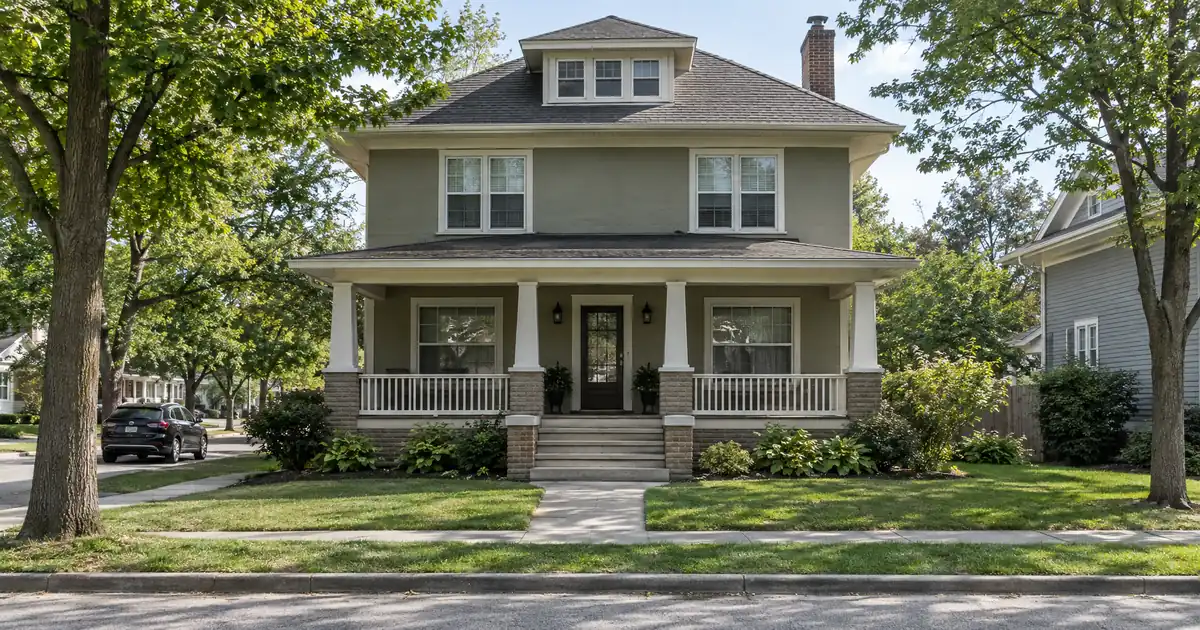
The Quick Read: A decree awards the property, but only a recorded deed changes title, so a retaining spouse generally cannot open a new line alone while the ex-spouse still appears in the vesting, and the practical path is to record the deed, settle any joint debt, and then apply in one name. Lenders review the file on the vesting, the applicant’s own income and credit, and combined leverage, all subject to lender guidelines. The gap between the signed decree and the recorded deed is where most of these files stall.
- The decree, the deed, and the debt are three separate things, and a lender only reads two of them.
- On an investment property, the network’s HELOC tops out at 70% CLTV with a $500,000 maximum line and a 700 minimum credit score, subject to lender guidelines.
- An LLC or irrevocable trust cannot hold title on these lines, so a rental deeded to an entity needs a vesting change or a different loan.
- A HELOC never removes an ex-spouse from the first mortgage or from an old joint line.
- The working order is to read the decree, deal with joint debt, record the deed, and then apply alone.
This article explains the order of operations. It does not describe a way around the other spouse’s signature. It describes what to do in the gap before the deed records, and why the order matters.
How large a line the equity supports.
An equity line is sized by combined loan-to-value, occupancy, and credit — not by rental coverage. Switch the occupancy or the credit band and the ceiling moves with it.
Investment-property lines require a 700 minimum credit score; second-home lines start at a 640 minimum and primary-residence lines at 600, and the combined-LTV ceiling steps down as the credit band drops on primary-residence and second-home lines and holds on investment-property lines; the line cap steps down on primary-residence lines and holds at every tier on investment-property and second-home lines.
A debt-to-income ratio above 45% requires 680+ credit. Profiles under 640 are limited to single-family homes. At least 75% of the approved line is drawn at closing. Ceilings, floors, and caps update from Lendmire’s centralized guideline source.
Line estimate
Illustrative estimate only — not a quote, Loan Estimate, approval, or commitment to lend. The rate is an editable assumption; equity-line pricing is variable through both the draw and repayment periods and never converts to fixed. Occupancy and credit drive the ceiling together: an investment property tops out at 70% combined LTV (minimum credit 700, line cap $500,000); a second home tops out at 90% combined LTV (minimum credit 640, line cap $500,000), with the ceiling stepping down as the credit band drops (the cap holds at every tier); a primary residence tops out at 90% combined LTV (minimum credit 600), and its $750,000 maximum line is available only at 75% combined LTV or below with a 700-or-better credit profile (720 on the longer-runway program) and a full appraisal. Lines above $500,000 require a full appraisal. Credit, debt-to-income, property type, and full underwriting review all affect the final line.
Where Do You Stand Right Now?
The right move depends on which of four stages the file is in. The decree stage and the deed stage look the same to the people involved, but they look very different to a title search.
| Stage | Who signs | What the lender checks | Main risk |
|---|---|---|---|
| Case pending | Title holders | Vesting and court orders | New borrowing may be restricted |
| Decree signed, deed unrecorded | Both title holders | Title shows the old owners | File cannot go forward in one name |
| Deed recorded | Applicant alone | Vesting matches applicant | Old joint debt still open |
| Joint line still open | Both on the contract | Balance and draw status | Ex can keep drawing |
On a pending case, automatic court orders can restrict new borrowing. Lendmire’s piece on a bank statement HELOC during a pending divorce covers that stage. This article starts once the decree exists.
Key Terms Defined
Decree: The court order that divides property and debt between the spouses.
Quitclaim deed: A deed in which one owner gives up their ownership interest, which moves title but does not touch the loan.
Vesting: The way title is held on the public record, such as an individual, a revocable trust, or an entity.
CLTV (combined loan-to-value): The first mortgage balance plus the new line, divided by the property’s value.
Joint line: A HELOC that both spouses signed, so both remain bound to the lender.
Assumption: A transfer of an existing loan to a new borrower, which keeps the old terms.
Due-on-sale clause: A mortgage term that lets the lender call the loan if the property transfers without consent.
Why Doesn’t the Decree Change What the Lender Sees?
The decree binds the former spouses to each other. It does not bind the lender, and it does not appear on the title until a deed records. A lender pulls a title report, and that report shows whoever the county recorder shows.
Three documents do three different jobs. The decree decides who gets the property. The recorded deed decides who holds title. The note and mortgage decide who owes the debt. A quitclaim moves ownership only, and the departing spouse stays on the first mortgage unless the loan is refinanced or assumed with a release.
The CFPB documents this pattern in its Issue Spotlight on homeowners after divorce or death. It reports that removing a party from a loan generally takes a refinance and that assumptions can take months or years. The departing spouse generally signs a quitclaim first and the retaining spouse then has to requalify alone, which CNBC Select describes as the usual sequence.
That is why the application name has to match the vesting. Lendmire’s piece How to Get a Rental HELOC After a Quitclaim Deed Moved the Title walks through the recording step in more detail.
How Do Lenders Underwrite the Retaining Spouse?
The retaining spouse is underwritten alone, on their own credit, income, and equity. Across the wholesale network Lendmire works with, the review follows the same basic path on most files.
1. Read the decree for operative terms. Look for who keeps the property, who owes the first mortgage and any existing line, and whether the decree sets a refinance deadline. A HELOC may not satisfy a decree that demands a refinance of the first mortgage.
2. Deal with any existing joint line. If both spouses signed, the decree does not release either one. Freeze or close the old line before opening a new one.
3. Fix the title. The departing spouse signs a deed, it is notarized, and it is recorded with the county. Ask the title insurer first, because a quitclaim can affect an owner’s policy.
4. Assemble the file. Expect the final decree, the recorded deed or title instructions, the current mortgage statement, the insurance declarations page, income documentation, a credit report, and a valuation.
5. Qualify the applicant alone. The score comes from a single credit report keyed to the primary wage earner. Debt-to-income runs up to 50% on these lines, and it is calculated on the interest-only payment at the maximum draw.
6. Test combined leverage. The first mortgage plus the new line must fit under the CLTV cap for the occupancy and credit tier.
Self-employed borrowers can qualify on documented income under the applicable program, subject to lender guidelines. The retaining spouse’s own deposit history or tax documents then carry the file, not the old household income.
What Does an Investment HELOC Allow?
On a rental the ceiling is 70% CLTV, with a $500,000 maximum line and a 700 minimum credit score. The tiers are different for a primary residence or second home, so the occupancy has to be stated before any ceiling is quoted.
| Occupancy | Max CLTV | Min credit | Max line |
|---|---|---|---|
| Investment property | 70% | 700 | $500,000 |
| Second home | Up to 90% (720+ only) | 640 | $500,000 |
| Primary residence | Up to 90% (720+ only) | 600 | $750,000 |
These figures reflect select wholesale-network guidelines and are not a commitment to lend. The 90% maximum CLTV shown for second homes and primary residences applies only at a 720-or-better credit profile, while investment property lines are capped at 70% CLTV. Lines at or below $500,000 ordinarily run on an automated valuation, though a borrower can request a full appraisal.
The investment structure is a standalone line, in first or second lien position, with a 5-year interest-only draw followed by a 25-year repayment period. At least 75% of the line is drawn at closing. The line floats and never converts to a fixed structure. A buyout that needs a large lump sum fits that draw rule. An open-ended reserve of credit does not.
Eligible collateral includes single-family homes, 2-4 unit properties, PUDs, townhomes, and condominiums. Manufactured homes, co-ops, condotels, log homes, and commercial or agricultural properties are not offered. A borrower is limited to three lines, and anyone with more than 15 financed properties is not eligible.
These HELOC lines are available only in the 16 states where Lendmire offers full-service lending. That footprint is narrower than its 41-market DSCR footprint, which includes Washington, D.C.
What Does the Math Look Like on a Rental?
Rental equity is thinner than most investors expect, because the cap applies to value and not to equity. Run it in percentages. Say a rental’s first mortgage sits at 50% of the property’s value. A 70% CLTV ceiling leaves room for roughly 20% of value in a new line, before the valuation and the credit tier trim it.
Now say the first mortgage sits at 65% of value. The same ceiling leaves about 5% of value, which is rarely worth the added second lien.
The DSCR comparison is different. A cash-out refinance replaces the first mortgage entirely, so it can also take the ex-spouse off the old note. A cash-out refinance on a standard rental tops out around 75% LTV across most of the network. A short-term-rental cash-out tops out at 70% LTV. The exact numbers vary by lender and program and follow a full review of property, leverage, and credit.
Where Does the General Rule Break?
Several edge cases change the plan, and some of them cannot be solved by the lender at all.
Decree signed, deed not recorded. Title is unchanged, so the file generally cannot proceed in one name. Recording the deed is the step that opens the file.
The decree requires a refinance. Many decrees set a refinance deadline for the first mortgage. A HELOC alone does not satisfy that order. Read the decree before assuming a second lien is the answer.
Assumption is not release. Assuming a loan keeps its terms, but the original borrower stays liable unless a release is requested and granted. Get written confirmation. Conventional first mortgages are generally not assumable, while eligible government-backed loans may allow assumption, as Fortune notes.
Due-on-sale and the divorce transfer. A due-on-sale clause lets a lender call the loan when the property transfers without consent. The federal statute, 12 U.S.C. § 1701j-3, exempts certain transfers, including one under a divorce decree that makes a spouse the owner. That protects against acceleration, not against liability. The exemption is limited to residential property with fewer than five units, and one law firm adds that the protected spouse should occupy the home, as Foust & Foust explains. Whether it covers a non-owner-occupied rental is a question for counsel, not a point to assume.
Vesting in an LLC. An LLC-held rental is blocked until it is deeded out. Individual or revocable-trust vesting meets the test. LLCs, corporations, partnerships, and irrevocable, blind, or land trusts cannot hold title on these lines.
Community-property states. A spouse can remain responsible for debt even if they did not sign, so the other spouse’s consent can matter even when they are not on title.
The ex keeps drawing. On a joint line the old contract is still live. Freeze the line in writing and get the lender to confirm the status.
What Should You Do With an Existing Joint Line?
Handle it before opening a new one, because a joint line sits on both credit files and counts against the applicant’s debt ratio.
| Option | What it does | The catch |
|---|---|---|
| Freeze | Stops new draws | Both names stay liable |
| Pay off | Closes the line | Needs cash or a refinance |
| Refinance to one name | Replaces the contract | Needs full requalification |
| Lender release or modification | Removes a party | Lender may refuse |
Missed payments hit both borrowers’ credit, and the retaining spouse’s housing history is read across every financed property. A late payment on the old line can cost the new file more than the line itself is worth.
What Should the Decree Say Before You Apply?
A decree that anticipates the lending steps makes the file smoother. Ask the attorney whether it covers these points:
- A refinance deadline and whether a HELOC counts toward it.
- Who keeps the rental, and the date the deed must be signed.
- Equity payout timing and whether it can be funded from a new line.
- Indemnification if the departing spouse stays on the old note.
- Consent for the departing spouse to sign lender paperwork when one is required.
Both sides carry risk. The departing spouse loses ownership but keeps liability if the deed records before the debt is dealt with. The retaining spouse cannot borrow alone until the deed records. A decree that sets the order protects both.
When Does a DSCR Cash-Out Beat the HELOC?
A DSCR cash-out refinance fits when the rental carries the property’s own weight, the ex is on the old note, or the title sits in an entity. DSCR loans are designed for non-owner-occupied investment properties. Because they are business-purpose investor loans, they are reviewed differently from a standard owner-occupied mortgage. The loan is reviewed primarily on property-level rental income covering the payment, subject to lender guidelines.
The numbers on the network are different from the HELOC’s. Standard loan sizes reach up to $3,000,000 on standard programs, with smaller balances available through select lenders. A cash-out refinance tops out around 75% LTV, and about 6 months of seasoning is the common expectation. The seasoning clock generally starts at the recorded deed, though lenders may treat spousal transfers differently.
Coverage of 1.00 is where many select programs start. A separate select-lender path takes coverage below 1.00 with leverage and terms adjusted. A ratio of 1.00 is not positive cash flow, because repairs, vacancy, management, and capex sit outside the calculation.
Credit floors vary. A 620 floor exists in parts of the network, most programs want around 660, and 700+ unlocks the strongest leverage tiers. Reserves vary by lender, leverage, loan size, and transaction type, commonly around 6 months of PITIA. A rental held in an LLC can be financed on a DSCR loan, subject to lender program eligibility. Lendmire’s complete DSCR loans guide covers the full program.
How Do You Pick Between the Paths?
| Situation | Likely better path |
|---|---|
| Small first mortgage, title in your name | Investment HELOC |
| Ex still on the first mortgage | Refinance or DSCR cash-out |
| Rental titled to an LLC | DSCR cash-out |
| Credit below 700 | DSCR cash-out, subject to program floors |
| Decree demands a refinance | Refinance the first mortgage |
For any new line, a property listed for sale in the past 60 days can be ineligible in some states, so a plan to sell and a plan to borrow should not overlap.
Tax treatment can depend on how the funds are used and how the property is held; investors should keep clear records and speak with a qualified tax professional before relying on any deduction.
Frequently Asked Questions
Can I open a HELOC before my ex signs the quitclaim?
Generally no. The lender reads the vesting on the title report, and a signed decree does not change it. Until the deed records, the ex-spouse still appears as an owner, and the file typically needs their signature or the title fixed first. Each lender’s guidelines govern.
Does a HELOC take my ex off the first mortgage?
No. A HELOC is a separate lien, and the first mortgage stays as it is. Removing a name from the first mortgage takes a refinance, an assumption with a written release, or a payoff.
Can a rental held in an LLC get a HELOC after the divorce?
Not while the LLC holds title. These lines require an individual borrower or a revocable living trust. The property would need to be deeded out first, or a DSCR cash-out could be used instead, subject to lender program eligibility.
What credit score and leverage does an investment HELOC need?
An investment-property line typically needs a 700 minimum score, tops out at 70% CLTV, and caps at $500,000. Primary residences and second homes follow different credit tiers. Every figure is subject to lender guidelines and full file review.
Is the decree enough proof that I own the home?
No. The decree shows what the court ordered, and the recorded deed shows who holds title. A lender underwrites the recorded vesting, so the deed has to be signed, notarized, and recorded with the county.
Next Steps
If you are considering a home equity line and want to see how the numbers work, Lendmire can help you compare HELOC options based on the property, the equity available, credit profile, combined leverage, and your goals. The illustrative calculator on this page can give a rough estimate of how the leverage and coverage figures interact. You can reach the team at 828-256-2183.
The investors who keep these files clean treat the recorded deed as the first milestone, because every later step depends on it.
About Lendmire
Lendmire (NMLS# 2371349) is a mortgage broker. Home equity lines of credit — on a primary residence, a second home or an investment property — are arranged through wholesale lenders in Lendmire’s 16 full-service states, and every line is underwritten by the lender under its program guidelines. Scotsman Guide named Lendmire a Top Mortgage Workplace in both 2025 and 2026.
Get Started
Ready to find the right loan for you?
In about 30 seconds you can review financing options available for your home or investment property. No commitment required.
Informational only. Not a Loan Estimate, approval, or commitment to lend. Program availability and eligibility are subject to lender guidelines, credit approval, property review, and underwriting.
References
1. CFPB Issue Spotlight on homeowners after divorce or death
2. CNBC Select, divorce and your mortgage
3. Fortune, navigating a mortgage during divorce
4. Cornell LII, 12 U.S.C. § 1701j-3
5. Foust & Foust, due-on-sale exceptions
This article is part of Lendmire’s home equity line of credit program — full qualification details, guidelines, and scenarios live on the program page.
Related reading: How to Use a Bank Statement HELOC During and After a Divorce · Can You Get a Bank Statement HELOC With a Final Decree and Old Title? · Can You Get a HELOC After a Final Decree Before Title Changes?
Brandon Miller
Founder & CEO, Mortgage Loan Originator, Lendmire LLC
- Mortgage Loan Originator · NMLS# 1129696 · Verify on NMLS Consumer Access
- North Carolina Real Estate Broker · License# 343312 · Verify on NCREC
- North Carolina Insurance Producer · License# 19053198 · Property, Casualty, Life, Health · Verify on NAIC SBS
- Lendmire LLC · Firm NMLS# 2371349 · Verify firm licensure
Disclosure information. Lendmire is a state-licensed mortgage brokerage under NMLS# 2371349. Lendmire is not a depository institution, direct lender, or financial advisor — all loans referenced are placed through wholesale lender partners and are subject to each lender's underwriting standards. This article is provided for general informational purposes and is not a commitment to lend, nor does it constitute financial, legal, or tax advice. Loan programs, terms, rates, and qualification standards change without notice and depend on borrower profile, property type, and the state in which the subject property is located. Equal Housing Opportunity provider. NMLS Consumer Access: nmlsconsumeraccess.org.