
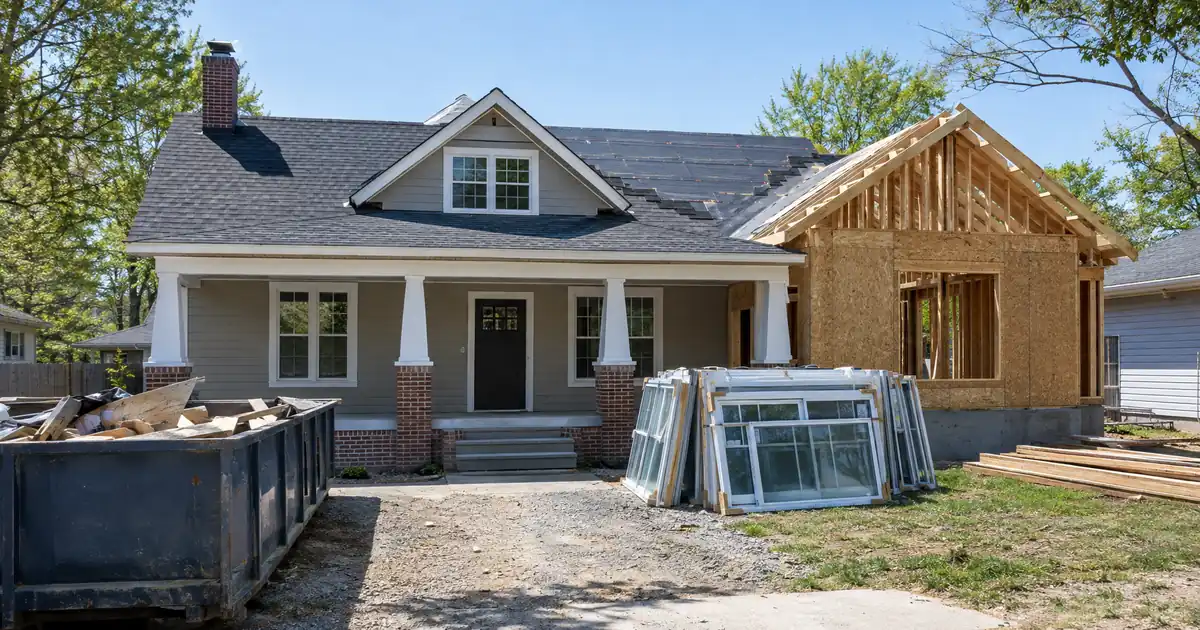
The Quick Read: A home equity line of credit (HELOC) is for flippers who already own a property with real equity, steady income, and the stomach to put that property on the line. Hard money is for flippers whose deal is the main collateral, who need rehab money released in stages, or who have no equity to borrow against. Neither one is the safer choice in every case, because each one puts a different asset at risk.
- A HELOC is underwritten on you: your income, your debts, your credit, and the equity in a property you already own.
- Hard money is underwritten on the deal: purchase price, rehab budget, projected resale value, and your exit plan.
- A HELOC puts the property that secures it at risk. Hard money puts the flip property at risk, and lenders often ask for a personal guarantee as well.
- Many first-timers end up using both: the line for the cash portion, hard money for the rest. That works, but it stacks two debts on one project.
- Whichever route you pick, the flip still needs a credible exit, meaning a sale or a refinance into long-term rental financing.
Here is the plain version of the choice. A HELOC asks “how strong is the borrower?” Hard money asks “how strong is the project?” Most first-time flippers are stronger on one question than the other, and that usually settles it.
What this loan actually costs to carry.
Hard money is sized against the project and priced by time. Enter the deal and see how much the program will lend, the cash required at closing, the carry while you hold it, and what is left at the exit.
Leverage tiers on the current program: 85% with fewer than 2, 90% with 2 or more, 93% with 5 or more completed projects — every tier capped at 75% of after-repair value. Loan amounts up to $5,000,000, larger by exception; terms of 6 to 18 months, interest-only, no prepayment penalty. The rehab portion funds in draws against completed work, not at closing.
Program parameters shown update from Lendmire’s centralized guideline source. Rate, points, and months are editable assumptions, not quoted terms.
Cost cap sets the loan · positive spread
Illustrative estimate only — not a quote, Loan Estimate, approval, or commitment to lend. Rate, points, and months are editable assumptions. Hard money is business-purpose financing for real estate investors, not a consumer mortgage. Leverage on the current program tops out at 93% of project cost for investors with a documented track record, capped at 75% of after-repair value, with rehab funding up to 100% of the documented budget released in draws; actual terms vary by lender, borrower experience, property, and exit. Lendmire is a mortgage broker, not a lender.
Side-by-Side
The table compares the structure of each option. The HELOC column reflects published industry norms, and the hard money column reflects typical guidelines across the wholesale network Lendmire works with, which vary by lender, property, and experience.
| Factor | HELOC | Hard Money |
|---|---|---|
| Review basis | Borrower income, debts, credit, equity | The deal: cost, rehab plan, resale value |
| Collateral | A property you already own | The flip property itself |
| Documentation | Traditional personal income and debt documents | Deal package, rehab budget, borrower credit, cash to close |
| Property types | Set by the line agreement and lender | Non-owner-occupied 1-4 unit residential, typically |
| Entity vesting | Usually secured by personal property | LLC borrowers common, subject to program eligibility |
| Funds released | Draw when you want, up to the limit | Purchase advance, then rehab draws after inspections |
| Term shape | Draw period, then repayment period | Short, interest-only term of roughly 6-18 months |
| Timing | Must be opened before you find the deal | Arranged around a specific deal |
| Reserves and cash | Lender sets own cushion rules | Expect cash to close plus liquid reserves |
| If the flip fails | Lender can look to the secured property | Lender looks to the flip, plus any guarantee |
Two rows deserve a second look. The first is timing: a HELOC is a tool you set up before the deal exists, so it does nothing for you if you find a property first and think about financing second. The second is draws. A HELOC lets you pull money whenever you like, with no inspector checking whether the kitchen is actually done. Hard money ties rehab money to finished work, which is a constraint and also a guardrail for a beginner.
When a HELOC Is the Better Fit
A HELOC wins when you own a property with substantial equity, have stable documented income, and want flexible access to cash without a deal-by-deal approval. Equity means the property’s value minus what you still owe on it. A HELOC is a revolving line of credit secured by that equity, and you can borrow, repay, and borrow again up to a limit.
Picture a first-timer who owns a home with a comfortable gap between its value and the mortgage balance. She has steady traditional employment income and low debt. She wants to take on a cosmetic flip: paint, floors, fixtures, no structural surprises. A HELOC suits her. She is reviewed on her own financial profile, so the quality of her first deal does not hold up the funding. She also keeps control of the money and can spend it as the project demands.
A HELOC also fits when the flip is small relative to your equity. If the cash needed is a modest slice of what the line allows, you are not leaning hard on the collateral. The more of your equity the project consumes, the less that comfort holds.
Three conditions matter before you commit:
- The line agreement has to allow the use. The CFPB’s HELOC booklet explains that lenders set the limit as a percentage of appraised value minus your existing mortgage balance. They also weigh your ability to repay based on income, debts, and credit history. Read the permitted-use language before you count on the money.
- Your first mortgage may have its own terms. Occupancy and due-on-sale provisions in an existing mortgage can interact with how you use a second lien. That depends on your documents, so read them or ask the servicer.
- The lien comes with the line. CBS News confirms that a HELOC places a lien on the property’s title. The lien lets the lender foreclose if you default, and it must be paid off if you sell or refinance.
The CFPB is blunt about the core risk: you could lose your home if you cannot repay on schedule. For a first flip, that sentence is the whole decision. If a bad flip would be an inconvenience, the HELOC is a reasonable tool. If it would be a crisis, it is the wrong one.
Investment-property HELOCs are a narrower product. Across the network Lendmire places files with, lines secured by an investment property cap at $500,000 total, and there is no tier above that. Most first-time flippers asking about a HELOC mean a line on their own home, which follows the lender’s own consumer guidelines.
When Hard Money Is the Better Fit
Hard money wins when the project itself is strong enough to carry the loan, or when you have little equity to borrow against. Hard money is short-term, interest-only, business-purpose financing secured by the flip property. Lenders weigh the property’s potential most heavily, though they still look at your credit and history.
Say you rent your home and have savings, but no property with equity. A HELOC is off the table, since there is nothing to secure it. Hard money still works because the collateral is the property you are about to buy. Credit still matters. A 620 score is a typical minimum, with extra conditions below 660, and first-time investors qualify at the lower leverage tiers. Underwriting stays centered on the property, the plan, and the exit.
Here is how leverage is usually built. Hard money is sized on loan-to-cost, meaning the loan as a share of your total project cost (purchase plus rehab). Across the network, the structure typically looks like this on a non-owner-occupied 1-4 unit fix-and-flip:
- Fewer than 2 completed projects: up to 85% of project cost.
- 2 or more completed projects: up to 90% of project cost.
- 5 or more completed projects: up to 93% of project cost.
- Every tier is capped at 75% of after-repair value (ARV), the projected resale value once the work is done.
- Up to 100% of the rehab budget is funded in draws against completed work.
That last point trips people up. The 100% applies to the rehab budget only. It is not a purchase program, and there is no true 100% purchase financing. These are typical guidelines that vary by lender, property, and experience, and the top tier is reserved for experienced investors.
A holdback is the rehab portion the lender keeps back and releases in stages. After each phase, an inspection confirms the work, and the next draw goes out. For a beginner running a heavier rehab, this is useful discipline. It keeps the budget honest and puts a second set of eyes on the contractor’s progress.
Terms usually run 6 to 18 months, interest-only, with no prepayment penalty. The principal comes back from the sale or from a refinance. That short clock is the real cost of this route. If the work runs long or the market softens, you may need to refinance or extend, and neither is a given. Lendmire arranges these loans across 41 markets, including Washington, D.C., through select lenders in its network.
Entity borrowing is another point in hard money’s favor. Lenders in this space commonly lend to LLCs, subject to lender program eligibility. A HELOC is normally secured by your personal property, so an LLC cannot simply borrow one.
One short note on classification. DSCR loans and hard money loans are designed for non-owner-occupied investment properties. Because they are business-purpose investor loans, they are reviewed differently from a standard owner-occupied mortgage. A HELOC on your home is generally a consumer product, which is part of why the two paths feel so different.
What Happens If the Flip Stalls?
If the flip stalls, a HELOC leaves you holding a debt secured by a property that has nothing to do with the project. Hard money leaves you holding a short-term loan that is coming due on a property you cannot sell. Both are painful. They hurt in different places.
Walk through three bad outcomes.
Rehab overruns. On a HELOC, you can keep drawing until the line is empty, which feels like flexibility until the line is used up and the project is unfinished. With hard money, the holdback is fixed to the budget. An overrun means you fund the gap from your own cash. The line gives you rope. The holdback gives you a limit. Which one is a feature depends on your discipline.
A slow sale. With a HELOC, you keep making the required payments from your own income while the flip sits on the market. The line typically has its own draw and repayment structure, so read what happens when the borrowing period ends. With hard money, the loan term keeps ticking. If it outlives the term, you may be pushed into a refinance that is not guaranteed to be available. Many investors plan an exit into long-term DSCR financing, which qualifies primarily on property-level rental income covering the payment, subject to lender guidelines. That is only an exit if the property is stabilized and still fits the program, so treat it as a plan to confirm, not a fallback to assume.
A lower resale price. A HELOC balance does not shrink because the flip sold for less. You owe the same amount regardless. Hard money is repaid from the sale proceeds, and any shortfall may fall on you through a personal guarantee. In both cases, the loss is real. The question is whether it lands on the secured home or on the project.
This is why the honest first-timer question is not “which is cheaper?” It is “which risk can I absorb?” If you could lose the project and keep your home, hard money matches that profile. If your home is the only thing you cannot lose, a HELOC deserves a hard second look.
The Hybrid: HELOC for the Cash, Hard Money for the Rest
Using a HELOC for your down payment and hard money for the balance is a legitimate structure, but it combines both risks on one deal. Many investors do it because hard money lenders expect cash from the borrower, and a HELOC is a ready source of it. The hybrid solves a liquidity problem.
It also adds a second layer of exposure. Your home carries the HELOC lien, and the flip property carries the hard money lien. If the project fails, you are dealing with both lenders at once. Whether your hard money lender permits borrowed funds as your cash in the deal also varies by lender, so ask before you assume.
The hybrid makes the most sense when your equity is large, your income is stable, and the project is conservative. It makes the least sense when the equity is thin, the rehab is heavy, or the budget has no cushion.
Who Should Wait on Both?
Some borrowers should not use either option yet. You are probably early if you have thin equity and thin cash, because then neither route has anything to stand on. You are also early if your income is unstable, since a HELOC lender will see it and a hard money lender will want to know how you survive a long hold.
A few more warning signs:
- You have no reserves for carrying costs while the property is vacant.
- You have not walked the rehab scope with a contractor and gotten real bids.
- You cannot describe your exit in two sentences: who buys it, at roughly what price, and what you do if they do not.
- You are counting on the best-case timeline for everything.
None of these is permanent. A smaller first project, a longer savings runway, or a partner with experience can change the answer. A clean small flip also lifts you into better leverage tiers on the next one.
How the Answer Changes by Flip Number Two or Three
The first flip is mostly about qualification. By the second or third, it is about track record. Hard money leverage steps up with documented completed projects, from the lower tier with fewer than 2 projects to higher tiers at 2 and then 5 or more. A HELOC does not reward experience that way, since the lender cares about your income and equity, not your flip history.
That shifts the math over time. A first-timer with equity may lean on a HELOC because it is the stronger part of their profile. After a couple of finished projects, the same investor often finds hard money more useful because the deal record now works in their favor. The tool that fits a beginner is not always the tool that fits a repeat flipper.
If your rehab is the main variable, Lendmire’s piece Rental HELOC vs Hard Money for a Rehab Budget covers how draw structure and scope affect the choice.
Before You Choose: A Short Checklist
Run through these before you apply anywhere:
1. Equity. How much does your property carry above what you owe, and how much of it would this project use?
2. Income stability. Could you keep up the required payments on any line for the full length of a delayed sale?
3. Permitted use. Does your line agreement and your first mortgage allow this use?
4. Scope and budget. Do you have written bids and a cushion for overruns?
5. Exit. Can you state your sale or refinance plan, and a backup?
6. Cash and reserves. How much cash can you put in, and what is left after closing?
7. Contractor readiness. Is someone lined up who has done this scope before?
Tax treatment can depend on how the funds are used and how the property is held; investors should keep clear records and speak with a qualified tax professional before relying on any deduction.
The Verdict
Choose a HELOC if you have real equity, stable income, and a conservative project, and if you are comfortable with the property securing the line being on the hook. Choose hard money if the deal is your strongest asset, you lack equity, or you want rehab money released against completed work. Consider the hybrid only when you can absorb both exposures. Wait if equity, reserves, or scope are not yet in place.
The cleanest way to decide is to ask what you are willing to lose if the flip goes badly. The answer usually points to one option fast enough that the rest is detail.
If you are buying, rehabbing, or refinancing an investment property on a short timeline and want to see how the numbers work, Lendmire can help you compare hard money options based on the project, the exit plan, leverage, and your goals. For the longer-term picture after the flip, the complete DSCR loans guide explains how rental financing works once the property is stabilized.
Frequently Asked Questions
Can I use a HELOC as the cash portion of a hard money flip?
Often yes, though it varies by lender. Some hard money lenders want your cash to come from your own funds, and others accept borrowed money. Ask before you rely on it. Remember that this structure puts a lien on your home and another on the flip property.
Can I get a HELOC on a property I don’t live in?
Some lenders offer lines on investment properties, but terms are tighter than on a primary residence. Across the network Lendmire places files with, investment-property lines cap at $500,000 total. Most first-time flippers who ask this question are really asking about a line on their own home.
What if the flip doesn’t sell before the hard money term ends?
You would need to extend, refinance, or pay off the loan. Hard money terms are short, typically around 6 to 18 months, and neither an extension nor a refinance is assured. Build a margin into your timeline and line up a backup exit before you close, such as holding the property as a rental.
Can a first-time flipper get hard money at all?
Yes, through lenders that place first-timers at the lower leverage tier. Experience changes how much a lender will fund, not whether you can apply. Expect up to 85% of project cost with fewer than 2 completed projects, always capped at 75% of ARV. These figures vary by lender, property, and experience, and nothing is a commitment to lend.
Which option puts my home at risk?
A HELOC does, since it is secured by the property you pledge, and that lien allows foreclosure on default. Hard money is secured by the flip property instead. A personal guarantee can still reach your other assets, so read the guarantee language closely.
About Lendmire
As a non-QM mortgage broker (NMLS# 2371349), Lendmire facilitates DSCR investor loans across 41 markets, including Washington, D.C. DSCR eligibility is generally reviewed around property-level rental income instead of personal income documentation, subject to lender guidelines, serving LLC-structured portfolios and self-employed borrowers who don’t fit conventional boxes. A two-time Scotsman Guide Top Mortgage Workplace (2025, 2026).
Get Started
Ready to find the right loan for you?
In about 30 seconds you can review financing options available for your investment property. No commitment required.
Informational only. Not a Loan Estimate, approval, or commitment to lend. Program availability and eligibility are subject to lender guidelines, credit approval, property review, and underwriting.
References
2. CBS News
3. CFPB – What is a home equity line of credit (HELOC)?
This article is part of Lendmire’s hard money loan program — full qualification details, guidelines, and scenarios live on the program page.
Related reading: HELOC vs Hard Money for Funding a Flip From Primary Home Equity · Should You Use Both a HELOC and Hard Money on the Same Flip? · Hard Money Lenders For Fix & Flip First Time Flippers
Brandon Miller
Founder & CEO, Mortgage Loan Originator, Lendmire LLC
- Mortgage Loan Originator · NMLS# 1129696 · Verify on NMLS Consumer Access
- North Carolina Real Estate Broker · License# 343312 · Verify on NCREC
- North Carolina Insurance Producer · License# 19053198 · Property, Casualty, Life, Health · Verify on NAIC SBS
- Lendmire LLC · Firm NMLS# 2371349 · Verify firm licensure
Disclosure information. Lendmire is a state-licensed mortgage brokerage under NMLS# 2371349. Lendmire is not a depository institution, direct lender, or financial advisor — all loans referenced are placed through wholesale lender partners and are subject to each lender's underwriting standards. This article is provided for general informational purposes and is not a commitment to lend, nor does it constitute financial, legal, or tax advice. Loan programs, terms, rates, and qualification standards change without notice and depend on borrower profile, property type, and the state in which the subject property is located. Equal Housing Opportunity provider. NMLS Consumer Access: nmlsconsumeraccess.org.