
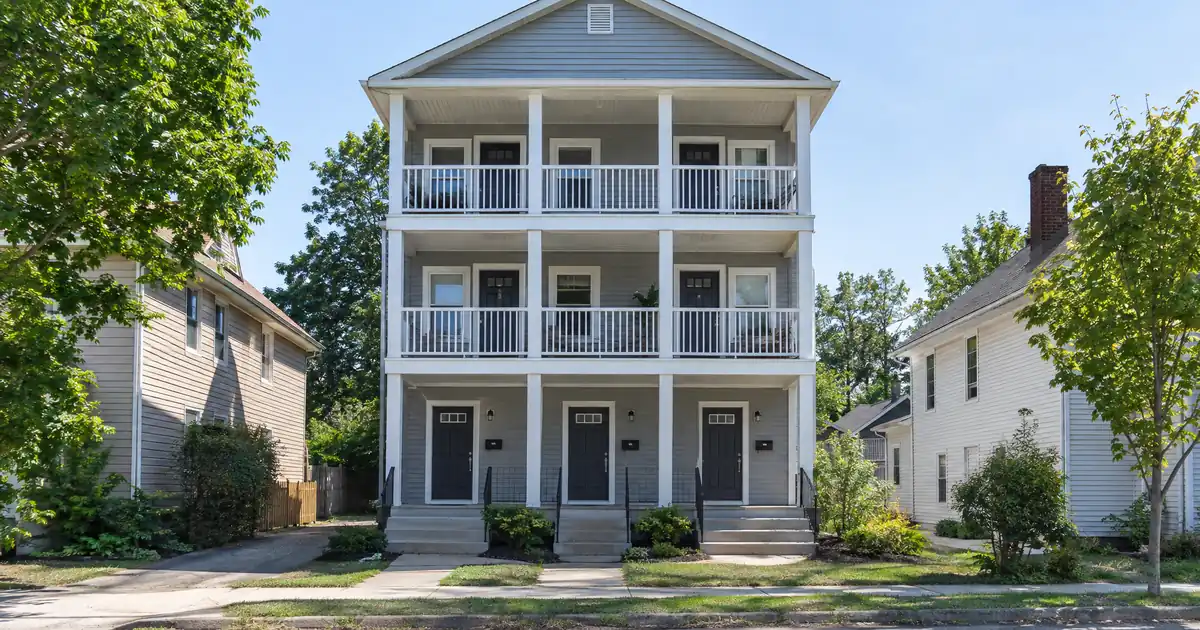
The Quick Read: No rule sets a single payment limit. The new loan amount sets the payment, and the smallest of several ceilings sets that amount. The main ceiling is 80% of the appraised value, and county loan limits sit above it. Your income, plus a share of the rent from the other units, then has to support the whole new payment, including mortgage insurance. All of this is subject to lender guidelines and a full file review.
Key Takeaways
- The payment on a cash-out follows the loan size. It is not a number you look up.
- On an FHA cash-out, the cap is 80% of appraised value whether you own a duplex or a fourplex. Unit count adds tests. It does not raise the cap.
- Rent from the units you do not live in can help you qualify, but only a portion of it counts.
- Mortgage insurance is part of the payment, and the upfront premium can be financed, which makes the loan a little larger.
- A low appraisal shrinks your cash. Each dollar of lost value cuts the maximum loan by about 80 cents.
What an FHA Cash-Out Actually Is
An FHA cash-out refinance replaces your current mortgage with a new, larger FHA-insured loan. The difference, after payoff and costs, comes to you as cash. You can use the money for nearly anything. The home has to be your primary residence, which means you live in one of the units.
Second homes and rentals do not qualify for this program. Occupancy decides the leverage, and a 2-4 unit you live in is treated as an owner-occupied home.
Lendmire’s FHA cash-out refinance program page covers the basics. This article answers the narrower question that 2-4 unit owners ask: how big can the loan get, and what does that do to the monthly payment?
Start with a distinction. A cash-out is not the same as an FHA Streamline or a rate-and-term refinance. A Streamline refinances an existing FHA loan with no appraisal and a limited credit review. It must show a net tangible benefit, and it puts no real cash in your pocket. A rate-and-term refinance with an appraisal reaches 97.75% on a principal residence you have occupied for the previous twelve months. The cash-out is the only one of the three built to turn equity into money, and it pays for that with a lower ceiling: 80% of value.
How Is the Maximum Loan Set, Step by Step?
The maximum loan is the lowest of several limits. Each step below can be the one that binds.
Step 1: The appraisal sets the value. On a 2-4 unit, the appraiser uses the small residential income property report. It gives a value for the building and a market rent for each unit. Value drives everything after it.
Step 2: Apply the 80% cap. The cash-out ceiling is 80% of the adjusted value. Across the wholesale programs FHA files get placed with, that is the working limit for a home owned and occupied for 12 months before the case number. That leaves about 20% of the value as equity you keep.
Step 3: Check the county loan limit. FHA limits are set by county and change every year. They also scale with unit count, so a fourplex has a higher limit than a duplex. Look up your county on HUD’s FHA loan limit lookup. In most markets, the 80% cap binds first on a 2-4 unit. In a very high-priced county, the limit can bind first.
Step 4: Subtract the payoff and the costs. Your old loan has to be paid off from the new one. So do closing costs. The 1.75% upfront mortgage insurance premium is calculated on the base loan and can be rolled in. What is left is your cash.
Step 5: Test your income against the full payment. This is where “how much payment” gets answered. The payment is principal, interest, taxes, insurance and FHA mortgage insurance. Your qualifying income has to carry it.
Equity is not cash. That is the point most owners miss.
The Rule That Bends: What Changes on 2-4 Units
Some ranking pages suggest FHA allows more leverage on multi-unit homes than a one-unit home. For an FHA cash-out, that is not how it works. The cap is one number: 80%. Unit count changes the tests around that number, not the number itself.
| Factor | 1 unit | 2 units | 3-4 units |
|---|---|---|---|
| Cash-out cap | 80% of value | 80% of value | 80% of value |
| County loan limit | Lowest | Higher | Highest |
| Occupancy | You live there | You live in one unit | You live in one unit |
| Rent from other units | None to count | Part can count | Part can count |
| Extra rent test | No | No | Yes, self-sufficiency |
| Reserves | Per the file | Per the file | Often required |
The row to watch is the extra rent test. On three and four units, the lender checks whether the building’s rent can carry the full payment on its own. This is called the self-sufficiency test. It does not apply to a duplex.
How Rent Counts on a 2-4 Unit
Rent helps, but it counts for less than most owners expect. Under HUD Mortgagee Letter 2023-17, rent from a 2-4 unit subject property can count as income. When there is limited or no rental history, the lender uses 75% of the lesser of two numbers: the appraiser’s market rent or the rent on the lease. Income from commercial space cannot be included.
Three practical points follow.
- Only the other units count. The rent your own unit would earn is not income to you. You are not paying yourself.
- Rent is not netted against the payment. It is added to income. It does not shrink the payment. The difference matters for your debt ratios.
- The lesser number wins. A lease signed above market does not help. An appraiser’s market rent above the lease does not help either.
On the ratio side, the base pair is 31/43 (housing payment to income, and total debts to income) with no compensating factors. Documented compensating factors can stretch that toward 40/50 at the top tier. The automated underwriting finding governs most files. The wholesale programs involved start at a 580 decision score, and some lenders set a higher floor.
Two Worked Examples
These are modeled scenarios, not market data. They use shares of value so the logic is easy to see.
The duplex. Say you own a duplex and live in one side. You have owned and occupied it for more than 12 months. Your current loan balance is about 60% of the appraised value. The 80% cap leaves roughly 20 points of value on the table. Closing costs and the financed 1.75% premium come out of that room. What remains is your cash. Because it is a duplex, there is no self-sufficiency test. Your income, plus 75% of the lesser rent on the other unit, has to carry the new payment.
The fourplex. Same 60% balance, same 80% cap, same 20 points of room. The cash math is identical. The difference is the extra test. The lender adds the market rent from all four units, including yours, applies an allowance for vacancy and maintenance, and checks whether what is left covers the whole payment. If it falls short, the loan amount can come down even though the equity is there. Reserves after closing may also be required. The cap did not change. The tests did.
Here is the takeaway. On a fourplex, the binding limit is often the rent test, not the 80%.
How Does the Payment Actually Move?
A cash-out raises your balance, so the payment rises. Mortgage insurance rises with it, because it is charged on the larger balance. The upfront premium can be financed, which adds to the balance again.
The annual premium runs between 0.15% and 0.75% of the balance, depending on term, loan amount and LTV. On a thirty-year loan above 90% LTV, it lasts for the term. At or below 90%, it ends after eleven years. A cash-out at 80% falls in the second group on a thirty-year term. That is a program fact, not a price. Leverage, reserves, and pricing vary by lender and program; the final terms follow the full file review.
Three things push the payment around:
- The amount you take out. Taking less cash means a smaller loan and a smaller payment.
- The term you choose. A shorter term lowers the total interest paid but raises the monthly figure.
- The old loan’s terms. If your current loan has a low payment, the new one may feel steep. A refinance resets everything.
The honest question is not “how much can I take?” It is “how much should I?” Sometimes the stronger play is to take less than the cap allows. The payment will thank you.
Where the General Rule Breaks
The 80% cap and the tests above cover most files. These edge cases are where they bend.
A low appraisal. The cap is a share of value, so a lower appraisal shrinks the maximum loan by about 80 cents per dollar of lost value. Your cash falls by that amount, since the payoff stays the same.
A recent purchase. If you bought the home recently, the value used for leverage can be the lower of the appraisal and what you paid. Lenders confirm the current wording on a given file.
An inherited home. HUD Handbook 4000.1 allows a borrower to skip the 12-month occupancy period on a cash-out if the property was not treated as an investment property since the inheritance. Renting it out afterward generally restarts the clock.
A late payment. The lender documents on-time payments on your mortgages for the prior 12 months. A recent late payment can stop the file.
A forbearance. Completing a plan and then making a stretch of on-time payments is usually required before cash-out is on the table.
Commercial space in the building. Mixed-use buildings cannot count the commercial rent as income.
An existing FHA loan with no need for cash. A Streamline may fit better. It keeps the process lighter, though it does not deliver equity.
A moving rulebook. The Handbook is revised from time to time, and county loan limits reset each year. Treat any page, this one included, as a starting point.
Is It the Right Tool?
| Goal | Best fit | Why |
|---|---|---|
| Need cash for a project | FHA cash-out | Equity turns into cash |
| Lower or fix the loan only | Rate-and-term | Higher leverage, no cash |
| Existing FHA, no cash needed | Streamline | No appraisal, limited review |
| Keep your current loan | Leave it alone | A refinance resets terms |
The rule of thumb: if you do not need cash, the cash-out is the wrong door. If you do, check whether a smaller draw works. For the equity side of the decision, see Lendmire’s article How Much Down Payment a Primary Home Cash-Out Refinance Creates.
One more consumer protection matters here. On a refinance of your primary residence, you get a three-business-day right of rescission after closing. The CFPB explains that the cancellation has to be in writing, and a phone call is not enough. Funds generally cannot be disbursed during the window. Plan around it.
Why 80%? HUD cut the cash-out limit from 85% to 80% of adjusted value to reduce risk to the FHA insurance fund from rising balances. Older consumer pages still quote the old figure, so check any page that cites 85% against current HUD guidance.
Key Terms Defined
Cash-out refinance: a new mortgage that pays off your old one and gives you the leftover equity as cash.
Adjusted value: the appraised value of the home, used to set the loan ceiling.
LTV (loan-to-value): the loan amount divided by the home’s value.
Self-sufficiency test: a check on 3-4 unit homes that asks whether the building’s rent, after an allowance, can cover the full payment.
Reserves: money left in the bank after closing, measured in months of payments.
Seasoning: the time you must own and occupy the home before the cash-out is allowed.
Mortgage insurance premium (MIP): FHA’s insurance, with an upfront part (1.75% of the base loan) and an annual part.
Frequently Asked Questions
Can I do an FHA cash-out on a fourplex?
Yes, if you live in one of the units and meet the 12-month ownership and occupancy test. The cap is still 80% of value. The extra hurdle is the rent test, and reserves may apply.
Can I count the rent from my own unit?
No. Only rent from the other units counts as income, and only 75% of the lesser of market or lease rent. Your own unit’s rent shows up in the self-sufficiency test on 3-4 units, but not as income to you.
What if the appraisal comes in low?
The ceiling drops with it. Because the cap is 80% of value, each dollar of lost value cuts the maximum loan by about 80 cents, and your cash falls by that same amount since the payoff stays put. A second look at the comparables is sometimes worth asking for.
Can I use the cash to buy another property?
The funds are not restricted to specific purposes. Most owners still check that the larger payment, plus any new debt, fits their income before they commit.
Do I need to move out of my own unit?
No, and you should not. The program requires you to live in the home. Moving out and renting it removes the occupancy that makes it eligible.
Next Step
If you are weighing a cash-out refinance against keeping the loan you have, Lendmire can help you compare the programs and the equity each one reaches. Program figures here are subject to lender guidelines and full file review. Nothing here is a commitment to lend.
Duplex owners rarely fall short on equity. Fourplex owners usually do not fall short on equity either. They fall short on rent math, so run that before anything else.
For your own numbers, request a scenario review with Lendmire.
About Lendmire
As a mortgage broker (NMLS# 2371349), Lendmire helps homeowners and home buyers in 16 states with FHA, VA, conventional and jumbo purchase and refinance loans arranged through wholesale lenders. Lendmire is never the lender; program terms are set by the lender and the agency guidelines. Scotsman Guide named Lendmire a Top Mortgage Workplace in both 2025 and 2026.
Get Started
Ready to find the right loan for you?
In about 30 seconds you can review financing options available for your home or investment property. No commitment required.
Informational only. Not a Loan Estimate, approval, or commitment to lend. Program availability and eligibility are subject to lender guidelines, credit approval, property review, and underwriting.
References
2. HUD Mortgagee Letter 2023-17, Revisions to Rental Income Policies
3. HUD Handbook 4000.1, Update 7.5
4. CFPB: Right of rescission on a refinance
5. HUD Mortgagee Letter 2019-11
This article is part of Lendmire’s FHA Loan series — every loan program’s qualification details, guidelines, and scenarios live on the loan options page.
Related reading: FHA vs Conventional Cash-Out When You Live in a 2-4 Unit Primary Home · FHA Cash-Out LTV Limit on a 2-4 Unit Primary Home · FHA and Conventional Cash-Out Requirements for a Condo Primary Home
Brandon Miller
Founder & CEO, Mortgage Loan Originator, Lendmire LLC
- Mortgage Loan Originator · NMLS# 1129696 · Verify on NMLS Consumer Access
- North Carolina Real Estate Broker · License# 343312 · Verify on NCREC
- North Carolina Insurance Producer · License# 19053198 · Property, Casualty, Life, Health · Verify on NAIC SBS
- Lendmire LLC · Firm NMLS# 2371349 · Verify firm licensure
Disclosure information. Lendmire is a state-licensed mortgage brokerage under NMLS# 2371349. Lendmire is not a depository institution, direct lender, or financial advisor — all loans referenced are placed through wholesale lender partners and are subject to each lender's underwriting standards. This article is provided for general informational purposes and is not a commitment to lend, nor does it constitute financial, legal, or tax advice. Loan programs, terms, rates, and qualification standards change without notice and depend on borrower profile, property type, and the state in which the subject property is located. Equal Housing Opportunity provider. NMLS Consumer Access: nmlsconsumeraccess.org.