
The Quick Read: On a VA cash-out of an owner-occupied 2-4 unit, rent from the other units counts only after the borrower shows landlord ability and verified cash reserves, and then only at 75% of the lease or rental agreement, unless a greater percentage can be documented. Those reserves must sit in the borrower’s own account, not in the cash-out itself.
- Rent is not counted automatically. The landlord test and the reserves come first.
- The reserve target in the regulation is 6 months of PITI, carried without the rent.
- Equity, cash-out proceeds, and gift funds cannot be used as those reserves.
- The veteran must live in one unit. A pure rental falls outside this product.
- When occupancy or reserves don’t fit, a business-purpose DSCR loan is the usual alternative.
A veteran with a duplex, triplex, or fourplex can pull equity and keep owner-occupied terms. The rent offset and the reserve rule are where the files get stuck. This article walks through both, then shows where DSCR takes over.
DSCR Cash-Out Calculator
Run the cash-out numbers in your market
Rate source: Freddie Mac 30-yr average via FRED® — Federal Reserve Bank of St. Louis · effective Oct 8, 2026
Prefilled with starting assumptions — enter your property’s value, balance, taxes, and insurance for a more accurate picture.
Program parameters update from Lendmire’s centralized guideline source. Taxes and insurance are editable estimates.
As of Oct 8, 2026 · General Freddie Mac market benchmark, not a Lendmire loan offer. Property value, balance, taxes, and insurance are editable estimates. Maximum loan-to-value varies by lender, program, property type, and seasoning. Not a Loan Estimate, approval, or commitment to lend. Program availability and eligibility are subject to lender guidelines, credit approval, property review, and underwriting.
How Does VA Underwriting Treat Rent on a 2-4 Unit?
VA treats rent as conditional income. Under the underwriting regulation, 38 CFR 36.4340 on eCFR, prospective rent on a multi-unit structure is not considered unless the veteran shows a reasonable likelihood of success as a landlord. The file must also show verified cash reserves to carry principal, interest, taxes, and insurance for at least 6 months without the rent.
Once those conditions are met, the regulation, as printed in the current-edition CFR, bases the rental income on 75 percent of the amount on the lease or rental agreement, unless a greater percentage can be documented. The haircut is VA’s cushion for vacancy and upkeep.
Landlord ability is judged from documentation of prior experience managing rental units or other collection activities. Practitioner guidance describes a hired property manager as a way to meet the test when the veteran has no landlord history. A lender should confirm that against the current handbook before the file leans on it.
What Are the Steps, Start to Finish?
The order matters because each step gates the next.
1. Eligibility. The veteran orders a Certificate of Eligibility, which shows entitlement and funding-fee status.
2. Occupancy. The borrower certifies that they live in one unit. Without that, nothing else applies.
3. Rent figure. The lender documents rent through signed leases or an appraiser’s rent opinion on a small residential income property appraisal form, as Military.com’s multifamily guide describes. The 75% factor is then applied.
4. Landlord test. The file shows rental management history or a management arrangement.
5. Reserve test. The borrower shows 6 months of PITI in their own funds, in an account before closing.
6. Qualifying math. The counted rent is added to income, which lowers the debt-to-income ratio. Residual income is then checked against the VA table.
7. Cash-out sizing. VA allows cash-out loans up to 100% of reasonable value, though lender overlays often cap lower. Treat that ceiling as a VA outer limit, not a promise of what a given lender will do.
Why Can’t the Cash-Out Fund the Reserves?
This is the main trap. The VA Lenders Handbook, Chapter 4 says equity in the property cannot be used as reserves. It says cash proceeds from a VA refinance cannot count as the required PITI on a rental property. It adds that reserve funds must be in the borrower’s account before the new VA loan closes, and that gift funds cannot meet reserve requirements. Exact terms depend on the lender’s guidelines, property type, leverage, and a full review of the borrower’s file.
So the loop is closed. A borrower can’t pull cash out and then point to that cash as proof of reserves. The reserves have to already exist, separately, and be seasoned in an account.
Treat the reserve-source rule as long-standing VA policy, and have the lender confirm the current text.
Do You Even Need to Count the Rent?
Often not. If the veteran is reviewed on personal income alone, the rent never enters the math, and the conditions tied to counting it fall away. This is the cleanest path for a borrower with solid income and low existing debt.
The decision runs two ways:
| Path | What the file needs |
|---|---|
| Qualify without rent | Income and residual income clear on their own |
| Need the rent | Landlord test, 6 months PITI reserves, 75% rent factor |
One caution: confirm with the lender whether the path that qualifies without rent carries its own reserve requirement before assuming it is reserve-free. Every figure here varies by lender and program — guidelines, property type, leverage, and credit profile all apply.
Where Does the General Rule Break?
Several edge cases sit outside the main rule. Keep them separate.
Other rental properties. The regulation requires self-employed-style documentation plus evidence of reserves equal to 3 months PITI on the rental property. The handbook adds 3 months of PITI for each property if the borrower owns several, a two-year rental history itemized on the tax return, and an add-back for claimed depreciation. This is a different rule from the multi-unit subject-property rule. Don’t blend them. Six months applies to the subject multi-unit. Three months applies to other rentals.
DTI is not a hard cut-off. The regulation’s published standards name a debt-to-income ratio of 41 percent or less and residual income as the two tests. Ordinarily the veteran meets both, but failing one does not automatically disqualify.
Existing home converted to a rental. The regulation carries a separate paragraph on rental of an existing home. The details differ from the multi-unit rule, so the lender should walk the borrower through which paragraph applies.
Active-duty occupancy. A spouse may be able to certify occupancy for an active-duty borrower. Only secondary summaries describe this, so confirm it before planning around it.
All units rented, or no owner occupancy. VA cash-out is an owner-occupied product. The veteran lives in one unit and the others are rented. A property with no owner living in it does not fit.
Contrast with FHA. FHA rental income guidance also uses 75% of the lesser of appraiser fair market rent or lease rent where subject rental history is limited. That is an FHA rule, not a VA one. It is a useful cross-check, nothing more.
What Does the Investor Decision Look Like?
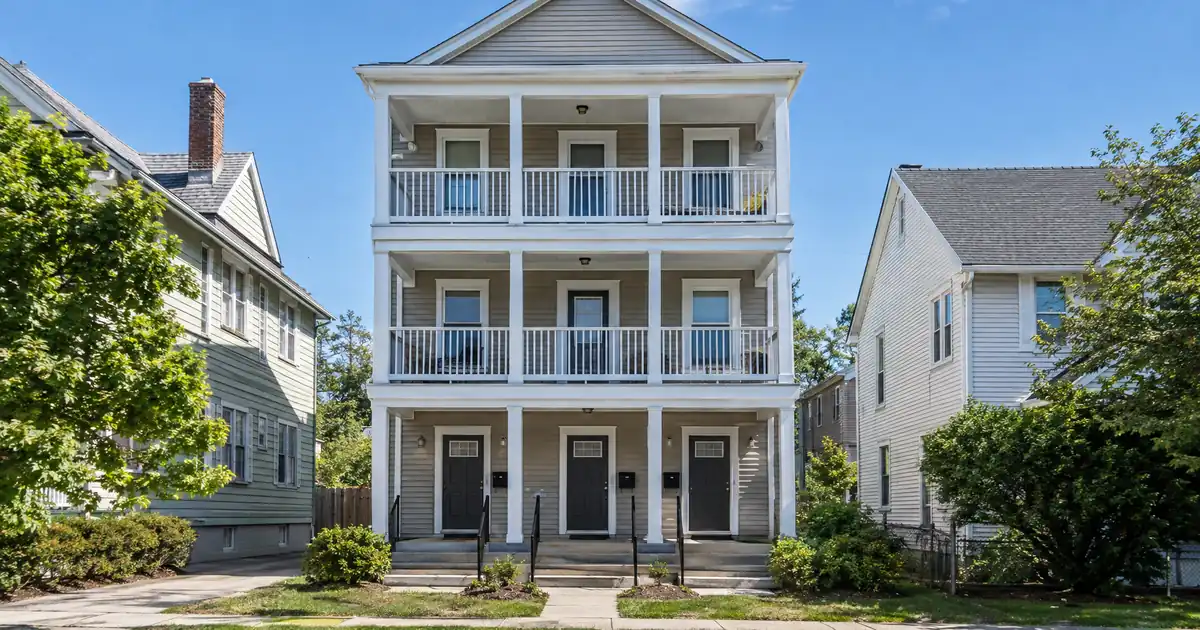
Picture a veteran with a fourplex, living in one unit and renting three. They want cash for the next purchase. The equity is there. Rents are documented by leases. They have prior landlord experience.
The question is cash. If their liquid funds are thin, the reserve rule blocks them even though the equity is strong. Their options are to season more cash in an account first, to qualify on personal income without counting the rent, or to look at a different structure.
Two things decide most of these files: whether 6 months of PITI sits in the borrower’s own seasoned funds, and whether the appraisal supports the rent. Residual income and the landlord test follow.
Here is the honest tradeoff. VA keeps owner-occupied terms and a high leverage ceiling. In exchange, it haircuts rent, demands separate reserves, and ties everything to occupancy. For a veteran who plans to stay, that can be a good trade. For one who plans to move out and rent every unit, it stops fitting.
When Does DSCR Become the Alternative?
DSCR loans are designed for non-owner-occupied investment properties. Because they are business-purpose investor loans, they are reviewed differently from a standard owner-occupied mortgage. The loan is reviewed primarily on property-level rental income covering the payment, subject to lender guidelines. Learn the mechanics in Lendmire’s complete DSCR loans guide.
Across the wholesale network, a cash-out refinance on an investment property tops out around 75% LTV on a standard rental. A 70% ceiling applies to short-term-rental collateral. About 6 months of seasoning is the common expectation, measured from title recording. Coverage starts at 1.00 on many select programs. A separate select-lender path takes coverage below 1.00, with leverage and terms adjusted. Credit floors begin at 620 in parts of the network, with most programs wanting around 660 and 700+ opening the strongest tiers. Loan sizes reach up to $3,000,000 on standard programs.
Reserves vary by lender, leverage, and loan size. They commonly run around 6 months of PITIA, with about 9 months above $1,500,000. Subject to program terms, files can also be held by an LLC. A DSCR number that clears 1.00 is not the same as positive cash flow, since repairs, vacancy, management, and capex sit outside the ratio.
Compare the structures side by side:
| Factor | VA Cash-Out (2-4 Unit) | DSCR Cash-Out |
|---|---|---|
| Occupancy | Owner lives in one unit | Non-owner-occupied investment |
| Rent treatment | 75% of lease, with conditions | rent used for lender review against PITIA |
| Reserve source | Own funds, not proceeds | Documented per program |
| Personal income | DTI and residual income | Property income is primary |
For a veteran who is moving out of the building, the occupancy line is the whole story. Lendmire’s piece VA Cash-Out Occupancy Rules for a 2-4 Unit Primary Home covers when that line holds. Tax treatment can depend on how the funds are used and how the property is held; investors should keep clear records and speak with a qualified tax professional before relying on any deduction.
Key Terms Defined
PITI: Principal, interest, taxes, and insurance, the monthly cost VA reserves are measured against.
Landlord test: The VA requirement that a veteran show a reasonable likelihood of success managing rental units before rent is counted.
Reserves: Verified cash in the borrower’s own account, set aside to carry the payment if rent stops.
Residual income: The money left each month after major obligations, checked against a VA table.
PITIA: PITI plus any association dues, the payment basis a DSCR file measures rent against.
Frequently Asked Questions
Can VA cash-out proceeds count as my reserves?
No. The VA handbook says cash proceeds from a VA refinance cannot count as the required PITI on a rental property. Equity and gift funds are excluded too. Reserves must be in the borrower’s account before the new loan closes.
How much of the rent does VA count?
Seventy-five percent of the lease or rental agreement, unless a greater percentage can be documented. That counted rent is added to income, which lowers the debt-to-income ratio. It only applies after the landlord test and reserve conditions are met.
Do I need landlord experience?
For rent to count, the file must show a reasonable likelihood of success as a landlord, judged from prior rental-management or collection experience. Guidance describes a hired property manager as another route. Confirm this with the lender against the current handbook.
Are reserves required for every rental I own?
No. The multi-unit subject property carries a 6-month PITI condition when rent is counted. Other rental properties carry a separate 3-month PITI reserve each, with two years of rental history on the tax return. Keep the two rules apart.
What if I can’t meet the VA reserve rule?
Options include seasoning more cash first, qualifying on personal income without counting rent, or moving to a different structure.
If you are buying or refinancing a rental property and want to see how the numbers work, Lendmire can help you compare DSCR loan options based on the property income, credit profile, leverage, and investor goals. Reach the team at 828-256-2183 or request a quote.
For current guidelines and terms, see Lendmire’s DSCR loan programs page.
About Lendmire
Lendmire (NMLS# 2371349) is a DSCR-focused mortgage broker that helps arrange investor financing across 41 markets, including Washington, D.C., through wholesale and investor-lending channels. DSCR eligibility is generally reviewed by the lender around the property’s rental income rather than personal income documentation, subject to lender guidelines — which works for self-employed investors, LLC operators, and portfolios above four financed properties. Scotsman Guide named Lendmire a Top Mortgage Workplace in both 2025 and 2026.
Investors weighing their equity options can start with Lendmire’s guide to cash-out refinance on an investment property.
Get Started
Ready to find the right loan for you?
In about 30 seconds you can review financing options available for your investment property. No commitment required.
Informational only. Not a Loan Estimate, approval, or commitment to lend. Program availability and eligibility are subject to lender guidelines, credit approval, property review, and underwriting.
References
2. GovInfo, CFR Title 38 Section 36.4340 (current edition)
3. Military.com, Buying a Duplex or Multi-Family Property
This article is part of Lendmire’s investment property cash-out refinance program — full qualification details, guidelines, and scenarios live on the program page.
Related reading: Cash Out Refinance Rental Property Rules · Cash Out Refinance Rental Property Calculator · Jumbo Cash-Out vs Jumbo HELOC on a Paid-Off Home
Brandon Miller
Founder & CEO, Mortgage Loan Originator, Lendmire LLC
- Mortgage Loan Originator · NMLS# 1129696 · Verify on NMLS Consumer Access
- North Carolina Real Estate Broker · License# 343312 · Verify on NCREC
- North Carolina Insurance Producer · License# 19053198 · Property, Casualty, Life, Health · Verify on NAIC SBS
- Lendmire LLC · Firm NMLS# 2371349 · Verify firm licensure
Disclosures. The information presented in this article is general market commentary, not financial, legal, or tax advice. Lendmire is a mortgage brokerage (NMLS# 2371349) — not a direct lender or depository institution — and loan placement is subject to lender underwriting. Nothing in this content represents a commitment to lend. Loan terms, pricing, and program availability vary based on borrower qualifications, property characteristics, and state of subject property, and are subject to change at any time. Lendmire complies with Equal Housing Opportunity requirements. Consumer access: nmlsconsumeraccess.org.