
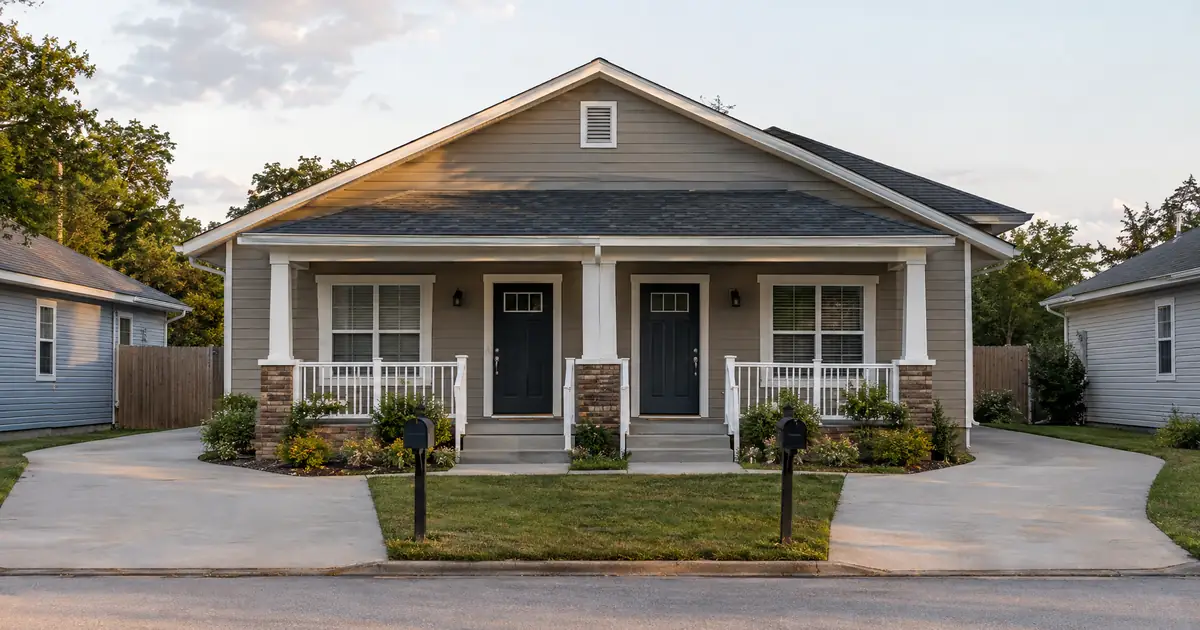
The Quick Read: A cash-out refinance on a duplex, triplex or fourplex replaces your current loan with a larger one and hands you the difference after payoff and costs. Two tests size the check: the leverage ceiling and the rent coverage on the new, bigger payment. Whichever limit is lower wins, and the headline LTV is never the cash you receive.
- Cash-out leverage on a standard rental tops out around 75% LTV across most of the network, subject to lender guidelines.
- About 6 months of ownership, measured from the recorded deed, is the common seasoning expectation.
- Coverage of 1.00 is where select programs start. Stronger ratios open better pricing and leverage.
- Typical reserves run around 6 months of PITIA, stepping up to about 9 months on loans above $1,500,000.
- Equity you keep equals appraised value minus the new loan.
Picture an investor who owns a fourplex outright and wants to pull money for the next purchase. The first question is not how much equity exists. It is how much the building’s rent can carry once the payment grows. That is where most 2-4 unit files get decided.
DSCR Cash-Out Calculator
Run the cash-out numbers in your market
Rate source: Freddie Mac 30-yr average via FRED® — Federal Reserve Bank of St. Louis · effective Oct 8, 2026
Prefilled with starting assumptions — enter your property’s value, balance, taxes, and insurance for a more accurate picture.
Program parameters update from Lendmire’s centralized guideline source. Taxes and insurance are editable estimates.
As of Oct 8, 2026 · General Freddie Mac market benchmark, not a Lendmire loan offer. Property value, balance, taxes, and insurance are editable estimates. Maximum loan-to-value varies by lender, program, property type, and seasoning. Not a Loan Estimate, approval, or commitment to lend. Program availability and eligibility are subject to lender guidelines, credit approval, property review, and underwriting.
Key Terms Defined
- Cash-out refinance: a new loan that pays off the old one and returns the leftover funds to the borrower.
- LTV: the new loan balance divided by the appraised value.
- Seasoning: the ownership time a lender wants before it counts a cash-out against appraised value.
- DSCR: monthly rent used for review divided by the full monthly payment.
- PITIA: principal, interest, taxes, insurance and association dues, the full payment the rent is tested against.
- Retained equity: appraised value minus the new loan balance.
How Does the Cash-Out Work on a 2-4 Unit?
DSCR loans are designed for non-owner-occupied investment properties. Because they are business-purpose investor loans, they are reviewed differently from a standard owner-occupied mortgage. The loan is reviewed primarily on property-level rental income covering the payment, subject to lender guidelines.
Here is the order a file follows across the wholesale network.
1. Classify the deal. Any cash back at closing makes it a cash-out. A refinance with no cash back sits in a more generous leverage category, up to 85% LTV on a rate-and-term refinance. Terms depend on the lender’s guidelines, the property type, the leverage, and a full review of the credit profile.
2. Order the appraisal. On a 2-4 unit, the appraiser typically uses the small residential income property form, which Fannie Mae’s Selling Guide lists as Form 1025 for two- to four-unit properties. Borrowing the form does not make the loan an agency loan. It just produces two things: an as-is value and a per-unit market-rent opinion.
3. Set the rent used for review. Unit rents are summed into one coverage number. Where a unit is leased, underwriting generally uses the lower of the lease and the appraiser’s market rent. Vacant units lean on the appraiser’s opinion.
4. Test coverage. Rent divided by the new full payment. Pulling more cash raises the payment and lowers the ratio.
5. Test leverage. Appraised value times the cash-out ceiling sets the maximum new balance.
6. Test seasoning and reserves. The deed date drives seasoning. Reserves are liquid funds left after closing.
7. Net it out. The new loan minus payoff, closing costs, prepaids and any funded reserves is your check.
Why the Headline LTV Is Not Your Check
A 75% ceiling does not mean 75% of value comes out as cash. Payoff comes first. Then costs. Then reserves.
Run the numbers on a modeled fourplex this way. Assume the existing balance sits at 50% of appraised value and the new loan lands at the 75% ceiling. About 25% of value comes out before costs and reserves, and about 25% of value stays in the building as equity. After costs, the check is smaller than 25%.
That illustration is a modeled assumption, not a market fact. It shows the shape of the waterfall.
| Step | What happens |
|---|---|
| Appraised value | Sets the LTV denominator |
| Leverage ceiling | Caps the new balance |
| Payoff | Existing lien comes out first |
| Costs and prepaids | Reduce the check |
| Reserves | Must remain liquid after closing |
| Equity kept | Value minus new loan |
Which Limit Binds First: Equity or Rent?
Rent can bind before equity does. A building with deep equity and weak rent hits the coverage wall first, and the loan gets sized down to fit.
| Item | Strong rent | Thin rent |
|---|---|---|
| Deep equity | Full pull to the ceiling | Loan sized to coverage, cash drops |
| Thin equity | Ceiling limits the check | Small or no cash-out |
On 2-4 units, summed unit rents often help. Three or four leases add up to a better coverage number than one house at the same value. That is a real advantage over single-family collateral.
Most standard programs start at a 1.00 coverage floor, with stronger ratios opening better pricing and leverage. A separate path below 1.00 is available through select lenders in the network, with leverage and terms adjusted. Those are different paths, not one program with a moving floor.
The Cash-Flow Trap
Clearing 1.00 is not positive cash flow. DSCR compares rent to PITIA only. Repairs, vacancy, management, utilities and capex sit outside it.
A max pull on a four-unit can push the payment close to rent. The file may clear the test while the owner’s real monthly margin gets thin. This one’s a genuine judgment call: some investors take the full amount to buy again, others pull less to keep a cushion. Neither is wrong. Know which one you are doing.
Credit matters too. A 620 floor exists in parts of the network, most programs want around 660, and 700+ unlocks the strongest leverage tiers.
What Documents Does a 2-4 Unit File Need?
Most friction on these files is paperwork, not math. A file with fewer preventable gaps is easier to review.
- Rent roll and signed leases for every occupied unit
- Entity documents and guarantor ID, where the property sits in an LLC, subject to program terms
- Insurance binder that matches the current building and unit count
- Payoff statement for the existing loan
- Reserve statements showing liquid funds
- Title with the recorded deed date
- HOA or condo questionnaire if the property is in a project
- Business-purpose declaration
Condo or PUD fourplexes add a project review on top of the appraisal. Stale insurance quotes and leases that conflict with the rent roll are the two gaps that pend files most often.
Edge Cases Where the General Rule Breaks
Seasoning is lender policy, not law. The network’s common expectation is about 6 months from title recording. Market surveys report a range, with some lenders wanting longer and a few shorter after heavy rehab, and the network figure is the one that applies here. Where seasoning runs from the deed record, finishing a rehab does not restart or satisfy it.
Cash buyers and delayed financing. Buying with cash and refinancing soon after is its own lane. It generally waives only the waiting period. The loan is typically sized to documented purchase cost, not the new appraisal, so cash back is roughly what you put in. Appraisal, coverage and reserves still apply.
Rent control. It can cap the appraiser’s market-rent conclusion, and the appraisal form itself asks about it.
Below-market legacy leases. These pull the rent used for review down, and the ratio with it.
Vacant units. The appraiser’s rent is an opinion. Lenders may count little of it.
Mixed-use buildings. Ground-floor retail income sits outside the residential rent method and does not blend into coverage.
Short-term rental collateral. It is underwritten differently. Cash-out on STR collateral tops out around 70% LTV, with a 640+ score and about 12 months of hosting history expected, while standard rentals stay at 75%. The exact numbers vary by lender and program and follow a full review of property, leverage, and credit.
Five or more units. The loan moves to NOI-based commercial underwriting. Different lane, different rules.
Live-in properties. An owner-occupied 2-4 unit is a consumer loan, not DSCR. Do not mix the two.
Not offered. DSCR programs in the network do not cover manufactured homes, log homes or barndominiums.
Should You Pull the Maximum?
The decision comes down to three checks.
1. Does the building still pencil after the payment grows? Look past the ratio to real operating costs.
2. Is the cash earning more than it costs? Closing costs reduce the check, and a refinance has to justify itself over time.
3. Is a smaller pull enough? Pulling less keeps more retained equity and a lighter payment.
Alternatives exist. Many lenders do not offer HELOCs on investment property, and where they do, lines cap at $500,000 total. Lendmire’s piece How Reserves Are Counted on a 2–4 Unit Rental Cash-Out Refinance shows what has to stay liquid after closing.
Tax treatment can depend on how the funds are used and how the property is held; investors should keep clear records and speak with a qualified tax professional before relying on any deduction.
Loan sizes run up to $3,000,000 on standard programs, and above $2,500,000 the network generally holds to 30-year fixed structures. Extended terms and interest-only periods are available through select lenders. The complete DSCR loans guide walks through how those pieces fit together.
Frequently Asked Questions
Why is my cash less than my equity?
Because payoff, closing costs, prepaids and reserves come out first, and the leverage ceiling leaves a layer of equity in the property. Rent coverage can shrink the loan further. Equity is value minus debt. The check is only what remains after the new loan clears all of that.
What if the appraisal comes in low?
A low value cuts the maximum balance directly, since leverage is a percentage of appraised value. A low rent schedule hurts separately by lowering coverage. Documented in-neighborhood sales and clean leases support an appraisal reconsideration request, though the result is the appraiser’s call.
Do all unit rents count toward coverage?
No. Vacant units, below-market leases and non-residential income may count for little or nothing. Occupied units generally count at the lower of the lease or the appraiser’s market rent.
Can a cash buyer refinance right away?
Often, through a delayed-financing structure. It typically waives the seasoning wait but sizes the loan to documented purchase cost rather than the new appraisal. Coverage, reserves and leverage limits still apply.
Is a live-in duplex the same loan?
No. An owner-occupied 2-4 unit is a consumer mortgage reviewed on personal income. DSCR programs are for non-owner-occupied rentals.
If you are buying or refinancing a rental property and want to see how the numbers work, Lendmire can help you compare DSCR loan options based on the property income, credit profile, leverage, and investor goals. Terms are subject to lender guidelines and credit approval, and nothing here is a commitment to lend.
For the mechanics of pulling equity out of a rental property, see Lendmire’s guide to cash-out refinance on an investment property.
About Lendmire
A non-QM mortgage broker (NMLS# 2371349), Lendmire arranges DSCR financing for real estate investors in 41 markets — 40 states plus Washington, D.C. Because deals are underwritten primarily on property cash flow rather than personal income documentation, the structure suits self-employed buyers and entity-owned portfolios. Lendmire places loans through wholesale investor lenders; it is not a direct lender. Scotsman Guide named Lendmire a Top Mortgage Workplace in both 2025 and 2026.
Get Started
Ready to find the right loan for you?
In about 30 seconds you can review financing options available for your investment property. No commitment required.
Informational only. Not a Loan Estimate, approval, or commitment to lend. Program availability and eligibility are subject to lender guidelines, credit approval, property review, and underwriting.
References
1. Fannie Mae Selling Guide B4-1.2-01
2. Fannie Mae Form 1025 / Freddie Mac Form 72
This article is part of Lendmire’s investment property cash-out refinance program — full qualification details, guidelines, and scenarios live on the program page.
Related reading: Rental Cash-Out Refinance for Investors Testing the Loan-to-Value Ceiling · Investment Property HELOC vs Cash-Out Refinance to Pull Cash Out · Multi-Family Cash-Out Refinance for Investors Who Raised NOI
Brandon Miller
Founder & CEO, Mortgage Loan Originator, Lendmire LLC
- Mortgage Loan Originator · NMLS# 1129696 · Verify on NMLS Consumer Access
- North Carolina Real Estate Broker · License# 343312 · Verify on NCREC
- North Carolina Insurance Producer · License# 19053198 · Property, Casualty, Life, Health · Verify on NAIC SBS
- Lendmire LLC · Firm NMLS# 2371349 · Verify firm licensure
Disclosure information. Lendmire is a state-licensed mortgage brokerage under NMLS# 2371349. Lendmire is not a depository institution, direct lender, or financial advisor — all loans referenced are placed through wholesale lender partners and are subject to each lender's underwriting standards. This article is provided for general informational purposes and is not a commitment to lend, nor does it constitute financial, legal, or tax advice. Loan programs, terms, rates, and qualification standards change without notice and depend on borrower profile, property type, and the state in which the subject property is located. Equal Housing Opportunity provider. NMLS Consumer Access: nmlsconsumeraccess.org.