
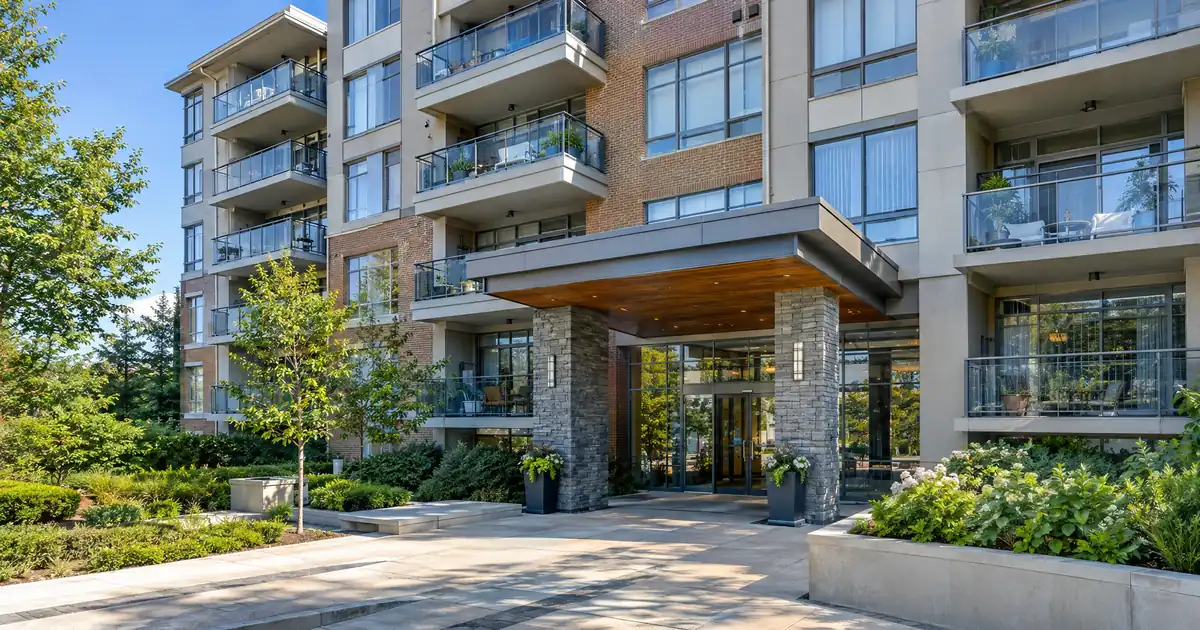
The Quick Read: A DSCR cash-out on a rented condo replaces your current mortgage with a larger loan and sends you the difference. Two tests decide the outcome. The first is whether you and the unit clear leverage, credit, reserve, and rent-coverage standards. The second is whether the building itself passes review. Most programs we place files with cap cash-out at about 75% of appraised value, which makes the building and the HOA dues the places a deal usually tightens.
- On a cash-out refinance of a standard rental, leverage tops out around 75% LTV across most of the network, and about 6 months of ownership is the common expectation.
- Coverage means rent against the full payment, and HOA dues sit on the payment side. The larger loan raises that payment.
- Credit of 620 is a floor in parts of the network, most programs want around 660, and 700+ opens the strongest tiers.
- A building with litigation, heavy investor ownership, or thin reserves can stall a file even when your own numbers are strong.
- Qualification is subject to lender guidelines, and every file is underwritten individually.
What Does a Condo Cash-Out Do for an Investor?
It turns equity into cash without selling the unit. The new loan pays off the old one, covers closing costs, and sends the remainder to you. Qualification rests primarily on property-level rental income covering the payment, subject to lender guidelines, rather than on your W-2 or tax-return income.
DSCR Cash-Out Calculator
Run the cash-out numbers in your market
Rate source: Freddie Mac 30-yr average via FRED® — Federal Reserve Bank of St. Louis · effective Oct 8, 2026
Prefilled with starting assumptions — enter your property’s value, balance, taxes, and insurance for a more accurate picture.
Program parameters update from Lendmire’s centralized guideline source. Taxes and insurance are editable estimates.
As of Oct 8, 2026 · General Freddie Mac market benchmark, not a Lendmire loan offer. Property value, balance, taxes, and insurance are editable estimates. Maximum loan-to-value varies by lender, program, property type, and seasoning. Not a Loan Estimate, approval, or commitment to lend. Program availability and eligibility are subject to lender guidelines, credit approval, property review, and underwriting.
DSCR loans are designed for non-owner-occupied investment properties. Because they are business-purpose investor loans, they are reviewed differently from a standard owner-occupied mortgage.
Condos add one wrinkle that single-family rentals do not have. The lender is not only judging your unit and your file. It is also judging the association that runs the building. A strong borrower can hit a wall because of a weak HOA.
Investors usually pull equity for one of three reasons: a down payment on the next rental, a repair or upgrade project, or fresh reserves. The first is the most common. Purchase leverage on most files runs 75%-80% LTV, so the next deal needs 20%-25% down. A select group of programs reaches 85% LTV on a purchase with roughly a 700+ score. Either way, the cash has to come from somewhere, and a cash-out is one source.
Key Terms Defined
These terms come up in every condo cash-out file.
- DSCR (debt service coverage ratio): the monthly rent divided by the monthly housing payment, which shows whether the unit’s rent covers its own costs.
- PITIA: principal, interest, taxes, insurance, and association dues, the full monthly obligation the rent is measured against.
- LTV (loan-to-value): the loan balance as a percentage of the appraised value.
- Cash-out refinance: a new, larger loan that pays off the old one and returns the difference to you.
- Seasoning: the waiting period between buying a property and refinancing it, measured from the date title is recorded.
- Warrantable condo: a building that meets the eligibility standards used for agency-backed loans.
- Non-warrantable condo: a building that fails those standards, often because of litigation, heavy investor ownership, or thin reserves.
- Special assessment: a one-time charge the association levies on owners to cover a large repair or shortfall.
How Underwriting Treats a Condo Cash-Out, Step by Step
The process runs in a fixed order. Knowing it lets you spot the weak step before the lender does.
Step 1: The equity check. The lender takes the appraised value and applies the cash-out leverage cap. The result is the largest new loan the file can support. Subtract your payoff and closing costs, and what remains is your cash. If the number is thin, the deal usually dies right here.
Step 2: The appraisal sets value and rent. The appraiser gives an opinion of value and an opinion of market rent. Underwriting generally uses that rent figure or your lease, not the rent you hoped for. For a condo, the rent opinion typically comes from a comparable rent schedule. The agency form for that is Form 1007, described in the Fannie Mae Selling Guide. The same guide lists Form 1025 for two-to-four-unit properties. DSCR loans are not agency products, so the form names are the only borrowed piece. A low appraisal changes both your cash and your ratio.
Step 3: The condo project review. Expect requests for a dues statement, the association budget, a condo questionnaire, proof of master insurance, and confirmation of any special assessments. Pending litigation or rental caps can add conditions. You can speed this step along by asking the association for documents the day you decide to refinance, not the day the lender asks.
Step 4: The coverage ratio. Rent is divided by PITIA. The “A” stands for association dues, so HOA fees are counted as a cost, never netted against rent. Most select programs start at 1.00 coverage, and stronger ratios open better pricing and leverage. A separate select-lender path takes coverage below 1.00, with leverage and terms adjusted.
Step 5: Credit and reserves. A 620 floor exists in parts of the network, and most programs want around 660. Reserves vary by lender, leverage, loan size, and transaction type. About 6 months of PITIA is common, and loans above $1,500,000 typically step up to about 9 months. Conservative rate-and-term files at modest leverage under that size can see reserves waived.
Step 6: Documents. A typical condo file includes the appraisal with rent schedule, the lease or rent roll, the HOA package, evidence of master insurance, proof of reserves, and entity paperwork if an LLC holds title, subject to lender program eligibility.
One caution belongs here. Clearing 1.00 does not mean the unit puts cash in your pocket. Coverage compares rent to PITIA only. Repairs, vacancy, management, utilities, and capital expenses all sit outside the calculation.
The Two Tests: You and the Building
Every condo file clears two separate gates. The strongest files pass both. The table shows how they differ.
| Factor | Borrower and unit test | Building test |
|---|---|---|
| Who is judged | You and the rented unit | The HOA and the project |
| Key measures | LTV, credit, reserves, coverage | Litigation, reserves, ownership mix |
| Main documents | Lease, appraisal, bank statements | Budget, questionnaire, insurance |
| Common failure | Coverage under the floor | Building flagged as non-warrantable |
| Your control | High | Low |
The building test is where condo investors get surprised. Enact MI, a mortgage insurer, defines a non-warrantable condo as one that fails the eligibility rules for purchase and securitization by the government-sponsored agencies. Its list of usual triggers includes heavy investor or single-entity ownership, a large share of commercial space, and pending litigation naming the HOA or developer. It also lists failed presale minimums on new projects and association reserves that fall short of the budget standard.
That label describes eligibility for one secondary-market channel. It is not a verdict on the unit or the neighborhood. Plenty of sound, well-rented buildings carry it.
A non-QM investor loan does not have to follow agency project standards. Those standards are a reference point for what the label means, not a rulebook for your file. The condo’s status can still affect terms, so ask early which side of the line your building sits on.
A Worked Example: Equity Out, Coverage Down
Run the numbers on a condo this way. These are modeled assumptions, not market data. Say the unit appraises at a figure we will call 100 units of value. Your current mortgage balance sits at 50% of that value.
At the 75% cash-out cap, the new loan can reach 75% of value. The gross difference is about 25% of appraised value, before closing costs come out. That is the most the file can return, and it is not a promise of any cash figure. Final terms depend on lender guidelines, property type, leverage, and the borrower’s complete credit picture.
Now the coverage side. Assume the unit rents well enough to cover the old payment at roughly 1.40x. The new balance is 50% larger than the old one, so the principal-and-interest portion of the payment rises by about half. Taxes, insurance, and HOA dues do not change. If principal and interest were about 55% of the old total, the full obligation rises by roughly a quarter. Coverage drops from about 1.40x to about 1.10x.
The unit still clears 1.00. A thinner margin, though, leaves little room. If the HOA raises dues, or the appraiser’s rent opinion lands lower than your lease, coverage can slide under the floor.
Consider the contrasting case. Another investor owns the same kind of condo with a lower starting ratio, near 1.15x. The same cash-out pushes coverage below 1.00. The options are to take less cash, bring the loan down to a lower LTV, or ask about a select-lender path that accepts coverage below 1.00 with leverage and terms adjusted. A larger down payment on a purchase can lift coverage, but it never erases leverage caps, credit floors, reserve rules, or property eligibility.
This is why we tell condo investors to size the cash-out backward. Start with the coverage you need to keep, then see how much loan that supports. Only then look at how much cash comes out.
Where the General Rule Breaks
The 75% cap and the 1.00 floor are the general rules. Condos produce several named exceptions.
The non-warrantable building. On these files, the loan-size ladder often sets your number more than the condo label does. Pricing and leverage can adjust, and fewer lenders in the network take the property. A cash-out generally needs more equity than a purchase on the same building. Because the building narrows the buyer pool at resale to cash buyers and portfolio lenders, exit value can also compress.
Warrantability changes over time. Status is reassessed with each new application. A building can lose standing if its reserves drop, delinquencies rise, or a lawsuit is filed. A condo that passed when you bought it may not pass when you refinance. A purchase-time approval is no guarantee later.
Special assessments. Treatment varies by file. An assessment converted to a monthly obligation usually folds into PITIA and lowers coverage. A lump-sum assessment more often becomes a reserves or cash-to-close issue. Either way, ask the association whether any assessment is planned, because dues and assessments have risen across the condo market in recent years.
Short-term-rental and condotel buildings. These are treated as their own property category with tighter leverage. For short-term-rental collateral, cash-out leverage is capped at 70%, while standard long-term rentals reach 75%. Expect a 640+ credit score and about 12 months of hosting history. Refinances on short-term rentals use a 1.00 coverage floor. Rental income that the association’s governing documents prohibit cannot be counted. In that case, long-term rent has to qualify on its own. Short-term rental rules can vary by city, county, HOA, and property type, so investors should confirm local rules before relying on projected rental income. These specifics are subject to lender guidelines and a full review of property, leverage, and credit.
LLC-held condos. Large retail lenders often stumble when an LLC holds title, which is one reason investors look at a DSCR cash-out. Eligibility for entity vesting is subject to lender program eligibility, so confirm it before you apply.
The recent purchase. If you bought the condo within the last several months, seasoning applies. About 6 months of ownership, measured from title recording, is the common expectation. Check the date before you order an appraisal.
Property types outside the network. DSCR programs in the network do not cover manufactured homes, log homes, or barndominiums. A condo in an ordinary multi-unit building is a different matter, but the point matters if your portfolio includes other property types.
What Structures Are Available?
The spine of the market is the 30-year fixed. Extended terms such as 40 years and interest-only periods are available through select lenders in the network, and adjustable-rate structures exist for investors who want them. Standard programs run up to $3,000,000, and above $2,500,000 the network generally holds to 30-year fixed structures. Smaller balances route through select lenders.
Interest-only is the structure to understand before you choose it. It can lift coverage by lowering the required payment during the interest-only period. The balance does not fall during that period, and the payment steps up afterward. Treat it as a tool for a specific plan, not a way to rescue a weak ratio.
Prepayment penalties deserve a look too. If you might sell within a few years, a shorter penalty period keeps your options open. If you plan to hold, a longer period may buy better terms.
Should You Pull the Equity?
Start with what the cash will do. Cash that becomes a down payment on a stronger property is a different decision from cash that fills a gap in a weak one. Ask four questions.
1. After the cash-out, does coverage still clear your program’s floor with room to spare?
2. Could the HOA raise dues or levy an assessment without breaking the file?
3. Do you have the reserves, counted separately from the cash you are pulling out?
4. Is a low-cost first mortgage worth keeping? A cash-out replaces it, so you lose it.
The last question is where the HELOC comparison comes in.
| Factor | DSCR cash-out | Investment HELOC |
|---|---|---|
| First mortgage | Replaced by new loan | Stays in place |
| Size limit | Up to $3,000,000, standard programs | Line caps vary by lender |
| Qualification | Property rent against PITIA | Varies by lender |
| LLC-held title | Subject to program eligibility | Often an obstacle |
Lendmire’s piece DSCR Cash-Out Refinance vs HELOC When Buying vs Pulling Equity on a Rental walks through that tradeoff in more depth. If your reserves are the sticking point, the guide Cash-Out Refinance Reserve Rules for Second-Home Owners Pulling Equity covers how lenders count them.
Tax treatment can depend on how the funds are used and how the property is held; investors should keep clear records and speak with a qualified tax professional before relying on any deduction.
Here is the practitioner view from watching many condo files across the network. The files that go smoothly almost always have the association documents in hand before the appraisal is ordered. The files that stall almost always learned about a lawsuit or an assessment midway through. Ask for the budget, the questionnaire, and the master insurance certificate first. If anything looks shaky, you can adjust leverage or pick a different lender before you have spent money on the appraisal.
For the full picture of how these loans work across property types, see the complete DSCR loans guide.
Frequently Asked Questions
Can I do a cash-out refinance on a condo in a non-warrantable building?
Often yes, through select lenders in the network, though leverage and terms may adjust. The building’s issues are reviewed alongside your file. Expect to put more equity into the deal than a purchase of the same building would need, and expect fewer lender options.
How long do I have to own the condo before I can pull cash out?
About 6 months of ownership is the common expectation, measured from the date title was recorded. Some lenders look at the appraised value rather than the purchase price after that point. Eligibility depends on the program and the file.
Do HOA dues lower my coverage ratio?
Yes. Dues are part of PITIA, so they sit on the payment side of the ratio. Rent is never reduced by dues. A dues increase after your cash-out can push a thin file under the floor, which is why leaving a cushion matters.
Can I use short-term rental income to qualify on a condo?
Sometimes. It needs a hosting history of about 12 months and a 640+ score, and cash-out leverage is capped at 70% on short-term-rental collateral. The association’s governing documents must also permit the rentals. If they do not, long-term rent has to carry the file.
Does a 1.00 ratio mean the condo cash flows?
No. The ratio compares rent to the full housing payment and nothing else. Repairs, vacancy, management, utilities, and capital expenses sit outside it. A unit can clear 1.00 and still run tight in a bad month.
Next Steps
If you are buying or refinancing a rental property and want to see how the numbers work, Lendmire can help you compare DSCR loan options based on the property income, credit profile, leverage, and investor goals. As a mortgage broker, Lendmire arranges DSCR investor loans through select lenders in a wholesale network covering 41 markets, including Washington, D.C. Program terms change, qualification is subject to lender guidelines. This is not a commitment to lend.
Investors weighing their equity options can start with Lendmire’s guide to cash-out refinance on an investment property.
About Lendmire
Lendmire — NMLS# 2371349 — is a mortgage brokerage specializing in DSCR investor loans, helping arrange financing across 41 markets, including Washington, D.C., through wholesale and investor-lending channels. The model centers on property-level rental income reviewed by the lender rather than W-2 documentation, subject to lender guidelines, suiting entity-owned and multi-property investors. Lendmire holds Scotsman Guide Top Mortgage Workplace recognition for 2025 and 2026.
Get Started
Ready to find the right loan for you?
In about 30 seconds you can review financing options available for your investment property. No commitment required.
Informational only. Not a Loan Estimate, approval, or commitment to lend. Program availability and eligibility are subject to lender guidelines, credit approval, property review, and underwriting.
References
2. Enact MI: What Makes a Condominium Non-Warrantable
This article is part of Lendmire’s investment property cash-out refinance program — full qualification details, guidelines, and scenarios live on the program page.
Related reading: Home Equity Loan vs Cash-Out Refinance for a Rental Owner · Multi-Family Cash-Out Refinance for Investors Who Raised NOI · Investment Property HELOC for Owners Weighing a Cash-Out Refinance
Brandon Miller
Founder & CEO, Mortgage Loan Originator, Lendmire LLC
- Mortgage Loan Originator · NMLS# 1129696 · Verify on NMLS Consumer Access
- North Carolina Real Estate Broker · License# 343312 · Verify on NCREC
- North Carolina Insurance Producer · License# 19053198 · Property, Casualty, Life, Health · Verify on NAIC SBS
- Lendmire LLC · Firm NMLS# 2371349 · Verify firm licensure
Important disclosures. Lendmire (NMLS# 2371349) is a licensed mortgage brokerage. Lendmire is not a direct lender, depository institution, or financial advisor. All loan inquiries are subject to lender underwriting; this article does not constitute a commitment to lend. Rates, terms, and program guidelines are subject to change without notice and vary by borrower profile, property type, and state. Information in this article is general in nature and is not financial, legal, or tax advice. Equal Housing Opportunity. NMLS Consumer Access: nmlsconsumeraccess.org.