
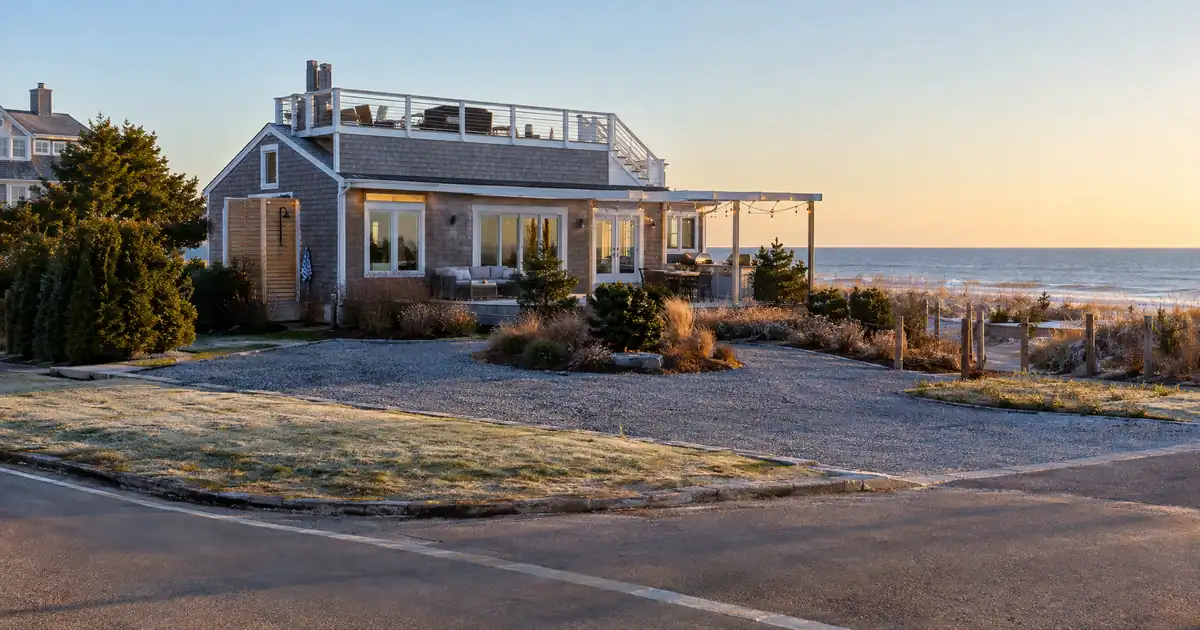
The Quick Read: Financing a beach rental works like financing any DSCR investment property, with four extra gates: income evidence the lender accepts, flood and wind insurance inside the payment, a condo or condotel project review, and local short-term rental rules that decide whether the income is legal to earn. The loan is reviewed primarily on property-level rental income covering the payment, subject to lender guidelines. Coastal insurance and project type decide more beach files than credit does.
- Most purchase files on a long-term rental land at 75%-80% LTV on an investment property. Short-term rental purchases top out at 75%.
- Flood, wind, and HOA dues all sit inside the payment the rent must cover.
- Condo and condotel projects get their own review, separate from you and the unit.
- Clearing the coverage ratio is not the same as positive cash flow.
- Short-term rental rules vary by city, county, HOA, and property type, so confirm the rules before relying on projected income. Final terms depend on the lender’s guidelines, the property type, and the borrower’s complete credit picture.
What Does a Lender Actually See in a Beach Rental?
A lender sees a non-owner-occupied investment property whose rent has to cover its own monthly obligation. The beach setting changes the inputs, not the loan type. Insurance runs higher, income swings by season, and the building may carry rental restrictions.
DSCR Calculator
Run the numbers in your market
Rate source: Freddie Mac 30-yr average via FRED® — Federal Reserve Bank of St. Louis · effective Oct 15, 2026
Prefilled with starting assumptions — enter your own rent or nightly figures, taxes, insurance, and HOA for a more accurate picture.
Program parameters update from Lendmire’s centralized guideline source. Taxes and insurance are editable estimates.
As of Oct 15, 2026 · General Freddie Mac market benchmark, not a Lendmire loan offer. Rent, nightly rate, occupancy, taxes, and insurance are editable estimates. Short-term rental figures are estimates only and vary significantly by season, property type, management approach, and local short-term-rental rules — confirm local regulations before relying on them. Qualifying income for short-term rentals varies by program — some use appraisal market rent, others use documented STR history or projections — and is confirmed in underwriting. Not a Loan Estimate, approval, or commitment to lend. Program availability and eligibility are subject to lender guidelines, credit approval, property review, and underwriting.
DSCR loans are designed for non-owner-occupied investment properties. Because they are business-purpose investor loans, they are reviewed differently from a standard owner-occupied mortgage.
The coverage ratio is monthly rent divided by PITIA: principal, interest, taxes, insurance, and any HOA dues. Many select programs start at 1.00. Stronger ratios open better pricing and leverage. A separate select-lender path takes coverage below 1.00, with leverage and terms adjusted. Both are covered in Lendmire’s complete DSCR loans guide.
Occupancy is where beach buyers slip. If you plan to spend real time in the house each summer, the file is not a pure investment purchase. Heavy personal use points toward a second-home loan, which is reviewed on your personal income instead. Decide which loan you need before you apply, and state your intended use honestly. Misstating occupancy is a documentation problem that can follow the loan.
How Does Underwriting Treat the Income, Step by Step?
Underwriting builds the rent number, builds the payment number, then tests the borrower and the property against program limits. At the beach, the first two steps carry most of the risk.
1. Choose the income evidence.
Long-term rentals use a lease or the appraiser’s market rent on Form 1007, the single-family rent schedule. Small multi-unit buildings use Form 1025. Short-term rentals use platform or property-manager history, or in some programs a market projection. Across the wholesale network, the stricter programs want about 12 months of hosting history.
2. Apply the lender’s haircut.
Some lenders reduce projected short-term income with an expense factor or haircut. The amount varies by lender. Some programs ignore projections and fall back on long-term market rent.
3. Build the payment.
Add principal, interest, taxes, hazard insurance, flood insurance where required, wind coverage where it is separate, and HOA dues. At the beach, insurance and dues often make the largest difference.
4. Run the ratio.
Divide rent by that payment. Compare the result to the program floor.
5. Test leverage, credit, and reserves.
Most programs want a score around 660. A 620 floor exists in parts of the network. A score of 700 or above unlocks the strongest leverage tiers. Reserves commonly run about 6 months of PITIA and step up to about 9 months on loans above $1,500,000. These vary by lender, leverage, and loan size.
6. Review the property and project.
Expect an appraisal, an insurance binder, HOA documents for any condo, and proof that any required rental license is in place.
The order matters. A file that fails step 1 or step 3 never reaches step 5.
Where Does Insurance Break the Ratio?
Insurance is the beach tax on the coverage ratio. A beach property can clear 1.00 at one premium level and miss it at the next, so the ratio has to be built on a complete quote.
Standard homeowners policies generally do not cover flooding. In some areas wind sits on its own policy, which means a second premium in the payment.
Flood requirements come in layers. FEMA’s FloodSmart says flood insurance is required for a property in a high-risk flood zone when it is financed with a mortgage from a federally regulated or insured lender. It also says some banks require it outside high-risk areas. DSCR loans qualify primarily on property-level rental income covering the payment, subject to lender guidelines, and DSCR lenders in the network set their own flood and wind requirements by guideline, so the map alone does not settle the question.
The premium trend matters as much as the first-year quote. A GAO analysis of the federal flood program’s pricing reform found most policyholders still need increases, with Gulf Coast states among the largest. It reported that annual increases for most policyholders are limited to 18%, and that 9 percent of policyholders will eventually need increases above 300 percent. That report reflects older data, so treat it as direction, not a forecast. The practical habit is to underwrite flood cost at the renewal trajectory.
Not every property moves the same way. NAR explains that some rates rise and others fall, depending on each home’s flood risk and replacement value. It also notes the federal building coverage cap of $250,000, which high-value structures can hit with partial damage. A beachfront house may need a private excess flood policy on top. Confirm that structure with an insurance agent before the file goes in.
If the payment in your pro forma uses last season’s premium, the ratio shifts when the new binder arrives. Get the final quote for hazard, flood, and wind before submitting.
Which Financing Structures Fit a Beach Rental?
Four structures cover most beach purchases: a long-term rental DSCR loan, a short-term rental DSCR loan, a cash-out on a property you already own, and a second-home loan for owners who will use the place heavily. The table compares how each treats income and leverage.
| Path | Income evidence | Leverage guide |
|---|---|---|
| Long-term rental DSCR | Lease or market rent | 75%-80% purchase |
| Short-term rental DSCR | Hosting history or projection | Up to 75% purchase |
| Cash-out on a standard rental | Lease or market rent | Up to 75% |
| Cash-out on short-term rental collateral | Hosting history | Up to 70% |
| Second-home loan | Your personal income | Lender-specific |
On a long-term rental purchase, select high-leverage programs reach 85% LTV with roughly a 700 score. A short-term rental purchase does not reach that tier. Short-term programs generally want a 640 or better score and about 12 months of hosting history. They apply a 1.00 coverage floor on purchases. A short-term refinance runs around 70% LTV with its own 1.00 floor.
Loan sizes run up to $3,000,000 on standard programs, and above $2,500,000 the network generally holds to 30-year fixed structures. The 30-year fixed is the spine. Extended terms such as 40-year and interest-only periods are available through select lenders. ARM structures exist for investors who want them.
A larger down payment lowers the payment and can lift the coverage ratio. It does not erase leverage caps, credit floors, reserve rules, or property eligibility. The strongest files clear both tests: enough equity and enough rental coverage.
Some buyers fund the down payment from equity in another property. Investment-property HELOC lines cap at $500,000 total. Lendmire’s piece How to Finance Rental Property Repairs With a HELOC covers how those lines work. The monthly cost of any borrowed down payment is an added burden outside the DSCR calculation.
Where Does the General Rule Break?
The standard path breaks in five places: the condo project, the rental program, local rules, the occupancy classification, and income evidence that does not match the market.
Condo and condotel projects. A unit can be fine while the building fails review. Lenders look at HOA budget, reserves, pending litigation, commercial space, and rental restrictions. Resort-style buildings often trip these items. A unit you control and rent yourself reads differently from a unit inside a mandatory rental pool or operator-run program. Whether a given project is accepted depends on the lender and the project review. Ask for the HOA questionnaire and budget early. Gaps in those documents delay more condo files than any borrower issue.
Rental-pool buildings. Programs that require owners to participate can limit your control of the unit and your options on resale. Some lenders decline them outright. Others review them case by case.
Local and HOA rules. A city that allows rentals can still sit inside an HOA that does not. If the license or registration is not in place, the projected income is not earnable income. Confirm any permit before you build the file around it.
Occupancy. The personal-use limit on a DSCR loan is real. An owner who wants a family summer house with occasional rentals is shopping for a different loan.
Income mismatch. In many beach towns, a long-term rental comp is far below summer short-term revenue. A lender that only accepts market rent will see a weak ratio on the same house another lender sees as strong. The loan gets decided at the income-method step. Matching the property to the right program matters more than shopping the lowest leverage.
Some sub-1.00 files exist. Coverage below 1.00 is available through select lenders in the network, with leverage and terms adjusted. These are exceptions, not a plan to build on.
What Does a Seasonal Income Test Look Like?
Run the file two ways before you commit: once on the income the lender will accept, and once on a weak year. The figures below are illustrative modeled assumptions, not market data.
Picture an investor buying a beach condo on a short-term rental purchase at 75% LTV. Summer-weighted hosting history supports coverage near 1.3x. The appraiser’s long-term market rent supports only about 0.9x. If the lender accepts hosting history, the file clears. If the lender falls back on market rent, it lands under 1.00 and needs a sub-1.00 path or a bigger down payment. Each figure is subject to lender guidelines and a complete review of property type, leverage, and credit.
Now stress the clear case. Cut peak-season income and add a premium increase at renewal. If coverage drops toward 1.00, the file has no cushion. That is a decision point, not a failure.
Here is the catch most beach buyers miss. DSCR compares rent to PITIA only. Clearing 1.00 is not positive cash flow. Repairs, vacancy, management, utilities, and capital expenses sit outside the calculation. A slow off-season can leave the loan performing while the owner’s own account covers the gap. Hold reserves beyond the program minimum, and document them. Reserves documentation is a file item, not a courtesy.
A bigger down payment can lift the ratio. It cannot fix a ratio that fails only because of a premium that doubles next year.
Key Terms Defined
PITIA: The full monthly obligation: principal, interest, taxes, insurance, and HOA dues where they apply.
DSCR (debt service coverage ratio): Monthly rent divided by PITIA, used to test whether the property’s income covers its payment.
Form 1007: The appraiser’s rent schedule for a single-family property, which supplies market rent when no lease exists.
Condotel: A condo building that operates like a hotel, often with a rental program or front-desk operator, which triggers extra project review.
Reserves: Liquid funds held after closing, commonly measured in months of PITIA and documented with account statements.
Flood zone determination: The check that sets whether a property sits in a high-risk flood area, which drives insurance requirements.
Which Route Fits Which Borrower?
Pick the route by what you plan to do with the house, not by which loan sounds more affordable.
| Borrower | Likely route |
|---|---|
| Pure rental, long-term tenants | Long-term rental DSCR loan |
| Seasonal host with history | Short-term rental DSCR loan |
| Owner with equity elsewhere | Cash-out, or HELOC for the down payment |
| Heavy personal use planned | Second-home loan |
Select lenders also offer a no-ratio path, generally for borrowers who already own a primary residence. It is a narrow route, not a default.
Tax treatment can depend on how the funds are used and how the property is held; investors should keep clear records and speak with a qualified tax professional before relying on any deduction.
Common Mistakes on Beach Files
- Using an old insurance quote and finding the ratio shifted at review.
- Assuming the flood map settles the requirement when the lender sets its own.
- Treating legal permission to rent as proof the condo project is reviewable.
- Counting on projected short-term income when the lender only accepts market rent.
- Skipping a reserve cushion because the ratio cleared 1.00.
- Planning heavy personal use under an investment loan.
For a deeper look at property-level questions, Lendmire’s beach house rental property financing guide covers the house-versus-condo decision.
Next Step
If you are buying or refinancing a rental property and want to see how the numbers work, Lendmire can help you compare DSCR loan options based on the property income, credit profile, leverage, and investor goals. Lendmire is a broker arranging financing through select lenders in its wholesale network, covering 41 markets including Washington, D.C., and every file is underwritten individually subject to lender guidelines.
Frequently Asked Questions
Do all DSCR lenders finance short-term beach rentals?
No. Some lenders only accept long-term rent, some want a full year of hosting history, and some use market projections. Programs in the network that do accept short-term income generally want a 640 or better score. They cap purchase leverage at 75% LTV on short-term rental collateral.
Does flood insurance matter if the property is outside a flood zone?
It can. Federal rules are map-driven, but lenders can set stricter requirements, and FEMA’s FloodSmart says some banks require flood coverage outside high-risk areas. Check the specific program’s requirement before you price the payment.
Can I use the beach house myself on a DSCR loan?
Only a little. These loans are for non-owner-occupied investment use, and heavy personal use points toward a second-home loan. Decide your use before applying and describe it accurately.
Can a condo with legal short-term rentals still be declined?
Yes. Legal rental permission is a separate test from the project review. Rental pools, litigation, commercial space, and thin HOA reserves can each cause trouble.
How much reserve cash should I plan for?
Programs commonly ask for about 6 months of PITIA, and about 9 months on loans above $1,500,000. Some conservative rate-term files at modest leverage under $1,500,000 can see reserves waived. At the beach, a cushion above the minimum protects against a weak season.
About Lendmire
Lendmire is a DSCR-focused mortgage brokerage, NMLS# 2371349, placing investor loans across 41 markets, including Washington, D.C. DSCR eligibility is generally reviewed by the lender around a property’s rental income rather than personal income documentation, which fits LLC-held rentals, self-employed investors, and portfolios scaling past conventional financed-property limits. Scotsman Guide named Lendmire a Top Mortgage Workplace in both 2025 and 2026.
Get Started
Ready to find the right loan for you?
In about 30 seconds you can review financing options available for your investment property. No commitment required.
Informational only. Not a Loan Estimate, approval, or commitment to lend. Program availability and eligibility are subject to lender guidelines, credit approval, property review, and underwriting.
References
1. FEMA FloodSmart – Flood insurance eligibility
2. GAO – Risk Rating 2.0 analysis
3. NAR – Myth Buster: Risk Rating 2.0
This article is part of Lendmire’s DSCR loan program — full qualification details, guidelines, and scenarios live on the program page.
Related reading: DSCR Refinance Loans for Landlords Weighing a Rental Refinance · How to Prepare a Rental Property for a DSCR Appraisal · LLC vs Personal Vesting on a Rental Loan
Brandon Miller
Founder & CEO, Mortgage Loan Originator, Lendmire LLC
- Mortgage Loan Originator · NMLS# 1129696 · Verify on NMLS Consumer Access
- North Carolina Real Estate Broker · License# 343312 · Verify on NCREC
- North Carolina Insurance Producer · License# 19053198 · Property, Casualty, Life, Health · Verify on NAIC SBS
- Lendmire LLC · Firm NMLS# 2371349 · Verify firm licensure
Disclosure information. Lendmire is a state-licensed mortgage brokerage under NMLS# 2371349. Lendmire is not a depository institution, direct lender, or financial advisor — all loans referenced are placed through wholesale lender partners and are subject to each lender's underwriting standards. This article is provided for general informational purposes and is not a commitment to lend, nor does it constitute financial, legal, or tax advice. Loan programs, terms, rates, and qualification standards change without notice and depend on borrower profile, property type, and the state in which the subject property is located. Equal Housing Opportunity provider. NMLS Consumer Access: nmlsconsumeraccess.org.