
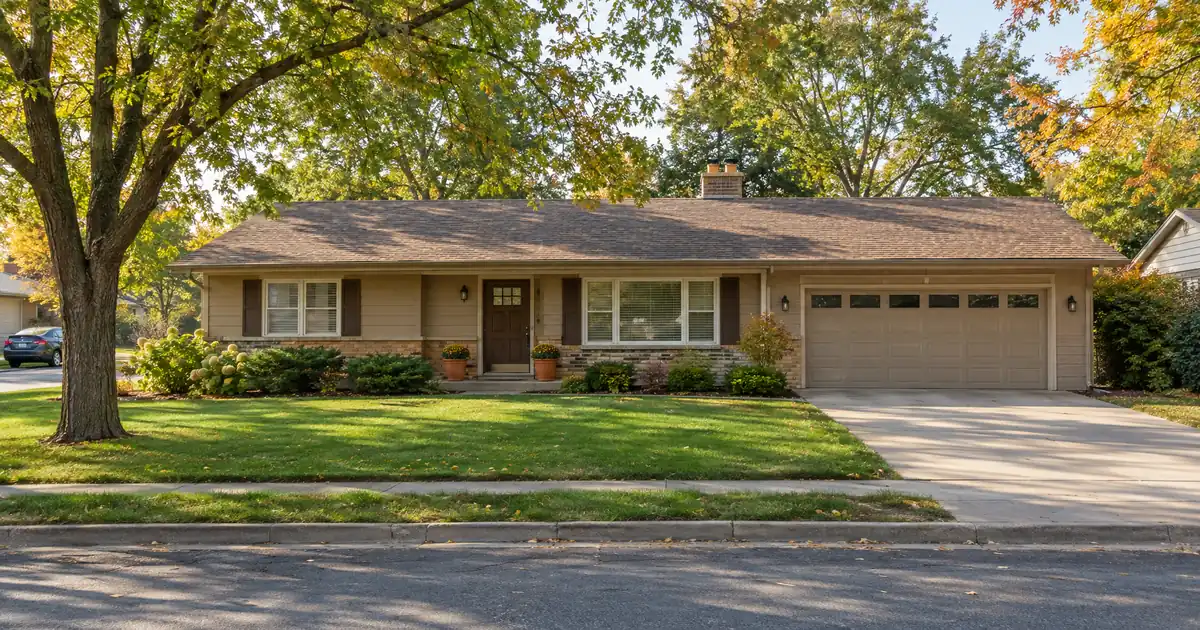
The Quick Read: Often yes, but a tenant who is behind makes the file harder and can lower the rent that counts toward the coverage ratio. A DSCR loan is reviewed primarily on property-level rental income covering the payment, subject to lender guidelines, so the question is which rent the lender can support with evidence. A one-time late payment usually matters far less than a pattern of shortfalls.
- The lender compares lease rent against what actually landed in your account.
- Appraiser market rent often becomes the fallback when the lease looks weak.
- A refinance puts payment history under a brighter light than a purchase does.
- Reserves show you can carry the property while the tenant issue gets resolved.
- Clearing the coverage test does not mean the property is making money.
DSCR files are built on rent evidence. A tenant who is behind does not break the formula. It weakens the evidence behind the rent number going into it. That distinction drives everything below.
DSCR Calculator
Run the numbers in your market
Rate source: Freddie Mac 30-yr average via FRED® — Federal Reserve Bank of St. Louis · effective Oct 15, 2026
Prefilled with starting assumptions — enter your own rent or nightly figures, taxes, insurance, and HOA for a more accurate picture.
Program parameters update from Lendmire’s centralized guideline source. Taxes and insurance are editable estimates.
As of Oct 15, 2026 · General Freddie Mac market benchmark, not a Lendmire loan offer. Rent, nightly rate, occupancy, taxes, and insurance are editable estimates. Short-term rental figures are estimates only and vary significantly by season, property type, management approach, and local short-term-rental rules — confirm local regulations before relying on them. Qualifying income for short-term rentals varies by program — some use appraisal market rent, others use documented STR history or projections — and is confirmed in underwriting. Not a Loan Estimate, approval, or commitment to lend. Program availability and eligibility are subject to lender guidelines, credit approval, property review, and underwriting.
Key Terms Defined
DSCR: the property’s monthly rent divided by its monthly debt obligation, expressed as a ratio.
PITIA: principal, interest, taxes, insurance, and any association dues, which together make up the payment the rent is tested against.
Scheduled rent: the rent the lease says the tenant owes each month.
Collected rent: the rent that actually shows up in your deposits.
Rent roll: a unit-by-unit list of tenants, lease terms, rents, and balances owed.
Market rent: the appraiser’s opinion of what the property would rent for today, documented on a rent schedule form.
Ledger: your running record of what each tenant owes and has paid.
Does a Late Tenant Disqualify a DSCR Loan?
No. A late tenant raises a documentation and risk question, not an automatic denial. The loan is sized on the property’s rent, and the lender needs to see that the rent figure is real and supportable. Whether a delinquent tenant changes that figure depends on how far behind the tenant is and what the file shows.
Here is how the DSCR ratio works. Monthly rent, or projected rent where the property is vacant, is divided by the full monthly payment. A ratio above 1.00 means the rent covers the payment. Across the wholesale network, 1.00 is where many select programs start. A separate select-lender path takes coverage below 1.00, with leverage and terms adjusted.
Where does the tenant come in? Underwriters want proof that the rent number is not just a number on a lease. A tenant who is a month late once, then catches up, is a footnote. A tenant who has paid partial rent for months, or nothing at all, makes the lease a poor piece of evidence. Lenders handle arrears differently, and no single arrears threshold applies across programs. Anyone who quotes you one is describing one lender, not the market.
Disclosed facts such as an active eviction, a payment plan, or a formal notice make the file harder to underwrite. How a given lender treats each one varies by lender, so those details need to go to the loan officer before the file is submitted, not after.
Which Rent Number Does the Lender Count?
The lender typically counts the lower of the lease rent and the appraiser’s market rent, and it wants deposits that support whatever lease rent it uses. For one unit, the appraiser’s opinion comes on Form 1007, the single-family comparable rent schedule. For two to four units, it comes on Form 1025. When a lease exists, underwriting compares it to that opinion. Lendmire’s explanation of how an existing lease sets the rent covers that lower-of comparison in detail.
There are three different rent figures in play, and they get confused constantly:
| Rent figure | What it is | Role in the file |
|---|---|---|
| Lease rent | What the tenant owes | Starting point, needs proof |
| Collected rent | What deposits show | Tests whether the lease is real |
| Market rent | Appraiser’s opinion | Fallback and cap |
Most files want recent bank statements showing rent landing in the owner’s account. On a cash-out, some lenders want a longer history. Underwriters may also review a rent ledger, concessions, and renewal terms, and the lease and the payment history have to agree. Where deposits run consistently below the lease, that gap suggests chronic under-collection. Where months show no deposits at all, the underwriter asks about occupancy or cash handling.
Here is a hypothetical to show the logic. Say the lease rent and the appraiser’s market rent match, and the deposits show full payment for most months with one short month. The coverage ratio does not move, and the explanation is a single line in the file. Now change it: the lease rent still matches the market rent, but deposits cover only part of the lease for several months. The lease still says the same thing, yet it is weak evidence. The lender may lean on market rent, condition the file, or reduce the rent it counts. Same ratio on paper, very different file.
Two different problems get lumped together here. A tenant on a below-market lease lowers the counted rent through the lower-of comparison. A tenant on an at-market lease who is not paying is a collectability problem. Do not treat them as the same.
How Far Behind Is the Tenant?
The deeper the arrears, the more the lender cares about the rent evidence, and the more the borrower has to explain. The ladder below shows what generally draws attention at each stage. Lender treatment varies, so read this as a map of what gets reviewed, not a set of rules.
| Situation | What gets reviewed | What to bring |
|---|---|---|
| Current, minor delay | Usually little | Recent statements |
| One month short | Whether it is isolated | Ledger and a short note |
| Several months short | Pattern of under-collection | Ledger, deposits, explanation |
| Partial payments | Gap versus lease | Deposit records, tenant history |
| Written payment plan | Whether it is being followed | The plan and proof of payments |
| Notice served | Collectability and risk | The notice and your plan |
| Eviction filed | Occupancy outlook | Status, plan, reserves evidence |
Think of the top of the ladder as a documentation exercise and the bottom as a risk exercise. At the bottom, expect the underwriter to ask whether the lease is usable at all, and whether market rent on a re-leased property is the more honest number.
Market data shows why lenders see this often. The Federal Reserve’s household well-being report found that 23 percent of renters were behind on rent at some point in the past year, up 2 percentage points from the prior year. Multifamily Dive’s coverage of Urban Institute research reports that one in five renter households paid late or missed a payment in 2025. The two surveys define the measure differently, so treat them as two separate signals, and note that both describe renters, not any landlord’s portfolio.
Purchase, Rate-and-Term, or Cash-Out: Does It Change the Answer?
Yes. The transaction type changes how much weight the lease and payment history carry. Typical purchase leverage runs 75% to 80% LTV on an investment property, rate-and-term refinance tops out at 85% LTV, and cash-out tops out around 75% LTV, all subject to lender guidelines and credit.
| Transaction | How late rent plays | Why |
|---|---|---|
| Purchase, tenant-occupied | Lease may count as weak evidence | Seller’s history is not yours |
| Purchase, vacant | Market rent drives the file | No lease to test |
| Rate-and-term | History is re-underwritten | Leases and collections reviewed |
| Cash-out | Thin rent has the least room | Larger payment tested |
On a purchase of a tenant-occupied property where the seller discloses arrears, expect the lender to treat the lease as weak evidence and lean on appraisal market rent. Market-rent substitution is routine on month-to-month and vacant units, and it applies here by the same logic.
On a refinance, the lender divides rent by the new loan’s payment and re-underwrites the evidence: current leases, the rent roll, and proof of rent collection. Lendmire’s page on DSCR refinance options for a rental walks through that review. Because a refinance is based on an occupied property’s real history, a delinquent tenant hurts more here than on a purchase. The history is the evidence, and it is poor.
On a cash-out, the payment being tested is larger. Rent that was thin on a smaller balance has less room on a bigger one. One practical lever is taking less cash out, which lowers the payment and lifts the ratio.
The experience point from placing files across the network: lenders vary in how hard they lean on collected rent versus the lower-of figure. A few programs lean on actual rent, and a delinquent tenant matters more there. Matching the file to a lender whose treatment fits the facts is much of the work.
Single Unit Versus Two to Four Units
On a small multi-unit property, healthy units can carry the ratio while the weak unit gets documented separately. The file uses leases and a rent roll alongside Form 1025. One delinquent unit may be a small share of the roll, and the underwriter can see that.
Treatment of a single unit in arrears is lender-specific. What helps in every case is a rent roll that reconciles to the leases, the deposits, and any concession or balance owed. Disclose the weak unit with its ledger rather than letting the underwriter find it in the deposits. A unit that appears healthy on the roll but shows no deposits is the kind of mismatch that stalls a file.
A single-unit landlord has no such cushion. One tenant is the whole income, so the evidence on that tenant carries the whole file.
DSCR vs. conventional financing
There are two common ways to finance an investment property, and they qualify you differently — here’s how investors weigh them.
Why investors choose it
- Qualifies on the property’s rental income — no personal tax returns, W-2s, or pay stubs needed to document income.
- No personal debt-to-income ceiling to clear, so existing mortgages and obligations don’t cap your borrowing the same way.
- Can be closed in an LLC, keeping the property inside a business entity.
- Built for scaling — not held to the limit on number of financed properties that conventional financing applies.
- Underwriting centers on the deal: generally qualifies when the rent covers the payment, a 1.00x coverage ratio being a common baseline (confirmed in underwriting).
- Designed specifically for investment property, including long-term and, where the program allows, short-term rentals.
Where it’s strong
- Often the lowest ongoing financing cost for a buyer who fully qualifies on personal income — a fit for a first property or a cost-first purchase.
Trade-offs for investors
- Requires full personal income documentation and must fit within a debt-to-income limit — salary, existing debts, and other mortgages all count.
- Typically held in your personal name rather than a business entity.
- Caps how many financed properties you can carry, which can become a ceiling as a portfolio grows.
- Evaluates you as a borrower as much as the property, which usually means more paperwork.
How investors usually choose: a first or single property often optimizes for the lowest financing cost; portfolio builders often optimize for leverage, vesting in an LLC, and scaling past conventional caps. The right answer depends on your goals, the property, and current guidelines — both paths run through select lenders in Lendmire’s wholesale network, with eligibility and terms confirmed in underwriting.
Vacant After a Tenant Leaves Is a Different File
A property with no tenant is not the same as a property with a tenant who is not paying. When the tenant has left or been removed, the file becomes a vacant-property file, and the appraiser’s market rent becomes the income figure. The property still has to be rent-ready and meet the full guideline review. Vacancy treatment and any time-to-lease expectations vary by lender.
The in-between state is the hard one: a tenant in place, a lease on paper, and rent unpaid. The lender cannot cleanly treat it as vacant, and the lease is weak evidence. That is why disclosure and documentation matters more than the formula.
What to Do Before You Apply
Pick one of three paths based on what the file shows.
1. Cure first. If the tenant can get current, let the ledger and deposits show it before applying. A recent run of full payments is the cleanest fix. It makes the lease credible again.
2. Document a plan. If the tenant has a written payment plan and is following it, bring the plan and the deposits that prove it. A followed plan reads very differently from a broken one.
3. Proceed on market rent. If the lease is a poor piece of evidence anyway, a file built on appraiser market rent may be the honest route, especially for a purchase or a property headed for re-leasing.
Timing matters on a refinance. If the file is near a lease expiry or a vacancy, the accepted rent weakens. Resolve the tenant issue before the appraisal is ordered where you can. The complete DSCR loans guide covers how the full qualification picture fits together.
Reserves are the other half of the answer. Across the network, reserves commonly run around 6 months of PITIA, stepping up to about 9 months on loans above $1,500,000. They exist to carry the property through vacancy, a slow tenant transition, or a repair. Showing them is a direct way to show you can keep paying the mortgage while a tenant is behind.
Documents to Have Ready
A clean arrears file removes questions before they are asked. Gather these:
- The current lease and any renewal or amendment
- A rent ledger showing what was owed and paid, month by month
- Bank statements showing rent deposits
- A unit-by-unit rent roll on small multi-unit properties
- Any notice served, written payment plan, or correspondence about balances
- Insurance documentation and the current mortgage statement, if refinancing
- Evidence of reserves
The lease and the payment history have to agree. If they do not, put the explanation in writing at the front of the file.
Clearing the Ratio Is Not the Same as Making Money
The coverage test counts PITIA against rent. Vacancy, repairs, management, utilities, and capex all sit outside it. A property can clear the test and still lose money in a month when a tenant does not pay. Run your own cash-flow stress test and do not treat the ratio as a profit measure.
That also answers a post-application worry. If the tenant falls behind after you apply or after closing, the new loan still assumes the rent you documented. Reserves and your own cash position carry the gap. The DSCR test measures the property at the time of the file, not your experience afterward.
One separate point: the DSCR test and your payment history on other loans are different things. If a tenant shortfall makes you late on a mortgage, that is a credit matter, not a coverage matter. Keep them apart. Tax treatment varies; consult a qualified professional.
Frequently Asked Questions
Can I get a DSCR loan if my tenant is being evicted?
It depends on the lender and the file. An active eviction is a disclosed fact that makes underwriting harder, and the lender may lean on appraiser market rent or ask for more reserves. If the tenant leaves, the property becomes a vacant-property file, which is routinely workable.
Does one late payment matter?
Usually not much. Underwriters focus on patterns, such as deposits that run consistently below the lease or months with no deposits. A single late month followed by catch-up generally needs only a short explanation in the ledger.
Do I need to evict before I apply?
Not necessarily. Some lenders will work with a tenant in place, and others will want the issue resolved first. The decision turns on how far behind the tenant is, whether the lease still counts as evidence, and whether market rent supports the loan.
Can the lender use market rent instead of the lease?
Often yes. Underwriting generally uses the lower of the lease rent and the appraiser’s market rent. When a lease is weak or a property is vacant, market rent carries more of the file. A few programs lean on actual rent instead, which makes arrears matter more there.
Can I buy a rental where the seller’s tenant is behind?
Yes, in many cases. Expect the lender to treat the seller’s lease as weak evidence and rely more on appraisal market rent. The purchase still has to meet the program’s leverage, credit, reserve, and property rules, which are reviewed lender by lender.
If you are buying or refinancing a rental property and want to see how the numbers work, Lendmire can help you compare DSCR loan options based on the property income, credit profile, leverage, and investor goals. Lendmire arranges DSCR financing through select lenders in its wholesale network across 41 markets, including Washington, D.C. Programs are subject to lender guidelines and credit approval, and none of this is a commitment to lend.
About Lendmire
Lendmire (NMLS# 2371349), a non-QM mortgage broker serving investors in 41 markets including Washington, D.C., helps structure DSCR scenarios commonly evaluated around a property’s rental income rather than personal income paperwork, subject to lender guidelines. A Scotsman Guide Top Mortgage Workplace in 2025 and 2026, Lendmire places loans through wholesale investor lenders and is not a direct lender.
Get Started
Ready to find the right loan for you?
In about 30 seconds you can review financing options available for your investment property. No commitment required.
Informational only. Not a Loan Estimate, approval, or commitment to lend. Program availability and eligibility are subject to lender guidelines, credit approval, property review, and underwriting.
References
1. Federal Reserve, Economic Well-Being of U.S. Households in 2025, Housing
2. Multifamily Dive, Middle-income tenants increasingly struggle to pay rent
This article is part of Lendmire’s DSCR loan program — full qualification details, guidelines, and scenarios live on the program page.
Related reading: How to Qualify for a DSCR Multifamily Loan for 5 to 10 Unit Properties · How to Get a DSCR Loan on a Vacant Rental Purchase · How a 40-Year IO DSCR Loan Lowers the Payment and Raises DSCR
Brandon Miller
Founder & CEO, Mortgage Loan Originator, Lendmire LLC
- Mortgage Loan Originator · NMLS# 1129696 · Verify on NMLS Consumer Access
- North Carolina Real Estate Broker · License# 343312 · Verify on NCREC
- North Carolina Insurance Producer · License# 19053198 · Property, Casualty, Life, Health · Verify on NAIC SBS
- Lendmire LLC · Firm NMLS# 2371349 · Verify firm licensure
Legal disclosures. Lendmire (NMLS# 2371349) is a state-licensed mortgage brokerage that arranges financing through wholesale lender relationships. Lendmire is not a direct lender, depository institution, or registered financial advisor. The discussion above is general informational content about real estate financing — it is not financial, legal, or tax advice, and readers should consult licensed professionals for guidance on their individual circumstances. Loan inquiries are subject to lender underwriting; this article does not represent a commitment to lend. Loan terms, rates, and qualification standards vary by borrower, property, and state, and are subject to change at any time. Equal Housing Opportunity. NMLS Consumer Access: nmlsconsumeraccess.org.