
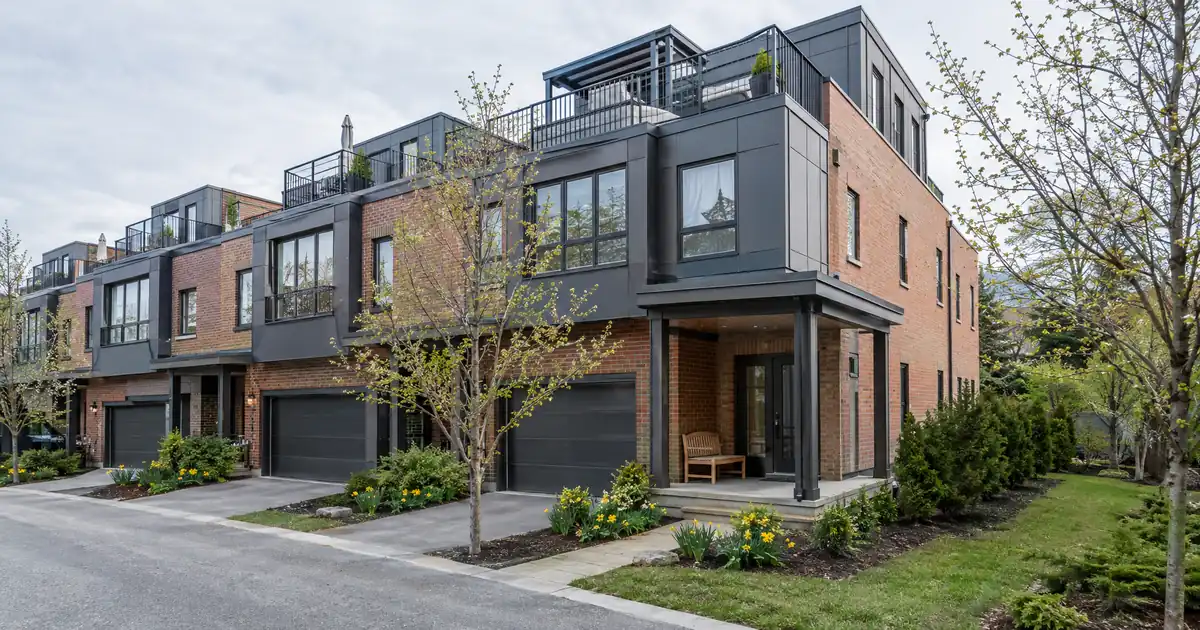
The Quick Read: Lenders treat this as an investment-property loan that qualifies primarily on property-level rental income covering the payment, subject to lender guidelines, and the townhouse’s legal form, the HOA’s rules, and your proof of short-term income decide whether the deal can move forward and at what leverage. Strong booking numbers do not settle the question on their own. If the HOA bans short stays, the loan stops there.
- Short-term rental purchases typically reach up to 75% LTV (loan-to-value) on the strongest files, with a 640 credit score and about 12 months of hosting or landlord experience as typical expectations.
- On a short-term rental refinance, leverage typically tops out around 70% LTV, and a short-term-rental cash-out refinance also tops out at 70%.
- The coverage ratio divides income by the full monthly obligation, and for a townhouse that obligation includes HOA dues.
- Clearing 1.00 coverage is not the same as positive cash flow.
- Read the HOA documents before you make an offer, not after.
What Is a Short-Term Rental Loan on a Townhouse?
No product is literally called an “Airbnb loan.” A short-term rental loan is an ordinary investment-property mortgage, underwritten on a property you plan to rent by the night or by the week. The word “short-term” describes the rental use. It does not describe how long the loan lasts. Most files are built on the 30-year fixed structure.
DSCR (debt service coverage ratio) is the test at the center of these loans. It compares the property’s rental income with its monthly housing obligation. Lendmire’s complete DSCR loans guide covers the basics.
DSCR loans are designed for non-owner-occupied investment properties. Because they are business-purpose investor loans, they are reviewed differently from a standard owner-occupied mortgage. You do not hand over pay stubs the way a homebuyer would. The file leans on the property’s income, your credit, your reserves, and your experience.
If you want the broader definition first, Lendmire’s piece What Is A Short-term Rental Loan? covers it.
Key Terms Defined
- DSCR: Monthly qualifying rental income divided by the monthly housing obligation. A result of 1.00 means income equals the obligation.
- PITIA: Principal, interest, taxes, insurance, and association dues. This is the monthly obligation in the DSCR math.
- Fee-simple townhouse: A townhouse where you own the structure and the land under it, not just a unit inside a building.
- PUD (planned unit development): A community of individually owned homes that share common areas and answer to an HOA.
- CC&Rs: The recorded covenants, conditions, and restrictions that set what owners may and may not do, including renting.
- Trailing-12-month history: A year of actual booking income, used as proof of what the property earns.
- Form 1007: An appraisal form that reports monthly market rent from long-term lease comparables.
- Seasoning: The waiting period between buying a property and refinancing or cashing out against it.
Is a Townhouse Treated Like a Single-Family Home?
Usually, yes, but only when the legal form says so. A fee-simple townhouse, or an attached unit in a PUD, generally reviews much like a single-family home. A townhouse-style building that is legally a condominium gets condo-project review instead. As an HOA documents explainer on condos versus townhouses puts it, the deed and declaration control, not the listing description.
That distinction matters for three reasons.
- Review depth. Condo review looks at the whole project: delinquency levels, master insurance, and reserves. A fee-simple townhouse mostly gets reviewed on its own.
- Insurance. A fee-simple townhouse typically carries its own homeowner-style policy, and the HOA master policy may cover only common areas. Short-term use needs its own insurance confirmation.
- Pricing and leverage. Classification can change the terms a lender will offer, on top of the short-term rental overlay.
Ask for the title or deed early. A listing that says “townhouse” is a marketing label, not a legal one.
How Underwriting Treats It, Step by Step
Here is the sequence a file follows when it moves through our wholesale network of DSCR lenders.
1. Confirm that short-term use is legal. Short-term rental rules can vary by city, county, HOA, and property type, so investors should confirm local rules before relying on projected rental income. Great projections cannot rescue a property where the use is prohibited.
2. Pull the HOA documents. A guide to checking HOA rental restrictions says restrictions often sit under headings like Use Restrictions or Rules and Regulations. Read the CC&Rs, the rules, and recent board minutes together.
3. Classify the property. Decide whether it is fee-simple, a PUD, or a condo in legal form. This sets the review path.
4. Choose the income evidence. The options are actual booking history, a third-party projection, or long-term market rent. The next section compares them.
5. Adjust the income. Short-term rentals cost more to run than long-term leases. Many programs reduce gross booking income before running the coverage ratio. The size of that reduction varies by program.
6. Run the DSCR. Divide the qualifying income by PITIA. For a townhouse, HOA dues belong in the denominator.
7. Order the appraisal. The appraiser establishes value. The rent exhibit is a point of confusion, covered below.
8. Underwrite the rest of the file. The lender reviews credit, reserves, insurance, entity documents, and title.
Notice what comes first. The legal check and the HOA review come before any math.
How Lenders Prove Short-Term Income
The table shows the three common paths.
| Evidence | What you provide | Typical lender view |
|---|---|---|
| Booking history | About 12 months of platform statements | Strongest proof of real income |
| Third-party projection | Market data report for the address | Accepted by some programs, not all |
| Long-term market rent | Appraiser’s rent figure | Often far below short-term potential |
Booking history is the cleanest path, and it ties to the usual hosting-experience expectation of about 12 months on short-term rental files. A new investor with no history can still look at programs that accept projections. Acceptance varies from lender to lender, so the choice of program matters as much as the property.
The long-term rent path is the trap. If the appraiser reports a long-term lease figure, coverage can fall well short of what the same townhouse earns by the night. For a deeper look at the income side, see Lendmire’s explainer What Counts As Short Term Rental Income For A Lender?.
A Worked Example in Ratios
Consider an attached townhouse in a planned community. All of the coverage figures below are modeled assumptions, not market data. They show direction, not a promise.
| Scenario (modeled) | Coverage read |
|---|---|
| Booking history, after income adjustment | About 1.25x |
| HOA dues increase | About 1.15x |
| Slow booking season | About 1.05x |
| Appraiser’s long-term rent only | About 0.90x |
The first row clears 1.00 with some cushion. Two ordinary changes, higher dues and a slower season, erode that cushion. The last row shows why the income evidence matters so much. Same house, same loan, different proof.
Here is the part many new investors miss. Coverage compares income to PITIA only. Repairs, vacancy, management, utilities, and capital expenses sit outside the calculation. A townhouse that clears 1.00 can still lose money after those costs. Treat the ratio as a lender’s test, not a profit forecast.
Coverage below 1.00 is a separate path. It is available through select lenders in the network, with leverage and terms adjusted. Where many select programs start at 1.00, this other path trades lower leverage and different terms for the lower ratio.
What Program Numbers to Expect
These are typical ranges across the select wholesale-network lenders we place short-term rental files with. They are guidelines, not commitments, and every file is underwritten individually.
- Purchase leverage: up to 75% LTV on a short-term rental purchase, on the strongest files.
- Refinance leverage: around 70% LTV on a short-term rental refinance.
- Cash-out: up to 70% LTV on short-term-rental collateral, versus up to 75% on a standard long-term rental.
- Credit: a 640 score is the typical short-term rental expectation. Stronger scores help the file.
- Coverage: on a purchase, the floor is 1.00. On a refinance, the floor is 1.00 too. Stronger ratios open better terms.
- Experience: about 12 months of hosting or landlord history is the usual expectation.
- Loan size: up to $3,000,000 on standard programs. Smaller balances route through select lenders in the network.
- Reserves: commonly around 6 months of PITIA, but they vary by lender, leverage, loan size, and transaction type.
- Seasoning: about 6 months is the common expectation on a cash-out.
- Terms: the 30-year fixed is the spine. Extended 40-year terms and interest-only periods are available through select lenders in the network, and ARM structures exist for investors who want them.
A larger down payment lowers the monthly obligation and can lift the coverage ratio. It does not erase leverage caps, credit floors, reserve rules, or property eligibility. The strongest files clear both tests: enough equity and enough rental coverage. Any scenario you run yourself will produce estimates, not quotes.
Qualification stays subject to lender guidelines, credit approval, and property review. Nothing here is a commitment to lend.
Where the General Rule Breaks
HOA bans and caps. A rule against rentals under 30 days is a standard HOA restriction, and a rental cap that is already full can block renting altogether. The HOA rental restrictions guide lists these types, along with minimum lease terms, owner-occupancy waiting periods, and tenant approval rules. Reading the documents is the only way to know.
Association process. HOAs have to follow their own rules. An association generally needs a written short-term rental policy and must enforce it uniformly. Rules on this vary by state and by association, so treat that as one example, not a national rule.
The appraisal form. Appraisers often report rent on Form 1007, which Fannie Mae’s appraiser update describes as documenting monthly market rent for single-family investment properties, and it can be used for condos. That is a monthly-lease form. It was not built to estimate nightly income. DSCR loans are not agency products, so this is contrast only, and the lender’s own income method controls the file. Trade press argues the form falls short for short-term rental lending even outside the agency channel.
Form 1025 is for two- to four-unit properties. A single townhouse typically uses the 1007 plus a narrative short-term income analysis. There is no dedicated short-term rental form.
Condo-classified townhouses. These go through condo-project review. Delinquent dues, thin reserves, or a weak master policy at the project level can sink a file even when your unit is fine.
Cash-out. Short-term-rental collateral carries a lower ceiling than long-term rental collateral, and the income adjustment hits coverage harder. A cash-out on a townhouse can pencil out on rent and fail on a short-term income haircut.
Property types not offered. Manufactured homes (single- and double-wide), log homes, and barndominiums are not offered in these programs. An attached townhouse is not in that group.
Insurance gaps. Where the HOA insures shared roofs or party walls, coverage gaps are common. Confirm your own policy covers short-term use before you rely on it.
Why Short-Term Townhouse Files Fail
Most failed files trace back to one of four causes.
- Use is not allowed. An HOA ban or a full rental cap. The fix is to find out before the offer.
- Income evidence is weak. Too little history, or a long-term rent figure that sinks coverage. The fix is a program that accepts your type of proof.
- Dues are underestimated. HOA dues sit in the denominator, so an unexpected increase can push coverage under the floor.
- Reserves fall short. Short-term rentals invite more scrutiny, and thin liquidity weakens the file.
Many investors in this position also run the numbers on a smaller balance or a bigger down payment. That can help, but it never overrides a use restriction.
Is This Loan the Right Fit?
It fits you if you are buying or refinancing an attached rental where short-term use is legal, you have about a year of hosting history or a lender that accepts projections, and the coverage ratio clears the floor with room to spare.
Look elsewhere if the HOA restricts short stays, if you plan to live in the property full time, or if your income case rests only on an optimistic projection. A long-term lease on the same townhouse might clear the ratio more easily and with less risk.
Tax treatment can depend on how the funds are used and how the property is held; investors should keep clear records and speak with a qualified tax professional before relying on any deduction.
Frequently Asked Questions
Do I need traditional personal-income documentation or pay stubs to qualify?
DSCR loans qualify primarily on property-level rental income covering the payment, subject to lender guidelines. You will still provide credit information, reserves documentation, and entity and insurance documents. Select lenders in the network also offer no-ratio structures, generally for borrowers who already own a primary residence.
Can I live in the townhouse and still use this loan?
No. These loans are for non-owner-occupied investment properties. If you plan to occupy the home, look at owner-occupied financing instead.
Can I buy the townhouse in an LLC?
Many investors do, subject to lender program eligibility. Some lenders have entity documentation requirements, so raise the question before you contract.
What if the HOA bans short-term rentals?
Then the short-term rental strategy is off the table for that property, however good the projections look. The lender can still review the file as a long-term rental, and the coverage ratio will reflect long-term rent.
Is a refinance easier than a purchase?
It can be. Existing booking history is the strongest proof, but short-term rental refinances typically cap around 70% LTV. On a cash-out, the ceiling is 70% on short-term-rental collateral, and seasoning of about 6 months is the common expectation.
Next Steps
If you are buying or refinancing a rental property and want to see how the numbers work, Lendmire can help you compare DSCR loan options based on the property income, credit profile, leverage, and investor goals. Lendmire is a broker that arranges financing through select lenders in its wholesale network, covering 41 markets, including Washington, D.C. For a townhouse, bring the HOA documents to the first conversation, because they decide more files than the rent does.
About Lendmire
Lendmire (NMLS# 2371349) is a mortgage brokerage focused on DSCR investor financing, helping arrange programs through wholesale and investor-lending channels in 41 markets, including Washington, D.C. DSCR loans are evaluated by the lender on property cash flow rather than personal income, subject to lender guidelines, supporting LLC closings and accommodating investors with four or more financed properties. Scotsman Guide Top Mortgage Workplace in both 2025 and 2026.
Get Started
Ready to find the right loan for you?
In about 30 seconds you can review financing options available for your investment property. No commitment required.
Informational only. Not a Loan Estimate, approval, or commitment to lend. Program availability and eligibility are subject to lender guidelines, credit approval, property review, and underwriting.
References
1. governingdocs.dev on condo versus townhouse HOA differences
2. governingdocs.dev on checking HOA rental restrictions
3. Fannie Mae appraiser update on Form 1007
4. HousingWire on short-term rentals and the appraisal playbook
This article is part of Lendmire’s short-term rental loan program — full qualification details, guidelines, and scenarios live on the program page.
Related reading: LLC vs Personal Name on a DSCR Loan for an LLC-Owned Rental · How to Qualify for a Jumbo Loan on a High-Value Rental Purchase · How to Get a DSCR Loan on a Vacant Rental Purchase
Brandon Miller
Founder & CEO, Mortgage Loan Originator, Lendmire LLC
- Mortgage Loan Originator · NMLS# 1129696 · Verify on NMLS Consumer Access
- North Carolina Real Estate Broker · License# 343312 · Verify on NCREC
- North Carolina Insurance Producer · License# 19053198 · Property, Casualty, Life, Health · Verify on NAIC SBS
- Lendmire LLC · Firm NMLS# 2371349 · Verify firm licensure
Compliance and disclosures. Lendmire (NMLS# 2371349) is a licensed mortgage broker and is not a direct lender, depository institution, financial advisor, or tax professional. Content in this article is general market analysis and educational information — not financial, legal, or tax advice for any specific situation. Lendmire does not guarantee loan approval; every transaction is subject to underwriting by the funding lender. Mortgage pricing and loan program guidelines are subject to change at any time without notice and vary by borrower characteristics, property type, and state regulations. Lendmire complies with Equal Housing Opportunity. Licensure verification: NMLS Consumer Access.