
The Quick Read: On a short-term rental loan, the 14-day line is the point where expected personal stays stop looking like a business-purpose investment and start looking like a second home, so most investor loan programs expect you to plan little or no owner use and to sign a certification saying so before funding.
- The test looks forward. It asks how many days you expect to use the property yourself over the coming year, not how many you used last year.
- Crossing 14 expected owner days changes how the loan is classified. Staying under 14 does not create a right to stay, because each program sets its own personal-use policy.
- Short-term rental DSCR (debt service coverage ratio) files typically allow purchase leverage up to 75% LTV (loan-to-value) and cash-out or refinance leverage up to 70% on short-term-rental collateral. They generally expect a 640+ credit score and about 12 months of hosting history, subject to lender guidelines.
- The IRS also has “14-day” rules. They are different tests with different jobs, and clearing one does not clear the other.
What the Rule Actually Is
The rule is a classification test. It decides whether your property counts as a rental you own for business or as a home you also rent out.
DSCR loans are designed for non-owner-occupied investment properties. Because they are business-purpose investor loans, they are reviewed differently from a standard owner-occupied mortgage. The lender’s job at application is to decide which bucket your property belongs in.
The line sits at 14 days of expected owner use in the coming year. Plan to stay longer than that, and the property no longer fits the non-owner-occupied category. Plan to stay less, and you have only passed the federal floor. Programs layer their own occupancy and personal-use policies on top, and those are typically stricter than the federal floor.
That gap trips up new hosts. They hear “14 days” and assume it is a free allowance. Across the wholesale network Lendmire places files with, many programs expect no owner stays at all, and a few tolerate limited personal use if it is disclosed up front. None of them treat 14 days as an entitlement.
How Underwriting Treats It, Step by Step
The lender builds a record of your intent, then checks that every other document tells the same story. The steps run in this order.
1. Classification at application. The lender asks how you plan to use the property. The answer you give, not the label on the listing, drives the classification.
2. A signed certification. Most DSCR files include a business-purpose or non-occupancy statement signed at or before funding. It says you do not live there and do not plan to. It also says you will not claim the property as a primary or secondary residence.
3. Rent support. Appraisers use Form 1007 (a single-family rent schedule) or Form 1025 (an operating income statement for 2-4 units). For short-term rentals, programs often lean on platform booking history or a short-term rental income analysis instead.
4. Consistency checks. Your mailing address, insurance policy, lease or booking calendar, and application should line up. A policy written as a second home, or a calendar full of owner blocks, contradicts a business-purpose story.
5. After funding. The certification keeps mattering. A later move-in or heavy personal use can conflict with what you signed.
Underwriting still compares rent to the full monthly obligation. That is how the coverage ratio works, and it is covered in Lendmire’s complete DSCR loans guide. Owner-blocked nights matter here too, because they reduce the booking history a lender reviews.
Key Terms Defined
Business-purpose loan: a loan made to acquire or operate a property as an investment, not as a home for the borrower.
Owner-use days: days you, and in many programs your family or guests, use the property personally instead of renting it.
Occupancy certification: the signed statement that you do not occupy the property and do not plan to.
PITIA: principal, interest, taxes, insurance, and any association dues, which together make up the monthly obligation the rent must cover.
Non-owner-occupied: a property the borrower does not live in and does not expect to use personally beyond the allowed limit.
Where the 14-Day Number Comes From
The number comes from federal commentary on business-purpose lending. The CFPB’s official interpretation of Regulation Z, section 1026.3 says credit to acquire or maintain non-owner-occupied rental property is treated as business purpose. It adds that if the owner expects to occupy the property for more than 14 days during the coming year, the property cannot be considered non-owner-occupied.
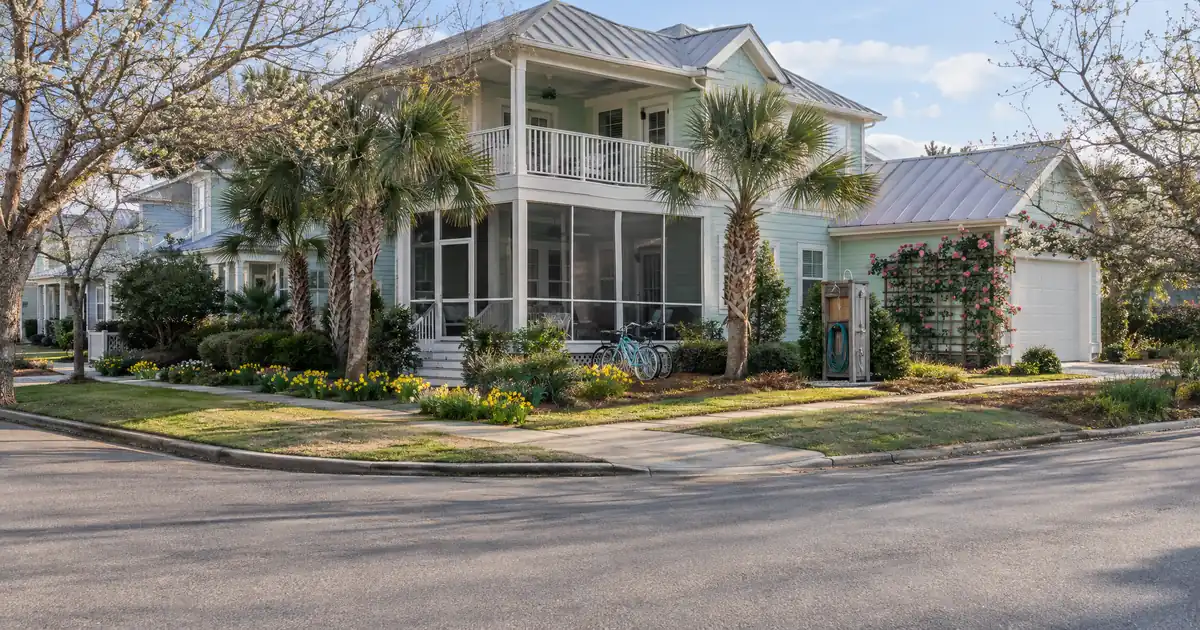
The commentary’s own example is a beach house. The owner stays a month in the summer and rents it out the rest of the year. That property is treated as owner-occupied.
Falling out of the non-owner-occupied category does not automatically make the loan consumer credit. The same commentary switches to unit counts. Credit to acquire is deemed business purpose if the property has more than 2 units, and credit to improve or maintain is deemed business purpose above 4 units. A practitioner guide from Doss Law adds that falling short of those unit counts does not necessarily make it consumer credit either, because the primary-purpose analysis still applies.
The test has one threshold. It has no “or 10% of rental days” alternative. That detail matters in the next section.
Three Different “14-Day Rules”
The same number shows up in three unrelated places, and mixing them up is a common mistake hosts make.
| Rule | What it decides | Governs your loan? |
|---|---|---|
| Lending occupancy test | Owner-occupied or not | Yes, as a floor |
| IRS personal-use limit | Whether it counts as a home for tax | No |
| IRS minimal-rental rule | Whether rental income is excluded | No |
IRS Tax Topic 415 explains the tax side. Personal use above the greater of 14 days or 10% of the days rented at a fair price makes the property a home for tax purposes. Separately, renting fewer than 15 days means the income is excluded and the rental expenses are not deductible. The University of Illinois Tax School walks through the same limits.
Notice the 10% escalator. A busy host can stay within the tax limit and still be well past the lending line, because the lending test has no escalator. Tax treatment can depend on how the funds are used and how the property is held; investors should keep clear records and speak with a qualified tax professional before relying on any deduction.
Where the General Rule Breaks
These are the edge cases where the answer is not what the headline number suggests.
- Exactly 14 days. The commentary says “more than 14.” Whether a program permits any owner days is a separate question, so never assume 14 is allowed.
- Whose days count. The federal text refers to the owner. Whether family or guests count is a program and certification question. Treat free stays by relatives as owner use unless the program says otherwise.
- House-hacking a 2-4 unit building. If you live in one unit, the property is owner-occupied. Many DSCR programs do not offer that structure, even where the federal unit tests would deem the loan business purpose.
- More than 2 units with 14+ owner days. The federal acquisition test may still deem the loan business purpose. The program’s own policy may still bar owner occupancy.
- LLC title. Holding title in an LLC does not change the analysis, subject to lender program eligibility on entity borrowers. Purpose and expected use control, not the name on the deed.
- Repair days. The IRS excludes days spent working substantially full-time on repairs from personal use. That is a tax rule, and a lender may not apply it to program occupancy.
Four Hosts, Four Outcomes
Each row below is a modeled scenario, not a market statistic.
| Scenario | Owner days | Federal line | Typical program read |
|---|---|---|---|
| Fully booked, no stays | 0 | Clear | Fits |
| Blocks one holiday week | 7 | Under 14 | Disclose; varies |
| Parents stay free | 10 | Under 14 | Often counts as owner use |
| Owner takes a month | 30 | Over 14 | Outside the box |
The first host is the cleanest file. The second host should raise the holiday week before applying, because a calendar block that surprises an underwriter reads worse than one disclosed up front. The third host is where families create trouble, since free stays rarely look like rental days to a lender. The fourth host has a second home, and the financing should match it.
The honest read on the middle rows is that they are program-specific. Lendmire’s network includes lenders that treat any planned personal use as disqualifying and a few that allow a small, documented amount. Plan around the stricter reading unless a specific program says otherwise in writing.
What Happens If You Go Over
Exceeding what you certified is a loan problem, not just a tax problem. A move-in or heavy personal use after funding can contradict the certification you signed. If the file closed on inaccurate representations, that can become a misrepresentation issue instead of a simple occupancy question.
Fixing it by refinancing is not always cheap. Many DSCR notes carry prepayment penalties, so unwinding a mistaken classification can cost real money. That is why the planning conversation belongs before the application. Lendmire’s piece Short-Term Rental Cash-Out Owner-Use Blocks on a Cabin or Resort Unit covers the refinance side of this.
The Decision in Practice
Start with an honest count of the days you want. Then pick the financing that matches.
If you want real personal time, a vacation-style property usually belongs under second-home or other owner-occupied-type financing. If the property is purely an investment, a DSCR loan fits. Lendmire’s piece Should a Short-Term Rental Use DSCR or Conventional Cash-Out? can help you choose between those two.
For a purely investment short-term rental, the network’s typical ranges look like this:
- Purchase: up to 75% LTV on the strongest files, with a 1.00 coverage floor.
- Refinance or cash-out: up to 70% LTV on short-term-rental collateral, with a 1.00 coverage floor.
- Credit and experience: a 640+ score and about 12 months of hosting history are typical expectations.
- Loan size: up to $3,000,000 on standard programs. Each figure is subject to lender guidelines and a complete review of property type, leverage, and credit.
All of this is subject to lender guidelines. Clearing 1.00 also does not mean the property cash flows. DSCR compares rent to PITIA only, so repairs, vacancy, management, utilities, and capital expenses sit outside the number. Short-term rental rules can vary by city, county, HOA, and property type, so investors should confirm local rules before relying on projected rental income.
Frequently Asked Questions
Can I stay at my short-term rental if I finance it with a DSCR loan?
It depends on the program, and the safest plan is no owner stays. Many programs treat any planned personal use as outside the loan’s purpose, and a few allow a small, disclosed amount. Ask before you apply and put any planned stays in writing.
Is the limit always exactly 14 days?
No. The 14-day figure is the federal floor for classifying the property as non-owner-occupied, and programs typically set tighter limits. The IRS has its own version with a 10% alternative, which is a separate test.
Do repair and maintenance days count as owner use?
For the IRS, days spent working substantially full-time on repairs are generally not personal use. A lender may not follow that rule for program occupancy, so confirm how your program treats work trips.
Does letting family stay for free count?
Usually, yes. For tax purposes the IRS treats family use as personal use, and lenders commonly read free stays the same way. Whether they count toward the lending test is a program question.
Is this the same as the Augusta rule?
No. The Augusta rule is the IRS provision that excludes income from renting fewer than 15 days. It has nothing to do with how a lender classifies your loan, and an active short-term rental host falls outside it.
Next Step
If you are buying or refinancing a rental property and want to see how the numbers work, Lendmire can help you compare DSCR loan options based on the property income, credit profile, leverage, and investor goals. As a mortgage broker, Lendmire arranges DSCR financing through select lenders in its wholesale network, across 41 markets including Washington, D.C. Qualification is subject to lender guidelines. This is not a commitment to lend.
About Lendmire
Lendmire — NMLS# 2371349 — is a mortgage brokerage specializing in DSCR investor loans, helping arrange financing across 41 markets, including Washington, D.C., through wholesale and investor-lending channels. The model centers on property-level rental income reviewed by the lender rather than W-2 documentation, subject to lender guidelines, suiting entity-owned and multi-property investors. Lendmire holds Scotsman Guide Top Mortgage Workplace recognition for 2025 and 2026.
Get Started
Ready to find the right loan for you?
In about 30 seconds you can review financing options available for your investment property. No commitment required.
Informational only. Not a Loan Estimate, approval, or commitment to lend. Program availability and eligibility are subject to lender guidelines, credit approval, property review, and underwriting.
References
1. CFPB Regulation Z Official Interpretations, section 1026.3
2. Doss Law, Business Purpose Exemption Simplified
3. IRS Tax Topic 415, Renting Residential and Vacation Property
4. University of Illinois Tax School, Tax Rules for Rentals and Vacation Homes
This article is part of Lendmire’s short-term rental loan program — full qualification details, guidelines, and scenarios live on the program page.
Related reading: How to Transfer an LLC-Owned Rental Into a DSCR Loan at Closing · How to Buy a First Rental With a DSCR Loan Before Owning a Home · How to Refinance a Rental Held in an LLC With a DSCR Loan
Brandon Miller
Founder & CEO, Mortgage Loan Originator, Lendmire LLC
- Mortgage Loan Originator · NMLS# 1129696 · Verify on NMLS Consumer Access
- North Carolina Real Estate Broker · License# 343312 · Verify on NCREC
- North Carolina Insurance Producer · License# 19053198 · Property, Casualty, Life, Health · Verify on NAIC SBS
- Lendmire LLC · Firm NMLS# 2371349 · Verify firm licensure
Legal disclosures. Lendmire (NMLS# 2371349) is a state-licensed mortgage brokerage that arranges financing through wholesale lender relationships. Lendmire is not a direct lender, depository institution, or registered financial advisor. The discussion above is general informational content about real estate financing — it is not financial, legal, or tax advice, and readers should consult licensed professionals for guidance on their individual circumstances. Loan inquiries are subject to lender underwriting; this article does not represent a commitment to lend. Loan terms, rates, and qualification standards vary by borrower, property, and state, and are subject to change at any time. Equal Housing Opportunity. NMLS Consumer Access: nmlsconsumeraccess.org.