
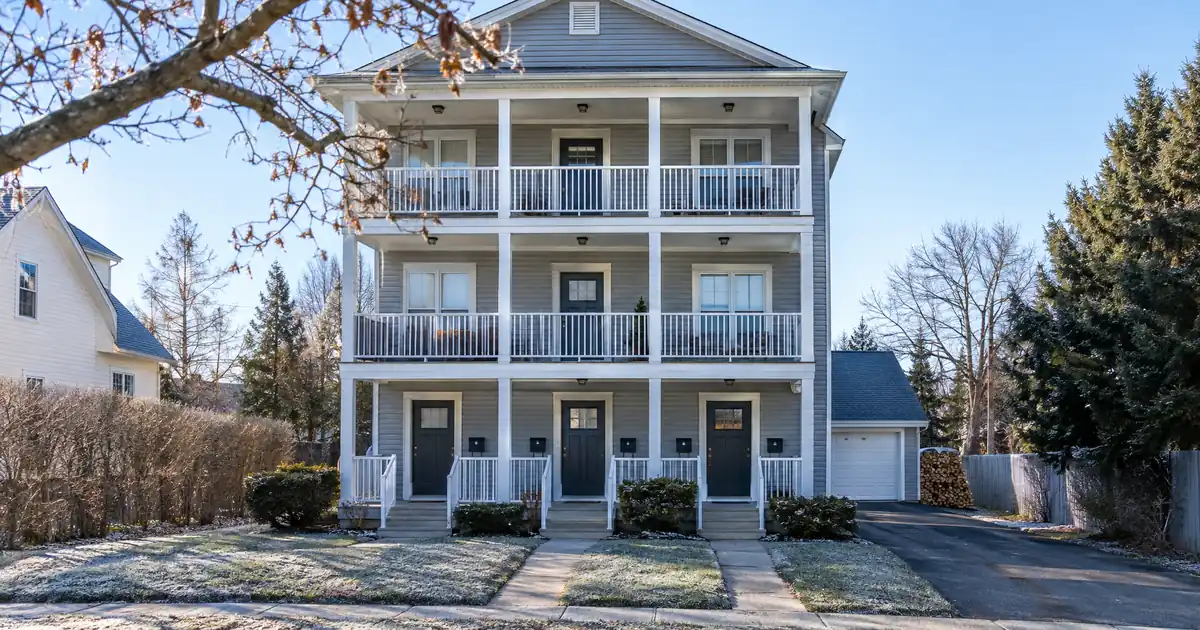
The Quick Read: Lender review centers primarily on whether the building’s rental income covers its full monthly obligation, subject to lender guidelines, rather than on your personal paycheck. On a duplex, triplex, or fourplex, the income from every legally rentable unit gets added together and compared to one payment. Nightly-rental income is measured from booking history or a market projection, and often counted at a discount.
- The test is rental income against the monthly payment (principal, interest, taxes, insurance, HOA). It is not your W-2 or your tax return.
- On a short-term-rental purchase, leverage tops out at 75% LTV on the strongest files. On a refinance it is around 70%.
- Expect a credit score of 640 or higher and about 12 months of hosting experience.
- Each unit must be legally allowed to operate as a short-term rental, or its income may not count.
- Clearing the coverage test is not the same as making money. Cleaning, platform fees, and furnishing sit outside the math. Terms vary by lender guidelines, property type, leverage, credit profile, and full file review.
Key Terms Defined
Six terms come up again and again. Here they are once, in plain words.
- DSCR (debt service coverage ratio): monthly qualifying rental income divided by the monthly payment. At 1.00, rent exactly covers it.
- PITIA: principal, interest, taxes, insurance, and any HOA dues. It is the full monthly obligation the income is measured against.
- LTV (loan-to-value): the loan balance as a percentage of the property’s value or price. Lower LTV means more equity from you.
- Trailing-12 (TTM) revenue: the last twelve months of actual booking income from a platform or property-management statement.
- Haircut: the discount a lender applies to projected or reported nightly income before using it. Think of it as a built-in cushion for vacancy and costs.
- Form 1025: the appraisal report used for two- to four-unit properties. It lists rent for each unit and an operating income statement.
Short-Term Rental Calculator
Run the STR numbers in your market
Rate source: Freddie Mac 30-yr average via FRED® — Federal Reserve Bank of St. Louis · effective Oct 15, 2026
Prefilled with starting assumptions — enter your nightly rate, occupancy, taxes, and insurance for a more accurate picture.
Short-term rental income is documented with a 12-month history or a market data report. Program parameters update from Lendmire’s centralized guideline source.
As of Oct 15, 2026 · General Freddie Mac market benchmark, not a Lendmire loan offer. Nightly rate, occupancy, taxes, and insurance are editable estimates. Qualifying income for short-term rentals varies by program — some use appraisal market rent, others use documented STR history or projections — and is confirmed in underwriting. Not a Loan Estimate, approval, or commitment to lend. Program availability and eligibility are subject to lender guidelines, credit approval, property review, and underwriting.
What This Loan Actually Is
A short-term rental loan on a 2-4 unit is a DSCR investor loan. “Short-term” describes how guests use the building, not how long you have to repay. Repayment terms are usually long: the spine of the lineup is the 30-year fixed. Select lenders in the network also offer 40-year terms and interest-only periods, and ARM structures exist for investors who want them.
DSCR loans are designed for non-owner-occupied investment properties. Because they are business-purpose investor loans, they are reviewed differently from a standard owner-occupied mortgage. That one fact shapes the rest of the article.
Here is how the three common routes compare for a buyer who wants nightly-rental income from a small multifamily.
| Factor | STR DSCR loan | Conventional | Owner-occupied |
|---|---|---|---|
| Main qualifier | Property income | Personal income, DTI | Personal income, DTI |
| Traditional personal-income documentation | Not the core test | Required | Required |
| Nightly income | Counted, often discounted | Heavily discounted | Rarely counted |
| You live there | No, investment use | Possible | Yes, one unit |
| Fit | Scaling a portfolio | Few properties | House-hacking |
Conventional lenders typically haircut expected nightly income and then run it through your global debt-to-income picture. That is why investors with heavy write-offs or several financed properties often move to DSCR. Lendmire’s complete DSCR loans guide walks through the general program from start to finish.
A quick note on the owner-occupied route. If you plan to live in one unit and rent the others, a primary-residence loan may fit better, because that financing assumes you live there. Once you move out and the building is purely a rental, the DSCR path becomes the practical one.
How Underwriting Treats a 2-4 Unit, Step by Step
Underwriting a multi-unit short-term rental follows a predictable sequence. Each step feeds the next, so a weak input early shows up in the final ratio.
1. Choose the income path. If the property has booking history, you supply twelve months of statements from the platform or property-management software. If it has none, the lender leans on a market projection from a data tool, an appraiser’s analysis, or both.
2. Order the appraisal. On a two- to four-unit building, the appraiser completes Form 1025, which breaks out rent by unit and reports an operating income statement. The Fannie Mae Selling Guide names this form for two- to four-unit appraisals, including units in PUDs, condos, and co-ops. DSCR loans are not agency products. Only the form name is borrowed.
3. Set the qualifying income. Many programs count less than 100% of reported or projected nightly revenue. The size of the haircut varies by lender, so the same building can produce different coverage numbers on different programs.
4. Divide income by PITIA. That is the coverage ratio. Run it twice: once on short-term income and once on supported long-term rent. The gap between the two tells you how much of the deal rests on guest bookings.
5. Review the rest of the file. Credit, assets, reserves, property condition, and eligibility all still matter. A ratio that clears the floor does not guarantee approval.
6. Check legal use. The building must be allowed to operate as a short-term rental under city, county, and HOA rules. Skip this one and everything above it can collapse.
Notice what is missing: no W-2s, and no tax-return debt-to-income test as the main event. The loan is reviewed primarily on property-level rental income covering the payment, subject to lender guidelines. Credit and cash still count.
History or Projection: Where Nightly Income Comes From
Booking history is the strongest evidence, and projection is the fallback. Across the programs Lendmire places files with, short-term-rental files usually expect about 12 months of landlord or host experience. That is experience on your side of the table, not always on this specific building.
On a purchase, you may be buying a building that has never hosted a guest. Then the lender needs another source. A seller’s statements can help. So can a third-party market projection, or the appraiser’s rent analysis. Programs differ on which they accept and how much they discount it.
On a refinance, the property usually has your own track record, so actual statements carry the file. That is also why refinance and cash-out terms run tighter than purchase terms.
Seasonality is where optimistic files go wrong. A lender reading twelve months of statements sees the slow months along with the busy ones. Overline IQ warns against annualizing peak-season revenue and recommends full twelve-month data. Good advice. A beach-week August multiplied by twelve is a fantasy, not a file.
What the Math Looks Like on a Duplex, Triplex, and Fourplex
More units means more income spread across one payment. But unit count only helps when each unit can legally earn what you assumed. Run the numbers on four modeled setups. The ratios below are illustrative assumptions, not market data.
| Setup | Income counted | Modeled coverage |
|---|---|---|
| Duplex, both units STR | Both, after haircut | About 1.15x |
| Fourplex, all four STR | All four, after haircut | About 1.25x |
| Fourplex, one STR, three long-term | Blended | About 1.10x |
| Fourplex, peak season annualized | Overstated | Looks 1.4x, true about 0.95x |
The last row is the trap. A file built on one hot quarter can look comfortable and then fall below 1.00 on a full year of statements.
When coverage lands below 1.00, you have options. A 1.00 floor is where many select programs start. A separate path through select lenders in the network goes below 1.00, with leverage and terms adjusted. Interest-only structuring or a larger down payment can also help the ratio. Whether any of them fits your building depends on lender guidelines, credit approval, and property review.
Mixed-Use Buildings: Some Units Nightly, Some Long-Term
Plenty of owners run a hybrid. One unit gets guests, and the others hold year-round tenants. That is allowed in principle, and the appraisal’s unit-level rent schedule is built to show it.
Each unit is typically treated by how it is actually used and documented:
| Unit status | Typical treatment |
|---|---|
| STR with 12 months of history | Booking statements, discounted |
| STR, no history | Projection or appraiser analysis |
| Long-term, leased | Lease and market rent |
| Vacant | Market rent from the appraisal |
| STR not legally permitted | May not count as STR income |
How a given program blends the two streams varies by lender. This is one reason a broker who sees many lenders’ guidelines earns a spot at the table. Some programs lean toward the lower of two readings for a mixed building. Others accept each unit’s own documentation. Ask before you assume.
Where the General Rule Breaks
The basic rule is simple: add up the income, divide by the payment. Several edge cases bend it.
Per-unit caps. Local rules can limit how many units in a small multifamily may operate as short-term rentals. One city’s licensing chart, from St. Paul, shows the pattern. It treats a non-owner-occupied duplex or triplex differently from an owner-occupied one. Short-term rental rules can vary by city, county, HOA, and property type, so investors should confirm local rules before relying on projected rental income.
Picture a fourplex where only one unit can legally host guests. The lender may count nightly income for that unit and long-term rent for the other three. That blended number is usually lower than the headline. The treatment depends on the program, so confirm it before you sign a contract.
Rent control and similar limits. Form 1025 asks whether the property is subject to rent control. That question signals that local rules can reach the income analysis, especially on the long-term units.
Property type. DSCR programs in the network cover one- to four-unit residential. Manufactured homes (single- and double-wide), log homes, and barndominiums are not offered. If the building is any of those, this loan does not apply.
Needs work or vacant on day one. A unit with no furniture, no listing, and no history gives the lender little to measure. Expect to lean on projection and a lower income credit, or to stabilize the property first.
Entity ownership. Many investors hold the building in an LLC, subject to lender program eligibility. Ask early so the title and the application match.
The Terms You Can Expect
Program figures below are typical ranges from select wholesale-network guidelines, not promises. Every file is underwritten individually.
On a short-term-rental purchase, leverage goes up to 75% LTV on the strongest files. On a short-term-rental refinance, it is around 70%, and a cash-out refinance on short-term-rental collateral also sits at 70%. Standard long-term rentals reach 75% on a cash-out, so nightly collateral gets tighter treatment. Exact terms depend on the lender’s guidelines, property type, leverage, and a full review of the borrower’s file.
Credit starts around 640 for short-term-rental files. The coverage floor is 1.00 on both purchase and refinance. Stronger ratios tend to open better pricing and leverage. Loan amounts go up to $3,000,000 on standard programs.
Reserves vary by lender, leverage, loan size, and transaction type. Around six months of PITIA is common. Larger balances typically step up. A bigger down payment lowers the payment and can lift coverage, but it never erases leverage caps, credit floors, reserve rules, or property eligibility. The strongest files clear both tests: enough equity and enough rental coverage.
Coverage Is Not Cash Flow
DSCR compares rent to PITIA. Nothing more.
Repairs, vacancy, platform fees, cleaning, utilities, furnishing, management, and capex all sit outside the calculation. A fourplex can clear 1.00 comfortably and still lose money after a slow winter and a roof repair. The reverse also happens (a building with modest coverage can be a good earner if costs stay low).
So underwrite twice. The lender runs its ratio. You run your own, with every nightly-rental cost included. Experienced operators of multi-unit nightly stays tend to carry a larger cushion than the lender requires, because guest turnover multiplies the small expenses. The loan will not tell you whether the deal is good. It only tells you whether the income covers the debt.
Tax treatment can depend on how the funds are used and how the property is held; investors should keep clear records and speak with a qualified tax professional before relying on any deduction.
Which Path Fits Which Buyer?
The decision comes down to where you live, how many loans you carry, and how much of the income you can prove.
- You will live in one unit. Look at an owner-occupied loan first, since it assumes you live there.
- You already hold several financed properties. DSCR avoids the personal income and debt-to-income limits that stall conventional files.
- You have booking history. Your statements are the strongest evidence you can bring.
- The building has no history. Expect projections, a larger haircut, and possibly lower leverage.
- Only some units are legal STRs. Model the blended income, not the headline.
Why These Files Stall
A few problems come up repeatedly. Most are preventable.
1. Unpermitted units. Income from a unit that cannot legally host does not help. Check before contract.
2. Peak-season math. Annualized best-month revenue falls apart against twelve months of statements.
3. Thin history. Under about 12 months of hosting experience, some programs decline or cut leverage.
4. Condition. A property that is not rent-ready gives little to underwrite.
5. Reserves. A file that clears coverage but lacks reserves can still stop.
6. Wrong property type. Manufactured, log, and barndominium structures are not offered.
Frequently Asked Questions
Can I use a duplex, triplex, or fourplex for a short-term rental loan?
Yes, in most cases. Programs in the network cover one- to four-unit residential property. The income from all legally eligible units is added together against one payment. The building must still meet property-type, legal-use, and credit requirements, subject to lender guidelines.
Can I live in one of the units?
Not with a DSCR loan. These loans are designed for non-owner-occupied investment property. If you plan to live in a unit, an owner-occupied loan is the route to compare first. After you move out and the building becomes a pure rental, a DSCR loan becomes the practical option.
Is rental history required?
Most short-term-rental programs expect about 12 months of host experience. On a purchase, a seller’s statements or a market projection may support the income. Refinances usually rely on your own booking records. Terms vary by lender and borrower.
What happens if one unit is vacant?
A vacant unit is usually valued at market rent from the appraisal. Short-term units without history may use a projection with a larger discount. The vacant unit lowers the ratio compared with a fully booked building, so model it that way.
Does a ratio above 1.00 mean the deal makes money?
No. The ratio measures rent against the payment only. Cleaning, platform fees, utilities, management, vacancy, and repairs are outside it. A property can clear the floor and still lose money.
Next Step
If you are buying or refinancing a rental property and want to see how the numbers work, Lendmire can help you compare DSCR loan options based on the property income, credit profile, leverage, and investor goals. As a mortgage broker, it arranges financing through select lenders in its wholesale network across 41 markets, including Washington, D.C. Programs change, and approval is never a commitment to lend. For a one-unit-at-a-time read on a multi-unit building, call 828-256-2183 or request a quote.
Before you do, add one more line to your checklist. The loan sets the leverage. The local rules decide whether the income exists at all.
Investors focused on short-term rentals can review DSCR loans for Airbnb and short-term rentals.
About Lendmire
Lendmire is a DSCR-focused mortgage brokerage, NMLS# 2371349, placing investor loans across 41 markets, including Washington, D.C. DSCR eligibility is generally reviewed by the lender around a property’s rental income rather than personal income documentation, which fits LLC-held rentals, self-employed investors, and portfolios scaling past conventional financed-property limits. Scotsman Guide named Lendmire a Top Mortgage Workplace in both 2025 and 2026.
Get Started
Ready to find the right loan for you?
In about 30 seconds you can review financing options available for your investment property. No commitment required.
Informational only. Not a Loan Estimate, approval, or commitment to lend. Program availability and eligibility are subject to lender guidelines, credit approval, property review, and underwriting.
References
2. Overline IQ: DSCR Loan Short-Term Rental Financing Guide
3. St. Paul Short-Term Rental Zoning and Licensing Chart
This article is part of Lendmire’s short-term rental loan program — full qualification details, guidelines, and scenarios live on the program page.
Related reading: How to Get a DSCR Loan on One Unit of a Two-Unit Condo · DSCR Loan on a 2-4 Unit vs Larger Multifamily: What Changes · How to Document Jumbo Loan Reserves on an Investment Property
Brandon Miller
Founder & CEO, Mortgage Loan Originator, Lendmire LLC
- Mortgage Loan Originator · NMLS# 1129696 · Verify on NMLS Consumer Access
- North Carolina Real Estate Broker · License# 343312 · Verify on NCREC
- North Carolina Insurance Producer · License# 19053198 · Property, Casualty, Life, Health · Verify on NAIC SBS
- Lendmire LLC · Firm NMLS# 2371349 · Verify firm licensure
Disclosure information. Lendmire is a state-licensed mortgage brokerage under NMLS# 2371349. Lendmire is not a depository institution, direct lender, or financial advisor — all loans referenced are placed through wholesale lender partners and are subject to each lender's underwriting standards. This article is provided for general informational purposes and is not a commitment to lend, nor does it constitute financial, legal, or tax advice. Loan programs, terms, rates, and qualification standards change without notice and depend on borrower profile, property type, and the state in which the subject property is located. Equal Housing Opportunity provider. NMLS Consumer Access: nmlsconsumeraccess.org.