
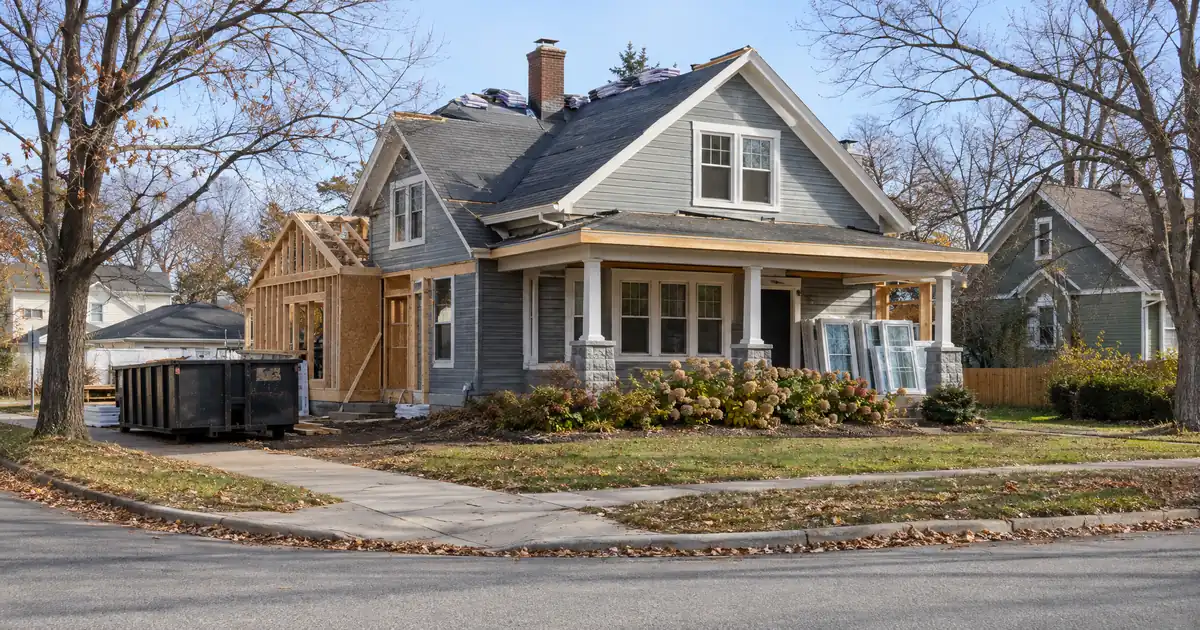
The Quick Read: Yes, in most cases you can pay off two hard money loans in one effort, either with two separate long-term rental loans closed side by side or with one blanket loan that pays off both notes, as long as each property passes the new lender’s value, rent coverage, and seasoning tests. Nothing caps how many refinances you run at once. The limit is whether each file holds up on its own.
- Two paths: parallel refinances keep each property independent, while a blanket loan ties them together under one note.
- Each property is tested: the new lender orders its own appraisal and rent opinion, and your after-repair estimate does not size the loan.
- Seasoning matters: across most of our wholesale network, about 6 months of ownership is the common expectation before a cash-out, so early exits are often payoff-only.
- Maturity dates drive the plan: if one bridge loan comes due first, you need an extension, a payoff-only refinance, or cash at closing.
- Nothing is guaranteed: programs vary by lender, property, and borrower, and every file is reviewed on its own.
Key Terms Defined
You will see these terms throughout. Each one is defined here once.
- Hard money loan: a short-term, interest-only loan secured by the property, used to buy or rehab quickly and then refinance out.
- DSCR (debt service coverage ratio): monthly rent divided by the full monthly housing payment (principal, interest, taxes, insurance, and any HOA dues).
- LTV (loan-to-value): the loan balance as a percentage of the property’s appraised value.
- Payoff statement: the written figure from a lender showing exactly what it takes to retire a loan on a given day.
- Seasoning: the waiting period a lender wants after you buy a property before it will refinance or cash out.
- Blanket loan: one loan, one note, secured by more than one property.
- Cross-collateralization: each property in a pool backs the whole loan, not just its own slice.
- Release clause: the term that decides how a property leaves a blanket loan later.
- Prepayment penalty: a fee for paying a loan off early.
What this loan actually costs to carry.
Hard money is sized against the project and priced by time. Enter the deal and see how much the program will lend, the cash required at closing, the carry while you hold it, and what is left at the exit.
Leverage tiers on the current program: 85% with fewer than 2, 90% with 2 or more, 93% with 5 or more completed projects — every tier capped at 75% of after-repair value. Loan amounts up to $5,000,000, larger by exception; terms of 6 to 18 months, interest-only, no prepayment penalty. The rehab portion funds in draws against completed work, not at closing.
Program parameters shown update from Lendmire’s centralized guideline source. Rate, points, and months are editable assumptions, not quoted terms.
Cost cap sets the loan · positive spread
Illustrative estimate only — not a quote, Loan Estimate, approval, or commitment to lend. Rate, points, and months are editable assumptions. Hard money is business-purpose financing for real estate investors, not a consumer mortgage. Leverage on the current program tops out at 93% of project cost for investors with a documented track record, capped at 75% of after-repair value, with rehab funding up to 100% of the documented budget released in draws; actual terms vary by lender, borrower experience, property, and exit. Lendmire is a mortgage broker, not a lender.
Two Loans on One Property, or One Loan on Each of Two Properties?
These are different problems, and the fix differs. Two loans on one property means a first lien and a second lien. Two loans on two properties means two separate payoffs. Mixing them up is how investors pick the wrong structure.
Two liens on one property. A new lender has to pay off both, in order, at closing. The combined payoffs must fit inside the leverage cap on the new loan. Across most of the network, a DSCR cash-out on a standard rental tops out around 75% LTV, so a stacked first and second can run into that ceiling fast. If the two balances together exceed what the appraisal supports, you bring cash or the deal does not pencil.
Two properties, one loan each. This is the more common case. Each hard money note sits on its own property, with its own maturity date and its own payoff figure. You can refinance both into two long-term loans, or fold them into one blanket loan.
A simple test applies either way. Add the payoffs, compare them to the value the new lender will accept, and then check the rent. If either test fails on a property, that property becomes the problem to solve first.
Three Ways to Structure It
The table shows how the three structures differ. None is automatically better.
| Structure | How it works | Main risk | Later sale |
|---|---|---|---|
| Parallel refinances | Two loans, closed in the same window | Two deadlines, two sets of costs | Simple, each property stands alone |
| Blanket refinance | One note pays off both bridges | Weak property drags down the pool | Depends on the release clause |
| Sequenced refinances | One property now, the other later | The second bridge keeps running | Simple, but the clock keeps ticking |
Lendmire’s team sees investors default to the blanket idea because one loan sounds tidier. Tidy is not the same as cheaper. A blanket loan saves paperwork, but it blends the coverage test and ties the properties together. Separate loans cost more paperwork and preserve your freedom to sell or refinance one property without touching the other.
Sequencing is the quiet third option. If one property is stabilized and the other is still being rehabbed, you refinance the ready one now. The unfinished one stays in the bridge until it is rented and has seasoned. That works only if the second bridge has enough runway left.
How the Payoff Works, Step by Step
Here is the order of operations that most files follow.
1. Request both payoff statements. Each hard money lender provides its own payoff figure and lien release. Ask for them early, because per diem interest changes the number daily.
2. Pull the exit file for each property. That usually means the settlement statement from your purchase, the hard money note, the draw history, rehab invoices, the lease, proof of insurance, and the payoff letter.
3. Pick the structure. Parallel loans, one blanket loan, or a sequence. The table above is your decision frame.
4. Order an appraisal and rent opinion for each property. Even in a blanket loan, each property is valued and rented on its own merits.
5. Check seasoning on each loan. Seasoning is lender policy, not law, and the clock generally runs from the recorded deed. Two properties bought months apart have two different clocks.
6. Choose payoff-only or cash-out per property. Payoff-only replaces the bridge balance and costs without returning cash. Cash-out sizes the new loan against value and returns the excess.
7. Close through title. The new lender sends funds to title, and title pays off both bridge lenders and records the releases. If the two hard money lenders are different companies, each needs its own payoff letter and wire instructions.
Step 7 is where parallel closings get messy. Two payoffs mean two sets of lien releases to confirm after closing. Track them until the old liens are cleared from the record.
What the New Lender Tests
The exit has to pass two tests: enough equity and enough rental coverage. Strong files clear both. Weak files usually fail one.
Equity. The new lender sizes the loan on its own appraisal. Most DSCR purchases land at 75% to 80% LTV on an investment property, and cash-out refinances top out around 75% LTV across most of the network. The after-repair value in your original rehab plan does not set the number. The appraiser’s comps do. Terms vary by lender guidelines, property type, leverage, credit profile, and full file review.
Coverage. The new lender divides the property’s market rent by its full monthly obligation. Many select programs start at 1.00. A stronger ratio opens better pricing and higher leverage. A separate select-lender path takes coverage below 1.00, with leverage and terms adjusted.
One caution. Clearing 1.00 does not mean the property produces positive cash flow. Repairs, vacancy, management, utilities, and capital expenses all sit outside the calculation. A rental can pass the DSCR test and still be thin once real operating costs land.
Credit and reserves. A 620 score floor exists in parts of the network, most programs want around 660, and 700 or higher unlocks the strongest leverage tiers. Reserves vary by lender, leverage, loan size, and transaction type. Around 6 months of the full payment is common, and some conservative files at modest leverage can see reserves waived. These are typical ranges, not promises, and each file is underwritten individually.
Loan count does not matter. DSCR files qualify primarily on property-level rental income covering the payment, subject to lender guidelines. Having two hard money loans does not disqualify you. A third hard money loan elsewhere does not either. What counts is whether each property supports its own new loan.
A Worked Example: One Strong Property, One Weak One
Picture an investor with two rehabbed rentals, each carrying its own hard money note. The numbers here are illustrative modeling assumptions, not market data.
Property A is fully leased with solid coverage, around 1.25x. Property B was leased a few weeks ago at a softer rent, and coverage sits closer to 0.90x. The two payments are roughly similar in size.
Parallel refinances. Property A goes through cleanly. Property B stands alone and falls below 1.00. That does not end the file. A lender would review options such as a sub-1.00 program, which is available through select lenders in the network with leverage and terms adjusted. Another option is more cash at closing, or waiting while the rent comes up. Property A’s strong result is not affected.
Blanket refinance. The pooled coverage lands near the average of the two, around 1.1x. That may clear a floor that Property B could not clear alone. The trade is that Property B’s weakness is now blended into a single note. If one appraisal comes in short, the whole pool is reworked, not just the weak property.
So the blanket structure can rescue a weaker property, and it can also hurt a stronger one. If Property A would qualify for better terms on its own, pooling gives that advantage away. This is a genuine judgment call, and the answer depends on how far apart the two files are.
Qualification stays subject to lender guidelines, credit approval, and property review in every version of this example.
When the Maturity Dates Don’t Match
Different maturity dates are the most common real-world wrinkle. Hard money terms typically run 6 to 18 months, interest-only, and the program Lendmire brokers carries no prepayment penalty. Terms vary by lender, property, and experience, so check your own notes.
If one bridge is nearly due and the other has runway left, you have four basic moves:
- Refinance both now. Works if both properties meet seasoning and coverage tests today.
- Refinance the near-term loan as payoff-only. The other bridge stays in place until it seasons.
- Extend the near-term bridge. Extension terms live in the original loan documents. Note Servicing Center notes that extension fees and prepayment clauses are set in those documents, so read yours before assuming either way.
- Bring cash to closing. If an appraisal comes in short, cash can bridge the gap on that property.
Running the two refinances in parallel limits your default exposure, because both deadlines are handled in one effort. Staggering them means you carry two separate sets of maturity risk.
If you plan to exit hard money at cost and pull cash out later, Lendmire’s piece How to Refinance Out of Hard Money at Cost and Cash Out Later covers that sequence in detail. A related approach is a two-step DSCR cash-out that pays off hard money at cost.
Payoff-Only or Cash-Out?
Inside the seasoning window, most early exits are payoff-only. The new loan retires the bridge and returns no cash. Past the window, a cash-out may be sized on appraised value rather than your purchase price, which is where equity from the rehab starts to show up.
Many investors choose payoff-only on the first exit, let the property season, and cash out later. That costs an extra set of closing costs. It also avoids forcing a cash-out on a property that has not earned its value yet.
A hard money refinance into another hard money loan is possible, but it is a different tool. On the hard money side, cash-out and rate-and-term refinances run up to 65% of value, and figures vary by lender, property, and experience. It buys time. It does not give you a long-term fixed structure. Many investors refinance out of hard money into long-term DSCR investor loans once the property is stabilized, and Lendmire brokers that path.
The Risks of Tying Properties Together
Blanket structures carry risks that parallel loans do not. The same cross-collateralization that helps a weak property get approved also puts every property in the pool behind one note. Goliath Data’s encyclopedia describes this exposure: a default can put every pledged property at risk, and a release clause, while common, is not guaranteed.
Cross-default language works the same way. A sample cross-default clause shows how a default under one security instrument can trigger a default under the others. Read that language in your own note, not in a summary.
Release terms deserve a hard look before you sign. Release clauses are negotiated lender by lender and are not standardized. Selling one property later may require paying down more than that property’s share of the balance. You want to know that number now, not at the listing.
A blanket loan also generally needs all properties to close or refinance together under the same note. If one appraisal fails or one title issue surfaces, the whole closing waits.
Then there is the question of whether a blanket loan is cheaper. It is not automatically cheaper. Compare total costs, not the headline convenience.
Tax treatment can depend on how the funds are used and how the property is held; investors should keep clear records and speak with a qualified tax professional before relying on any deduction.
Does Delayed Financing Rescue a Hard Money Purchase?
Usually not. Delayed financing is an exception some conventional programs offer to cash buyers, letting them recover their documented purchase cost soon after buying. A hard money lien on the subject property generally breaks that exception, because the purchase was not made with cash. Even when it applies, it recovers documented cost, not equity you created through rehab.
When Not to Do This (and What to Do Instead)
Skip the combined refinance when one property clearly is not ready. A vacant or half-rehabbed property drags down a blanket file and fails a standalone coverage test. In that case, refinance the ready property and leave the other in its bridge.
Other fallbacks if a file comes up short:
- Refinance only one property. The stronger one goes first.
- Extend the weaker bridge. Buy time for rent to come up and seasoning to run.
- Sell one property. Use the proceeds to retire the second bridge.
- Add cash at closing. Cover an appraisal shortfall instead of restructuring.
- Move to a sub-1.00 path. Available through select lenders in the network, with leverage and terms adjusted.
Also check one more thing before you commit. If the exit loan carries a prepayment penalty, your planned hold period has to fit it. A DSCR exit that you plan to sell out of in a year deserves a hard look at the note’s early-payoff terms. No neutral source publishes a typical schedule, so read the note itself.
One more broker observation. In files like this, the exit usually fails on value or seasoning, not on the investor’s credit. Order appraisals early and confirm each property’s ownership clock before you commit to a closing date with either bridge lender.
Frequently Asked Questions
Can I refinance only one of my two hard money loans?
Yes. Many investors refinance the stronger property first and leave the other in its bridge until it seasons or stabilizes. The risk is that the second bridge’s maturity date keeps running. Confirm it has enough runway before you split the exits.
Do both hard money loans need to be with the same lender?
No. Different lenders each issue their own payoff statement and lien release, and title pays both at closing. The only added work is coordination: two payoff letters, two sets of wire instructions, and two releases to track after closing.
Will having two hard money loans hurt my DSCR approval?
Not by itself. The loan count is not the test. Each property’s appraised value, rent, and seasoning are what the lender reviews.
Is a blanket loan cheaper than two separate refinances?
Not automatically. One note can mean fewer documents, but it also blends the coverage test and ties the properties together. Compare total costs, release terms, and your plans for each property before choosing.
What if one appraisal comes in short?
In parallel loans, only that property is affected. You can add cash, switch to payoff-only, or restructure that single file. In a blanket, a short appraisal can force cash at closing or a restructure of the whole pool.
What to Gather Before You Talk to a Lender
- Both hard money notes, with maturity dates and extension terms.
- A payoff statement from each lender.
- Settlement statements, draw histories, and rehab invoices.
- Current leases, or a plan and timeline for leasing.
- Proof of insurance on each property.
- Your entity paperwork, if you hold title in an LLC, subject to lender program eligibility.
Knowing these details lets a broker match your files to the right lenders in the network. A complete DSCR loans guide covers the full qualification picture if you want the long-term side in more depth.
About Lendmire
Lendmire (NMLS# 2371349) is a mortgage broker arranging DSCR investor loans and hard money financing through select lenders in its wholesale network, across 41 markets, including Washington, D.C. Program terms vary by lender, property, and experience, and nothing here is a commitment to lend. Scotsman Guide named Lendmire a Top Mortgage Workplace in both 2025 and 2026.
If you are buying, rehabbing or refinancing an investment property on a short timeline and want to see how the numbers work, Lendmire can help you compare hard money options based on the project, the exit plan, leverage, and your goals. Short-term rental rules can vary by city, county, HOA, and property type, so investors should confirm local rules before relying on projected rental income.
Get Started
Ready to find the right loan for you?
In about 30 seconds you can review financing options available for your investment property. No commitment required.
Informational only. Not a Loan Estimate, approval, or commitment to lend. Program availability and eligibility are subject to lender guidelines, credit approval, property review, and underwriting.
References
1. noteservicingcenter.com: Hard Money Loan Fees Dispelling the Hidden Cost Myth for Investors
2. Goliath Data encyclopedia: blanket mortgages
3. Law Insider: cross-default and cross-collateralization clause
This article is part of Lendmire’s hard money loan program — full qualification details, guidelines, and scenarios live on the program page.
Related reading: How to Buy a Home Later Without DSCR Loans Blocking You · How W-2 Investors Keep DSCR Loans From Compounding Into a Home DTI · How to Pull Cash From a Rental Without Refinancing a Low First Lien
Brandon Miller
Founder & CEO, Mortgage Loan Originator, Lendmire LLC
- Mortgage Loan Originator · NMLS# 1129696 · Verify on NMLS Consumer Access
- North Carolina Real Estate Broker · License# 343312 · Verify on NCREC
- North Carolina Insurance Producer · License# 19053198 · Property, Casualty, Life, Health · Verify on NAIC SBS
- Lendmire LLC · Firm NMLS# 2371349 · Verify firm licensure
Disclosures. The information presented in this article is general market commentary, not financial, legal, or tax advice. Lendmire is a mortgage brokerage (NMLS# 2371349) — not a direct lender or depository institution — and loan placement is subject to lender underwriting. Nothing in this content represents a commitment to lend. Loan terms, pricing, and program availability vary based on borrower qualifications, property characteristics, and state of subject property, and are subject to change at any time. Lendmire complies with Equal Housing Opportunity requirements. Consumer access: nmlsconsumeraccess.org.