
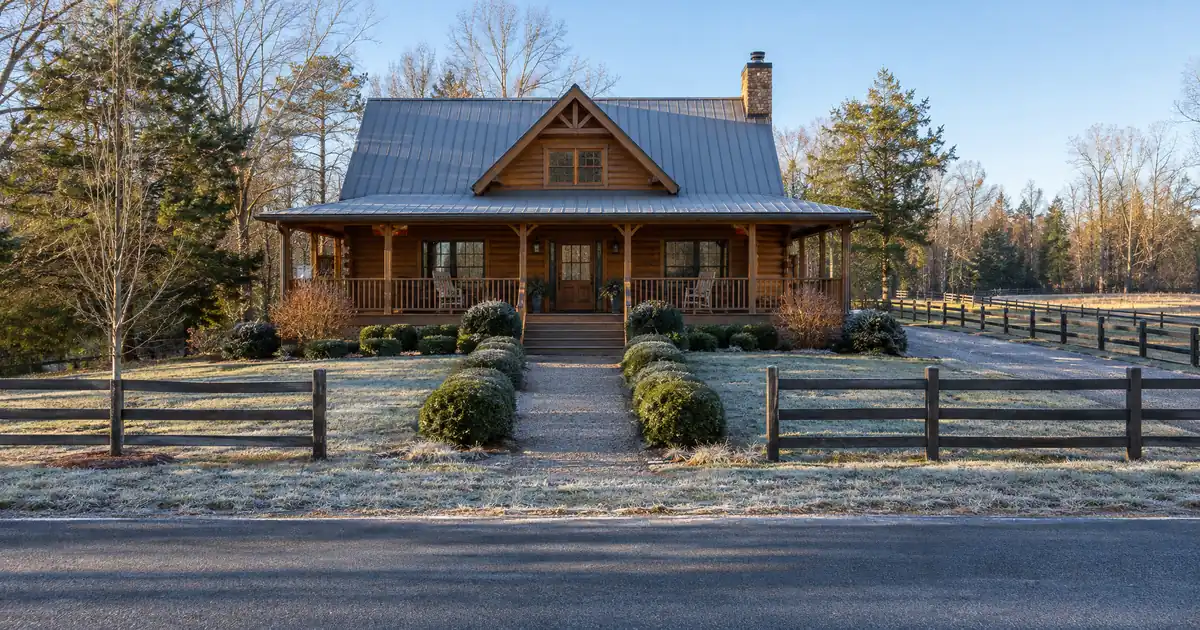
The Quick Read: Start by buying a policy written for nightly-guest use on your exact property type, then send the lender the declarations page that proves it. A standard homeowners or landlord policy usually fails here, because insurers treat nightly renting as business activity. Quote coverage before you sign the purchase contract, since the premium feeds the coverage ratio.
- The policy must name you (or your entity) as insured and show nightly rental use, not “tenant-occupied.”
- Lenders typically look for hazard coverage at replacement cost, liability, and loss-of-rents coverage.
- A cabin needs a dwelling-style STR policy. A resort unit needs unit-owner coverage built for rental use.
- Flood insurance does not replace lost rent.
- Airbnb or VRBO host protection does not stand in for your own policy.
Insurance is the quiet deal-killer on cabins and resort units. Investors spend weeks on rent projections, then discover at the last step that no carrier will bind the policy the lender wants. This walkthrough covers what the policy is, how a lender reads it, the structures that exist, and where the usual rules break.
Short-Term Rental Calculator
Run the STR numbers in your market
Rate source: Freddie Mac 30-yr average via FRED® — Federal Reserve Bank of St. Louis · effective Oct 15, 2026
Prefilled with starting assumptions — enter your nightly rate, occupancy, taxes, and insurance for a more accurate picture.
Short-term rental income is documented with a 12-month history or a market data report. Program parameters update from Lendmire’s centralized guideline source.
As of Oct 15, 2026 · General Freddie Mac market benchmark, not a Lendmire loan offer. Nightly rate, occupancy, taxes, and insurance are editable estimates. Qualifying income for short-term rentals varies by program — some use appraisal market rent, others use documented STR history or projections — and is confirmed in underwriting. Not a Loan Estimate, approval, or commitment to lend. Program availability and eligibility are subject to lender guidelines, credit approval, property review, and underwriting.
Key Terms Defined
Declarations page: the one- or two-page summary of a policy. It shows the insured, the address, the coverages, the limits, and the dates.
Loss of rents: coverage that pays your lost rental income after a covered loss, such as a fire, while the unit is unlivable.
HO-6: a unit-owner policy for a condo. It covers what the association’s master policy does not.
DP-3: a landlord-style dwelling policy for a rental house. It can be endorsed for vacation-rental use.
Master policy: the policy the association carries on the building and common areas.
Replacement cost: what it would cost to rebuild with similar materials, not what you paid or what the market says the home is worth.
PITIA: principal, interest, taxes, insurance, and association dues. A DSCR compares rent to this full monthly obligation.
Why a Standard Policy Fails on a Nightly Rental
A homeowners policy is written for someone who lives in the house. BiggerPockets notes that these policies exclude business activity, and most short-term rental hosts do not live in the property. Rent it nightly and the insurer can treat the claim as outside the policy.
A basic landlord policy has its own gap. BiggerPockets explains that an insurer can classify short-term renting as a business pursuit, which can void liability coverage even for incidents on the premises. Landlord forms also assume the contents belong to the tenant. In a furnished rental, they are yours. Hot tubs and provided recreational gear may need endorsements.
Here is the catch for financing. A lender reading your declarations page sees the same thing an adjuster would. If the page doesn’t show nightly-rental use, the file stalls.
What a DSCR Lender Is Checking
A DSCR loan qualifies primarily on property-level rental income covering the payment, subject to lender guidelines. The insurance proof protects the collateral behind that income. Across the lenders in Lendmire’s wholesale network, the review comes down to a short list.
| Coverage | What it does | What the lender looks for |
|---|---|---|
| Hazard (dwelling) | Rebuilds the structure | Replacement-cost basis |
| Liability | Covers guest injury claims | Written for rental use |
| Loss of rents | Replaces income after a loss | Present and active |
| Flood | Covers water damage | Where the property is mapped |
Exact limits, deductible caps, and mortgagee wording vary by lender and program. Your loan officer gets the specifics for the file you are actually running. The pattern holds across the network: the policy form has to match the use, and the declarations page has to say so plainly.
The Policy Structures That Exist
Three structures show up most often. A dedicated STR or commercial policy is a stand-alone contract on a home rented to guests. A landlord DP-3 policy with a vacation-rental endorsement adds STR use to a rental form. A hybrid policy covers both long-term and nightly use.
The structure matters more than the label. BiggerPockets separates a true STR policy from home-sharing endorsements and supplemental host protection that sit on top of another policy. Coverage split across two products can leave a gap where a claim falls through.
- The named insured is you or your entity.
- Occupancy does not read “tenant-occupied.”
- There is no vacancy clause, day-count limit, or primary-residence requirement.
If the policy fails any of these checks (the named insured, the occupancy wording, or the absence of a vacancy clause, day-count limit, or primary-residence requirement), ask the agent to fix it before the lender sees it.
Cabins: Insure the Detached House
A cabin is a detached dwelling, so the usual fit is a DP-3-style STR policy or a commercial STR form. Cabins also carry risks that town houses don’t. Think wildfire exposure, heavy snow, remote fire protection, seasonal vacancy, wood stoves, and hot tubs.
Set dwelling limits against rebuilding cost, not purchase price. One investor on a BiggerPockets forum thread described a cabin lost to a forest fire where the policy limit fell far short of replacement cost. It is one anecdote, but it explains why lenders care about the basis.
Some carriers won’t write stays under a minimum night count. A BiggerPockets forum discussion flags that, so ask up front. Cabins in wildfire areas may also need specialty carriers. An agent who shops several carriers is worth more here than a single-brand quote.
Resort Units: Read the Master Policy First
Master policies generally fall into three types: bare walls, single entity, and all-in. Request the master policy declarations page, bylaws, and CC&Rs before you buy.
A bare-walls master pushes more interior value onto you. NerdWallet explains that an HO-6 may cover fixtures and appliances depending on what the master includes. For a rental unit, the form is usually an HO-6 endorsed for STR use, or a DP-3 designated for condo rental, per a Florida agency write-up. Look for walls-in coverage, loss of rents, contents, and liability. Loss assessment coverage helps when a covered loss exceeds the master’s limits and the association bills owners.
Resort units near wildfire risk or with heavy rental activity may need specialty or surplus-lines carriers, according to Insurance Pro Agencies. Rental-pool and management programs can change who insures what, so get that in writing too.
Flood: Lender Policy, Not Just Law
Flood is where investors get tripped up. The federal mandatory-purchase rule binds federally regulated lenders and loans backed by agencies. The Office of the Comptroller of the Currency describes it under the Flood Disaster Protection Act. The Congressional Research Service says a mortgage from a private lender that isn’t sold to an agency or bank may not carry a statutory requirement.
That does not mean you skip it. A DSCR lender can still require flood coverage by its own guideline in a mapped flood zone. Treat it as lender policy.
Three practical points follow:
- Amount. Lenders typically require only enough coverage to match the loan amount, up to the federal program maximum. That can leave you underinsured against the home’s value.
- Waiting period. Federal flood policies generally carry a 30-day waiting period unless an exception applies. Order it early.
- Lost income. Federal flood policies don’t pay alternative living or business-interruption expenses. Flood alone leaves your rent unprotected. Ask the agent about lost-income coverage on top.
How the Premium Moves Your Coverage Ratio
DSCR divides monthly rent by the full monthly obligation: principal, interest, taxes, insurance, and association dues. Insurance sits in the denominator. A higher premium raises the obligation and pulls the ratio down.
Run it this way, with modeled numbers rather than market data. Say a cabin clears 1.15x with a modest premium. If the only quote that binds comes in much higher, the same file can slide toward 1.00x. Short-term rental programs in the network generally start at 1.00 coverage on both purchases and refinances, so a thin file has little room to absorb a surprise.
Clearing 1.00 is also not the same as positive cash flow. DSCR counts rent against the payment only. Repairs, vacancy, management, utilities, and capex sit outside it.
Premiums swing most on cabins in wildfire or heavy-snow areas and on coastal or resort units. That is why you quote before the contract, not after.
Step by Step: Get a Policy the Lender Will Accept
1. Classify the use. Tell the agent the property rents nightly on Airbnb or VRBO. Ask about night minimums.
2. Pick the form by property type. A dwelling-style STR or commercial policy for a cabin. A rental-use unit-owner policy for a resort condo.
3. Collect the HOA documents (condos). Get the master policy declarations page, bylaws, and CC&Rs.
4. Set realistic limits. Base dwelling coverage on rebuild cost.
5. Add flood where mapped, plus a separate answer on lost income.
6. Quote before you contract. Use an agent who shops several carriers. If a quote won’t bind or prices too high, you want to know before earnest money is down.
7. Match the paperwork. Send the declarations page and any STR endorsements to the lender. The mortgagee clause and payment-evidence wording are lender-specific, so ask your loan officer for the exact language.
8. Align the names. If you buy through an LLC, the named insured, the vesting, and the lender’s required insured parties must line up, subject to lender program eligibility.
Lendmire’s complete DSCR loans guide covers how the rest of the file fits together.
DSCR vs. conventional financing
There are two common ways to finance an investment property, and they qualify you differently — here’s how investors weigh them.
Why investors choose it
- Qualifies on the property’s rental income — no personal tax returns, W-2s, or pay stubs needed to document income.
- No personal debt-to-income ceiling to clear, so existing mortgages and obligations don’t cap your borrowing the same way.
- Can be closed in an LLC, keeping the property inside a business entity.
- Built for scaling — not held to the limit on number of financed properties that conventional financing applies.
- Underwriting centers on the deal: generally qualifies when the rent covers the payment, a 1.00x coverage ratio being a common baseline (confirmed in underwriting).
- Designed specifically for investment property, including long-term and, where the program allows, short-term rentals.
Where it’s strong
- Often the lowest ongoing financing cost for a buyer who fully qualifies on personal income — a fit for a first property or a cost-first purchase.
Trade-offs for investors
- Requires full personal income documentation and must fit within a debt-to-income limit — salary, existing debts, and other mortgages all count.
- Typically held in your personal name rather than a business entity.
- Caps how many financed properties you can carry, which can become a ceiling as a portfolio grows.
- Evaluates you as a borrower as much as the property, which usually means more paperwork.
How investors usually choose: a first or single property often optimizes for the lowest financing cost; portfolio builders often optimize for leverage, vesting in an LLC, and scaling past conventional caps. The right answer depends on your goals, the property, and current guidelines — both paths run through select lenders in Lendmire’s wholesale network, with eligibility and terms confirmed in underwriting.
Where the Rules Break
Platform coverage. Airbnb and VRBO host protection is not a substitute. Investors on BiggerPockets and the agency noted above say so, and a lender expects your own policy.
Rehab to STR. A renovation-insurance provider may have no go-to STR policy, as one BiggerPockets thread shows. Line up the permanent policy before the rehab ends.
Declined risk. If carriers decline a remote cabin, go to specialty or surplus-lines markets through a multi-carrier agent. If the lender rejects a binder, the fix is usually a form or wording change, not a new property.
Ineligible property types. Manufactured homes, log homes, and barndominiums are not offered in the network’s DSCR programs, however good the insurance.
Short-term rental rules. These can vary by city, county, HOA, and property type, so investors should confirm local rules before relying on projected rental income.
What the Decision Looks Like
Insurance is one of two tests. The first is equity and credit. On STR files, purchase leverage typically tops out around 75% LTV, and cash-out or refinance around 70% on short-term-rental collateral. Expect a 640+ credit score and about 12 months of hosting history. The second test is coverage, and the premium sits inside it. A larger down payment can lift the ratio, but it never erases leverage caps, credit floors, reserve rules, or property eligibility. All of this is subject to lender guidelines and underwriting.
Investors weighing a cabin against a resort unit face a real tradeoff. A cabin means more control over the policy and more exposure to wildfire and snow. A resort unit means association documents to decode and possible assessments. Neither is automatically cheaper to insure, so quote both.
For related reading, see Lendmire’s piece Short-Term Rental Cash-Out Owner-Use Blocks on a Cabin or Resort Unit.
Tax treatment varies; consult a qualified professional.
If you are buying or refinancing a rental property and want to see how the numbers work, Lendmire can help you compare DSCR loan options based on the property income, credit profile, leverage, and investor goals. Call 828-256-2183.
Frequently Asked Questions
Does my homeowners policy cover Airbnb guests on a cabin?
Usually not. Homeowners policies exclude business activity, and nightly renting can be classed that way. You need a policy written for short-term rental use, with the declarations page showing it.
Is Airbnb host protection enough for the lender?
No. Platform protection supplements your own coverage. Lenders expect a policy in your name that shows rental use, and investors report that platform liability is no replacement.
Does a DSCR lender require flood insurance?
Often, where the property is in a mapped flood zone. The federal mandate reaches federally related loans, but a non-agency lender can require flood by its own guideline. Ask early, because federal flood policies carry a 30-day waiting period.
Does the HOA master policy cover my resort unit?
Partly, depending on the master type. A bare-walls master leaves interior finishes to you. Contents and liability stay with the unit owner, so request the master declarations before you buy.
Can a higher premium sink my DSCR?
It can. Insurance is part of the monthly obligation, so a steep premium lowers the ratio. Quote before the contract, so you know the coverage number on a thin file before you commit.
Investors focused on short-term rentals can review DSCR loans for Airbnb and short-term rentals.
About Lendmire
Lendmire (NMLS# 2371349) is a DSCR-focused mortgage broker that helps arrange investor financing across 41 markets, including Washington, D.C., through wholesale and investor-lending channels. DSCR eligibility is generally reviewed by the lender around the property’s rental income rather than personal income documentation, subject to lender guidelines — which works for self-employed investors, LLC operators, and portfolios above four financed properties. Scotsman Guide named Lendmire a Top Mortgage Workplace in both 2025 and 2026.
Get Started
Ready to find the right loan for you?
In about 30 seconds you can review financing options available for your investment property. No commitment required.
Informational only. Not a Loan Estimate, approval, or commitment to lend. Program availability and eligibility are subject to lender guidelines, credit approval, property review, and underwriting.
References
1. BiggerPockets – Rental Property Insurance Types
2. BiggerPockets – What Landlord Policies Don’t Cover
3. BiggerPockets – Comparing STR Insurance
5. BiggerPockets forum discussion
7. Fuller Insurance – FL STR condo
9. OCC – Flood Disaster Protection Act handbook
10. Congressional Research Service – Intro to NFIP (R44593)
This article is part of Lendmire’s short-term rental loan program — full qualification details, guidelines, and scenarios live on the program page.
Related reading: How to Qualify for a DSCR Loan in Mississippi · How to Qualify for a DSCR Loan in Oklahoma · How Cleaning Fees and Platform Fees Are Treated on an STR DSCR Loan
Brandon Miller
Founder & CEO, Mortgage Loan Originator, Lendmire LLC
- Mortgage Loan Originator · NMLS# 1129696 · Verify on NMLS Consumer Access
- North Carolina Real Estate Broker · License# 343312 · Verify on NCREC
- North Carolina Insurance Producer · License# 19053198 · Property, Casualty, Life, Health · Verify on NAIC SBS
- Lendmire LLC · Firm NMLS# 2371349 · Verify firm licensure
Legal disclosures. Lendmire (NMLS# 2371349) is a state-licensed mortgage brokerage that arranges financing through wholesale lender relationships. Lendmire is not a direct lender, depository institution, or registered financial advisor. The discussion above is general informational content about real estate financing — it is not financial, legal, or tax advice, and readers should consult licensed professionals for guidance on their individual circumstances. Loan inquiries are subject to lender underwriting; this article does not represent a commitment to lend. Loan terms, rates, and qualification standards vary by borrower, property, and state, and are subject to change at any time. Equal Housing Opportunity. NMLS Consumer Access: nmlsconsumeraccess.org.