
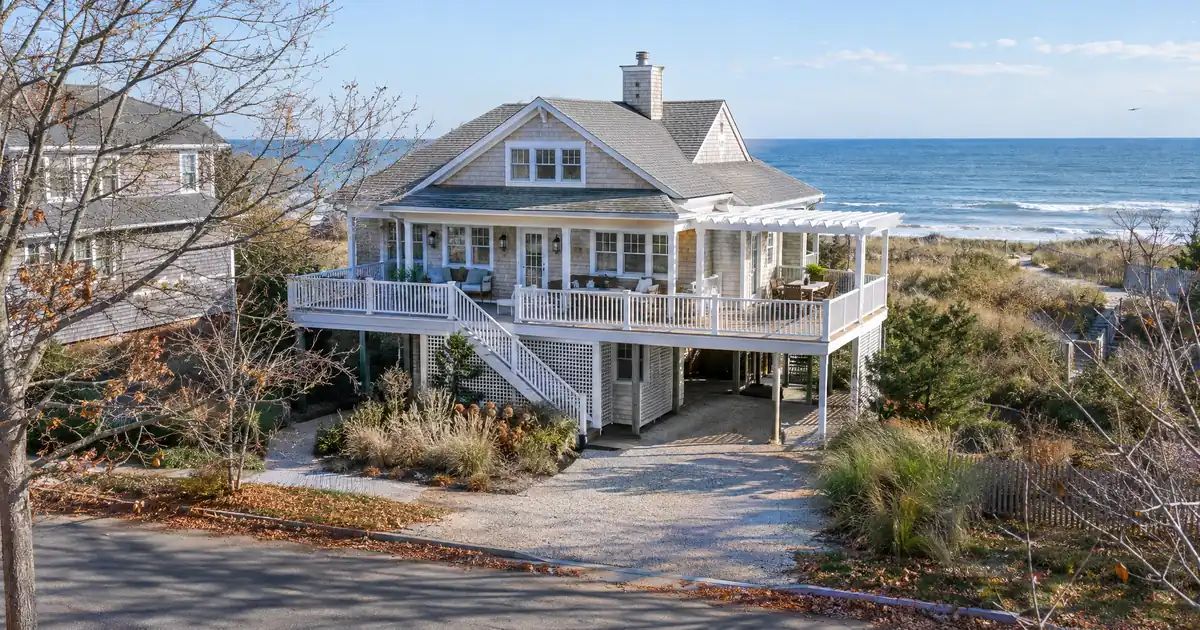
The Quick Read: A DSCR loan finances the Airbnb property itself and qualifies primarily on property-level rental income covering the payment, subject to lender guidelines. A business loan generally finances the operating company and rests on the owner’s credit, business revenue and broader collateral. The two usually solve different problems rather than competing for the same job.
- A DSCR loan is a mortgage on the property. Coverage means rent compared with the full monthly obligation: principal, interest, taxes, insurance and any HOA dues (PITIA).
- A business loan is usually underwritten on the company, not on one building’s rent.
- Both can carry personal liability. The real difference is what secures the debt and how far a lender can reach.
- SBA loans, the best-known business loans, generally do not fund a passive rental purchase.
- Many hosts use both: a DSCR loan for the real estate, and a business line or term loan for furnishing and operating costs.
The Honest Answer: Who Each Option Is For
A DSCR loan is for the investor who wants to buy or refinance the property and let the rent carry the file. A business loan is for the host who needs money for the operation: furniture, software, marketing, working capital or a second location’s setup costs.
Short-Term Rental Calculator
Run the STR numbers in your market
Rate source: Freddie Mac 30-yr average via FRED® — Federal Reserve Bank of St. Louis · effective Oct 15, 2026
Prefilled with starting assumptions — enter your nightly rate, occupancy, taxes, and insurance for a more accurate picture.
Short-term rental income is documented with a 12-month history or a market data report. Program parameters update from Lendmire’s centralized guideline source.
As of Oct 15, 2026 · General Freddie Mac market benchmark, not a Lendmire loan offer. Nightly rate, occupancy, taxes, and insurance are editable estimates. Qualifying income for short-term rentals varies by program — some use appraisal market rent, others use documented STR history or projections — and is confirmed in underwriting. Not a Loan Estimate, approval, or commitment to lend. Program availability and eligibility are subject to lender guidelines, credit approval, property review, and underwriting.
“Business loan for an Airbnb” is not one product. It is a label that covers term loans, lines of credit, equipment financing and SBA programs, each with its own rules. A DSCR loan is also a business-purpose loan, but it sits on the real estate side of the fence.
Most investors do not have to choose one forever. They need to match the tool to the job.
Side-by-Side
The DSCR column reflects the guidelines of select lenders in Lendmire’s wholesale network. The business-loan column shows published industry norms, which vary by lender and program.
| Factor | DSCR Loan (network) | Business Loan (industry norms) |
|---|---|---|
| What it finances | The property: purchase or refinance | Operations, equipment, working capital |
| Review basis | Rental income vs. PITIA | Business revenue, owner credit, time in business |
| Documentation | Appraisal, rent evidence, credit, entity papers | Financials, traditional personal-income documentation, business plan |
| Property types | 1-4 unit rentals; manufactured, log, barndominium not offered | Rarely a property purchase |
| Entity vesting | Borrower or LLC, subject to program terms | The operating company |
| Collateral | Lien on the financed property | Business assets, UCC lien, personal assets |
| Recourse | Guaranty common; terms vary by program | Personal guarantee common |
| STR leverage | Purchase up to 75%; refi and cash-out up to 70% | Collateral-based, not LTV-based |
| Reserves | Commonly about 6 months of PITIA; varies | Cash-flow covenants and collateral cushions |
| Term structure | 30-year fixed spine; 40-year, IO, ARM via select lenders | Shorter terms; lines may renew |
When a DSCR Loan Is the Better Fit
Choose a DSCR loan when the thing you are financing is the building. That covers buying a turnkey short-term rental, refinancing one, or pulling equity out of one you already host in. The file is built around the property’s income, not your pay stubs.
Here is how the network’s short-term rental parameters typically run, subject to lender guidelines:
- Purchases reach up to 75% LTV on the strongest files.
- On a short-term-rental cash-out or refinance, the ceiling is up to 70%. Standard long-term rental cash-out tops out around 75%.
- A credit score of 640 or better is the usual expectation.
- Lenders look for about 12 months of hosting history.
- Coverage on short-term rentals starts at 1.00, whether the file is a purchase or a refinance. That is a floor for select programs, not a universal standard.
- Standard programs go up to $3,000,000. Terms vary by lender guidelines, property type, leverage, credit profile, and full file review.
Coverage below 1.00 is a separate path. It is available through select lenders in the network, with leverage and terms adjusted.
Income evidence. Lenders differ on how they count short-term income. Some use trailing platform payouts matched to bank deposits. Some accept a third-party market projection for a property without history. Others fall back on the appraiser’s rent schedule. That is the 1007 form for single-family homes and the 1025 form for two- to four-unit properties. Ask which method a lender uses before you pick one.
New hosts. The history expectation matters if this is your first Airbnb. Lendmire’s piece on why first-time Airbnb buyers face stricter DSCR terms walks through how that changes the file.
A scenario. Picture an investor with a clean credit profile buying a lake-area duplex rented by the night. Trailing income shows strong coverage, around 1.2x on the lender’s chosen income method. At 75% LTV the file could clear on both tests: equity and coverage. A bigger down payment would lower the monthly obligation and lift the ratio. It would not lift the leverage cap or erase reserve rules. Exact terms depend on the lender’s guidelines, property type, leverage, and a full review of the borrower’s file.
Why there are no pay stubs. DSCR loans are designed for non-owner-occupied investment properties. Because they are business-purpose investor loans, they are reviewed differently from a standard owner-occupied mortgage. The federal business-purpose exemption in Regulation Z is the legal reason, and it turns on the primary purpose of the credit. A property you live in does not fit this loan.
One warning on the ratio. DSCR compares rent to PITIA only. Clearing 1.00 does not mean the Airbnb makes money. Repairs, vacancy, cleaning, management, utilities and capital expenses sit outside the calculation. Budget for them separately.
When a Business Loan Is the Better Fit
Choose a business loan when the money is for operating the rental business, not for owning real estate. That includes furnishing a unit, photography, marketing, booking and management software, or a cushion for the slow season.
A DSCR loan stays tied to the property. A term loan or line of credit can be spent more broadly, and the lender will underwrite the host as a business: credit, revenue and time in operation. Typical thresholds vary by lender, so treat any single number you read as one lender’s rule.
A business loan also fits a host who already has strong operating history and wants flexible working capital without touching the property’s mortgage. A line of credit can be drawn and repaid as the season swings.
There is a trade-off. Business lenders often ask for a personal guarantee, a lien on business assets, or both. Even loans described as unsecured commonly carry one of those. The reach can be wider than one property.
Collateral and Recourse: What Each Lender Can Reach
Recourse is not the dividing line, since both products commonly carry personal liability. The dividing line is what secures the debt.
DSCR collateral. The lender takes a lien on the financed property. When an LLC is the borrower, the owner often signs a personal guaranty, and the terms vary by program. Confirm the guaranty language before you sign. The exposure is mostly contained to that property plus whatever the guaranty covers.
Business-loan collateral. Secured loans pledge equipment, inventory, receivables or real estate. Many carry a blanket UCC lien, a public filing that can cover all business assets, not only the Airbnb’s furniture and booking income. If you hold several properties in one operating entity, a blanket lien can reach further than you intended. Read what the lien describes.
SBA guaranties. For SBA 7(a) loans, Delancey Street’s explanation of SBA personal guaranties cites 13 CFR 120.160(a). It calls for an unlimited guaranty from each owner of 20% or more of the borrower. Another explainer notes that when business collateral is short, the SBA can look to available equity in a 20%-plus owner’s personal real estate, including investment property. A DSCR guaranty and an SBA guaranty are different animals, so compare the actual documents.
Can an SBA Loan Buy Your Airbnb?
Generally not. The National Apartment Association’s comment letter to federal regulators quotes 13 CFR 120.110(c), which excludes passive businesses owned by developers and landlords that do not actively use or occupy the assets the loan buys or improves. The trade group reads that to mean an SBA loan cannot fund a real estate investment.
Two more points follow. One operator explainer that quotes SBA guidance says a business handing a third-party manager sole discretion over operations can itself be treated as passive. That is a secondary source, so treat it as a caution. A hands-off Airbnb owner with a full-service manager could be hit by it. Also, when SBA money does go to real estate, owner occupancy is the test. That fits an owner-operator who runs a business in most of the building, not a pure rental. The SBA’s occupancy thresholds are set in its own rules, so confirm the exact percentages for existing and new construction at sba.gov rather than relying on a summary.
The SBA owns these rules, and the program changes, so check the agency’s own pages at sba.gov before relying on any secondary source.
DSCR vs. conventional financing
There are two common ways to finance an investment property, and they qualify you differently — here’s how investors weigh them.
Why investors choose it
- Qualifies on the property’s rental income — no personal tax returns, W-2s, or pay stubs needed to document income.
- No personal debt-to-income ceiling to clear, so existing mortgages and obligations don’t cap your borrowing the same way.
- Can be closed in an LLC, keeping the property inside a business entity.
- Built for scaling — not held to the limit on number of financed properties that conventional financing applies.
- Underwriting centers on the deal: generally qualifies when the rent covers the payment, a 1.00x coverage ratio being a common baseline (confirmed in underwriting).
- Designed specifically for investment property, including long-term and, where the program allows, short-term rentals.
Where it’s strong
- Often the lowest ongoing financing cost for a buyer who fully qualifies on personal income — a fit for a first property or a cost-first purchase.
Trade-offs for investors
- Requires full personal income documentation and must fit within a debt-to-income limit — salary, existing debts, and other mortgages all count.
- Typically held in your personal name rather than a business entity.
- Caps how many financed properties you can carry, which can become a ceiling as a portfolio grows.
- Evaluates you as a borrower as much as the property, which usually means more paperwork.
How investors usually choose: a first or single property often optimizes for the lowest financing cost; portfolio builders often optimize for leverage, vesting in an LLC, and scaling past conventional caps. The right answer depends on your goals, the property, and current guidelines — both paths run through select lenders in Lendmire’s wholesale network, with eligibility and terms confirmed in underwriting.
Using Both on One Deal
The hybrid is the practical answer for many hosts. Run the DSCR loan for the property, then use a business line or term loan for furnishing, marketing and working capital.
Keep the two separate on paper. DSCR lenders look at the property’s coverage, and a new business debt can complicate reserves or the entity’s balance sheet. Sequence matters: arrange the real estate financing first, then line up operating capital.
One more fit note. A property needing heavy renovation before it can earn rent may not suit a permanent DSCR loan yet. Short-term rental rules can vary by city, county, HOA, and property type, so investors should confirm local rules before relying on projected rental income.
What Happens When Coverage Slips?
Seasonality can pull trailing income down, and a rule change can end it altogether. A DSCR loan is sized to the property’s income at origination, so a dip does not rewrite the loan, but it can make a later refinance harder. A business line may have covenants or renewal reviews that react to falling revenue.
Plan for the slow quarter before you borrow. Hold the reserves the lender asks for, since they vary by lender, leverage, loan size and transaction type. Many files sit near 6 months of PITIA. Conservative rate-and-term files at modest leverage under $1,500,000 can see them waived, and larger loans typically step up to about 9 months.
The Verdict
Pick the DSCR loan when you are buying or refinancing the property and the rent can carry it. Pick a business loan when you need operating capital. Treat an SBA loan as a poor fit for a pure rental purchase.
If you are weighing both, the question is simple. What is the money for, and what are you willing to pledge? A DSCR loan puts the property and a guaranty on the line. A business loan can put business assets and personal assets on the line.
Tax treatment can depend on how the funds are used and how the property is held; investors should keep clear records and speak with a qualified tax professional before relying on any deduction. For the full picture of how these loans work, see Lendmire’s complete DSCR loans guide.
Frequently Asked Questions
Can I use a small business loan to buy an Airbnb?
Usually not through the SBA, because its rules generally exclude passive rental ownership. A conventional business lender may extend credit to a host’s operating company, but it will underwrite the company and the owner’s credit. For the property purchase itself, a DSCR loan is the more common route.
Is a DSCR loan non-recourse?
Not reliably. Many DSCR files use an LLC as the borrower with a guaranty from the owner, but terms vary by program. Ask for the guaranty language early and compare it before you commit.
Does a DSCR loan need traditional personal-income documentation?
DSCR loans qualify primarily on property-level rental income covering the payment, subject to lender guidelines, so personal income documents are not the center of the file. You still provide an appraisal, rent evidence, credit and entity paperwork.
Can an LLC borrow on a DSCR loan?
Often yes, subject to program terms. The lender will want entity documents, and the owner commonly signs a guaranty. Owner-occupied properties do not belong in this product.
Can I combine a DSCR loan with a business loan?
Yes, and many hosts do. The DSCR loan covers the property and the business loan covers furnishing and operating costs. Sequence them so each lender sees a clean picture.
Next Step
If you are buying or refinancing a rental property and want to see how the numbers work, Lendmire can help you compare DSCR loan options based on the property income, credit profile, leverage, and investor goals. As a broker, it arranges these loans through select lenders in its wholesale network, across 41 markets including Washington, D.C. Lendmire’s DSCR loan for Airbnb page covers the short-term-rental details.
About Lendmire
A DSCR-focused mortgage broker, Lendmire (NMLS# 2371349) places investor financing across 41 markets — 40 states plus Washington, D.C. — with DSCR eligibility generally reviewed by the lender on property cash flow instead of traditional personal-income documentation, subject to lender guidelines. Scotsman Guide named Lendmire a Top Mortgage Workplace in 2025 and 2026.
Get Started
Ready to find the right loan for you?
In about 30 seconds you can review financing options available for your investment property. No commitment required.
Informational only. Not a Loan Estimate, approval, or commitment to lend. Program availability and eligibility are subject to lender guidelines, credit approval, property review, and underwriting.
References
1. CFPB Regulation Z § 1026.3: Exemptions
2. Delancey Street: SBA loan personal guaranty
4. NAA comment letter to the CFPB
This article is part of Lendmire’s short-term rental loan program — full qualification details, guidelines, and scenarios live on the program page.
Related reading: Preemption States vs Enforcement States for a DSCR Airbnb Loan · STR Endorsement vs Commercial Policy for a DSCR Airbnb Loan · DSCR vs Conventional Airbnb Loan for an LLC or Partnership Investor
Brandon Miller
Founder & CEO, Mortgage Loan Originator, Lendmire LLC
- Mortgage Loan Originator · NMLS# 1129696 · Verify on NMLS Consumer Access
- North Carolina Real Estate Broker · License# 343312 · Verify on NCREC
- North Carolina Insurance Producer · License# 19053198 · Property, Casualty, Life, Health · Verify on NAIC SBS
- Lendmire LLC · Firm NMLS# 2371349 · Verify firm licensure
Important disclosures. Lendmire (NMLS# 2371349) is a licensed mortgage brokerage. Lendmire is not a direct lender, depository institution, or financial advisor. All loan inquiries are subject to lender underwriting; this article does not constitute a commitment to lend. Rates, terms, and program guidelines are subject to change without notice and vary by borrower profile, property type, and state. Information in this article is general in nature and is not financial, legal, or tax advice. Equal Housing Opportunity. NMLS Consumer Access: nmlsconsumeraccess.org.