
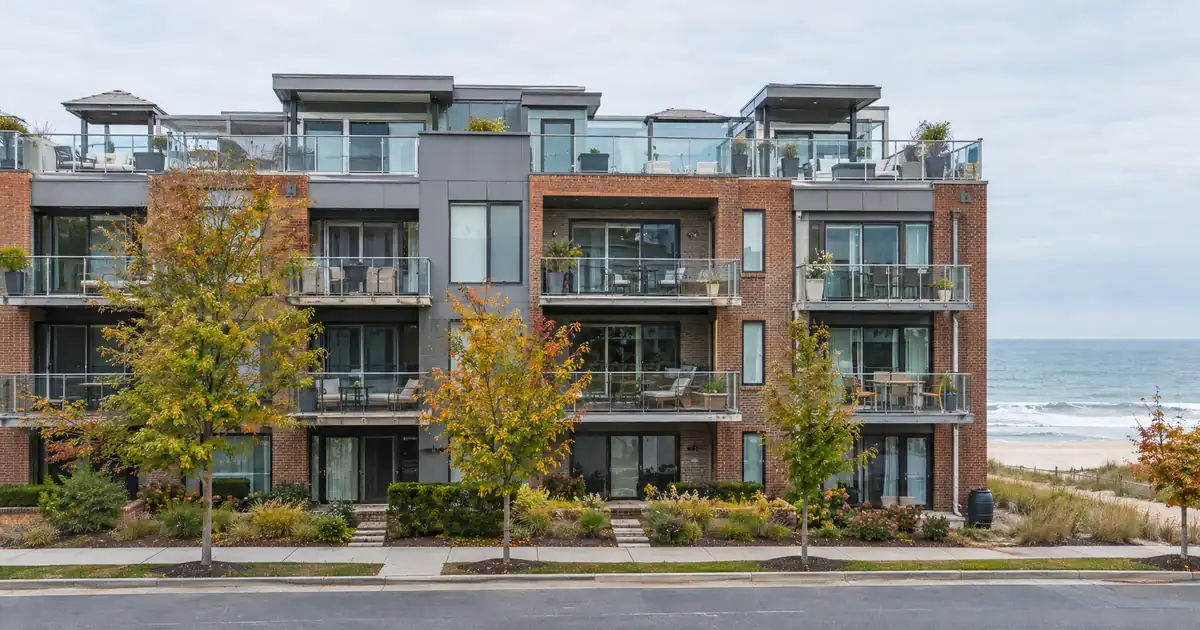
The Quick Read: On a condotel or resort unit, these two options are usually not rivals, because a 40-year DSCR loan typically bundles an interest-only window with a longer repayment tail. The real choice is whether you want an interest-only period at all, and how long the amortization runs after it. Both structures are available through select lenders in Lendmire’s wholesale network, and both depend on the building being approved.
- A 40-year loan often means 10 interest-only years plus 30 amortizing years. It rarely means 40 years of interest-only.
- Interest-only lowers the payment used in the coverage test, but only where the lender tests on that payment.
- Principal does not fall during the interest-only years.
- Condotel dues and the rental-pool split can eat the coverage that interest-only creates.
- Passing 1.00 coverage is not the same as positive cash flow.
Here is the honest answer on who each option is for. A 40-year structure suits the investor who wants a smaller payment for the long haul and a gentler step-up when the interest-only window ends. A plain interest-only structure suits the investor with a defined hold period who needs the coverage number to clear today. Neither fixes a weak building or weak rents.
DSCR Calculator
Run the numbers in your market
Rate source: Freddie Mac 30-yr average via FRED® — Federal Reserve Bank of St. Louis · effective Oct 15, 2026
Prefilled with starting assumptions — enter your own rent or nightly figures, taxes, insurance, and HOA for a more accurate picture.
Program parameters update from Lendmire’s centralized guideline source. Taxes and insurance are editable estimates.
As of Oct 15, 2026 · General Freddie Mac market benchmark, not a Lendmire loan offer. Rent, nightly rate, occupancy, taxes, and insurance are editable estimates. Short-term rental figures are estimates only and vary significantly by season, property type, management approach, and local short-term-rental rules — confirm local regulations before relying on them. Qualifying income for short-term rentals varies by program — some use appraisal market rent, others use documented STR history or projections — and is confirmed in underwriting. Not a Loan Estimate, approval, or commitment to lend. Program availability and eligibility are subject to lender guidelines, credit approval, property review, and underwriting.
Why Condotels Land in the DSCR Lane
Condotels land in the DSCR lane because mainstream agency financing generally excludes them. Fannie Mae’s Selling Guide lists projects operated as a hotel or motel as ineligible, even when each unit is individually owned. Its Condo Status Finder says the same about projects that manage daily or short-term rentals.
That is contrast only. Agency rules do not govern DSCR files. A DSCR loan qualifies primarily on property-level rental income covering the payment, subject to lender guidelines. Across the network, condotel appetite is narrower than for a standard rental. Some lenders decline the category, and others review each building one at a time.
One more point: a condotel is not the same as a non-warrantable condo. A condo can fail agency rules over litigation, thin reserves, or investor concentration with no hotel operation at all. Classification of your specific building comes before any structure talk.
Side-by-Side
The 40-year column reflects published industry norms plus what we see across the network. Terms vary by lender and file.
| Factor | 40-Year Structure | Interest-Only Period |
|---|---|---|
| What it is | Usually 10 IO + 30 amortizing | IO window, then amortizing (often 30-year note) |
| Review basis | Property rent vs. PITIA | Property rent vs. PITIA |
| Payment tested | Varies: IO or amortizing | Varies: IO or amortizing |
| Principal paydown | Starts after IO window | None during IO window |
| Step-up at reset | Smaller, longer tail | Larger, shorter tail |
| Documentation | Credit, property docs, entity papers | Same |
| Entity vesting | LLC possible, subject to program terms | Same |
| Reserves | Often sized on the stricter payment | Same question applies |
| Availability | Select lenders in the network | Select lenders in the network |
Notice how many rows match. The documents, the property review, and the reserve questions do not change with the payment structure. Only the payment inside the coverage test and the post-reset payment change.
How the Coverage Test Actually Works
The formula never changes. Debt service coverage ratio (DSCR) is the property’s rent used for lender review divided by PITIA, which is principal, interest, taxes, insurance, and association dues. The interest-only choice swaps which payment sits in the denominator.
Some programs review the file on the interest-only payment. Others require coverage at the eventual fully amortizing payment. Ask which one applies before you fall in love with a structure.
Condotel dues matter here. Interest-only removes principal, but taxes, insurance, and dues stay. Resort dues run heavy, so interest-only helps less than it would on a typical rental. Run it as a thought experiment: a unit that sits just under 1.00 on amortizing payments might reach the low 1.1 range on interest-only, then slide back under once heavy dues are in the denominator. That is a modeled illustration, not a program result.
Also confirm which income figure counts. A rental-pool or hotel operator’s revenue split is not the same as gross rent. Short-term income is its own question: appraisers do not get monthly market rent by multiplying a nightly rate by 30. How or whether short-term income counts is the lender’s call.
For a standard rental, 1.00 is where many select programs start. A separate select-lender path takes coverage below 1.00 with leverage and terms adjusted. Both sit behind the same property-eligibility review.
When the 40-Year Structure Is the Better Fit
Pick the 40-year structure when you plan to hold the unit for a long stretch and want the eventual payment as gentle as possible. Spreading repayment over 30 post-interest-only years instead of 20 makes the reset step smaller. It is still a step.
It also suits the investor who wants equity building eventually, not just coverage today. Once the amortizing years begin, principal starts to fall.
Tradeoffs are real:
- A longer term lowers the payment but raises total interest over the life of the loan.
- Loan size matters. Extended terms are available through select lenders, and above $2,500,000 the network generally holds to 30-year fixed structures.
- Pairing a condotel with an extended structure narrows the lender pool further. Not every select lender does both on the same file.
When Interest-Only Is the Better Fit
Interest-only fits when the coverage number is the bottleneck and your hold plan is defined. If the deal fails at the amortizing payment but passes on interest-only with identical income, the structure is doing real work.
It also fits the investor who expects to sell, or who has a clear plan for the window’s end. Match the interest-only length to the planned hold, then test the post-reset payment as if you had to carry it.
Be honest about the risks, because condotels amplify them:
- Principal does not fall during the window. Equity comes only from appreciation or voluntary paydown.
- Resale can be hurt by tight credit conditions, as one BiggerPockets thread on condotel financing points out.
- Refinancing out at reset is not a plan you can count on. Few lenders take this property type, and credit conditions change.
A cash-out on a resort unit raises the balance, which lowers coverage. Cash-out tops out around 75% LTV on most standard rental files across the network, with about 6 months of seasoning common. Short-term-rental collateral steps down: purchase to 75%, refinance around 70%, cash-out 70%, with about 12 months of hosting history and a 640+ score expected.
Condotel Economics the Ratio Won’t Show
DSCR compares rent to PITIA only. Repairs, vacancy, management, utilities, and capital expenses sit outside it. Clearing 1.00 is not positive cash flow.
Condotels add their own drag. Investor accounts on BiggerPockets describe the operator split, dues, and fees consuming a large share of gross revenue. Treat those as anecdotes, not benchmarks. A funder’s post on why condotels are hard to fund lists income uncertainty, management quality, tourism swings, and association finances as underwriting concerns.
From our desk, files on resort-style units tend to succeed or stall on three questions: does the building have approval, which income figure counts, and which payment is tested. The structure debate comes after those. Reserves also deserve a direct question. They vary by lender, leverage, and loan size, commonly around 6 months of PITIA and about 9 months above $1,500,000. Ask whether reserves are sized on the interest-only payment or the amortizing one.
Short-term rental rules can vary by city, county, HOA, and property type, so investors should confirm local rules before relying on projected rental income.
Key Terms Defined
Condotel: a condo-style unit in a building run partly or wholly like a hotel, often with a rental program.
Interest-only period: a stretch at the start of the loan when payments cover interest and not principal.
Term: the date the note matures.
Amortization: the schedule used to calculate how the balance is repaid.
Reset (recast): the point when the payment steps up because principal must now be repaid.
Rental pool: an arrangement where unit owners share revenue from a hotel-style operator.
Non-warrantable condo: a condo that fails agency project rules, for reasons such as litigation or investor concentration.
DSCR vs. conventional financing
There are two common ways to finance an investment property, and they qualify you differently — here’s how investors weigh them.
Why investors choose it
- Qualifies on the property’s rental income — no personal tax returns, W-2s, or pay stubs needed to document income.
- No personal debt-to-income ceiling to clear, so existing mortgages and obligations don’t cap your borrowing the same way.
- Can be closed in an LLC, keeping the property inside a business entity.
- Built for scaling — not held to the limit on number of financed properties that conventional financing applies.
- Underwriting centers on the deal: generally qualifies when the rent covers the payment, a 1.00x coverage ratio being a common baseline (confirmed in underwriting).
- Designed specifically for investment property, including long-term and, where the program allows, short-term rentals.
Where it’s strong
- Often the lowest ongoing financing cost for a buyer who fully qualifies on personal income — a fit for a first property or a cost-first purchase.
Trade-offs for investors
- Requires full personal income documentation and must fit within a debt-to-income limit — salary, existing debts, and other mortgages all count.
- Typically held in your personal name rather than a business entity.
- Caps how many financed properties you can carry, which can become a ceiling as a portfolio grows.
- Evaluates you as a borrower as much as the property, which usually means more paperwork.
How investors usually choose: a first or single property often optimizes for the lowest financing cost; portfolio builders often optimize for leverage, vesting in an LLC, and scaling past conventional caps. The right answer depends on your goals, the property, and current guidelines — both paths run through select lenders in Lendmire’s wholesale network, with eligibility and terms confirmed in underwriting.
Questions to Ask Before You Apply
- Is this specific building approved, and is that approval tied to this structure?
- Is coverage tested on the interest-only or the fully amortizing payment?
- Which income counts: market rent, pool statements, or short-term history?
- How are dues treated in the obligation?
- Are reserves sized on the same payment as qualification?
- Can the unit vest in an LLC? That depends on program guidelines.
The Verdict
Choose the 40-year structure if you hold long, want the smallest eventual payment, and can accept paying more interest overall. Choose a standard interest-only period if coverage is the obstacle and your exit or hold plan is specific. Skip both if the unit only works at the interest-only payment and fails badly after reset, because that is hope, not a plan.
Our complete DSCR loans guide covers the basics of how these loans fit together.
If you are buying or refinancing a rental property and want to see how the numbers work, Lendmire can help you compare DSCR loan options based on the property income, credit profile, leverage, and investor goals. Tax treatment varies; consult a qualified professional.
Frequently Asked Questions
Is a 40-year DSCR loan interest-only?
Usually only partly. The common form is a 10-year interest-only window followed by 30 years of amortization. A fully amortizing 40-year schedule exists but is the minority case.
Does interest-only lower the DSCR requirement?
No. It lowers the payment in the denominator where the lender tests on that payment, so the ratio rises with the same rent. Credit, leverage, and property rules stay the same, and some programs test at the amortizing payment instead.
Can a resort unit outside a hotel program qualify?
It can be reviewed, and it is easier to place than a hotel-operated unit. Classification turns on how the building operates, so approval of the specific project comes first. Select lenders in the network review these case by case.
Will a larger down payment fix a weak condotel file?
It lowers the payment and can lift coverage. It does not erase credit floors, reserve rules, or property eligibility. Strong files clear both tests: enough equity and enough rental coverage.
Is a business-purpose investor loan free of rules?
No. Lender guidelines still govern, and federal rules exempt business-purpose credit from certain consumer-loan requirements. Whether a given loan is reviewed is a fact-specific determination for the lender.
About Lendmire
Lendmire is a non-QM mortgage brokerage (NMLS# 2371349) arranging DSCR investor loans in 41 markets, including Washington, D.C. DSCR eligibility is generally reviewed around property-level rental income rather than personal income, subject to lender and program guidelines, a fit for self-employed investors and LLC-owned portfolios. Lendmire was recognized as a Scotsman Guide Top Mortgage Workplace in 2025 and 2026.
Get Started
Ready to find the right loan for you?
In about 30 seconds you can review financing options available for your investment property. No commitment required.
Informational only. Not a Loan Estimate, approval, or commitment to lend. Program availability and eligibility are subject to lender guidelines, credit approval, property review, and underwriting.
References
1. Fannie Mae Selling Guide B4-2.1-03
2. Fannie Mae Condo Status Finder
4. BiggerPockets: Condo Hotel (Condo-tel)
5. BiggerPockets: Why condotels are difficult to fund
This article is part of Lendmire’s DSCR loan program — full qualification details, guidelines, and scenarios live on the program page.
Related reading: How to Qualify for a DSCR Loan in California · How to Qualify for a DSCR Loan in Washington · How to Qualify for a DSCR Loan in Tennessee
Brandon Miller
Founder & CEO, Mortgage Loan Originator, Lendmire LLC
- Mortgage Loan Originator · NMLS# 1129696 · Verify on NMLS Consumer Access
- North Carolina Real Estate Broker · License# 343312 · Verify on NCREC
- North Carolina Insurance Producer · License# 19053198 · Property, Casualty, Life, Health · Verify on NAIC SBS
- Lendmire LLC · Firm NMLS# 2371349 · Verify firm licensure
Disclosures. The information presented in this article is general market commentary, not financial, legal, or tax advice. Lendmire is a mortgage brokerage (NMLS# 2371349) — not a direct lender or depository institution — and loan placement is subject to lender underwriting. Nothing in this content represents a commitment to lend. Loan terms, pricing, and program availability vary based on borrower qualifications, property characteristics, and state of subject property, and are subject to change at any time. Lendmire complies with Equal Housing Opportunity requirements. Consumer access: nmlsconsumeraccess.org.